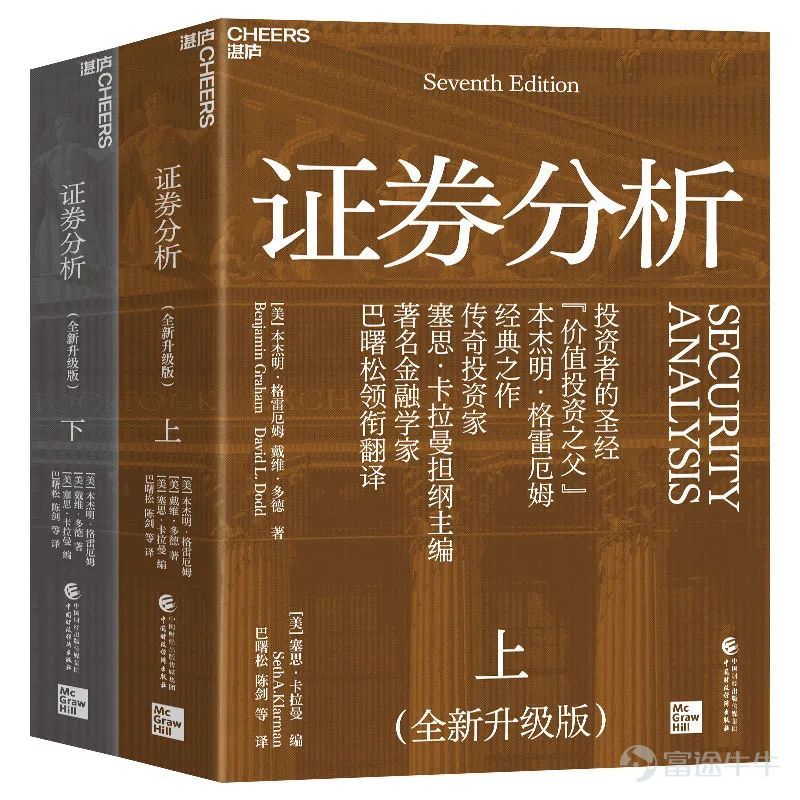

[Here’s a great book for you] First published in 1934! A legendary book written into history, with a ten-thousand-word preface on investment: Did you understand this book?
Chongyang Speaking
Mr. Charlie Munger has a famous saying: "In my life, I have never seen anyone who is wise without reading. Not one. Warren (Buffett)'s reading volume may astonish you. I am like him. My kids joke that I am a book with two legs."
Friends familiar with Chongyang surely know that reading has always been a highly regarded path for growth.
Now, we hope to persist in reading together with you.
In each column, we will continue to discuss books, which may include book reviews, reading lists, or excerpts.
Each issue will have a communication topic, and we hope you will interact with us through comments.
We select high-quality books and will randomly send them out based on the quality of the comments.
The world is vast, and time is desolate; reading generates the power of thought. May you feel that your thoughts have depth and direction, opening up everywhere, allowing you to wander freely.
Notice: The content published by this public account is for reference only and does not constitute any investment advice or sales offer. If you are interested in Chongyang products, feel free to inquire.
[Good Book] Issue 291: "Security Analysis"
![Chongyang Speaking Mr. Charlie Munger has a famous saying: "In my life, I have never seen anyone who is wise without reading. Not one. Warren (Buffett)'s reading volume may astonish you. I am like him. My kids joke that I am a book with two legs." Friends familiar with Chongyang surely know that reading has always been a highly regarded path for growth. Now, we hope to persist in reading together with you. In each column, we will continue to discuss books, which may include book reviews, reading lists, or excerpts. Each issue will have a communication topic, and we hope you will interact with us through comments. We select high-quality books and will randomly send them out based on the quality of the comments. The world is vast, and time is desolate; reading generates the power of thought. May you feel that your thoughts have depth and direction, opening up everywhere, allowing you to wander freely. Notice: The content published by this public account is for reference only and does not constitute any investment advice or sales offer. If you are interested in Chongyang products, feel free to inquire. [Good Book] Issue 291: "Security Analysis" [American] Benjamin Graham [American] David L. Dodd authored Translated by Ba Shusong and Chen Jian, published by Zhanlu Culture / China Financial and Economic Publishing House. Recommender Marketing Editor Lin Ta June 2025. Interactive Topics: ...](https://nnqimage.futunn.com/32735900/44f65ba8e92daf73c31b5715a97e0468.jpeg/big?imageMogr2/ignore-error/1/format/webp)
[US] Benjamin Graham (BenjaminGraham) [US] David Dodd (DavidL.Dodd) authors.
Translated by Ba Shusong Chen Jian, published by Zhanlu Culture / China Financial and Economic Publishing House.
Recommender Marketing Editor Lin Ta
June 2025.
Interactive Topics:
Based on this book,
Discuss your understanding of 'Security Analysis' and Graham's thoughts.
Message time: July 2, 2024 - July 9, 2025.
(Encouraging originality, as long as your content is excellent enough, there's a chance of being selected every time.)
Selection and book (single volume) delivery: after July 10, 2025.
(If selected, a private message will be sent to provide the delivery address. Failure to submit or incomplete information after the deadline will be regarded as a forfeiture. During the participation period, try not to change your profile picture and nickname to avoid missing opportunities.)
The Eternal Wisdom of Benjamin Graham and David Dodd
Author / Zhanlu Publishing Excerpted from Zhanlu Culture / China Financial and Economic Publishing House "Securities Analysis"
The world of investing is filled with endless choices, enormous opportunities, and substantial returns, but also with unpredictable situations, countless details, and severe risks. In this context, investors must weigh multiple, sometimes even competing, objectives: generating income, achieving long-term growth of principal, defending against losses and the erosion of inflation, and maintaining a certain level of liquidity to flexibly respond to unforeseen future demands. Finding the right balance is essential.
For this reason, investors need a guide. This guide does not provide a successful plan for a specific point in time, but rather a set of principles that will guide them to move steadily in any environment. In 1934, during the worst period of the Great Depression, Graham and his colleague Dodd created 'Security Analysis', detailing how to sift through thousands of common stocks, preferred stocks, and Bonds to identify those worthy of investment. Over the next 90 years, 'Security Analysis' has remained a bestseller, celebrated as the 'Bible of Value Investing.' The names Graham and Dodd have also become synonymous with the eternal wisdom of value investing.
The 6th edition of 'Security Analysis' was published during the most severe financial crisis since the time of Graham and Dodd. The 7th edition in your hands is an expanded version based on the 6th edition, reviewing changes in the market, the current economic context and business environment, as well as the latest developments in the fields of investment management and security analysis.
Like in the 6th edition, in the 7th edition, we have gathered leading industry practitioners and market observers to update and provide commentary on the widely acclaimed 2nd edition of this book. While distilling years of market changes, we strive to distinguish between reality and timeless investment wisdom, eliminating transient, variable, and illusory factors.
Although the market has undergone tremendous changes over the past 90 years, and the historical cases in the book reveal their age, you will see that many core value investment principles in "Security Analysis" are still applicable today, even more valuable than ever.
The depth and detail of "Security Analysis" have indicated that this is not an easy read. Today's investment novices and newcomers to the industry may doubt whether it is worth reading, but the other contributors and I have always been convinced that it is indeed an effort worth making.
Investment principles that have stood the test of time.
Change is the only constant in the investment world. Any investment book that can withstand the test of time must have universality. A successful investment philosophy like value investing must be able to respond to ever-changing challenges, maintain flexibility in methods and strategies, while adhering to basic principles. Conversely, trading strategies that are capricious and inconsistent are almost destined to cause investors to suffer frequent blows in turbulent markets and become victims of frantic trading.
Many details in "Security Analysis" stem from another era. The earliest versions obscurely described the economy of the steam age, where steam-driven trains raced across the land, delivering large amounts of industrial goods. Today, the characteristics of the global economy are increasingly information-based, with thousands of people collecting, tracking, and analyzing data through computers and mobile phones, dedicated to the information economy; while countless others actively engage in the thriving service economy.
Many businesses mentioned in early versions have been merged, restructured, or liquidated, and some tools and methods used by Graham and Dodd have become outdated or no longer applicable. For instance, book value is far less significant to today's investors than it was a century ago. Graham and Dodd advised investors to buy stocks trading below two-thirds of net working capital (i.e., working capital minus all other liabilities). During the Great Depression, many stocks met this criterion, which is now rare.
Despite the fact that many of Graham's examples and tools have faded over time, the general principles of Graham and Dodd remain effective because the investor behavior driving the market is rooted in human nature, and market inefficiencies are common. Generations of investors have adopted the strategies outlined in this book and successfully applied them to highly diverse market environments, regions, asset classes, and types of securities. This would reassure the authors, as they hoped the investment principles presented in the book could 'withstand the test of an unpredictable future' (see the preface of the first edition).
Graham and Dodd lived through and wrote about their experiences in the financial markets of the 1930s, a period marked by prolonged economic depression and extreme risk aversion. The decade, which began in the late 1920s, included both the best and worst of times in the market: the frenzied rise at the peak in 1929, the crash in October 1929, and the relentless suppression during the Great Depression. Although it is now far removed from today, exploring such a period remains valuable. After all, every day holds the possibility of drastic changes: a war, a pandemic, macroeconomic shocks, a real estate crash, a financial crisis, unexpected bankruptcies of well-known companies, sovereign debt defaults, widespread technological change, and dramatic political or regulatory shifts. People tend to believe tomorrow will closely resemble today, and most of the time, it does. But from time to time, circumstances can suddenly change, overturning traditional notions. During those times, many investors may feel powerless and unsure about what to do. They need a guiding philosophy, and Graham and Dodd provide just such a philosophy.
They wrote in the book: 'We have always strived, and we continue to strive to remind students that they must not measure the ocean with a gourd, only looking at surface and immediate phenomena... Surface and immediate phenomena are the illusions and bottomless abysses of the financial world.' (see the preface of the first edition) The philosophy of value investing is especially beneficial during turbulent and transformative periods.
Stock price fluctuations are both a challenge and an opportunity.
Graham and Dodd remind us that stocks represent partial ownership interests in companies, while bonds are a priority claim on the enterprise. Investors earn returns from equity investments, the most important factor being the cash flows generated by the underlying business itself. McDonald's has sold billions of burgers, which is equivalent to investors holding 1% of McDonald's stocks selling tens of millions of burgers. Therefore, the Market Cap of each company is inevitably related to its current and future financial performance.
When valuing a business, the market often displays inefficiencies, leading to securities being underpriced or overpriced. The emotional overreactions of the stock market can sometimes temporarily overshadow the fundamentals. When stock prices are overpriced, euphoric investors will eventually be brought back to reality, causing prices to fall. When stock prices are underpriced, investors can take advantage of this price misalignment to buy partial ownership stakes in the business at a low price. Long-term, as current uncertainties and temporary operational difficulties are resolved, stock prices typically converge to the intrinsic value of the business, allowing value investors seeking bargains to profit.
Stock prices themselves carry no intrinsic informational value. Over time, they are determined by supply and demand forces and are more influenced by the emotions, beliefs, and urgencies of other buyers and sellers rather than by rational assessments of business performance and outlook. Unexpected events, heightened uncertainty, and immediate capital movement exacerbate short-term market fluctuations, with prices sometimes deviating from a company's intrinsic value. As evidenced by the stock prices of many rapidly growing but still unprofitable Technology and biotechnology companies in recent years, even small changes in investment assumptions or market sentiment can lead to dramatic price volatility.
These fluctuations are one of the largest challenges in investing. Although investors may analyze companies and their values very accurately, they may not see returns in the stock market, and may even experience results contrary to their predictions. In fact, investors may not see returns for a considerable amount of time, or even experience significant paper losses. Therefore, an investor's approach may be correct, but it might seem wrong to themselves and others.
At first glance, this seems like a dilemma, but in reality, it is also an opportunity. The value investment philosophy of Graham and Dodd asserts that the financial markets themselves create many opportunities for investors. On any given day, some securities may be reasonably priced while others may not. However, in the long run, the fundamentals are key to determining a company's value. Graham once pointed out: "In the short term, the market is a voting machine; but in the long run, it is a weighing machine." By acknowledging and leveraging this dichotomy, investors patiently wait for a company's potential fundamental value to be reflected in its stock price and profit from the bargains.
Some investors firmly believe that the securities they choose are sound investments and can endure significant market fluctuations and potential drawdowns. When the undervaluation they perceive worsens, as long as they have the perseverance to stick it out and reasonably increase their holdings, they will benefit. In some cases, extreme undervaluation can itself become a catalyst, attracting not only bargain buyers in the open market but also those with the opportunity to purchase the entire company.
Just as market fluctuations may contradict accurate predictive analysis, prices may temporarily validate incorrect conclusions. For example, investors may gain confidence due to rising market prices and, at a moment when the investment actually becomes less attractive, develop excessive confidence in their investments, leading to poor decision-making.
Learning to appreciate valuation declines is crucial for long-term investment success. The key is to maintain the perspective that a valuation decline means the ability to purchase additional shares of a company at better prices, and that a valuation decline is only a loss when you sell. From this angle, seemingly bad news is actually a sign of positive developments. Clearly, when facing a decline in the stock market, especially in the face of sudden and surprising price drops, investors have the responsibility to regularly review their analyses and reaffirm their conclusions, assessing whether price movements reflect important information—whether it be new changes or something they may have missed or misunderstood.
Investors who lack confidence and persistence, or those under short-term performance pressure, often choose to exit when the prices of the stocks they hold decline. Investors endure sharp criticism from clients and superiors during periods of poor long-term performance, as well as self-doubt, but must remain resolute (this is why it is crucial for investors managing other people's money to have patient, long-term oriented clients). Conversely, an opposite extreme is that overly confident investors can easily fall prey to cognitive biases. This means they rejoice in information that confirms their conclusions while filtering out or neglecting anything that might contradict them.
Investors must cultivate their belief in investing through work, repeatedly checking and verifying their analyses before taking action. At the same time, they must remain open to updated information and new perspectives, enabling them to objectively change their original thoughts when necessary. Investors must walk a tightrope, maintaining firm beliefs while also being flexible.
It is equally important to recognize that while investment outcomes depend on the fundamentals of the companies invested in, returns are closely related to the purchase price. The lower your purchase price relative to the intrinsic value of the company, the higher your investment returns will be; self-restraint is essential throughout the buy-sell process. In the words of Graham and Dodd: "Security prices are often a fundamental factor. A stock may have investment value at one price level, but not at another." An old saying sums this up well: "Price is what you pay; value is what you get."
The core of value investing: buy one dollar for fifty cents.
Whether in the time of Graham and Dodd or in today's era, value investing involves purchasing securities or Assets at a price below their actual value, famously known as 'buying one dollar for fifty cents.' Value investors can profit in two ways: first, through the cash flow generated by the underlying Business, and second, from capital gains when the market recognizes the intrinsic value and re-prices the securities. They also benefit from the significant margin of safety that comes from buying at a low price. The margin of safety allows room for decision-making errors, data inaccuracies, bad luck, or changes in the economy and stock market, which helps protect investors from losses during downturns. While some may mistakenly view value investing as a mechanical tool for identifying statistically cheap securities, it is actually a comprehensive investment philosophy based on deep Fundamental Analysis, pursuing long-term investment results, resisting herd mentality, and limiting risks.
Identifying and buying undervalued securities is the best choice for value investors. However, determining at what price point to buy or continue holding is an art rather than a science, requiring subjective judgment. Value investors must set buy and sell price targets and then adjust those regularly based on all current available information.
Value investors should plan to fully exit when the securities return to their intrinsic value; holding overvalued securities in hopes of further appreciation is a game for speculators. In fact, value investors should typically begin selling when the price is 10% to 20% lower than their assessment of the intrinsic value of the securities, with the exact discount rate depending on the liquidity of the securities, the likelihood of value realization catalysts, the quality of management, the extent of leverage used by the business, and their confidence in their analytical assumptions. On one hand, while exiting an investment too early and missing out on all potential gains can be frustrating, it is far less painful than attempting to exit after it is too late. Engaging in round-trip transactions (failing to sell when prices rise, and then watching prices fall) can come at a high economic cost, while leaving investors feeling frustrated and anxious. On the other hand, disciplined selling can provide an opportunity to clear positions and potentially reinvest in familiar companies at more favorable prices.
Some believe that value investing should combine contrarian thinking and in-depth analysis, thoroughly studying the fundamentals of businesses to gain a unique perspective when assessing market information and not follow the crowd. Having a perspective independent of market consensus is essential. In the stock market, if good news about a company is already anticipated by investors, it is of no help to value investors.
Conduct extensive searches for opportunities and deeply explore value
What are the reasons for the inefficiency of financial markets? As humans, investors sometimes make emotional decisions to Buy or Sell during excitement or panic. They frequently change their decisions not based on investment fundamentals, but rather on the significant increase or decrease in their own net worth. Seeing their peers making profits leads to a fear of missing out. They may become complacent, influenced by the market momentum, and even engage in risky behavior. Maintaining a contrarian investment view that has previously resulted in losses is challenging for them. They may also exhibit overreactions to unexpected events, particularly when quarterly earnings fall short of expectations or when credit ratings are unexpectedly downgraded. They may not know how to cope with the challenges posed by rapid corporate changes, complexity, or high uncertainty. Investors need to resist the tendency to be overly enthusiastic about investments during price increases, while selling off during price declines.
There are many reasons why security prices deviate from intrinsic value. One reason is that investors may have very different perceptions of reality: some are hopeless optimists, while others are pessimists. Some investors support the stocks they hold regardless of the circumstances, indulging in their expectations and beliefs about an investment. Investors have different investment horizons, leading to varying expectations about the future. A university endowment fund or a charitable foundation may be able to maintain a truly long-term holding perspective, but an elderly couple nearing retirement who expects to access their principal quickly cannot. Investors' risk tolerance also varies, including tolerance for temporary price fluctuations as well as tolerance for permanent capital loss, the latter being more critical. The income needs of portfolis differ, with some investors being forced to exit a stock that cancels dividends or a bond that defaults, regardless of its price.
In addition to these causes of market inefficiency, people are always influenced by their own behavioral biases, as described by Daniel Kahneman in "Thinking, Fast and Slow." People tend to anchor to their purchase prices and stubbornly hold on to investments when they are in trouble, irrationally waiting for them to return to the purchase price to Sell without incurring losses. After suffering economic losses, people usually become more risk-averse, which may lead them to miss the next great opportunity.
People tend to believe that events they have recently experienced are likely to happen again in the future, while events that have not occurred recently are unlikely to happen again. The cumulative effects of numerous irrational behaviors by investors may lead to significant misalignments in asset values. One of the main challenges investors face is to recognize, combat, and overcome their own biases, relying instead on objective realities and facts. In this way, they can profit from misalignments rather than exacerbate their negative effects.
Another reason why security prices deviate from intrinsic value is that many investors must comply with institutional constraints that limit their behavior. These constraints are often designed to protect investors, but they still reduce market efficiency as they restrict the pool of potential buyers and sellers for certain securities. For example, many investment funds are required by their charters to operate within a narrow field, only investing in companies with certain levels of investment-grade credit ratings, paying cash dividends, or listed on an Exchange. Other funds are limited to investing in a single Industry. However, in the investment field, price is king. Different price levels dictate the actions investors should take—Buy, hold, or Sell. Any restrictions that prevent investors from purchasing or selling the most attractive opportunities act as constraints and may lead to underperformance.
So how can value investors take advantage of all these factors that lead to market inefficiency and non-economic behavior, rather than being limited by them? At my company, Baupost Group, we actively and purposely seek to create a culture committed to minimizing the risks of irrational or biased behavior. We engage in teamwork, regularly incorporating new information and perspectives into our analysis, and calmly debating our decisions. We also strive to ensure we are not constrained by institutional limitations. For the securities and Assets we believe are most likely undervalued, we investigate, analyze, and monitor them to seek opportunities. These opportunities often exist in market segments neglected by traditional investors, including recently distressed or downgraded debt instruments; companies undergoing rapid change, such as mergers, significant asset sales, and spin-offs; and situations involving high uncertainty, such as those facing significant litigation. We often peel back interesting situations to search for other investment clues or create investment patterns based on past successful investments. We review price "new lows" lists, knowing that unloved securities may indicate attractive cheap assets. We conduct broad searches for potential opportunities and then dig deeper to verify that each situation is indeed being undervalued by the market. Even after making a Buy, we continue to explore its intrinsic value.
Valuation is both an art and a science.
Although value investing involves purchasing businesses at prices below their fair value, it is by no means a step-by-step practice. It does not involve simply Buying securities at the lowest multiples of recent earnings, cash flow, or book value. After all, sometimes a stock's low valuation multiple is well justified: disturbing trends, competitive challenges, broken business models, hidden liabilities, long-term lawsuits that could have serious consequences, and incompetent or corrupt management. Investors must consider each potential investment with skepticism and humility, realizing that they will never know everything about a company, and thus relentlessly seek additional information.
So how can the value be accurately determined to identify whether there are cheap assets? There are several useful methods for evaluating the value of a company: calculating the present value of expected future cash flows; appropriately applying multiples of relevant income statements, balance sheets, and cash flow indicators; assessing the private market value of the company (i.e., the business value that an informed third party would reasonably pay), and determining the breakup value (i.e., the total value that would be realized if different parts of the business were sold separately to the highest bidder). Usually, the assessment of a company's value cannot be determined by a single number; investors are best advised to consider all of these methods to determine a reasonable value range.
These methods each have their pros and cons. On the one hand, private market value may fluctuate with market sentiment and economic changes, and there may be almost no private bids for certain assets. Such transactions generally also depend on the availability and cost of financing. On the other hand, one benefit of using multiples for valuation is that it relies on observable financial indicators. Although this method may appear more objective on the surface, adhering to very low purchase multiples may inadvertently filter out lower-quality or deteriorating companies for investors, or may fail to capture the intrinsic value of rapidly growing businesses. While Graham believed that company earnings, dividend payments, and book value are the most important indicators for analyzing stocks, most modern value investors ignore these factors in favor of focusing on the generation of free cash flow. Free cash flow is the cash that a company generates during annual operations after covering all capital costs and considering changes in working capital. Investors have turned to this method because earnings reported according to U.S. Generally Accepted Accounting Principles (GAAP) may differ greatly from the actual cash generated by the business. For example, depreciation and amortization are non-cash expenses that alter the net income shown in reports and obscure actual cash generation. Conversely, some business activities consume cash but are not reported as expenses, such as accumulating potentially obsolete inventory or uncollectible receivables.
However, valuing based on appropriately calculated multiples of current cash flows may miss key elements of business value. Ultimately, the future cash flows of the business are what matter. If assessing the drivers of a company's current cash flow is an imperfect art, then estimating potential paths of future cash flows is even more daunting because past performance does not necessarily predict future outcomes.
Given the difficulty of this forecasting method, Graham and Dodd believed it best to avoid such attempts. In the preface of the first edition of "Security Analysis," the authors wrote, "Some critical topics, such as the determinants of a company's future prospects, occupy relatively little space in this book because there are too few known determinants of value for this topic." Yet, in today's investment world, future cash flows can and must be discussed. It is clear that if a company generates $1 per share in cash flow today, and it is reasonably expected that this value will grow to $2 in five years, then its value will be far greater than that of a company with no growth. The quality and source of these cash flows are also significant. Whether growth stems from internal operations or through acquisitions, whether it is stable or cyclical, and whether large capital investments are needed to sustain growth are all important. More complex is the fact that businesses can increase cash flows in many different ways. They can sell the same quantity of goods at a higher unit price, or they can sell more goods at the same or lower price. They might change their product offerings, selling more high-margin items, or they may develop an entirely new product line. Cash flow growth achieved through cost-cutting impacts businesses entirely differently than growth achieved through expanding the customer base. Because when expenses are cut, a business may simultaneously lose its core competitive edge. These decisions will undoubtedly also affect customer satisfaction and competitors' responses. Clearly, some forms of growth will be more valuable. Investors need to dive into the details to understand the true nature of business growth and make appropriate valuations. Ultimately, although Graham and Dodd had reasonable reservations about predicting the future, today's business environment is undergoing rapid and powerful transformations of existing businesses and the steady formation of promising new firms, making it impossible to ignore the trajectories of growth or decline when determining company valuations.
Investors using the discounted cash flow method also need to select an appropriate discount rate to assess company valuation. Valuations are highly sensitive to the chosen discount rate, especially for high-growth companies, whose expected cash flows will largely occur far into the future. To set the correct discount rate, investors must evaluate the quality, consistency, and risk of company cash flows. The highest quality companies typically have the following characteristics: strong barriers to entry, low capital requirements, organic growth, repeat customers, significant pricing power, high profit margins, low risk of technological obsolescence, and competitive moats that lead to strong, sustainable, and continuously growing free cash flows. In many cases, the growth of these companies is intertwined with the growth of other companies; as other firms execute their plans, high-growth companies become stronger and more profitable. Quality companies should use a lower discount rate than others, thus achieving higher valuation multiples. However, the extent to which multiples are higher is a question that needs continuous adjustment and discussion.
In all of this valuation analysis, investors must also attempt to assess the skills, capabilities, priorities, and core values of the company’s senior management. Talented managers can clearly enhance cash flow and improve capital allocation decisions for the companies they lead, but management capability is not easy to quantify. As Graham and Dodd pointed out, "There are few objective tests of management ability and they are often not scientific" (see page 108). Doubtlessly, management's acumen, integrity, and motivations have a huge impact on shareholder returns. For any management team, whether in their current role or previous positions, their past actions are the most reliable guide to predicting their future behavior. The alignment of their incentives with shareholder interests is also critical.
In addition to running the business well, managers have many other ways to positively influence investor returns, including immediate stock buybacks, prudent use of leverage, and smart acquisitions. Managers who are unwilling to make shareholder-friendly decisions may lead their companies into a “value trap.” These firms may be undervalued, but they could ultimately be poor investments, as their assets may still not be fully utilized and cash flows could be wasted. However, these poorly performing companies do not necessarily need to be avoided; they may indeed attract activist investors who wish to gain board seats, change management, improve decision-making, and unlock potential value. Investors must also decide whether they are willing to take the risk of investing (regardless of price) alongside management teams that seem to put their own interests ahead of those of the shareholders. Although shares of these companies may be sold at a significant discount, this discount may be justified because the value belonging to shareholders today may be diverted or wasted tomorrow. In other words, future actual cash flows cannot be included in discounted cash flow analysis because these cash flows may never flow to investors.
In summary, valuation is both an art and a science that requires constant judgment. An investor's analytical ability must be combined with their softer intuitive abilities, allowing them to identify subtle distinctions through rigorous analysis and to think from different perspectives. Ultimately, the most successful value investors will always remember this inherent uncertainty while combining detailed business research and valuation work with endless discipline, patience, profound curiosity, intellectual honesty, and the judgment gained from years of analysis and investment experience.
Content summary
Benjamin Graham, the author of 'Security Analysis', is regarded as the father of value investing theory and is often referred to as the 'father of Wall Street'. He has served as a professor at Columbia Business School in the United States and has achieved remarkable investment performance on Wall Street; he has experienced both euphoric bull markets that made investors lose their senses and the frustrating and despairing Great Depression. The market has both refined Graham and demonstrated the significance of value investing.
'Security Analysis' is hailed as the Bible for investors and has remained a bestseller for over 90 years since its publication in 1934, becoming a classic work of value investing. This newly launched edition retains the complete content of the second edition, which Graham appreciated and Buffett treasured, while adding introductions from 15 Wall Street investment masters, including Todd Combs, Chief Investment Officer of Berkshire Hathaway Inc., James Grant, founder and editor of Grant's Interest Rate Observer, and Seth Alexander, President of MIT Investment Management Company, with an update of nearly 0.13 million words compared to the previous edition.
The new Chinese edition invites several domestic value investing practitioners, including Zhang Lei, Qiu Guogen, Zhuang Yuanfang, Qiu Guolu, Wang Guobin, Chen Guangming, Li Guofei, and Yang Tiannan, to provide in-depth interpretations of 'Security Analysis' and value investing from perspectives concerning domestic investors, such as 'the evolving path of value investing', 'the wisdom and evolution of value investing', and 'why value investing suits China', making this book more aligned with the core needs of contemporary Chinese readers.
Renowned economist Professor Ba Shusong leads a professional translation team to comprehensively update the Chinese version, revitalizing this investment classic that has traversed over 90 years.
Author Introduction
[American] Benjamin Graham
· Renowned as the 'Father of Modern Securities Analysis' and the 'Godfather of Wall Street', a pioneer of value investing theory, his status in the investment world is comparable to that of Einstein in the field of physics and Darwin in biology.
· As a master of his generation, his investment philosophy is admired by top investment masters such as 'Stock God' Warren Buffett, 'PE Pioneer' John Neff, and 'Index Fund Father' John Bogle. Numerous investment managers actively working on Wall Street, with assets totaling over a billion, proudly identify themselves as his 'disciples'.
· He was not only Warren Buffett's graduate mentor at Columbia University but is also revered by Buffett as a 'spiritual mentor', with Buffett stating that '85% of his investment theory comes from Graham'. Buffett even named his son Howard Graham Buffett in honor of his mentor.
[U.S.] David L. Dodd
Vice Dean and professor at Columbia Business School, formerly Vice President of the American Finance Association, member of the American Economic Association, and member of the Social Science Research Council. Graham's assistant, follower, and loyal partner.
Previous Issues Review
▲ Swipe up to read 【Disclaimer]
The text and images in this material are copyrighted by the original party or original author. Shanghai Chongyang Investment Management Co., Ltd. (referred to as "Chongyang Investment") has obtained authorization to reprint articles from the original party or original author.
The content of this material represents only the analysis, speculation, and judgment of the original party or author, and is published here solely for the purpose of information transmission and investor education. It does not imply that Chongyang Investment agrees with these views or confirms their descriptions, nor does it represent any agency or cooperative relationship between Chongyang Investment and the original party or author. Chongyang Investment makes no explicit or implicit declaration or guarantee regarding the authenticity, completeness, or timeliness of this article and its entire or partial content, and assumes no direct or indirect responsibility for the transmission of information. The related information is for reference only and does not constitute advertising, a sales offer, or advice to trade any securities, Funds, or investment products. Any entities, brands, or Commodities cited in this material do not represent the actual operations of Chongyang Investment. Due to various factors such as investment restrictions of Fund products, portfolio adjustments, and transaction costs, the actual operations of Chongyang Investment may differ from the conclusions drawn in this material.
This material does not take into account any specific investment needs, investment goals, or risk tolerance of the reader. Before investing, readers should carefully read the product's legal documents and risk disclosure statements, fully understand the risk-return characteristics and product features, consider their own risk tolerance, and make informed and prudent investment decisions.
If you are interested in Chongyang products, feel free to inquire.
The public account has changed the PUSH rules,
Our articles may get lost in the vast information flow.
A part of you,Share, like, and "looking at".,
can bring us a step closer,
for a better encounter,
star mark pinnedis also excellent.
Chongyang Investment is always with you.
Risk Disclaimer: The above content only represents the author's view. It does not represent any position or investment advice of Futu. Futu makes no representation or warranty.Read more
Comments
to post a comment