
English
Back
Open Account
特朗普再掀「關稅風雲」!近期如何應對?
富途资讯
joined discussion · Feb 5, 2025 19:02 ·

How will the USA Stocks respond to the impact of Trump's tariffs? Five major pressure-resistant sectors are worth paying attention to!

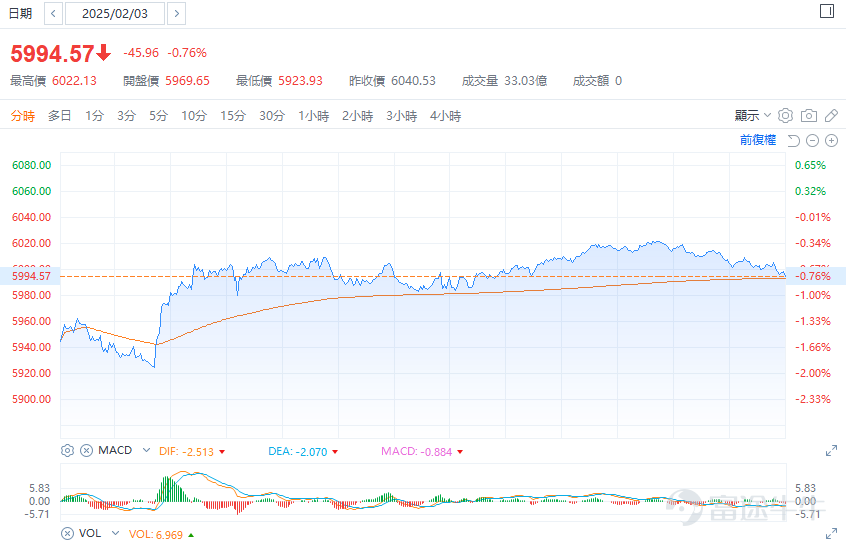
On the first trading day after the implementation of Trump's new tariff policy, US stocks plummeted at one point.
Monday's trends are hard to predict, ambiguous and unpredictable. $S&P 500 Index (.SPX.US)$ Falling nearly 2% at one point, as Trump announced a 10% tariff on goods imported from China, and a 25% tariff on goods from Mexico and Canada.
However, Trump postponed his tariff plan for Canada and Mexico by at least a month, easing concerns about a full-scale trade war sparked by tariff threats, which seemed to narrow the decline of US stocks on Monday.
On the first trading day after Trump's new tariff policy took effect, USA Stocks fell sharply at one point. Monday's trends are hard to predict, ambiguous and unpredictable. $S&P 500 Index (.SPX.US)$ It dropped nearly 2% at one point, as Trump announced tariffs of 10% on goods imported from China, and 25% on goods from Mexico and Canada. However, Trump delayed his tariff plan for Canada and Mexico by at least a month, alleviating concerns about a full-blown trade war sparked by tariff threats, and the decline in USA Stocks narrowed on Monday. The market seems to have fallen into a 'sell first, look later' mentality. Companies with significant stock price drops have also exposed their higher tariff risks—such as chip manufacturers, large retailers, and some manufacturing companies. Many American companies import materials from China. Trump's comprehensive imposition of tariffs will raise the cost of goods, thereby reducing gross margins. These companies will raise prices to pass on this cost, ultimately borne by consumers. On the other hand, companies with lower bargaining power will see a hit in revenue, while those with strong bargaining power and greater customer attractiveness may remain relatively unscathed. So, which industries are less affected by tariffs? And which US companies have strong bargaining power and can withstand tariff risks? Five sectors that are less affected by tariffs are worth paying attention to. Investment firm Evercore's research pointed out that some companies are not relying on trade partners affected by tariffs, or have strong bargaining power, ...
The market seems to have fallen into a "sell first, ask questions later" mindset. Companies that have significantly declined in stock prices have also exposed their high tariff risks—such as chip manufacturers, large retailers, and some manufacturing companies.
Many American companies import materials from China. Trump's comprehensive tariff hikes will raise the cost of goods, thereby lowering gross margins. These companies will raise prices to pass on this cost, ultimately borne by consumers; on the other hand, companies with lower bargaining power will be hit by reduced revenues, while companies with strong bargaining power and greater attractiveness to customers may remain relatively unscathed.
So, which industries are less affected by tariffs? And which US stocks have strong bargaining power to resist tariff risks?
On the first trading day after Trump's new tariff policy took effect, USA Stocks fell sharply at one point. Monday's trends are hard to predict, ambiguous and unpredictable. $S&P 500 Index (.SPX.US)$ It dropped nearly 2% at one point, as Trump announced tariffs of 10% on goods imported from China, and 25% on goods from Mexico and Canada. However, Trump delayed his tariff plan for Canada and Mexico by at least a month, alleviating concerns about a full-blown trade war sparked by tariff threats, and the decline in USA Stocks narrowed on Monday. The market seems to have fallen into a 'sell first, look later' mentality. Companies with significant stock price drops have also exposed their higher tariff risks—such as chip manufacturers, large retailers, and some manufacturing companies. Many American companies import materials from China. Trump's comprehensive imposition of tariffs will raise the cost of goods, thereby reducing gross margins. These companies will raise prices to pass on this cost, ultimately borne by consumers. On the other hand, companies with lower bargaining power will see a hit in revenue, while those with strong bargaining power and greater customer attractiveness may remain relatively unscathed. So, which industries are less affected by tariffs? And which US companies have strong bargaining power and can withstand tariff risks? Five sectors that are less affected by tariffs are worth paying attention to. Investment firm Evercore's research pointed out that some companies are not relying on trade partners affected by tariffs, or have strong bargaining power, ...
Five sectors with less impact from tariffs are worth paying attention to.
Investment institution Evercore's research pointed out that some companies, due to not relying on trade partners affected by tariffs or having strong bargaining power, can effectively resist the impact.These resistant stocks mainly focus on consumer essentials, the medical industry, some retailers, streaming entertainment, and the chemical industry sector.
1. Consumer Essentials
Some companies whose product procurement is not highly affected by tariffs may emerge unscathed in this turmoil. Many of these companies belong to the consumer essentials industry, do not rely on trade partners for raw material procurement, and have weak demand elasticity. Even if prices rise, American consumers continue to make purchases.
On the first trading day after Trump's new tariff policy took effect, USA Stocks fell sharply at one point. Monday's trends are hard to predict, ambiguous and unpredictable. $S&P 500 Index (.SPX.US)$ It dropped nearly 2% at one point, as Trump announced tariffs of 10% on goods imported from China, and 25% on goods from Mexico and Canada. However, Trump delayed his tariff plan for Canada and Mexico by at least a month, alleviating concerns about a full-blown trade war sparked by tariff threats, and the decline in USA Stocks narrowed on Monday. The market seems to have fallen into a 'sell first, look later' mentality. Companies with significant stock price drops have also exposed their higher tariff risks—such as chip manufacturers, large retailers, and some manufacturing companies. Many American companies import materials from China. Trump's comprehensive imposition of tariffs will raise the cost of goods, thereby reducing gross margins. These companies will raise prices to pass on this cost, ultimately borne by consumers. On the other hand, companies with lower bargaining power will see a hit in revenue, while those with strong bargaining power and greater customer attractiveness may remain relatively unscathed. So, which industries are less affected by tariffs? And which US companies have strong bargaining power and can withstand tariff risks? Five sectors that are less affected by tariffs are worth paying attention to. Investment firm Evercore's research pointed out that some companies are not relying on trade partners affected by tariffs, or have strong bargaining power, ...
2. Low Stock Price retailers
Compared to high-end brands, some Low Stock Price retailers may potentially be less affected by tariffs. Low Stock Price retailers have an advantage in price competition, and if mainstream retailers raise prices to cope with tariffs, the pricing ceiling for Low Stock Price retailers will increase.
此外,低价零售商的商品多来自零售商和品牌商的多余库存,直接进口风险较低。For example, $Burlington Stores (BURL.US)$ 2024年直接进口仅占8%,其中大部分来自中国,因此90%以上商品无需直接支付关税。这些低价零售商还有$Gap Inc (GAP.US)$$Macy's (M.US)$$Ross Stores (ROST.US)$
另一个具有强大议价能力的消费品牌是 $Lululemon Athletica (LULU.US)$ ,或能够较好地转嫁成本。
On the first trading day after Trump's new tariff policy took effect, USA Stocks fell sharply at one point. Monday's trends are hard to predict, ambiguous and unpredictable. $S&P 500 Index (.SPX.US)$ It dropped nearly 2% at one point, as Trump announced tariffs of 10% on goods imported from China, and 25% on goods from Mexico and Canada. However, Trump delayed his tariff plan for Canada and Mexico by at least a month, alleviating concerns about a full-blown trade war sparked by tariff threats, and the decline in USA Stocks narrowed on Monday. The market seems to have fallen into a 'sell first, look later' mentality. Companies with significant stock price drops have also exposed their higher tariff risks—such as chip manufacturers, large retailers, and some manufacturing companies. Many American companies import materials from China. Trump's comprehensive imposition of tariffs will raise the cost of goods, thereby reducing gross margins. These companies will raise prices to pass on this cost, ultimately borne by consumers. On the other hand, companies with lower bargaining power will see a hit in revenue, while those with strong bargaining power and greater customer attractiveness may remain relatively unscathed. So, which industries are less affected by tariffs? And which US companies have strong bargaining power and can withstand tariff risks? Five sectors that are less affected by tariffs are worth paying attention to. Investment firm Evercore's research pointed out that some companies are not relying on trade partners affected by tariffs, or have strong bargaining power, ...
3. Medical Care Industry
On the first trading day after Trump's new tariff policy took effect, USA Stocks fell sharply at one point. Monday's trends are hard to predict, ambiguous and unpredictable. $S&P 500 Index (.SPX.US)$ It dropped nearly 2% at one point, as Trump announced tariffs of 10% on goods imported from China, and 25% on goods from Mexico and Canada. However, Trump delayed his tariff plan for Canada and Mexico by at least a month, alleviating concerns about a full-blown trade war sparked by tariff threats, and the decline in USA Stocks narrowed on Monday. The market seems to have fallen into a 'sell first, look later' mentality. Companies with significant stock price drops have also exposed their higher tariff risks—such as chip manufacturers, large retailers, and some manufacturing companies. Many American companies import materials from China. Trump's comprehensive imposition of tariffs will raise the cost of goods, thereby reducing gross margins. These companies will raise prices to pass on this cost, ultimately borne by consumers. On the other hand, companies with lower bargaining power will see a hit in revenue, while those with strong bargaining power and greater customer attractiveness may remain relatively unscathed. So, which industries are less affected by tariffs? And which US companies have strong bargaining power and can withstand tariff risks? Five sectors that are less affected by tariffs are worth paying attention to. Investment firm Evercore's research pointed out that some companies are not relying on trade partners affected by tariffs, or have strong bargaining power, ...
4. Streaming Entertainment
Some streaming companies are less affected due to their global revenue models. For example,$Netflix (NFLX.US)$Most of its user growth comes from countries outside of the USA, China, and Mexico.
On the first trading day after Trump's new tariff policy took effect, USA Stocks fell sharply at one point. Monday's trends are hard to predict, ambiguous and unpredictable. $S&P 500 Index (.SPX.US)$ It dropped nearly 2% at one point, as Trump announced tariffs of 10% on goods imported from China, and 25% on goods from Mexico and Canada. However, Trump delayed his tariff plan for Canada and Mexico by at least a month, alleviating concerns about a full-blown trade war sparked by tariff threats, and the decline in USA Stocks narrowed on Monday. The market seems to have fallen into a 'sell first, look later' mentality. Companies with significant stock price drops have also exposed their higher tariff risks—such as chip manufacturers, large retailers, and some manufacturing companies. Many American companies import materials from China. Trump's comprehensive imposition of tariffs will raise the cost of goods, thereby reducing gross margins. These companies will raise prices to pass on this cost, ultimately borne by consumers. On the other hand, companies with lower bargaining power will see a hit in revenue, while those with strong bargaining power and greater customer attractiveness may remain relatively unscathed. So, which industries are less affected by tariffs? And which US companies have strong bargaining power and can withstand tariff risks? Five sectors that are less affected by tariffs are worth paying attention to. Investment firm Evercore's research pointed out that some companies are not relying on trade partners affected by tariffs, or have strong bargaining power, ...
Another company with strong bargaining power is $Spotify Technology (SPOT.US)$ Considering its business nature, the cost and demand issues of the streaming music platform are less affected by tariffs. Analysts expect that the majority of Spotify's sales growth in the coming years will come from accumulating more users globally, with US demand being only a small part, and the monthly subscription price is expected to increase by only a few dollars per year.
On the first trading day after Trump's new tariff policy took effect, USA Stocks fell sharply at one point. Monday's trends are hard to predict, ambiguous and unpredictable. $S&P 500 Index (.SPX.US)$ It dropped nearly 2% at one point, as Trump announced tariffs of 10% on goods imported from China, and 25% on goods from Mexico and Canada. However, Trump delayed his tariff plan for Canada and Mexico by at least a month, alleviating concerns about a full-blown trade war sparked by tariff threats, and the decline in USA Stocks narrowed on Monday. The market seems to have fallen into a 'sell first, look later' mentality. Companies with significant stock price drops have also exposed their higher tariff risks—such as chip manufacturers, large retailers, and some manufacturing companies. Many American companies import materials from China. Trump's comprehensive imposition of tariffs will raise the cost of goods, thereby reducing gross margins. These companies will raise prices to pass on this cost, ultimately borne by consumers. On the other hand, companies with lower bargaining power will see a hit in revenue, while those with strong bargaining power and greater customer attractiveness may remain relatively unscathed. So, which industries are less affected by tariffs? And which US companies have strong bargaining power and can withstand tariff risks? Five sectors that are less affected by tariffs are worth paying attention to. Investment firm Evercore's research pointed out that some companies are not relying on trade partners affected by tariffs, or have strong bargaining power, ...
5. Industrial Gas
Some companies in the chemical industry are less affected by tariffs, such as $Linde (LIN.US)$ and$Air Products & Chemicals (APD.US)$, these two companies sell industrial gas in more than eight countries globally, with localized production layout. At the same time, they dominate the global industrial gas industry with strong bargaining power along with Air Liquide of France.
On the first trading day after Trump's new tariff policy took effect, USA Stocks fell sharply at one point. Monday's trends are hard to predict, ambiguous and unpredictable. $S&P 500 Index (.SPX.US)$ It dropped nearly 2% at one point, as Trump announced tariffs of 10% on goods imported from China, and 25% on goods from Mexico and Canada. However, Trump delayed his tariff plan for Canada and Mexico by at least a month, alleviating concerns about a full-blown trade war sparked by tariff threats, and the decline in USA Stocks narrowed on Monday. The market seems to have fallen into a 'sell first, look later' mentality. Companies with significant stock price drops have also exposed their higher tariff risks—such as chip manufacturers, large retailers, and some manufacturing companies. Many American companies import materials from China. Trump's comprehensive imposition of tariffs will raise the cost of goods, thereby reducing gross margins. These companies will raise prices to pass on this cost, ultimately borne by consumers. On the other hand, companies with lower bargaining power will see a hit in revenue, while those with strong bargaining power and greater customer attractiveness may remain relatively unscathed. So, which industries are less affected by tariffs? And which US companies have strong bargaining power and can withstand tariff risks? Five sectors that are less affected by tariffs are worth paying attention to. Investment firm Evercore's research pointed out that some companies are not relying on trade partners affected by tariffs, or have strong bargaining power, ...
Risk Disclaimer: The above content only represents the author's view. It does not represent any position or investment advice of Futu. Futu makes no representation or warranty.Read more
Thumbs Up
25
Emm
1
918K Views
Report
Comments (2)
Write a Comment...
2
26
12