
美股強勁反彈!哪些牛股帶頭衝鋒?

Tech giants aren't the “only winners”! These industries have quietly soared. Who will lead the downturn in US stocks?
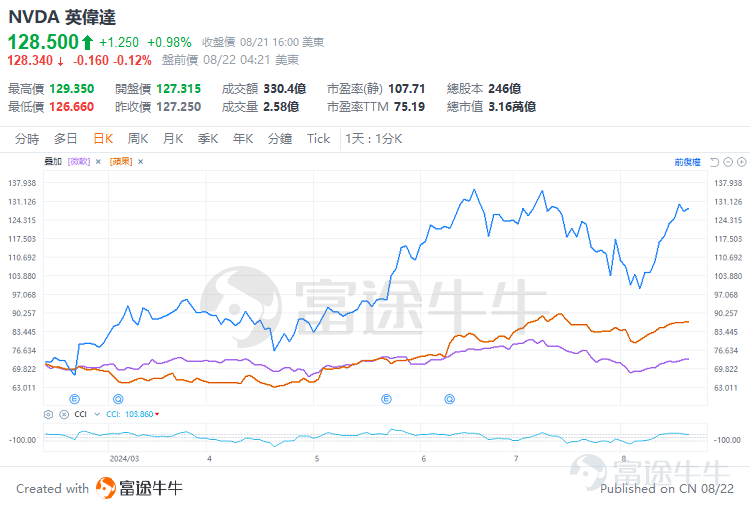
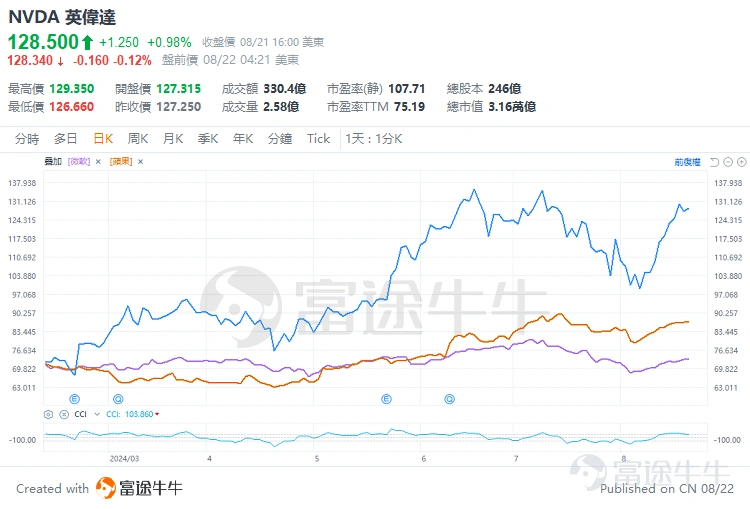
Less than 3 weeks until the sharp decline at the beginning of the month, US stocks once again proved their strong resilience with their strength — the S&P and NASDAQ are about to return to historic highs, so$NVIDIA (NVDA.US)$The leading technology stocks even bottomed out, leading the NASDAQ out of the pullback range at a record speed.
Tech giants are still the main forces in the current round of US stock rebound.According to statistics, the market capitalization of the Big Seven has rebounded more than 1.4 trillion dollars since August 5, almost half of the 3.2 trillion dollar market value increase that rebounded during the $S&P 500 Index (.SPX.US) $ period; among them, Nvidia directly contributed about 7% of the increase.
Although US stocks are booming, there are still some interesting signs worth keeping an eye out for. Leaving aside technology stocks that have been in the spotlight for a long time, some industries that have not been taken seriously for a long time also seem to be “making a fortune.”
Are US stocks “blooming everywhere”? Defensive stocks rarely outperform tech stocks
According to the data,The utilities, daily consumption, healthcare, and defensive stock sectors rarely outperformed the IT sector in January and recorded significant increases. The three major sectors are already at 52-week highs.
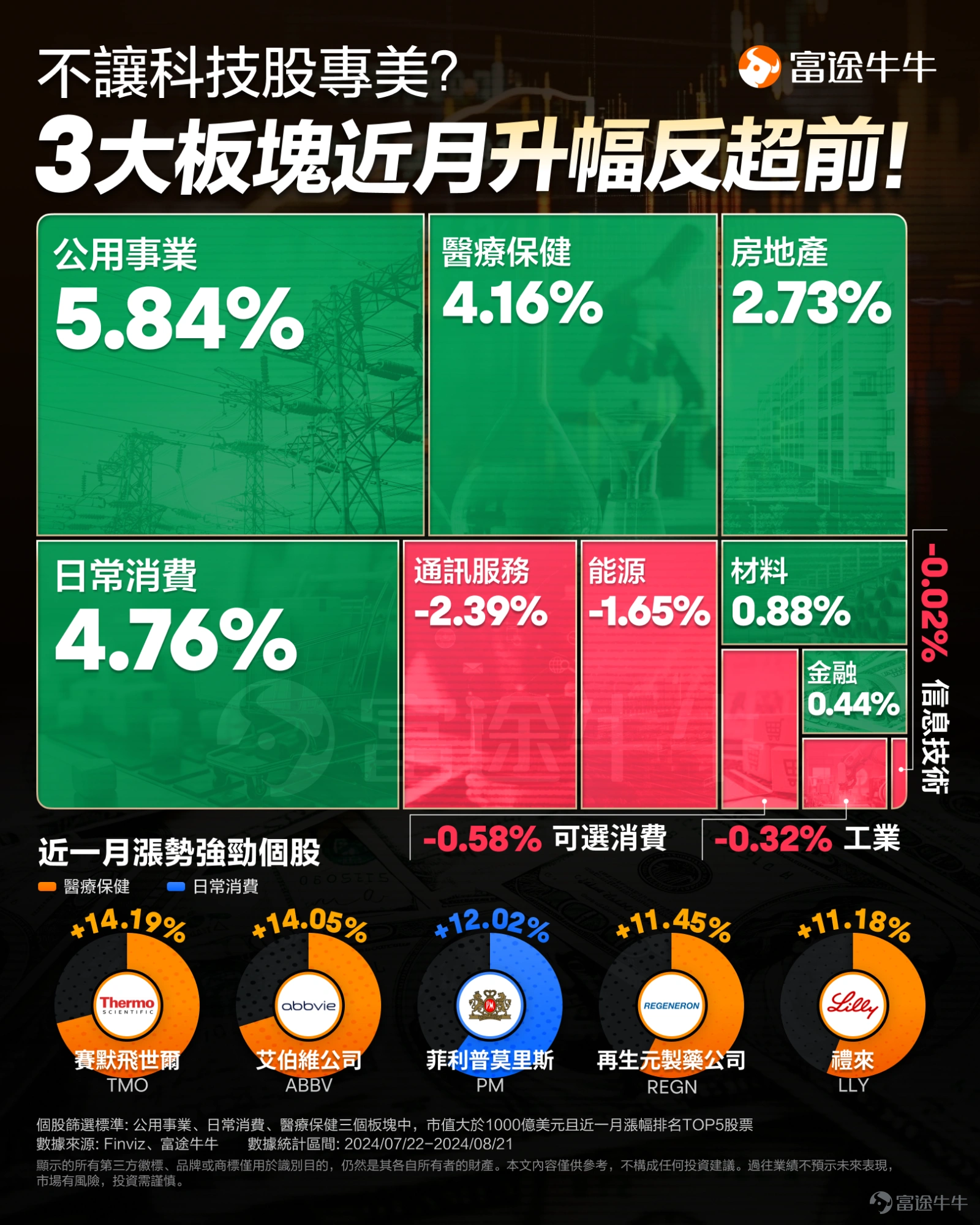
Furthermore, many stocks in the industry have also performed extremely well. Among individual stocks with a market capitalization of 100 billion dollars,$Eli Lilly and Co (LLY.US)$、$Thermo Fisher Scientific (TMO.US)$、$AbbVie (ABBV.US)$、$Regeneron Pharmaceuticals (REGN.US)$Pharmaceutical giants and others all showed strong trends.
It's worth noting that one key indicator —Weighted indices such as the S&P 500 hit new all-time highs on MondayThis indicator is an important indicator for measuring the concentration of market gains.
Robert Pavlik, senior portfolio manager at Dakota Wealth Management, commented: “This shows that the market's rebound is expanding, and investors seem to be looking for opportunities in other areas of the market after the “Big 7” rose sharply earlier this year.”
The excessive concentration of US stocks has always been a sword of Damocles hanging over the heads of market participants, and now it is a pleasure to hear that multiple sectors are “blooming everywhere.” The market generally believes thatBroader earnings growth is a good thing and can provide investors with more opportunitiesIt is no longer limited to just a few technology stocks, thus making the market more balanced, and investors are more likely to switch from large stocks to small-cap stocks with higher growth potential and stocks that have underperformed previously.
From a long-term perspective, if the S&P 500 wants to continue to reach new highs, it will also need more stocks to provide upward momentum.Ryan Detrick of Carson Group said, “Now that the stock market doesn't rely entirely on technology stocks, it's a good sign for investors to see these more cyclical sectors show leadership.”
Who will guide the next wave of gains in US stocks?
According to data from the HSBC report, as of the 19th, about 91% of S&P companies had announced second-quarter results, and the earnings per share growth rate was the highest since 2022. Among them, 78% of companies had earnings per share exceeding expectations and higher than the average of the past five years.
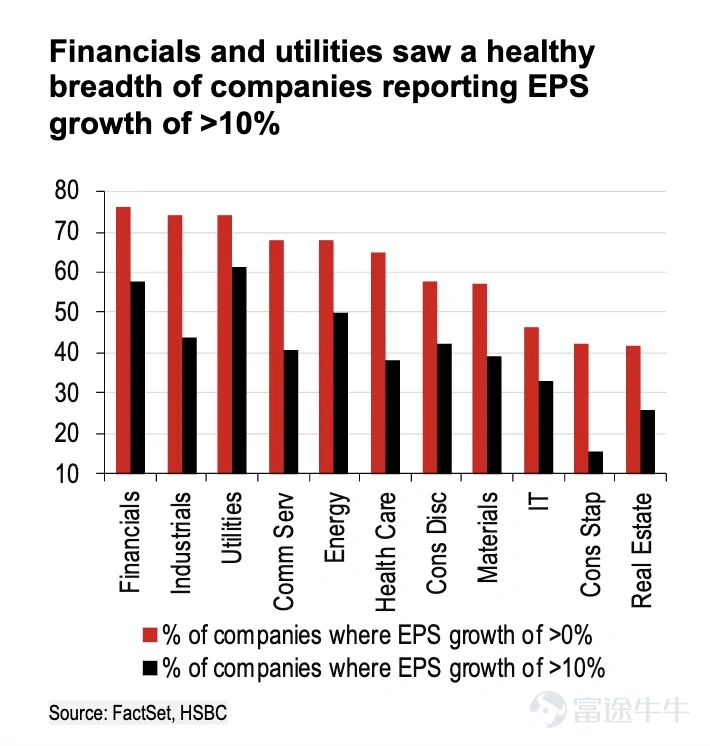
By industry, a large number of companies in the finance and utilities sector had a year-on-year earnings growth rate of more than 10% in the second quarter, far exceeding that of the IT industry.The report said that with the expansion of profit growth, stock gains in various industries are expected to be more balanced in the future.
Craig Sterling, head of stock research at Amundi US, said tech stocks won't be the only winners in the next few months.He believes that if the US is spared from an economic recession, then by next year, the profit growth of the Big Seven will begin to slow down, while the profit growth of other S&P companies will pick up somewhat.
When the technology sector is no longer “outstanding”, which sectors are likely to help the market continue to rise higher? Perhaps there are opportunities in the following sectors:
— utilities
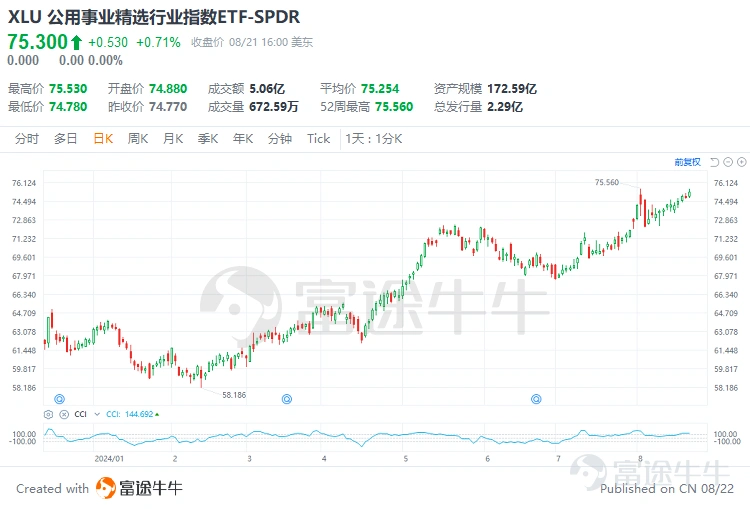
Utility companies provide basic services such as electricity, gas, and water, and demand elasticity is less. According to Morningstar data, almost all utility companies expect annual profit growth of at least 6%, and the industry's 3.6% yield is competitive compared to interest rates.
In the context of the interest-rate cut cycle, utility companies' dividends will also continue to increase. Dividend yields, combined with growth investment opportunities in renewable energy, AI data centers, and grid infrastructure, make the risk-return ratio for these stocks more attractive.
According to the data,$Utilities Select Sector SPDR Fund (XLU.US)$It has risen 8.51% since July, outperforming the S&P 500 and NASDAQ by a large margin.
Additionally, the utilities sector provides investment exposure for a number of blue-chip utility companies with strong balance sheets, such as$Southern (SO.US)$、$Duke Energy (DUK.US)$、$Sempra Energy (SRE.US)$、$American Electric Power (AEP.US)$with$Dominion Resources (D.US)$.
— Necessary consumer goods
Sales of daily necessities are often less affected during economic booms and economic downturns. Such companies generally resist recessions, and the sector is likely to provide strong relative performance in the future as economic uncertainty increases. Furthermore, among essential consumers, due to sticky demand, retailers with lower price free brands tend to have more control over pricing power, so they also have stronger fundamentals.
In terms of size, the largest essential consumer goods ETF is $Consumer Staples Select Sector SPDR Fund (XLP.US)$ Its tracking index is the “Consumer Necessities Selected Industry Index”, which selects people's livelihood necessities that mainly invest in beverages, food, tobacco, and household and personal daily necessities from large US companies in the S&P 500.
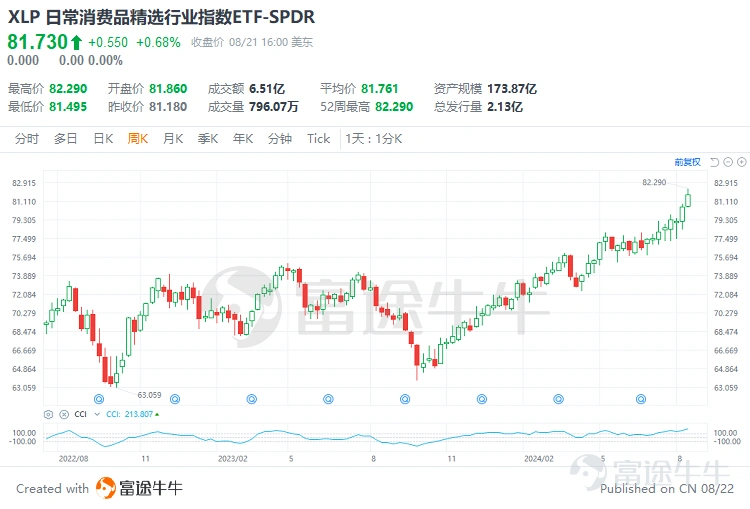
Many stocks in the essential consumer goods sector have already “caught the wind”, beverage giants $Coca-Cola (KO.US)$ Stock prices hit record highs overnight and have risen nearly 20% this year; essential retailers $Walmart (WMT.US)$ The trend is even stronger. It has risen more than 44% this year, and also hit a new high on Wednesday. The market capitalization has now surpassed 600 billion US dollars; another retail giant $Costco (COST.US)$ The performance was also impressive, with an increase of over 34% this year.
— medicare
The healthcare sector generally outperforms the market during periods of economic fluctuation due to its low correlation with the economic cycle. Demand in the sector is very inelastic, and despite many external variables, demand for healthcare products and services remains very strong. Furthermore, most biopharmaceuticals have high gross margins — the potential gross margin of many pharmaceutical companies promoting drugs is as high as 95% or more, reducing the impact of inflation.
More importantly, after interest rate cuts become easier, capital costs will drop, and capital expenditure on pharmaceuticals will increase investment efforts.
Popular and larger healthcare ETFs $The Health Care Select Sector SPDR® Fund (XLV.US)$ , $Vanguard Health Care ETF (VHT.US)$ Both have recorded good gains this year, with both rising by more than 14%.

mooer, do you think tech stocks will continue to soar?
Which industry will relay to lead the new rise in US stocks?
Let's discuss it in the comments section!
Risk Disclaimer: The above content only represents the author's view. It does not represent any position or investment advice of Futu. Futu makes no representation or warranty.Read more


Comments (5)
to post a comment
50
25