GME股東大會重磅嚟啦,掀起Meme股新熱潮?

The roaring kitten will be broadcast live tonight. How can GME trading strategies be implemented?
At 0:00 Beijing time on June 8, the YouTube channel with the screen name “Roaring Kitty” (Roaring Kitty) is scheduled to launch a live video broadcast on Friday (June 7) local time.
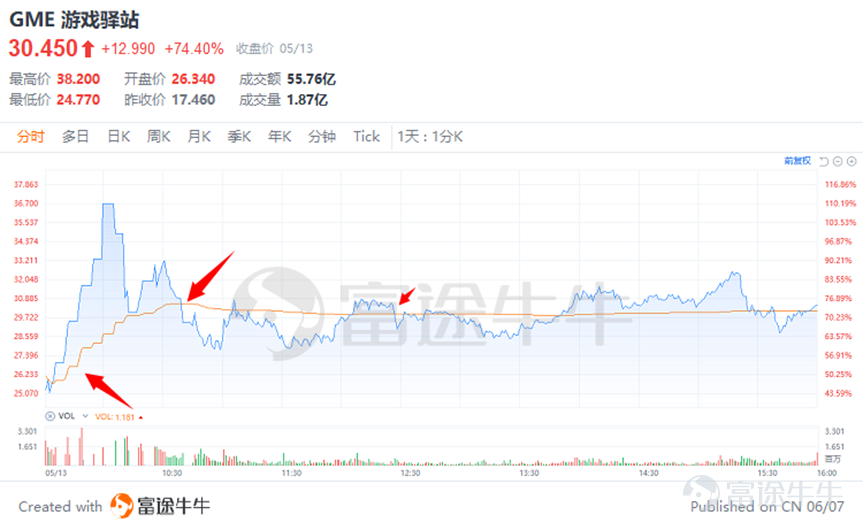
As early as May 13, Gill posted a meme image on X. The picture shows a person leaning forward and getting serious while playing a game, showing a shift from laid-back to focus. Gill posted this time, and some traders think Gill is about to start acting again. It spurred MeME stocks, led by game stations GME and AMC Cinemas, to soar, and began a round of shortfall.
The reason Keith has such a high position in the minds of the public is because he led the “meme stock war” against Wall Street institutions in 2020-2021. At the time, through continuous posting of orders and comments and predictions, Gill promoted the popularity of game stations among retail investors, attracted large amounts of capital to game stations, and caused huge losses to the bears. This war of the century between retail investors and institutions has been hailed by retail investors as the “battle between David and Goliath.”
Obviously, this incident is bound to cause GME's stock price to fluctuate so much. There will be many trading opportunities here, so how can we seize them?
1. “Trade” rather than “long-term hold”
First, we need to understand that this deal is more of a “transaction” rather than a “long-term hold”, so the first rule is “don't fight”. Otherwise, under huge fluctuations, how much money can be earned back to the bottom, and whether this incident will be targeted by regulation and cause a decline, there is huge uncertainty.
2. Make good use of trend tracking strategies
Due to its transactional nature, we know that the most important thing about trading is to “cut off losses and let profits run”, so when we need to evaluate such large fluctuations in history, what indicators are better to use:
(1) The intraday EMA set by the software is not sensitive, and the 10-minute EMA is better
Looking at the intraday moving average situation on May 13, we are actually very insensitive. If we use the intraday moving average, it is easy for us to be forced to break into a high position and cut out of a low level.
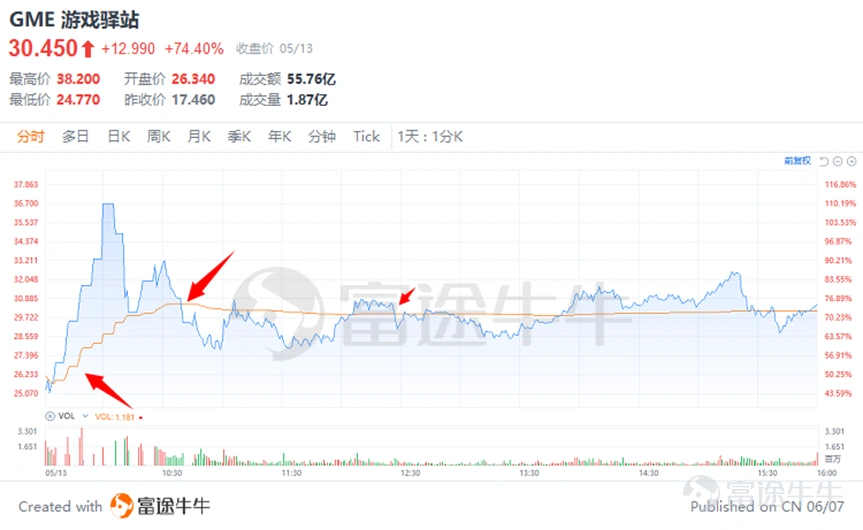
However, if we change our mind, change the timesharing chart to a 1-minute chart, and focus on the blue EMA (10-minute EMA), we found that the 10-minute EMA is a good trend tracking indicator. Although mistakes in the middle may cause selling when the platform consolidates, we can not miss opportunities to rise during huge fluctuations, and at the same time not get bogged down when falling.
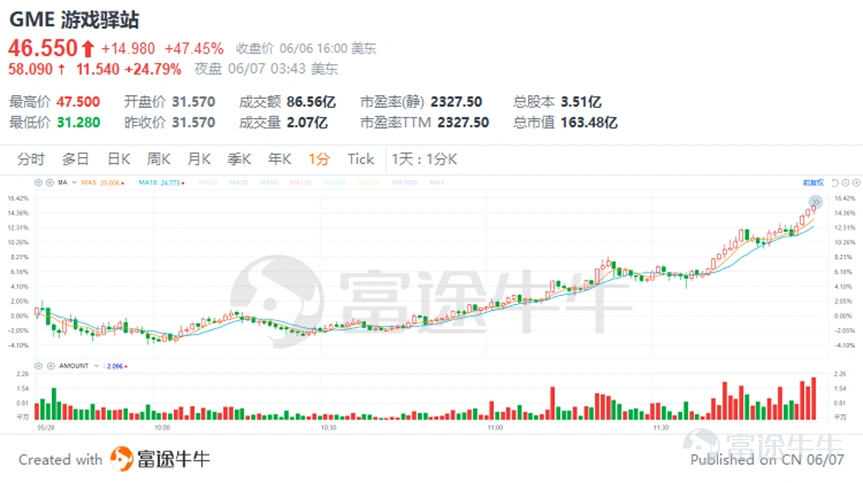
We remember that the trend strategy believes that once the market price forms a trend, whether it rises or falls, it tends to continue for a period of time, so traders should operate in the direction of this trend, but it may not work well in an untrending or volatile market. Obviously, if this live broadcast causes huge fluctuations in stock prices, then it is good to use this strategy.
Other trend indicators can also vary from person to person. Adjust the parameters yourself, such as:
1. Bollinger Bands (BOLs): Use the expansion and contraction of price channels to identify the strength of a trend and potential reversal points.
2. Relative Strength Index (RSI): Although it mainly measures overbought or oversold conditions, it can also help determine the strength of a trend.
3. Deviation rate (BIAS): calculate the gap between the price and the moving average. An increase in positive deviation may indicate a continuation of the upward trend, while an increase in negative deviation may indicate a strengthening downtrend.
3. Options Strategy
Another strategy is the options strategy. What we need to remind users here is that “this strategy requires sufficient capital and can only use very few positions.”
Since the current volatility of GME options is extremely high, buying options needs to bear a large risk of fluctuation attenuation (therefore, it is recommended that if you trade options for a short period of time, it is better to complete them within the day to prevent the next day's downward price fluctuations, causing the volatility to decline after hitting market sentiment), so the bosses use a “shorting volatility strategy”, such as:
“Old Debt King” Bill Gross (Bill Gross) criticized this “gambling” trading craze in a social media post, saying he wouldn't trade these stocks; “Gamestonk” is out of date.
Gross said that his strategy can be simply summed up as “shorting 400% annualized volatility,” that is, he adopted a plan called “selling cross-option” (Straddle). The market highly overestimated the possibility of large fluctuations in GME and AMC stock prices in the short term.
The income from selling intermodal options comes from the option fee collected, or premium. If the price remains between the selling call option and the exercise price of the put option, investors can collect the premium and profit, such as:
It is expected that the stock price will return to 30 US dollars/share after 1 week, then sell the call that expires after 1 week (exercise price is 20 US dollars/share), and sell PUT (exercise price is 20 US dollars/share). If the price rises or falls sharply, it exceeds the execution price of the sold option (increase over 70 US dollars/share+ received option fee, fall below 20 US dollars/share+option fee), and investors will face losses.
Therefore, at this point, it is recommended that users need to “accurately select” the event point where sentiment reaches its climax, and sell broad-span options at the same time. If they need a safer strategy, they should buy another false bullish option to prevent the stock price from exploding themselves after a sharp rise.
Here is a suggestion when implementing an options strategy, first read the investment education course on intermodal strategies before acting:Selling wide-span combinations
So in this live stream, if you want to participate in this deal, there are two ways:
1. Trend tracking strategy, which is more suitable for most people;
2. Shorting the volatility rate. This is only used for investors who have a very large principal and only account for a very small share of their principal using this strategy, and are familiar with options trading;
Risk Disclaimer: The above content only represents the author's view. It does not represent any position or investment advice of Futu. Futu makes no representation or warranty.Read more


Comments
to post a comment
18
17