
English
Back
Open Account
AI概念股業績扎堆來襲!AI狂歡會重啟嗎?

牛牛課堂
joined discussion · Apr 29, 2024 20:08 ·

【Investment Talk】What do you think of Amazon's results? Focus on the base plate, growth points and free cash flow

Among the US tech giants, only Amazon may be the recognized leader in both major industries. As the dual dominant player in the e-commerce and cloud computing industries, Amazon's financial performance has also been a big draw. After the U.S. stock market close on May 2, Amazon will release the latest report. What should Amazon's financial report look like? What are the main points of concern?We look at three main points: retail business base, cloud business and free cash flow. 1. Basic portfolio: retail business Everyone's first impression of Amazon may be that of an e-commerce giant. On the basis of e-commerce, Amazon also derives its business from offline retail, third-party seller services, member subscriptions, e-commerce advertising, etc., all of which can be classified as Amazon's retail business, or Amazon's basic Tray. For the retail business, look primarily at its revenue growth rate and profit rate. In terms of revenue, Amazon's retail revenues have fluctuated considerably in the last two or three years due to the effects of the pandemic and macroeconomic volatility. In the first half of 2020 - 2021, the pandemic stimulated demand for online shopping, coupled with the Fed's easing policy boosted macroeconomic growth, with Amazon's retail segment growing at the highest quarterly rate, or even more than 40%. However, starting in the second half of 2021, as the effects of the pandemic began to subside, economic growth expectations due to the US Federal Reserve rate hike fell, and previous revenue levels were high, Amazon's retail revenue growth began to show a cliff-edge...
Among the US tech giants, only Amazon may be the recognized leader in both major industries. As the dual dominant player in the e-commerce and cloud computing industries, Amazon's financial performance has also been a big draw.
After the U.S. stock market close on May 2, Amazon will release the latest report. What should Amazon's financial report look like? What are the main points of concern?We look at three main points: retail business base, cloud business and free cash flow.
1. Basic portfolio: retail business
Everyone's first impression of Amazon may be that of an e-commerce giant. On the basis of e-commerce, Amazon also derives its business from offline retail, third-party seller services, member subscriptions, e-commerce advertising, etc., all of which can be classified as Amazon's retail business, or Amazon's basic Tray.
Among the US tech giants, only Amazon may be the recognized leader in both major industries. As the dual dominant player in the e-commerce and cloud computing industries, Amazon's financial performance has also been a big draw. After the U.S. stock market close on May 2, Amazon will release the latest report. What should Amazon's financial report look like? What are the main points of concern?We look at three main points: retail business base, cloud business and free cash flow. 1. Basic portfolio: retail business Everyone's first impression of Amazon may be that of an e-commerce giant. On the basis of e-commerce, Amazon also derives its business from offline retail, third-party seller services, member subscriptions, e-commerce advertising, etc., all of which can be classified as Amazon's retail business, or Amazon's basic Tray. For the retail business, look primarily at its revenue growth rate and profit rate. In terms of revenue, Amazon's retail revenues have fluctuated considerably in the last two or three years due to the effects of the pandemic and macroeconomic volatility. In the first half of 2020 - 2021, the pandemic stimulated demand for online shopping, coupled with the Fed's easing policy boosted macroeconomic growth, with Amazon's retail segment growing at the highest quarterly rate, or even more than 40%. However, starting in the second half of 2021, as the effects of the pandemic began to subside, economic growth expectations due to the US Federal Reserve rate hike fell, and previous revenue levels were high, Amazon's retail revenue growth began to show a cliff-edge...
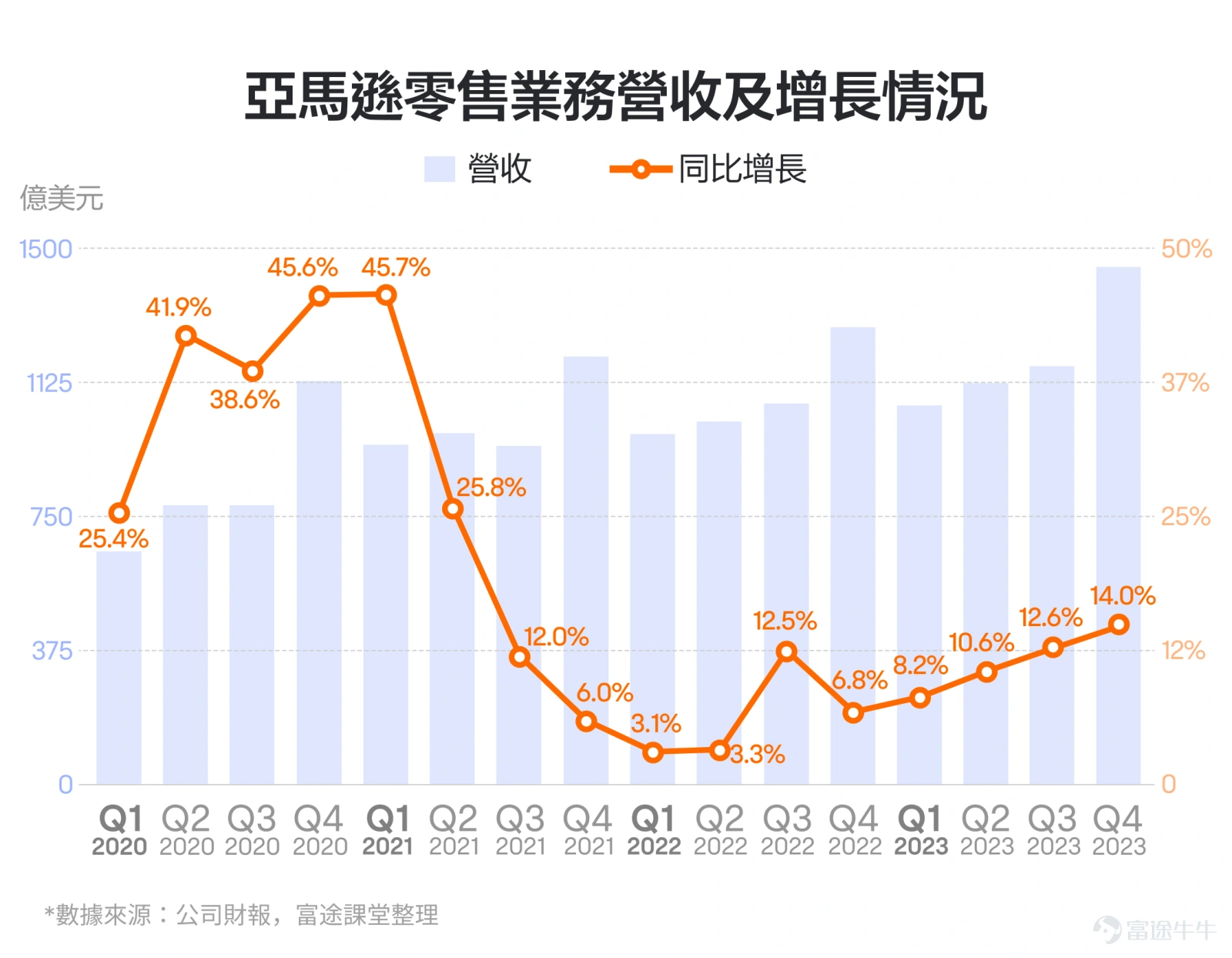
For the retail business, look primarily at its revenue growth rate and profit rate. In terms of revenue, Amazon's retail revenues have fluctuated considerably in the last two or three years due to the effects of the pandemic and macroeconomic volatility.
In the first half of 2020 - 2021, the pandemic stimulated demand for online shopping, coupled with the Fed's easing policy boosted macroeconomic growth, with Amazon's retail segment growing at the highest quarterly rate, or even more than 40%.
Among the US tech giants, only Amazon may be the recognized leader in both major industries. As the dual dominant player in the e-commerce and cloud computing industries, Amazon's financial performance has also been a big draw. After the U.S. stock market close on May 2, Amazon will release the latest report. What should Amazon's financial report look like? What are the main points of concern?We look at three main points: retail business base, cloud business and free cash flow. 1. Basic portfolio: retail business Everyone's first impression of Amazon may be that of an e-commerce giant. On the basis of e-commerce, Amazon also derives its business from offline retail, third-party seller services, member subscriptions, e-commerce advertising, etc., all of which can be classified as Amazon's retail business, or Amazon's basic Tray. For the retail business, look primarily at its revenue growth rate and profit rate. In terms of revenue, Amazon's retail revenues have fluctuated considerably in the last two or three years due to the effects of the pandemic and macroeconomic volatility. In the first half of 2020 - 2021, the pandemic stimulated demand for online shopping, coupled with the Fed's easing policy boosted macroeconomic growth, with Amazon's retail segment growing at the highest quarterly rate, or even more than 40%. However, starting in the second half of 2021, as the effects of the pandemic began to subside, economic growth expectations due to the US Federal Reserve rate hike fell, and previous revenue levels were high, Amazon's retail revenue growth began to show a cliff-edge...
However, starting in the second half of 2021, as the effects of the pandemic began to subside, economic growth expectations brought on by the overarching Fed rate cut, and previous revenues at high levels, Amazon's retail revenue growth began to decline precipitously.
In the first half of 2023, US economic growth is expected to turn around again, coupled with a lower prior revenue base, and Amazon's retail revenue rebounded, returning to double-digit growth in the second quarter of this year.
In 2023Q3-Q4, Amazon's retail revenue grew 12.6% and 14.0%, continuing to grow faster. For the upcoming FY2024 Q1 report, weNeed to watch Amazon's retail revenue growth continue to accelerate the rebound
In terms of profitability, the operating margin trend of Amazon's retail business remains fundamentally consistent with the revenue growth trend. In the first half of 2020-2021, the operating profit margin of the North American retail business exceeded 5%, while the international retail business was profitable.
Starting in the third quarter of 2021, as revenue growth began to decline sharply, scale weakened, with competition from newcomers such as TickTok and Temu, industry volume increased, Amazon's retail operating margin declined in line, and even the North American business posted a loss.
Among the US tech giants, only Amazon may be the recognized leader in both major industries. As the dual dominant player in the e-commerce and cloud computing industries, Amazon's financial performance has also been a big draw. After the U.S. stock market close on May 2, Amazon will release the latest report. What should Amazon's financial report look like? What are the main points of concern?We look at three main points: retail business base, cloud business and free cash flow. 1. Basic portfolio: retail business Everyone's first impression of Amazon may be that of an e-commerce giant. On the basis of e-commerce, Amazon also derives its business from offline retail, third-party seller services, member subscriptions, e-commerce advertising, etc., all of which can be classified as Amazon's retail business, or Amazon's basic Tray. For the retail business, look primarily at its revenue growth rate and profit rate. In terms of revenue, Amazon's retail revenues have fluctuated considerably in the last two or three years due to the effects of the pandemic and macroeconomic volatility. In the first half of 2020 - 2021, the pandemic stimulated demand for online shopping, coupled with the Fed's easing policy boosted macroeconomic growth, with Amazon's retail segment growing at the highest quarterly rate, or even more than 40%. However, starting in the second half of 2021, as the effects of the pandemic began to subside, economic growth expectations due to the US Federal Reserve rate hike fell, and previous revenue levels were high, Amazon's retail revenue growth began to show a cliff-edge...
By 2023, Amazon's operating profit margin began to rebound as economic growth is expected to warm up and Amazon's across-the-board accretion measures, such as cutting staff flow, begin to take effect. The North American retail business margin returned to above 5% in Q4 2023, while the international retail loss margin narrowed significantly.
The growth and earnings performance of the retail business in each quarter of 2023 may be a major reason why Amazon's share price surged more than 80% last year. For the latest financial season, we canKeep an eye on whether Amazon's retail revenue growth will continue to rebound and retail profit margins will continue to improve.
2. Growth Point: AWS Cloud Business
Amazon started power cloud computing in 2006 and now accounts for more than 15% of total revenue from AWS cloud business. In recent years, it has become Amazon's core growth point and primary source of profit.For AWS cloud business, we focus on two main points.
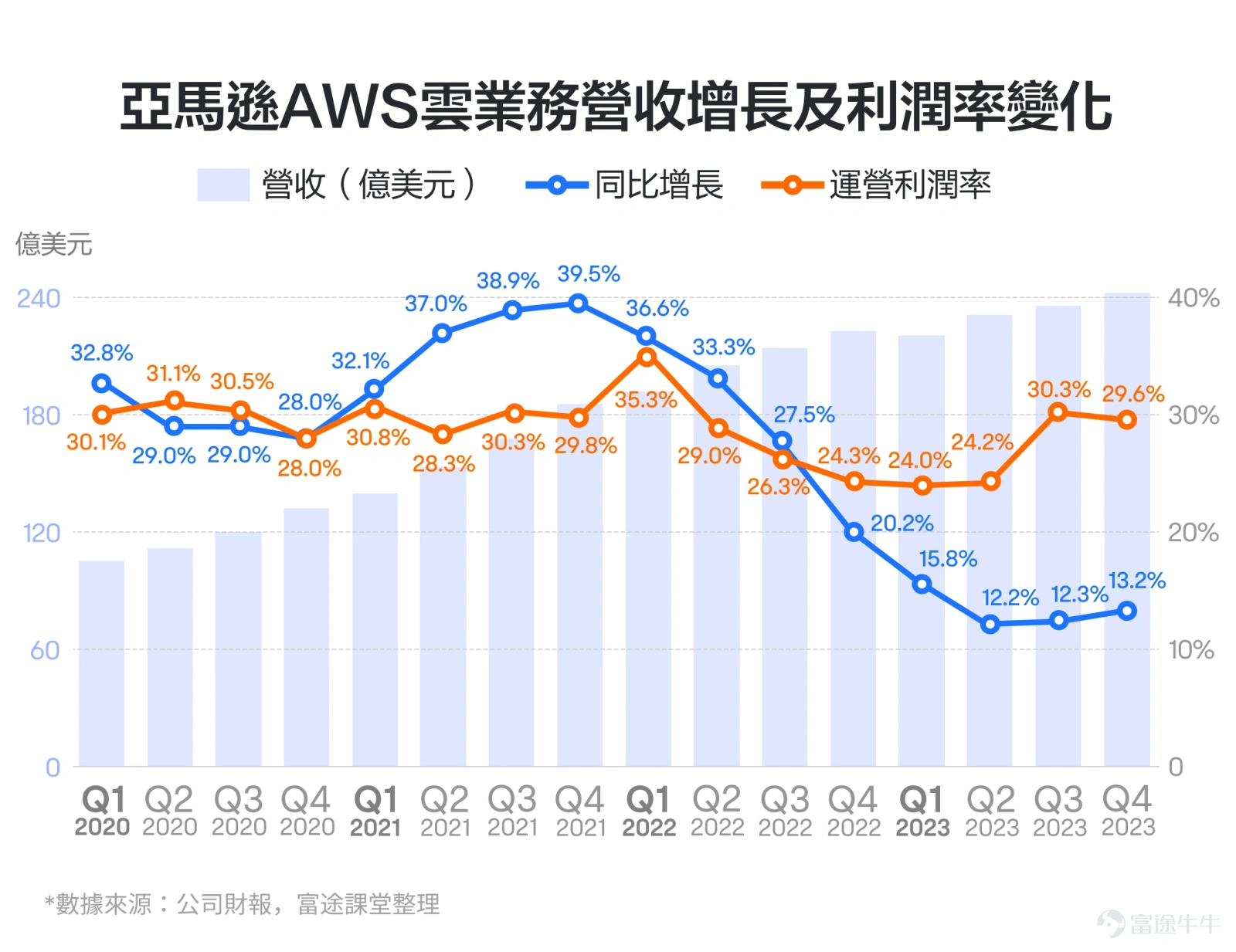
First of all, its revenue growth and operating margin.Starting in the first half of 2022, as a result of corporate IT spending cuts, revenue growth in Amazon's cloud business began to decline steadily, from nearly 40% quarter-on-quarter to 10% year-over-year.
Its operating margin, also from above 30%, slipped to about 24% in 2023Q1. However, in fiscal 2023Q3-Q4, Amazon's cloud revenue growth continued to rebound, with operating margins rising to approximately 30%.
Among the US tech giants, only Amazon may be the recognized leader in both major industries. As the dual dominant player in the e-commerce and cloud computing industries, Amazon's financial performance has also been a big draw. After the U.S. stock market close on May 2, Amazon will release the latest report. What should Amazon's financial report look like? What are the main points of concern?We look at three main points: retail business base, cloud business and free cash flow. 1. Basic portfolio: retail business Everyone's first impression of Amazon may be that of an e-commerce giant. On the basis of e-commerce, Amazon also derives its business from offline retail, third-party seller services, member subscriptions, e-commerce advertising, etc., all of which can be classified as Amazon's retail business, or Amazon's basic Tray. For the retail business, look primarily at its revenue growth rate and profit rate. In terms of revenue, Amazon's retail revenues have fluctuated considerably in the last two or three years due to the effects of the pandemic and macroeconomic volatility. In the first half of 2020 - 2021, the pandemic stimulated demand for online shopping, coupled with the Fed's easing policy boosted macroeconomic growth, with Amazon's retail segment growing at the highest quarterly rate, or even more than 40%. However, starting in the second half of 2021, as the effects of the pandemic began to subside, economic growth expectations due to the US Federal Reserve rate hike fell, and previous revenue levels were high, Amazon's retail revenue growth began to show a cliff-edge...
For the upcoming fiscal quarter, we need to keep an eye on whether Amazon's cloud revenue growth will continue to rebound, as well as whether operating profit margins will continue to grow steadily.
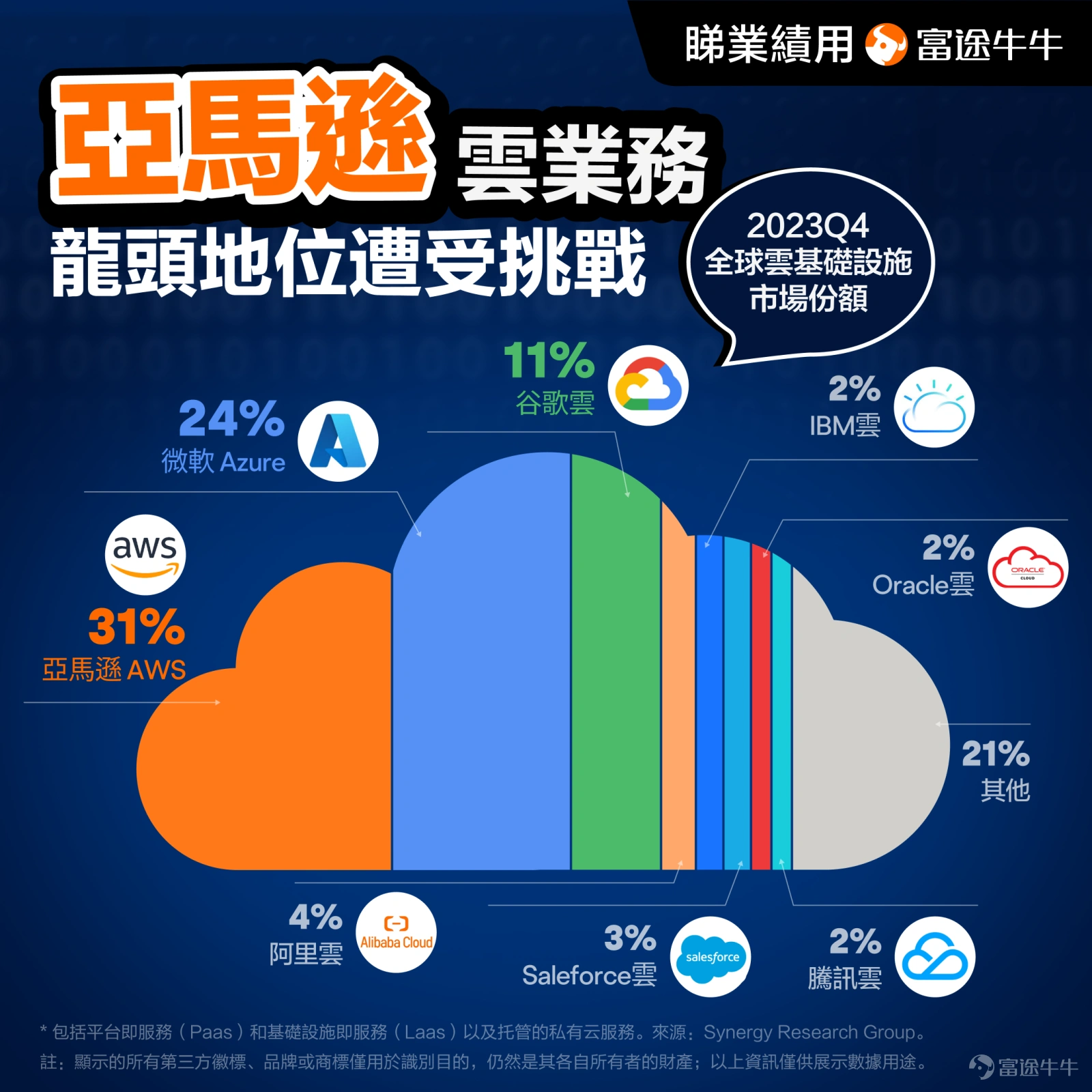
Second, we can keep an eye on changes in the market share of Amazon's cloud business.Amazon is the leader in cloud computing, with more than 30% of the market share. Slowing growth is a common phenomenon in the industry, and Amazon, as the industry leader, has not survived and is well within market expectations.
While enterprise IT spending is cyclical, the shift of traditional IT spending towards cloud computing may be a trend, so the short-term acceleration of the cloud computing industry may not change the logic of its long-term growth.
Among the US tech giants, only Amazon may be the recognized leader in both major industries. As the dual dominant player in the e-commerce and cloud computing industries, Amazon's financial performance has also been a big draw. After the U.S. stock market close on May 2, Amazon will release the latest report. What should Amazon's financial report look like? What are the main points of concern?We look at three main points: retail business base, cloud business and free cash flow. 1. Basic portfolio: retail business Everyone's first impression of Amazon may be that of an e-commerce giant. On the basis of e-commerce, Amazon also derives its business from offline retail, third-party seller services, member subscriptions, e-commerce advertising, etc., all of which can be classified as Amazon's retail business, or Amazon's basic Tray. For the retail business, look primarily at its revenue growth rate and profit rate. In terms of revenue, Amazon's retail revenues have fluctuated considerably in the last two or three years due to the effects of the pandemic and macroeconomic volatility. In the first half of 2020 - 2021, the pandemic stimulated demand for online shopping, coupled with the Fed's easing policy boosted macroeconomic growth, with Amazon's retail segment growing at the highest quarterly rate, or even more than 40%. However, starting in the second half of 2021, as the effects of the pandemic began to subside, economic growth expectations due to the US Federal Reserve rate hike fell, and previous revenue levels were high, Amazon's retail revenue growth began to show a cliff-edge...
With this in mind, we may need to focus more on whether Amazon can stay ahead in market share, thereby consolidating its leading position and competitive advantage.
We've seen Microsoft Azure and Google Cloud grow substantially unmatched over the last two years in players with a market share of more than 10% in the cloud computing industry, both significantly outpacing those of Amazon AWS.
This means that while Amazon remains ahead of market share in the cloud computing industry for the time being, its position as the leader may be challenged as its main competitors are running faster.Looking ahead, we still need to keep an eye on the growth of the top ranked industry leaders and changes in market share to see if Amazon can reverse its relative growth lag.
Among the US tech giants, only Amazon may be the recognized leader in both major industries. As the dual dominant player in the e-commerce and cloud computing industries, Amazon's financial performance has also been a big draw. After the U.S. stock market close on May 2, Amazon will release the latest report. What should Amazon's financial report look like? What are the main points of concern?We look at three main points: retail business base, cloud business and free cash flow. 1. Basic portfolio: retail business Everyone's first impression of Amazon may be that of an e-commerce giant. On the basis of e-commerce, Amazon also derives its business from offline retail, third-party seller services, member subscriptions, e-commerce advertising, etc., all of which can be classified as Amazon's retail business, or Amazon's basic Tray. For the retail business, look primarily at its revenue growth rate and profit rate. In terms of revenue, Amazon's retail revenues have fluctuated considerably in the last two or three years due to the effects of the pandemic and macroeconomic volatility. In the first half of 2020 - 2021, the pandemic stimulated demand for online shopping, coupled with the Fed's easing policy boosted macroeconomic growth, with Amazon's retail segment growing at the highest quarterly rate, or even more than 40%. However, starting in the second half of 2021, as the effects of the pandemic began to subside, economic growth expectations due to the US Federal Reserve rate hike fell, and previous revenue levels were high, Amazon's retail revenue growth began to show a cliff-edge...
3. Long-term basis of stock price: free cash flow
Compared to tech giants like Apple, Microsoft, Google, and more, Amazon has been in a loss-making state for a long time, only reaching $1 billion in massive profits until 2018. At the same time, Amazon rarely carries out actions such as share buybacks and dividends to give back to shareholders.
However, these short plates did not affect the long line gains in Amazon's stock price history, and it ranks among the trillion-dollar giants of the market. Perhaps the big reason behind it is Amazon's long history of high growth and strong free cash flow.
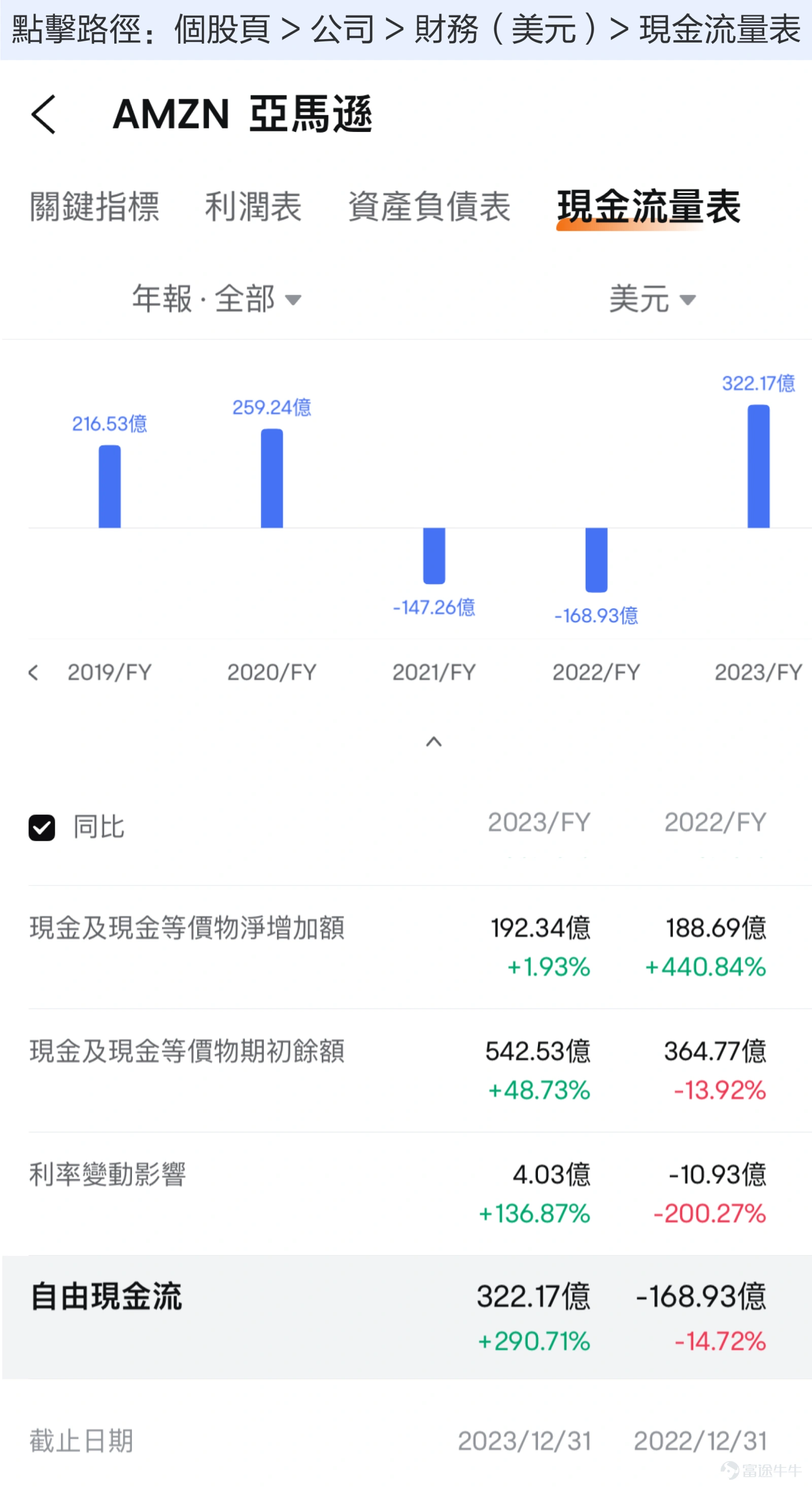
Among other things, Amazon's free cash flow, or license, is a major reason for the market's loss of billions of dollars. Hence, in some market-accepted valuation models, enterprise value is a fall in value that is not forthcoming from the cash flow. In Futubull APP's cash flow table, we can easily see free cash flow data for different financial periods.
Among the US tech giants, only Amazon may be the recognized leader in both major industries. As the dual dominant player in the e-commerce and cloud computing industries, Amazon's financial performance has also been a big draw. After the U.S. stock market close on May 2, Amazon will release the latest report. What should Amazon's financial report look like? What are the main points of concern?We look at three main points: retail business base, cloud business and free cash flow. 1. Basic portfolio: retail business Everyone's first impression of Amazon may be that of an e-commerce giant. On the basis of e-commerce, Amazon also derives its business from offline retail, third-party seller services, member subscriptions, e-commerce advertising, etc., all of which can be classified as Amazon's retail business, or Amazon's basic Tray. For the retail business, look primarily at its revenue growth rate and profit rate. In terms of revenue, Amazon's retail revenues have fluctuated considerably in the last two or three years due to the effects of the pandemic and macroeconomic volatility. In the first half of 2020 - 2021, the pandemic stimulated demand for online shopping, coupled with the Fed's easing policy boosted macroeconomic growth, with Amazon's retail segment growing at the highest quarterly rate, or even more than 40%. However, starting in the second half of 2021, as the effects of the pandemic began to subside, economic growth expectations due to the US Federal Reserve rate hike fell, and previous revenue levels were high, Amazon's retail revenue growth began to show a cliff-edge...
For example, during the decade 2011-2020, Amazon's net profit was very volatile ahead of time, but its free cash flow has been positive and exceeds its net profit figures every year. The cumulative net profit for the period was about $500 billion, but the cumulative free cash flow was close to $1 trillion.
Among the US tech giants, only Amazon may be the recognized leader in both major industries. As the dual dominant player in the e-commerce and cloud computing industries, Amazon's financial performance has also been a big draw. After the U.S. stock market close on May 2, Amazon will release the latest report. What should Amazon's financial report look like? What are the main points of concern?We look at three main points: retail business base, cloud business and free cash flow. 1. Basic portfolio: retail business Everyone's first impression of Amazon may be that of an e-commerce giant. On the basis of e-commerce, Amazon also derives its business from offline retail, third-party seller services, member subscriptions, e-commerce advertising, etc., all of which can be classified as Amazon's retail business, or Amazon's basic Tray. For the retail business, look primarily at its revenue growth rate and profit rate. In terms of revenue, Amazon's retail revenues have fluctuated considerably in the last two or three years due to the effects of the pandemic and macroeconomic volatility. In the first half of 2020 - 2021, the pandemic stimulated demand for online shopping, coupled with the Fed's easing policy boosted macroeconomic growth, with Amazon's retail segment growing at the highest quarterly rate, or even more than 40%. However, starting in the second half of 2021, as the effects of the pandemic began to subside, economic growth expectations due to the US Federal Reserve rate hike fell, and previous revenue levels were high, Amazon's retail revenue growth began to show a cliff-edge...
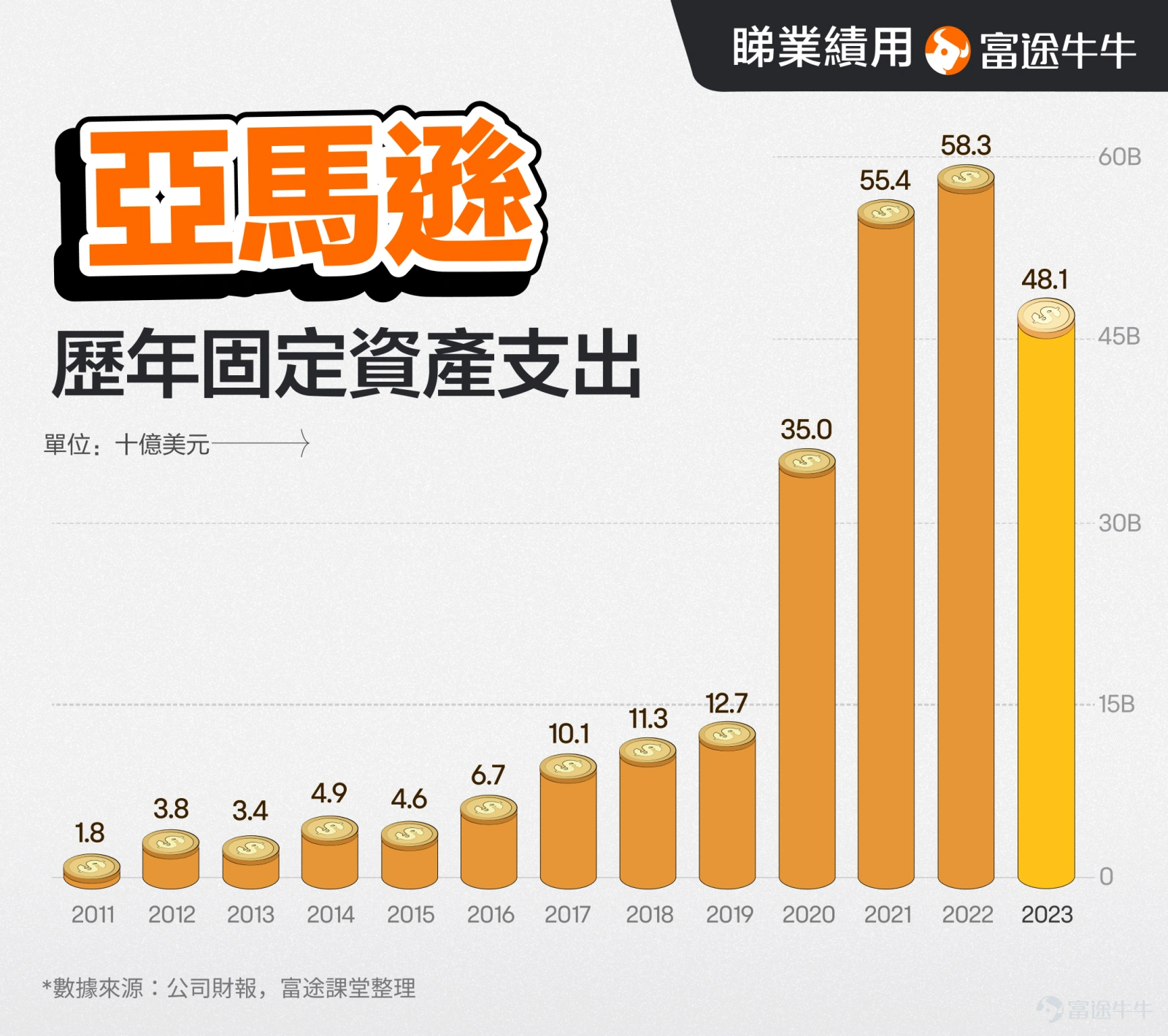
But starting in 2021, Amazon's free cash flow went into a downward spiral, going negative by more than $1 billion for two consecutive years, which may be a major reason why its stock price outperformed other tech giants in 2021 and even showed up in 2022.
Amazon has seen a 180-degree turn in free cash flow, with a significant increase in fixed asset spending. Maybe it was the shakeup of TickTok, Temu that led to an increase in volume within the industry, or maybe Amazon itself is feeling the pressure to grow, and Amazon has increased its investments in logistics infrastructure and more over the past two years to improve the user experience and strengthen its competitive edge.
With real gold and silver smashed, Amazon's revenue did not continue its previous high growth, but instead its fixed asset spending, which jumped from the previous billion level to over $500 billion, thus putting huge pressure on free cash flow.
Among the US tech giants, only Amazon may be the recognized leader in both major industries. As the dual dominant player in the e-commerce and cloud computing industries, Amazon's financial performance has also been a big draw. After the U.S. stock market close on May 2, Amazon will release the latest report. What should Amazon's financial report look like? What are the main points of concern?We look at three main points: retail business base, cloud business and free cash flow. 1. Basic portfolio: retail business Everyone's first impression of Amazon may be that of an e-commerce giant. On the basis of e-commerce, Amazon also derives its business from offline retail, third-party seller services, member subscriptions, e-commerce advertising, etc., all of which can be classified as Amazon's retail business, or Amazon's basic Tray. For the retail business, look primarily at its revenue growth rate and profit rate. In terms of revenue, Amazon's retail revenues have fluctuated considerably in the last two or three years due to the effects of the pandemic and macroeconomic volatility. In the first half of 2020 - 2021, the pandemic stimulated demand for online shopping, coupled with the Fed's easing policy boosted macroeconomic growth, with Amazon's retail segment growing at the highest quarterly rate, or even more than 40%. However, starting in the second half of 2021, as the effects of the pandemic began to subside, economic growth expectations due to the US Federal Reserve rate hike fell, and previous revenue levels were high, Amazon's retail revenue growth began to show a cliff-edge...
The good news is that Amazon's fixed asset investment in 2023 declined relatively, and free cash flow improved significantly to more than $300 billion.
So for Amazon's future earnings, we still need to keep an eye on its fixed asset investment situation and the improvement in free cash flow, as this is an important underpinning of the long line logic of Amazon's historical share price.
Finally to summarize:
The retail business is Amazon's core business, and we need to keep an eye on whether its revenue growth and operating margin will continue to improve.
The AWS cloud business is Amazon's core growth point and source of profit, and we need to keep an eye on whether its revenue growth and profit rates are gradually stabilizing.
Free cash flow is an important foundation of Amazon's historical stock price long line logic, and we need to keep an eye on whether its free cash flow will continue to improve in future financial quarters.
Among the US tech giants, only Amazon may be the recognized leader in both major industries. As the dual dominant player in the e-commerce and cloud computing industries, Amazon's financial performance has also been a big draw. After the U.S. stock market close on May 2, Amazon will release the latest report. What should Amazon's financial report look like? What are the main points of concern?We look at three main points: retail business base, cloud business and free cash flow. 1. Basic portfolio: retail business Everyone's first impression of Amazon may be that of an e-commerce giant. On the basis of e-commerce, Amazon also derives its business from offline retail, third-party seller services, member subscriptions, e-commerce advertising, etc., all of which can be classified as Amazon's retail business, or Amazon's basic Tray. For the retail business, look primarily at its revenue growth rate and profit rate. In terms of revenue, Amazon's retail revenues have fluctuated considerably in the last two or three years due to the effects of the pandemic and macroeconomic volatility. In the first half of 2020 - 2021, the pandemic stimulated demand for online shopping, coupled with the Fed's easing policy boosted macroeconomic growth, with Amazon's retail segment growing at the highest quarterly rate, or even more than 40%. However, starting in the second half of 2021, as the effects of the pandemic began to subside, economic growth expectations due to the US Federal Reserve rate hike fell, and previous revenue levels were high, Amazon's retail revenue growth began to show a cliff-edge...
Finally bring a blessing to the big family! Many listed companies will publish performance reports soon, so that more mooers will share their investment activities during the performance period, so that the money will be effective! Send youUS$15 Commission Card+HK$100 Stock Cash VoucherHelp you start investing big! NEW GUEST RETREATSUp To $2100 RewardClick here for the linkOr the picture below, you can get it >>
Among the US tech giants, only Amazon may be the recognized leader in both major industries. As the dual dominant player in the e-commerce and cloud computing industries, Amazon's financial performance has also been a big draw. After the U.S. stock market close on May 2, Amazon will release the latest report. What should Amazon's financial report look like? What are the main points of concern?We look at three main points: retail business base, cloud business and free cash flow. 1. Basic portfolio: retail business Everyone's first impression of Amazon may be that of an e-commerce giant. On the basis of e-commerce, Amazon also derives its business from offline retail, third-party seller services, member subscriptions, e-commerce advertising, etc., all of which can be classified as Amazon's retail business, or Amazon's basic Tray. For the retail business, look primarily at its revenue growth rate and profit rate. In terms of revenue, Amazon's retail revenues have fluctuated considerably in the last two or three years due to the effects of the pandemic and macroeconomic volatility. In the first half of 2020 - 2021, the pandemic stimulated demand for online shopping, coupled with the Fed's easing policy boosted macroeconomic growth, with Amazon's retail segment growing at the highest quarterly rate, or even more than 40%. However, starting in the second half of 2021, as the effects of the pandemic began to subside, economic growth expectations due to the US Federal Reserve rate hike fell, and previous revenue levels were high, Amazon's retail revenue growth began to show a cliff-edge...
*Event Target: A special number of registered users in the Futu APP in Hong Kong over the year who have not opened a securities account will participate.
Risk Disclaimer: The above content only represents the author's view. It does not represent any position or investment advice of Futu. Futu makes no representation or warranty.Read more
Thumbs Up
15
Heart
1
Emm
1
Respect
1
70K Views
Report
Comments
Write a Comment...
18
18