
In a turbulent situation, how to diversify investments is a long-term problem.
The recent changes on the world stage are difficult to depict in words. The Middle East conflict continues to escalate, and the humanitarian crisis in the Horn of Africa deepens. The left-wing revival in Latin America has encountered obstacles, while the right-wing remains steadfast. The economic and security situations in Asia are intertwined, and the Russia-Ukraine war is difficult to resolve. Global trade faces headwinds, inflation remains high, and supply chain challenges await solutions.
For investors, with increasing volatility, how to pursue portfolio security is a long-term issue. This article will conduct some research on asset allocation.
I. Global allocation is essential.
From an individual perspective, our own wealth is like a small boat. Placing a single bet on assets in a specific region may carry significant risks. Looking at the history of the rise and fall of empires and the evolution of trade networks, modern history has witnessed the rise and fall of multiple empires, such as Spain, the Netherlands, England, and later the United States. Their positions in the global trade system have undergone significant changes.
Spain became a wealthy empire through the extraction of gold and silver from the New World, but its economic power was gradually replaced by the Netherlands, which became the "carriage driver" on the seas with its strong maritime transportation capabilities and financial innovation.
Britain, through the Industrial Revolution and global colonial expansion, established a vast empire system and became the "empire on which the sun never sets."
The United States grew into the global economic hegemon in the late 19th to early 20th century.
These changes mean that the global wealth and economic growth momentum are shifting between different countries and regions. If investors can adjust their asset allocation in a timely manner and follow the change of economic focus, they will be able to capture emerging growth opportunities and avoid over-reliance on a single country or region; otherwise, the decline of a single region will have more serious negative effects on individual wealth from a longer perspective.
So from a global investment perspective, what layouts can we have through ETFs?
2. Dual Growth and Safety: Invest in the S&P 500 index and high dividend ETF.
As the stock god Buffett has emphasized many times, "I think, for most people, the best way is to own an S&P 500 index fund." The S&P 500 has performed excellently in countless turmoils and changes in the past, according to statistics. The S&P 500 index has been profitable every 20 years in history. Its 20-year average minimum return rate is 5.62%, and its 25-year average minimum return rate is 9.07%, and as the investment time extends, the actual yield will be closer to the average value. From January 1928 to December 2023, a total of 1152 months, it achieved a positive return in 682 months.
Investing in the S&P 500 helps investors greatly minimize various market risks, and this passive investment is very suitable for ordinary people. It not only saves time for researching individual stocks but also helps investors to sustain profits.Well-known S&P 500 ETFs in the U.S. market include:
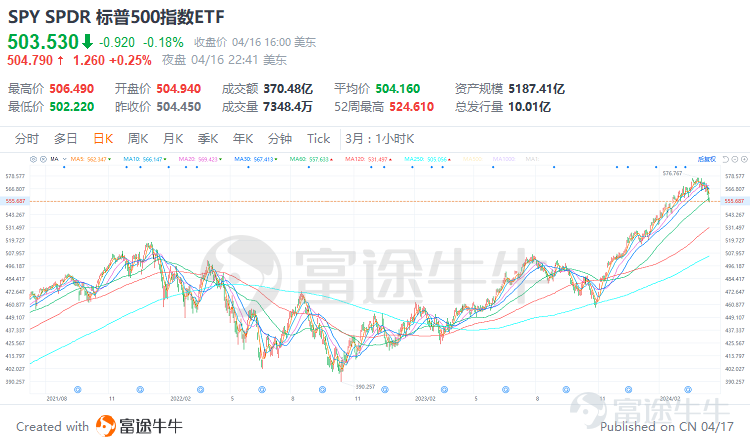
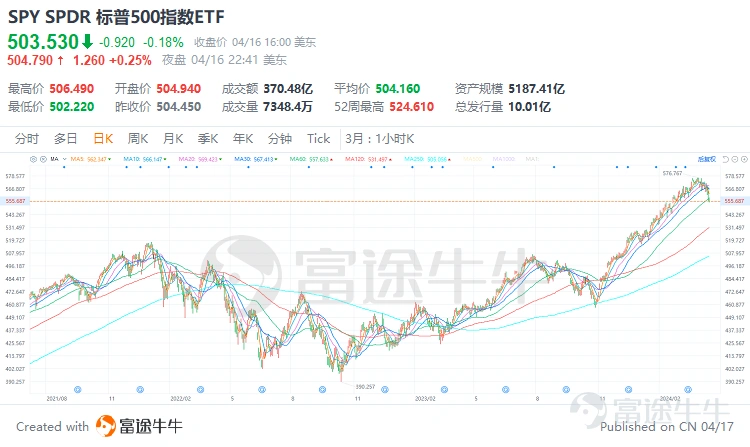
The first and one of the most famous S&P 500 index ETFs on the market. Managed by State Street Global Advisors, it was launched in 1993. It is not only one of the largest exchange-traded funds globally, but also a widely used investment tool for U.S. large-cap stocks. SPY has extremely high liquidity, with huge daily trading volume, making it easy for investors to buy or sell. The bid/ask spread is typically small, particularly advantageous for large traders.
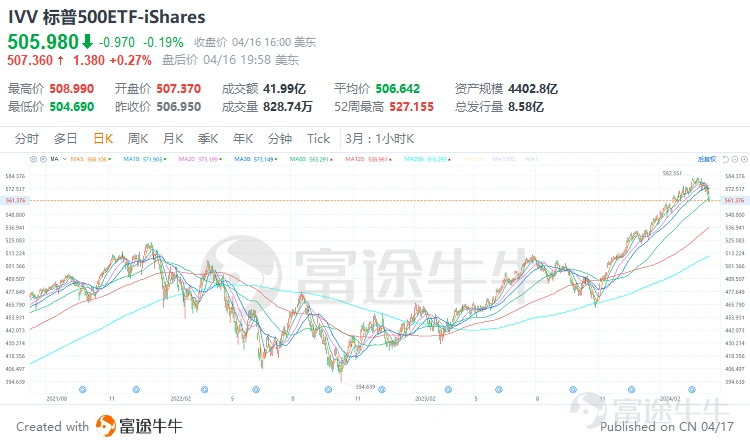
IVV is an ETF issued by iShares under BlackRock, which aims to track the performance of the S&P 500 index. IVV's expense ratio is lower than SPY, at around 0.03%. Although IVV's liquidity is not as high as SPY, it still has sufficient average daily trading volume to meet the normal trading needs of most investors.
In addition to investing in S&P 500 ETFs, a high dividend strategy is also the best strategy for stable income in a turbulent macro environment, especially in the context of high interest rates. If you want to pursue higher dividend returns, you can also pay attention to the following ETFs:
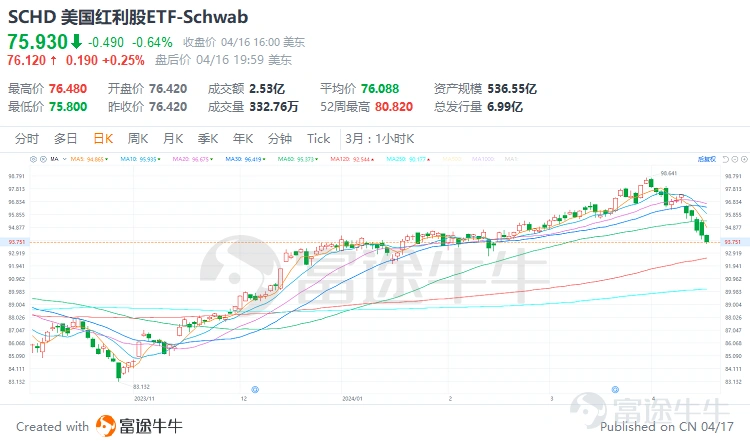
This ETF tracks the Dow Jones Select Dividend Index, which consists of companies that have paid dividends for at least 10 consecutive years and have high dividend quality scores based on factors such as earnings growth and return on capital. This means that SCHD invests in some of the most profitable and stable dividend payers in the market, such as Home Depot, Johnson & Johnson, and Microsoft. The dividend yield of this ETF is 3.52% and the assets under management are $53.65 billion, making it an excellent choice for investors seeking stable and growing dividend income.
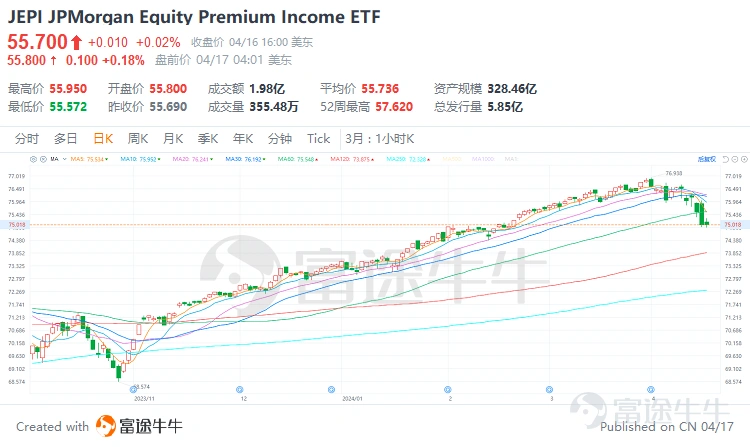
This is a Covered Call ETF issued by J.P. Morgan. Unlike traditional ETFs, Covered Call ETFs not only hold a basket of stocks corresponding to their tracked index, but also sell call options on the same underlying asset to earn option premiums. This investment approach is suitable for assets that maintain a stable growth rate, as holders can earn option premiums in addition to the returns from holding the stocks in the ETF.
JEPI tracks companies in the S&P 500 and provides investors with incremental income through the option premiums earned from selling covered call options. It aims to provide monthly distributable income and exposure to the stock market with lower volatility. According to data provided by J.P. Morgan, this ETF:
Offers an attractive 12-month trailing dividend yield of 8.50% and a 30-day total return of 7.04%;
Ranks in the top one-third in terms of performance among similar products;
Compared to peers, the price is competitive, with a management fee of only 0.35%.
Third, it is an excellent asset for hedging: investing in precious metals and other commodity assets.
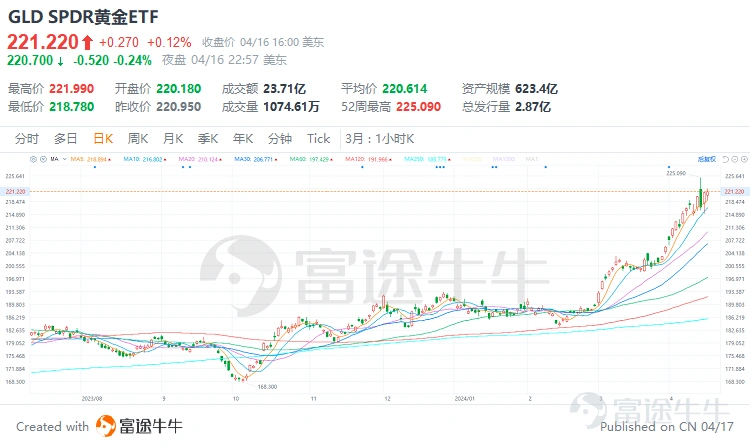
As the saying goes, in turbulent times, buy gold. As a traditional safe haven asset, gold is often sought after in financial market turmoil, currency depreciation, and escalating inflation. Its non-credit nature allows it to be independent of the financial system and provides a way to hedge risk. In addition, gold has repeatedly proven its ability to maintain value in times of crisis.
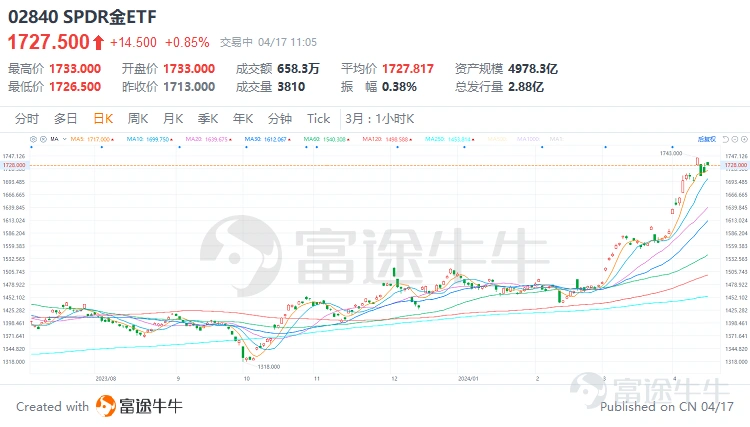
Looking at the current world economic and political situation, both the tense geopolitical situation and the massive liquidity injection by central banks worldwide have become catalysts for the soaring price of gold since the beginning of the year.
ETFs provide investors with the opportunity to participate in the gold market without directly owning gold. With its high transparency, strong liquidity, and convenient operations, gold ETFs have gradually become important tools for investors to allocate gold assets. There are already many mature gold ETF products in the Hong Kong and U.S. stock markets, such as:
This is the world's largest gold ETF, providing investors with the opportunity to track the spot price of gold.
This is a gold ETF listed on the Hong Kong Stock Exchange, and it is the sister fund of GLD in the US stock market, aiming to track the price of gold.
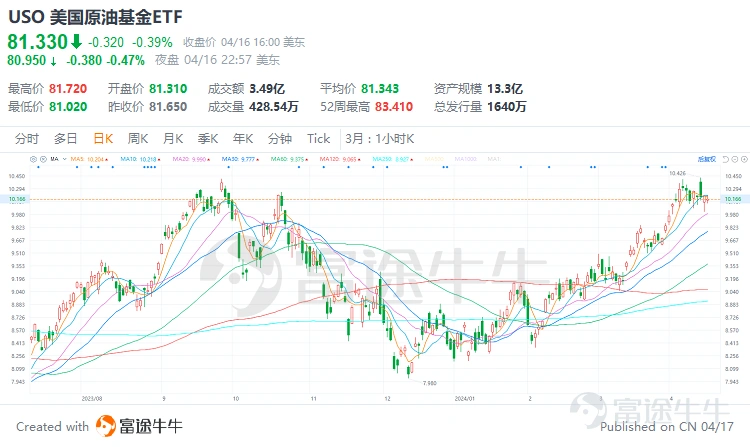
At the same time, commodities such as crude oil are also worth paying attention to. Energy prices may rise due to changes in demand expectations caused by supply interruptions, increased transportation risks, or geopolitical tensions, such as the recent escalation of the Middle East conflict triggering an increase in crude oil prices. There are also some crude oil ETF products in the market, as an important component of the commodity category:
Full name: United States Oil Fund, is an ETF that tracks the price of WTI crude oil. The ETF tracks the fluctuation of WTI crude oil prices by investing in crude oil futures contracts. The advantage of USO is that it allows investors to participate in the oil market investment at a relatively low cost, without directly purchasing crude oil. In addition, USO is a highly liquid ETF, making it easy to buy and sell. However, USO has disadvantages such as rolling costs associated with futures contracts, market risks, and so on.
ETF full name: ProShares UltraShort Bloomberg Crude Oil, is an ETF that is bearish on crude oil, aiming to provide reverse investment in WTI crude oil prices. The ETF achieves its goal by investing in oil price futures and other derivatives. The advantage of SCO is that it can provide protection against falling oil prices, making it an investment tool in the declining oil market. However, SCO also carries high risks associated with short-term trading and speculation.

The above two crude oil ETFs correspond to positive and negative investments in crude oil prices respectively. Everyone can carefully choose based on the economic and political situation and market expectations for price movements.
Steady happiness: Investing in bonds and other fixed income assets.
At this time point in 2024, the market is facing turbulence caused by factors such as expectations of economic recession, escalating geopolitical conflicts, and increased financial system risks. For investors who value the safety and liquidity of their assets, increasing allocation to high-quality sovereign bonds such as government bonds of highly credit-rated countries is also a good choice. Currently, the Federal Reserve is expected to maintain high interest rates, possibly exceeding market expectations. In this situation, high-yield assets such as government bonds become the target for investors to pursue.
U.S. Treasury bonds are considered the safest bonds in the world because the U.S. is the largest economy globally. Unless the U.S. declares bankruptcy, U.S. Treasury bonds are generally regarded as "absolutely default-free" bonds. U.S. Treasury bonds can be divided into short-term bonds (1-3 years), medium-term bonds (4-10 years), and long-term bonds (10 years or more). The longer the term of the bond, the more sensitive it is to changes in interest rates, theoretically resulting in higher yields. On the other hand, shorter-term bonds tend to have lower yields.
Therefore, investing in U.S. Treasury bond ETFs not only allows investors to obtain stable dividends that are close to risk-free interest rates but also enables them to achieve higher returns when interest rates decline.
Below are three U.S. Treasury bond ETFs classified according to their time horizon. We recommend beginners to start with these ETFs.

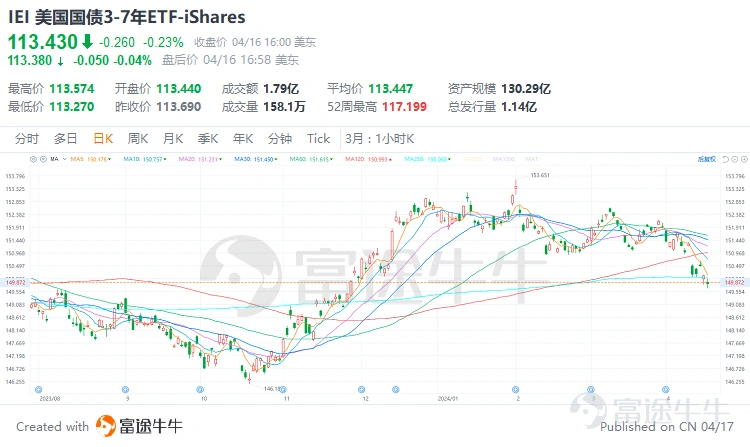
TLT became the most popular U.S. stock ETF in 2023, and many investors participate in the investment of U.S. Treasury bonds through this ETF product.
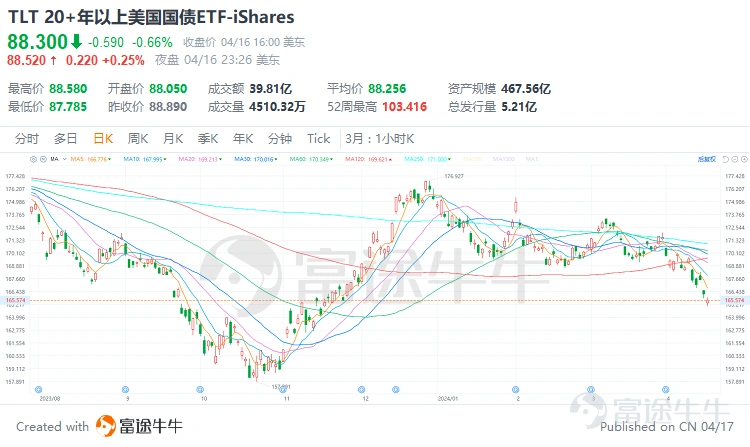
In response to the current lack of signs of improvement in inflation, there is also a specific type of ETF in the U.S. stock market for investors to choose from to reduce the losses caused by inflation - inflation-protected bonds, also known as TIPS, are a special type of U.S. Treasury bond whose principal and interest adjust with changes in the inflation rate.
The principal value of TIPS adjusts based on the inflation rate, and its principal value changes according to the Consumer Price Index, which serves as a standard measure of inflation. This means that if the inflation rate rises, the principal value of the bond will also increase, and vice versa. In addition, the interest on the bond also adjusts with changes in the inflation rate. This way, investors can ensure that the value of their investment is not affected by inflation.
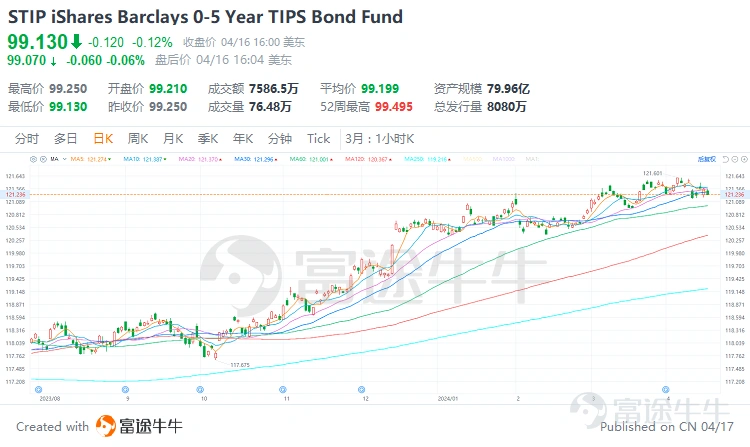
The yield on TIPS is usually lower than that of regular bonds because they provide additional protection. However, if the inflation rate rises, the yield of TIPS will also increase, meaning that investors can achieve higher returns. Here is a recommendation for the best-performing TIPS ETF product.
The STIP aims to track the Bloomberg USA Treasury Inflation Protected Securities (TIPS) 0-5 year index, which consists of TIPS with a remaining term of less than five years. The ETF provides investors with short-term TIPS exposure. The shorter maturity of these securities means lower risk for investors, but also lower yield compared to long-term securities. The fund allocates approximately 38.0% of total assets to TIPS with remaining terms between 3-5 years. The second largest investment proportion is approximately 22.5%, directed towards TIPS with remaining terms between 2-3 years.
V. Alternative investments such as safe-haven currencies, etc.
"Safe-haven currencies" refer to achieving the effect of avoiding market risks by holding the most liquid sovereign currencies. When the market is in turmoil, these currencies are often seen as safe havens due to the stability of their national economies, strong financial systems, and significant positions in international trade. The most stable and reassuring currency among them is the US dollar. The safe-haven properties of the US dollar stem from its strong foundation, including but not limited to the powerful US economy, sound financial market system, highly liquid bond market, and its core pricing role in global commodity trading. Especially when market risk appetite declines and uncertainty increases, the US dollar often demonstrates outstanding attractiveness, attracting global capital inflows and highlighting its key role as a safe-haven asset.
The following is an introduction to a USD-denominated ETF product:
This ETF aims to track and provide returns based on the performance of the US dollar index, mainly through futures contracts and other derivative tools to invest in the value changes of the US dollar relative to a basket of major international currencies. The US dollar index measures the comprehensive value of the US dollar relative to several major trading partner countries' currencies. It usually includes currencies such as the euro, yen, pound, Canadian dollar, Swedish krona, and Swiss franc. UUP, as a financial instrument, allows investors to indirectly participate in the investment in the US dollar relative to these currencies without directly trading in the forex market. Due to its design to reflect exposure to a strong US dollar, when the US dollar appreciates against other currencies, the value of UUP theoretically should rise; conversely, if the US dollar depreciates, the value of UUP may decline.

In the face of future uncertainty and market volatility, the core value of diversified investments lies in their long-term stability and resilience. It requires investors to have patience and foresight, not to be swayed by short-term fluctuations, but to adhere to investment principles and continuously optimize and balance investment portfolios.
In today's intertwined globalization and digitization, every investor should take advantage of diversification strategies to build a solid investment fortress for themselves. Although we cannot predict every market swing, through scientifically and reasonably diversified investments and effective use of various investment tools, we can navigate through turbulent times and even expect to achieve steady and sustainable investment returns after the storm.
Risk Disclaimer: The above content only represents the author's view. It does not represent any position or investment advice of Futu. Futu makes no representation or warranty.Read more


Comments (2)
to post a comment
46
79