
美股指數齊創新高!減息預期下有咩機會?

Futu Research | Expect the Federal Reserve to cut interest rates, won't you buy it? Just buy the S&P Index!
At 2 a.m. on March 21, Beijing time, the Federal Reserve announced that it will continue to keep the federal funds rate unchanged in the range of 5.25% to 5.5%. This is the fifth time in a row since September last year that interest rates have remained stable. This decision is in line with general market expectations. At the press conference that followed, Federal Reserve Chairman Powell sent a mild signal, suggesting that current interest rates may be close to cyclical highs, and believes that it is appropriate to start cutting interest rates at some point during the year, even though the current level of inflation is still high.
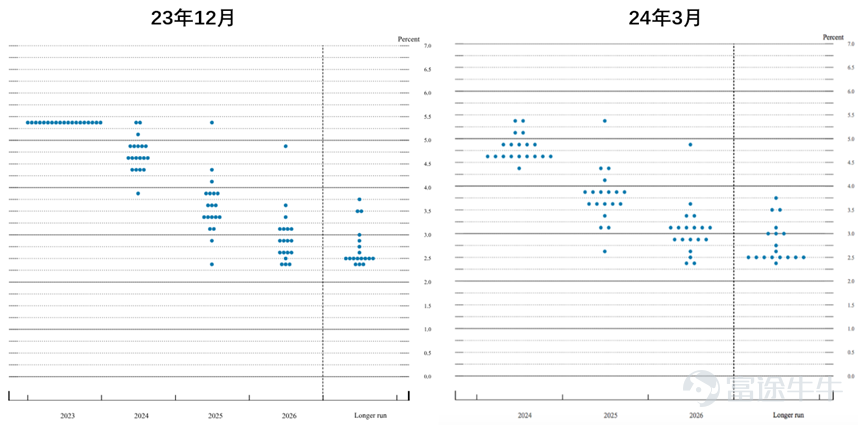
According to its newly released economic forecast bitmap, the Federal Reserve plans to cut interest rates by a total of 75 basis points within this year, which means it may cut 25 basis points each time in three installments to gradually relax monetary policy.
Figure: Interest rate bitmap comparison
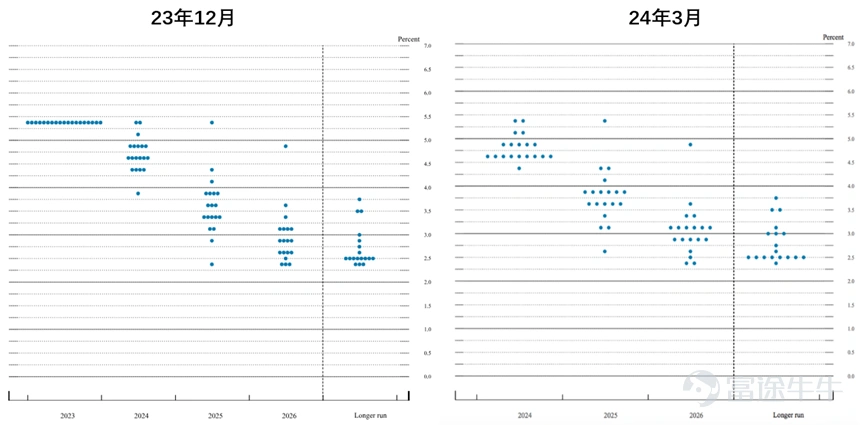
Source: US Federal Open Market Committee (FOMC)
Judging from historical data, in the 11 cycles of interest rate hikes and interest rate cuts experienced by the Federal Reserve since 1982, the S&P 500 index and the NASDAQ index usually showed strong average returns during the six-month period after the first interest rate cut, close to 10%. This means that markets often respond positively to monetary policy easing.
Faced with the potential market benefits brought about by expectations of interest rate cuts, investors may ask: How to choose the right investment portfolio among the many options?
Buffett has already given an answer to this question:
“I think the best way for most people is to have an S&P 500 index fund.”
“People spend a lot of money to buy stock suggestions, but they don't need them. If you bet on the US and maintain positions for decades, your yield will be much better than buying treasury bills, and much better than those who follow stock selection recommendations.”
Over the 25 years from 1993 to 2018, he recommended the S&P 500 14 times, and even made a clear plan in his will to invest 90% of his personal assets in the S&P 500, fully demonstrating his trust in the long-term stable return of this index.
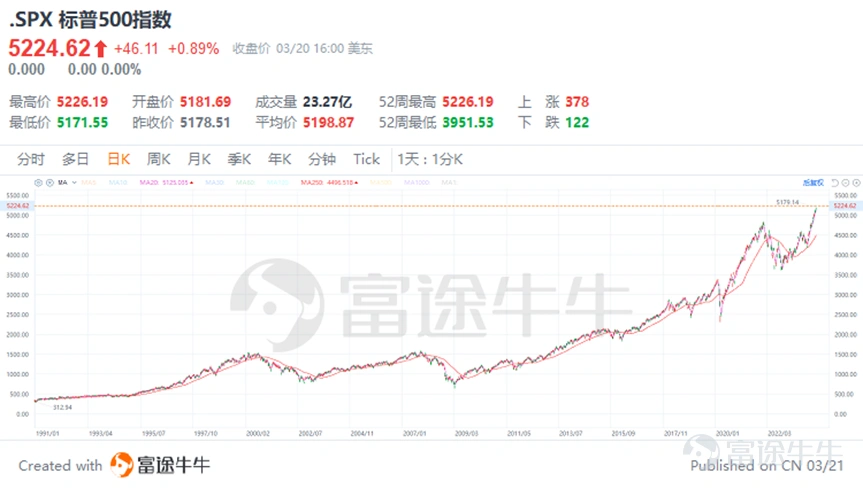
First, as one of the most important benchmark indices for the US stock market, the S&P 500 index covers the market capitalization performance of large US listed companies. Its constituent stocks include leading companies in various industries, and are extremely representative of the market. When macroeconomic policies shift to favor the rise of the stock market, the S&P 500 index can often more fully reflect this macro-trend and provide investors with an effective tool to grasp the overall rise in the market.
Second, investing in the S&P 500 index is equivalent to diversifying investment into 500 high-quality companies. Compared with investing in individual stocks, the risk is more diversified, reducing the impact of fluctuations in the business conditions of a single company. Furthermore, since the S&P 500 index includes leaders in multiple industries, even at different stages of the economic cycle, there is usually a certain hedging effect between industries, which can withstand specific industry risks to a certain extent.
Finally, by purchasing ETFs or other indexed investment products that track the S&P 500 index, investors can easily and inexpensively participate in the overall market performance without selecting individual stocks or trading frequently. This passive investment strategy is more stable, especially when market uncertainty or expectations of interest rate cuts bring mixed market sentiment.
What products can I choose?
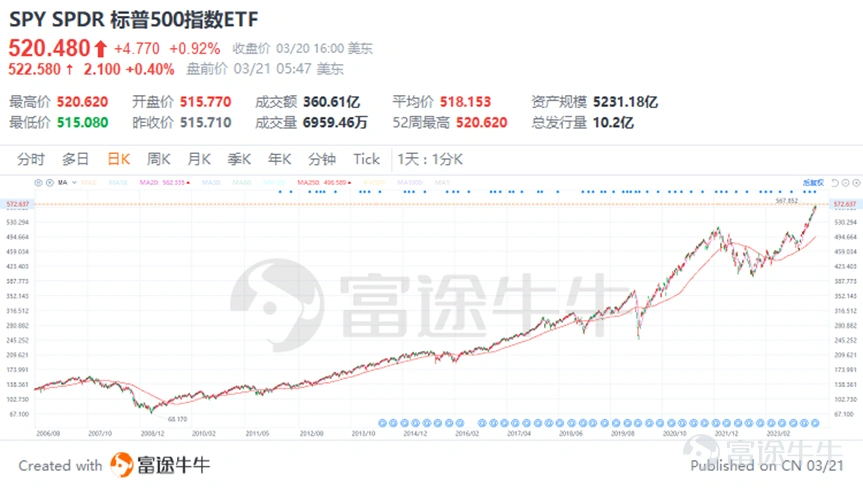
ETF index equity funds linked to the S&P 500 provide a one-stop low-cost solution. Taking SPY as an example, the fee rate is only 0.09%, which is far lower than the stock fee or 1-2% of mutual funds, which is very cost-effective.
Buffett believes that this passive investment model is ideal for ordinary investors. It not only saves time to study individual stocks, but also has a better chance of profit, and is suitable for investors interested in long-term placement of US stocks:
“What I often recommend is a low-cost S&P 500 index fund, but only a few humble friends will take my word for it. Hardly any of the richest investors, fund managers, and pension funds actually followed my advice; they politely thanked me. However, when I turned my head around, I was persuaded by the asset management manager, who charged high management fees, and chose a different investment method.”
Well-known S&P 500 ETFs on the US market include:
1. $SPDR S&P 500 ETF (SPY.US)$: Commonly known as “Spider” (Spider), it is one of the first and most well-known S&P 500 ETFs on the market. Managed by State Street Global Advisors and launched in 1993, it is not only one of the world's largest exchange-traded funds, but has also been a widely used US large-cap investment tool by investors. SPY has extremely high liquidity and huge daily trading volume, which makes it easy for investors to buy or sell, and the spread (spread) is usually very small, which is particularly beneficial for large traders.
2. $iShares Core S&P 500 ETF (IVV.US)$: IVV is an ETF issued by iShares, a subsidiary of BlackRock. It also aims to track the performance of the S&P 500 index. The cost ratio of IVV is lower than SPY, which is around 0.03%. Although IVV's liquidity is not as high as SPY, for most investors, its average daily trading volume is still sufficient to meet normal trading needs.
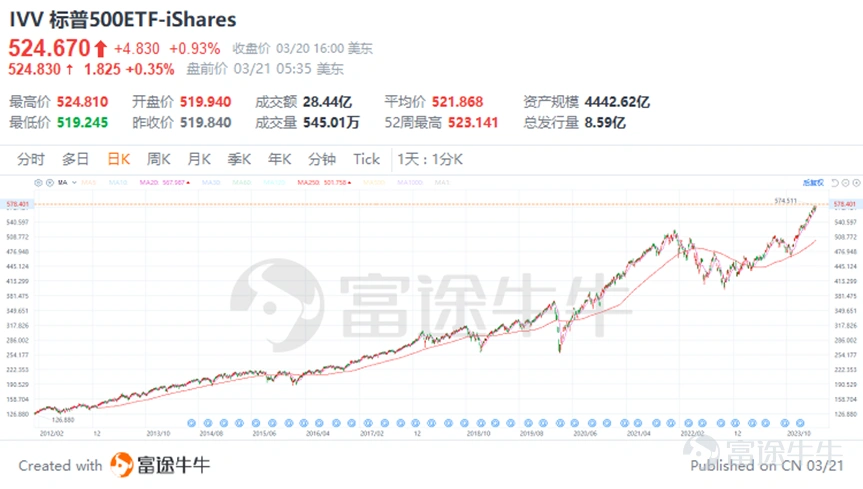
3. $Vanguard S&P 500 ETF (VOO.US)$: VOO is an ETF managed by Vanguard Group, a well-known low-cost fund manager, which also closely tracks the S&P 500 index. VOO's fee ratio is usually around 0.03%, which is a reflection of Vanguard's long-standing low-cost investment strategy.
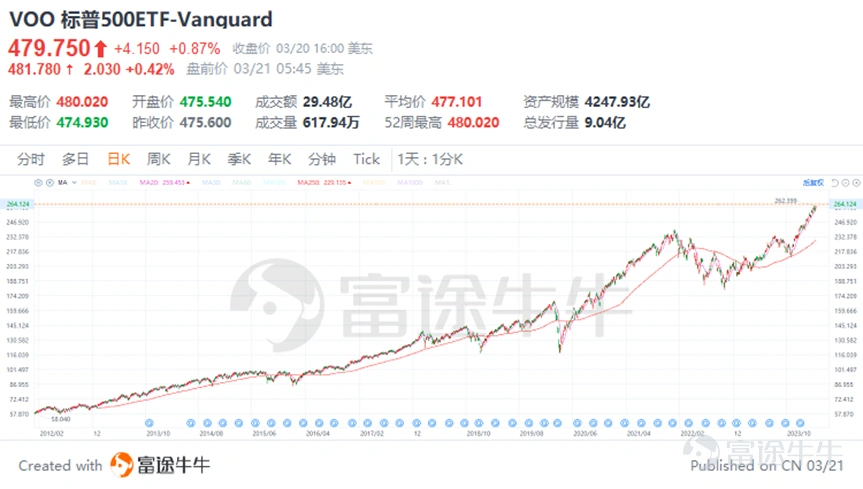
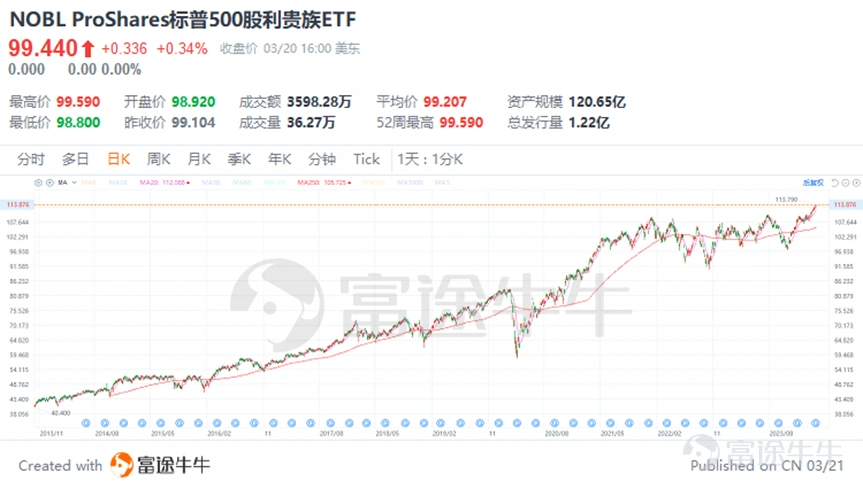
4. In addition to the above three ETFs that track the S&P 500 index, you can also keep an eye out$Proshares Trust S&P 500 Divid Aristocrats Etf (NOBL.US)$: This is an ETF that selects “dividend aristocrats” (companies whose dividends have been growing for 25 consecutive years) from the S&P 500 index as constituent stocks.
What should I pay attention to in leveraged ETFs?
Leveraged Exchange-Traded Funds (Leveraged Exchange-Traded Funds) are ETFs that use financial derivatives (such as options and swap agreements) to amplify the daily return of the benchmark index they track. These products usually provide 2 or 3 times the daily return.However, at the same time, it is extremely risky and is not suitable for long-term positions.
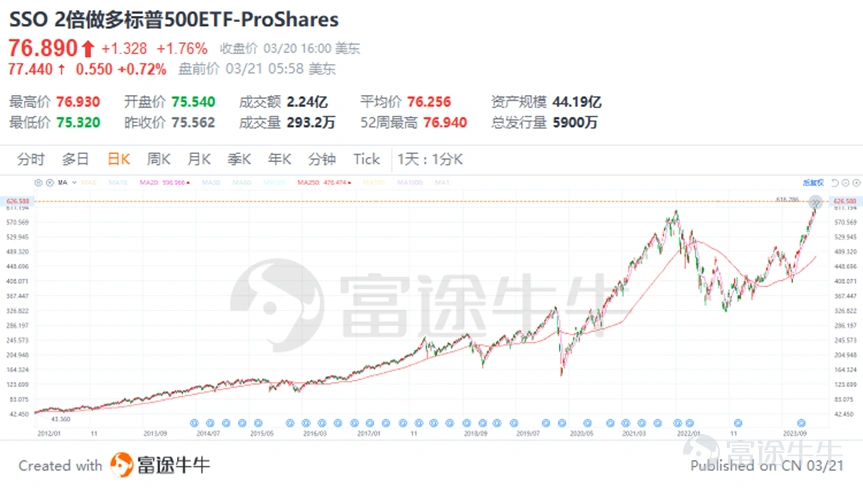
1. $Proshares Ultra S&P500 (SSO.US)$: SSO is designed for investors who expect the S&P 500 to rise in the next day and want to amplify their return on investment. If the S&P 500 index rises 1% on the same day, in theory SSO will try to achieve a daily yield of about 2%.
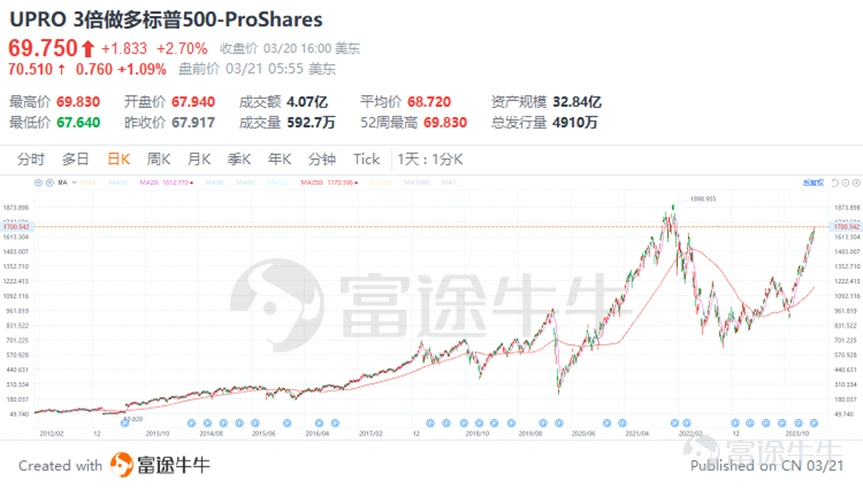
2. $ProShares UltraPro S&P500 ETF (UPRO.US)$: UPRO provides 3 times leverage on daily changes in the S&P 500 index, that is, when the S&P 500 index rises 1%, the ETF aims to obtain 3% daily return.
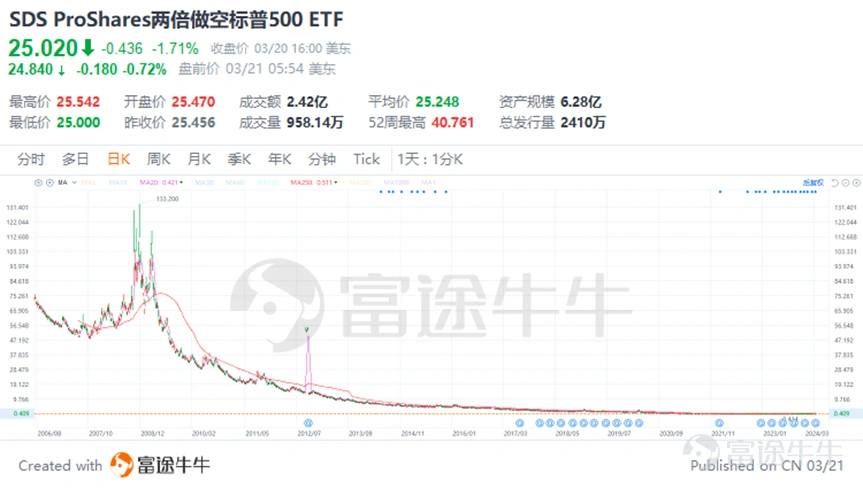
3. $Proshares Ultrashort S&P500 (SDS.US)$: SDS is a bearish ETF. When the S&P 500 index falls, it tries to provide a return of twice the index's daily decline.
4. $Direxion Daily S&P 500 Bear 3X Shares ETF (SPXS.US)$: SPXS is also a bearish ETF. The design goal is to provide a return of three times the index's decline on days when the S&P 500 index falls.
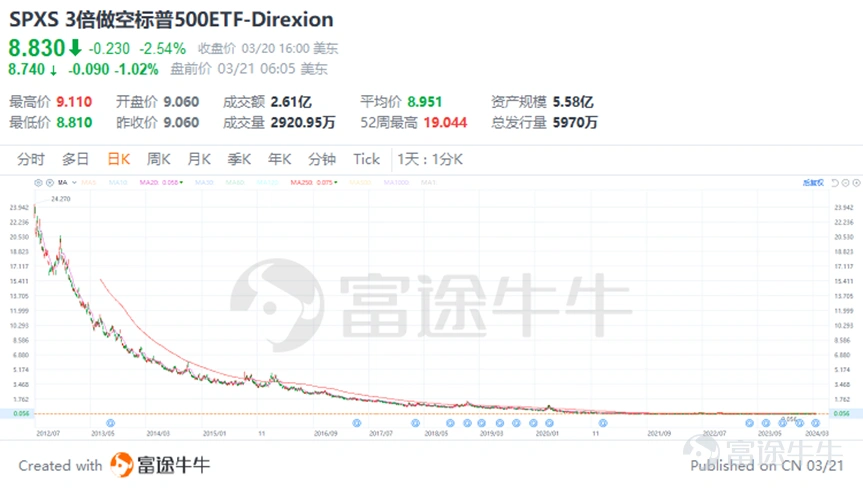
However, due to how they are structured and operated, leveraged ETFs lose their performance when held for a long time, which is commonly referred to as “decay” or “loss.” This loss is mainly due to the following factors:
①Compound interest effect:
Leveraged ETFs aim to provide multiples of the benchmark index return on a daily basis. As they are readjusted daily, the compounding effects of time can cause long-term performance to deviate from expected multi-fold returns. This effect is particularly evident in volatile markets, as leveraged ETFs require continuous increases to cover previous losses and maintain ties with the index.
②Replacement/rebalance costs:
Leveraged ETFs readjust their leverage ratio at the end of each day to maintain a predetermined level of leverage. This daily realignment requires trading derivatives and may incur transaction costs, especially when the market is volatile. These costs can accumulate over time and may cause long-term performance to decline.
③Capital borrowing costs:
To obtain leveraged benefits, leveraged ETFs require borrowing capital or the use of derivatives. These operations incur borrowing costs or derivatives holding costs. These fees reduce the ETF's net asset value (NAV), which affects long-term returns.
④Volatility loss:
In volatile markets, the loss of leveraged ETFs is particularly significant. Since they provide multiples of daily returns, negative returns can have a disproportionate impact on the value of ETFs in volatile markets. For example, if the market rises and falls by the same percentage for two consecutive days, the value of a leveraged ETF will drop because losses will be amplified.
⑤Management expenses:
Although management fees are part of all ETFs, in leveraged ETFs, they also affect long-term performance, as investors not only have to pay the management costs of the fund, but also need to consider the additional costs associated with leveraged operations described above.
Due to the above factors, leveraged ETFs are generally not suitable for long-term investments. They are more suitable for experienced investors, for short-term trading or hedging strategies.
Let's take a simple example:
Let's say we have a leveraged ETF that aims to provide 2x daily returns and track a benchmark index. Here's a simplified example showing that in a volatile market, the value of a leveraged ETF may drop even if the benchmark index's total return is zero.
Assumptions:
(1) The initial value of the benchmark index is 100 points.
(2) The initial price of a leveraged ETF is $100.
(3) The goal of an ETF is to provide a daily return of 2x the benchmark index.
Scenario:
On the first day, the benchmark index rose 10%. The index rose from 100 points to 110 points.
The return on a leveraged ETF should be 20% (2x 10%).
The ETF's new value is $120 ($100 starting price + 20%).
The next day, the benchmark index fell 9.09% (this would bring the index back to 100 points, since the 9.09% drop of 110 points was just 10 points).
The return on a leveraged ETF should be -18.18% (2x -9.09%).
The ETF's new value was $98.18 ($120 - 18.18%).
Results:
(1) At the end of the two days, the benchmark index returned to its initial value of 100 points, with a total return of 0%.
(2) However, the price of leveraged ETFs dropped from $100 to $98.18, with a total loss of 1.82%.
This example illustrates the loss of leveraged ETFs due to daily resets even when the performance of the benchmark index returns to its original point in the face of market fluctuations. In reality, leveraged ETFs are also affected by management fees, borrowing costs, and replacement costs, which further reduce the long-term value of the ETF.
Therefore, leveraged ETFs are more suitable for investors who aim to invest in the short term and are able to closely monitor market dynamics. For investors seeking long-term investment strategies, the wear and tear nature of these products may result in unanticipated returns. Unskilled investors are advised to stay away from it.
summed
Buffett once said that investors can easily fall into a situation where they are “affected by market failure because of increased leverage or due to psychological factors that are unable to absorb the impact of bad news.” When we invest in the global market, if we don't understand a country's market, we have doubts about stock research, but if we are optimistic about the country's assets, the best investment strategy is to study Buffett's “Index Investment Law”. At the same time, paying more attention to some basic knowledge and risks will help us invest successfully.
Risk Disclaimer: The above content only represents the author's view. It does not represent any position or investment advice of Futu. Futu makes no representation or warranty.Read more


Comments (10)
to post a comment
40
85