
你日常喺交易邊些ETF?

Futu Research | Buffett's Enduring Belief: Why the S&P 500 Index is the First Choice for Investment
Stock god Buffett emphasized many times at Berkshire Hathaway's annual meetings over the years:
“I think the best way for most people is to have an S&P 500 index fund.”
“People spend a lot of money to buy stock suggestions, but they don't need them. If you bet on the US and maintain positions for decades, your yield will be much better than buying treasury bills, and much better than those who follow stock selection recommendations.”
Over the 25 years from 1993 to 2018, he recommended the S&P 500 14 times, and even made a clear plan in his will to invest 90% of his personal assets in the S&P 500, fully demonstrating his trust in the long-term stable return of this index.
So why did this simple index win such firm and enduring recognition from Buffett?
What is S&P 500
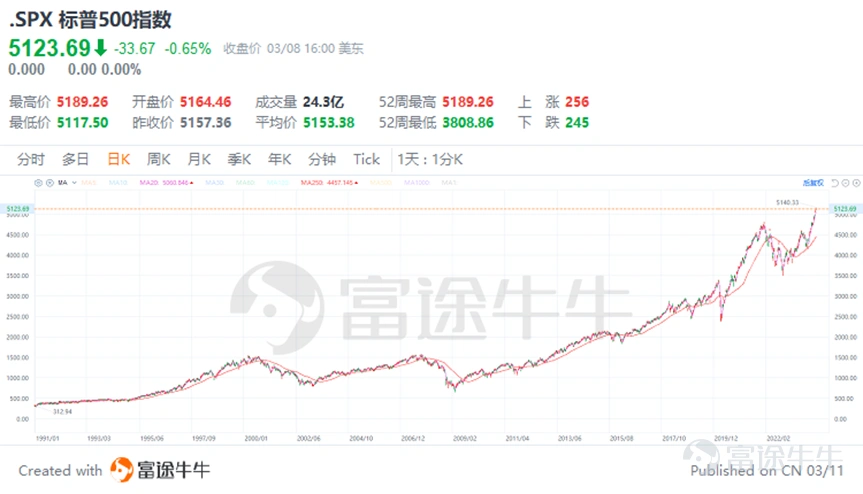
The S&P 500 Index is like a “market thermometer” for US stocks. It is compiled by Standard & Poor's and tracks the stock performance of the 500 most influential US listed companies. These companies cover various industry leaders, and market capitalization weight determines their influence in the index.
Seven of the world's most popular technology stocks (Magnificent 7), namely Apple (AAPL.US), Amazon (AMZN.US), Google (GOOGL.US), Meta (META.US), Microsoft (MSFT.US), Tesla (TSLA.US), and NVDA.US (NVDA.US), are at the top of the list, and these companies account for 76% of the S&P 500's increase of more than 20% in 2023.
The rise and fall of the S&P 500 index intuitively reflects the overall trend of the US stock market. In fact, investing in the S&P 500 index means that investors allocate their capital to an investment portfolio that is deeply tied to the overall performance of the US economy, so it can be said that investing in the S&P 500 is betting on the development potential and long-term prosperity of the US economy.
How is the investment performing
Buffett once said, “People would rather get a lottery ticket that could win the grand prize next week than seize an opportunity to slowly get rich.”
Over the past 5, 10, and 20 years, the yield of the S&P 500 index has excelled in many asset classes around the world, surpassing not only European and Asian stock markets, but also stocks in emerging markets.
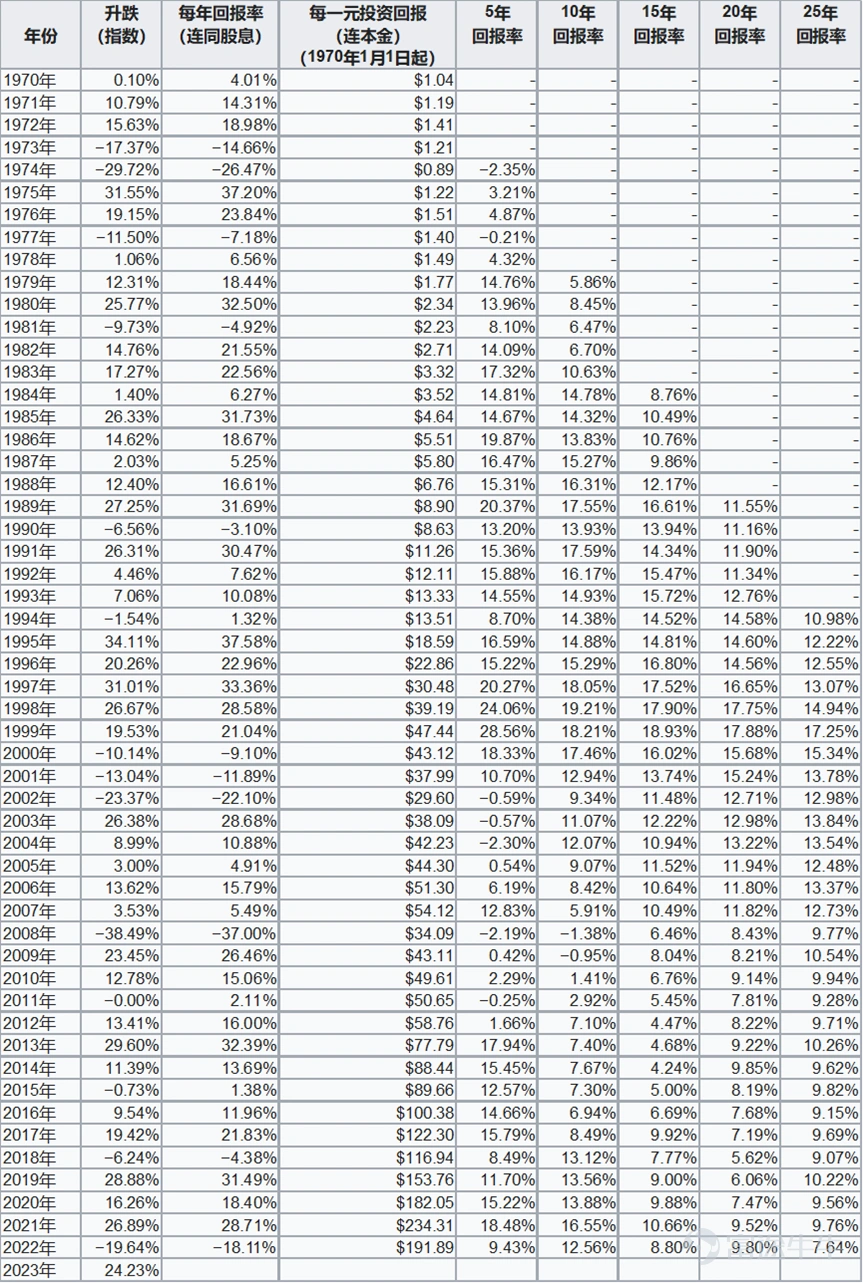
The S&P 500 has historically been profitable every 20 years. Its 20-year average minimum return rate is 5.62%, the 25-year average minimum return rate is 9.07%, and as the investment period is extended, the actual return will be closer to the average. There were a total of 1,152 months from January 1928 to December 2023, and it achieved positive returns in 682 months.
Based on actual case calculations, if $1 was invested in the S&P 500 index on January 1, 1970, the final return, including dividends, would be about $191.89 by the end of 2020, with an annual compound return of 10.43%.
Figure: Historical performance and annualized return
Source: Wikipedia
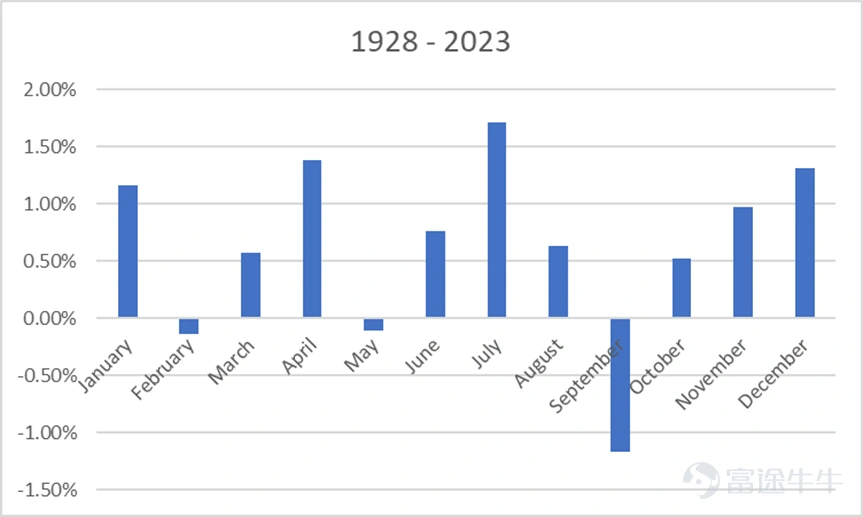
On a monthly basis, historically, the S&P 500 index usually brought positive returns during most months of the year. Although there is a consensus that summer will be sluggish and sales will occur in May, in reality the S&P 500 index tends to maintain a good upward trend during the summer.
On the other hand, the “September effect” actually exists, that is, the S&P 500 index often falls significantly in September. However, the following months are usually accompanied by a strong rebound, which may benefit from factors such as holiday spending to boost the market. Therefore, for investors, understanding this seasonal trend can help them make decisions in September, such as holding cash to buy stocks at a low level.
Chart: Average monthly return for the S&P 500
Source: Bloomberg
What products to choose
ETF index equity funds linked to the S&P 500 provide a one-stop low-cost solution. Taking SPY as an example, the fee rate is only 0.09%, which is far lower than the stock fee or 1-2% of mutual funds, which is very cost-effective.
Buffett believes that this passive investment model is ideal for ordinary investors. It not only saves time to study individual stocks, but also has a better chance of profit, and is suitable for investors interested in long-term placement of US stocks:
“What I often recommend is a low-cost S&P 500 index fund, but only a few humble friends will take my word for it. Hardly any of the richest investors, fund managers, and pension funds actually followed my advice; they politely thanked me. However, when I turned my head around, I was persuaded by the asset management manager, who charged high management fees, and chose a different investment method.”
Well-known S&P 500 ETFs on the US market include:
1. $SPDR S&P 500 ETF (SPY.US)$: Commonly known as “Spider” (Spider), it is one of the first and most well-known S&P 500 ETFs on the market. Managed by State Street Global Advisors and launched in 1993, it is not only one of the world's largest exchange-traded funds, but has also been a widely used US large-cap investment tool by investors. SPY has extremely high liquidity and huge daily trading volume, which makes it easy for investors to buy or sell, and the spread (spread) is usually very small, which is particularly beneficial for large traders.

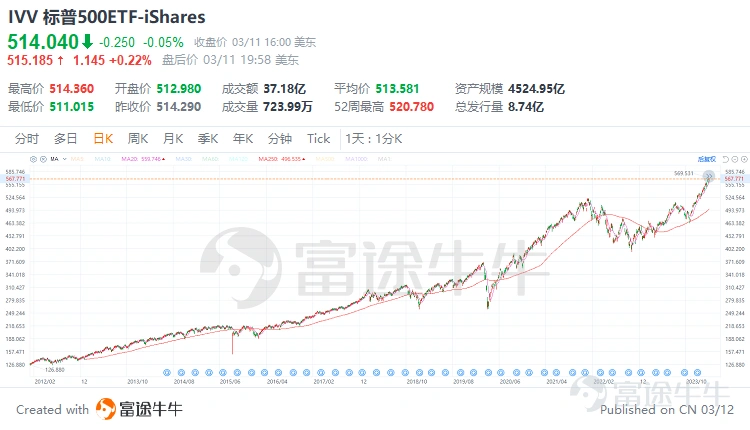
2. $iShares Core S&P 500 ETF (IVV.US)$: IVV is an ETF issued by iShares, a subsidiary of BlackRock. It also aims to track the performance of the S&P 500 index. The cost ratio of IVV is lower than SPY, which is around 0.03%. Although IVV's liquidity is not as high as SPY, for most investors, its average daily trading volume is still sufficient to meet normal trading needs.
3. $Vanguard S&P 500 ETF (VOO.US)$: VOO is an ETF managed by Vanguard Group, a well-known low-cost fund manager, which also closely tracks the S&P 500 index. VOO's fee ratio is usually around 0.03%, which is a reflection of Vanguard's long-standing low-cost investment strategy.

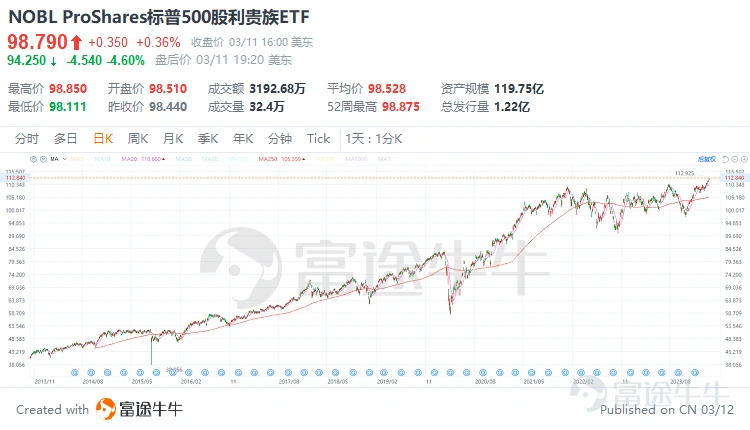
4. In addition to the above three ETFs that track the S&P 500 index, you can also keep an eye out$Proshares Trust S&P 500 Divid Aristocrats Etf (NOBL.US)$: This is an ETF that selects “dividend aristocrats” (companies whose dividends have been growing for 25 consecutive years) from the S&P 500 index as constituent stocks.
summed
“In the short term, the stock market is a voting machine, but in the long run, it's more like a weighing machine.” From a long-term investment perspective, the S&P 500 provides an attractive risk-return ratio, making it almost difficult for investors seeking to accumulate wealth to find a comparable asset class.
Therefore, when constructing an investment portfolio, S&P 500 index-related products can be one of the ideal choices for most investors, especially as a supplementary or basic allocation tool other than directly investing in individual stocks.
“Only when the tide recedes do you know who is swimming naked”.No matter how the market changes, maintaining rational analysis and independent thinking, and adhering to the concept of value investment is the key for us to move forward steadily in any market environment.
Risk Disclaimer: The above content only represents the author's view. It does not represent any position or investment advice of Futu. Futu makes no representation or warranty.Read more


Comments (4)
to post a comment
83
123