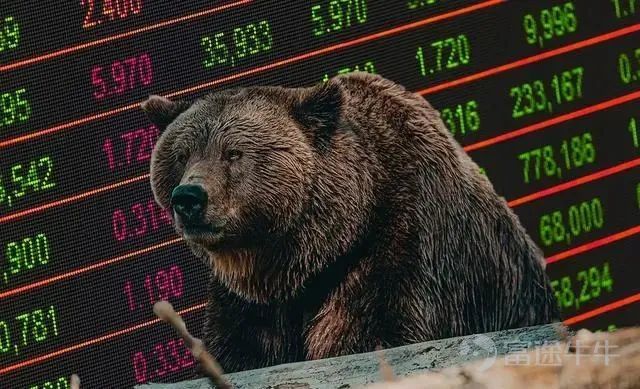

The real apocalypse of the big bear market: understand that everything is a cycle
Text | financial statements
Original production of Yonzai
For investors in A-shares and Hong Kong stocks, after experiencing a miserable 2022, their promises at the beginning of '23 were relentlessly abandoned. In 2023, the two markets once again ended with a sharp drop throughout the year, making people feel chilling. Numbness is probably the truest picture of the current situation of A-share investors.
Since 2023, China's stock market, including A-shares and Hong Kong stocks, has indeed experienced a significant decline, which has led to a general downturn in investor sentiment. It is difficult to accurately predict when the bottom of the bear market will arrive, because stock market trends are affected by various complex factors, including macroeconomics, policy environment, and global market dynamics. But we can learn from the experiences of Wall Street masters to learn how to survive and even benefit from a bear market.

At this time, no matter how much spiritual chicken soup there is, no one can drink it, but many times, we always have to do something to calm our wounded souls. The historic giant bear market has happened many times in the global capital market. Let's take a look today. The big bear market's inspiration: How should we survive the bear market?
How to survive a bear market:
Long-term perspective: Investment guru Warren Buffett often emphasizes the importance of long-term investments. During a bear market, it's important to stay calm and not make impulsive decisions due to short-term market fluctuations.
Risk Management: Follow Benjamin Graham's teachings to diversify your investment portfolio to reduce risk. At the same time, focus on the company's fundamentals rather than market sentiment.
Find value: A bear market may provide an opportunity to buy undervalued assets. Investors like Philip Fisher and Peter Lynch look for companies that can maintain steady performance even when the overall performance of the market is poor.
wait patiently: The bear market is not permanent; there will always be a rebound in the market. Being patient and waiting for the market to recover is key.
The formation of a bear market is usually the result of a combination of factors. This could include:
recession: An economic slowdown or recession usually causes corporate profits to decline and affects stock market performance.
Policy changes: Higher interest rates, changes in tax policies, etc. may have a negative impact on the market.
Market sentiment: Overly pessimistic market sentiment can exacerbate stock price declines.
Global events: Such as geopolitical tension, global health crises, etc., may also cause market uncertainty.
During a bear market, it is important to maintain a long-term perspective, manage risk well, and find and seize opportunities. At the same time, understanding the causes of a bear market can help investors better cope with possible future market turbulence. Wall Street's investment gurus have provided us with guidance on staying rational and finding opportunities in a bear market through their experiences and writings. Although predicting the exact timing of the market bottom is difficult, by learning from these experiences, investors can better prepare to deal with market uncertainty and find opportunities for growth and improvement.

We need to first recognize that market movements follow a cyclical pattern.Every cycle of the market consists of rising and falling phases. Investors' optimism peaked during the bull market, and asset prices soared. However, this boom is not permanent. As the market overheats and various unsustainable factors accumulate, the arrival of a bear market seems inevitable. The onset of a bear market is often accompanied by panic, uncertainty, and a revaluation of values.
In this market environment, investors often experience extreme mood swings. When the market crashes, many people feel sad and hopeless. This emotional response is understandable, especially for those watching their hard-earned wealth shrink drastically in a short period of time. Yet Wall Street masters teach us that even in the toughest times, there are opportunities to grow and learn.
One key lesson is learning to manage emotions.Investment decisions should be based on rational analysis, not on impulses driven by panic or greed. This means staying calm during times of market turbulence and not being affected by the panic surrounding you. At the same time, we also need to recognize that a bear market is not the end of the world. Historically, every major market adjustment has laid the foundation for reconstruction and new growth.
Furthermore, the bear market also provides an opportunity to reevaluate portfolios and strategies. This is a time to reconsider long-term investment goals and risk tolerance. For investors with patience and vision, a bear market may even be a good opportunity to harvest high-quality assets.
Ultimately, through these cycle experiences, investors can learn valuable lessons and become smarter and more resilient participants. Amidst market fluctuations, we not only learned how to deal with challenges, but more importantly, we learned how to find opportunities in the face of adversity.

The Big Bear Apocalypse tells us that market fluctuations are inevitable, but we can prepare for and meet these challenges by learning and adapting. By understanding the cyclical nature of the market, maintaining a calm mind, and continuing to learn and adapt, we can not only survive difficult times, but also grow and progress along the way.
A book that Yan Cai really likes, “The Big Bear Market Apocalypse: Super Panic and Opportunity in 100 Years of Financial History”, check out what the book says:
“Big Bear Market Revelations: Super Panic and Opportunity in 100 Years of Financial History” (4th edition) is a book that thoroughly explores major bear market events in history and their impact on investment strategies. The book not only reviews the bottom of the four major bear markets of 1921, 1932, 1949, and 1982, but also analyzes the relationship between these periods and major changes in American society, such as the formation of consumer society, large government, military industrial complexes, and free markets. These historical events provide insight into the transition from a bear market to a bull market, potential factors for market recovery, and investment opportunities.Through a detailed analysis of these bear markets, the book shows the historical picture of Wall Street and the alternating pattern of bulls and bears, and also provides clear market trend comparisons and extensive data support. Core ideas and key points include:
History and characteristics of a bear market: The book analyzes major bear markets in history and explores their causes and characteristics.
An opportunity in a crisis: Discussed how to identify investment opportunities in times of financial turmoil.
Risk Management: Highlight the importance of risk management in a bear market.
Long-term perspective: It is recommended to start from a long-term perspective and understand the impact of cyclical market fluctuations on investment strategies.
This book is for investors and financial history buffs who want to learn lessons from past financial crises and better navigate future markets. The causes and characteristics of bear markets that have had a wide range of effects in history usually include:
Cause:
recession: An economic slowdown or recession is often the main trigger for a bear market.
High inflation and high interest rates: Increased inflation has led central banks to raise interest rates, increase borrowing costs, and reduce corporate profits.
The market bubble bursts: The asset price is too high, exceeding its intrinsic value, which eventually causes the bubble to burst.
Political and geopolitical events: such as war, political instability, etc.
financial crisis: A crisis in the banking sector or other important financial institutions.
FEATURES:
Stock prices fell sharply: The overall market showed a significant downward trend.
Investors are pessimistic: General panic and pessimism.
Increased trading volume: Stock market volatility has increased, and trading volume has surged.
Market valuation adjustments: The market re-evaluates the company's value, and the stock price returns to its fundamentals.
Deterioration of economic indicators: For example, unemployment rises and consumption and production fall.
These causes and characteristics reflect the complexity of the bear market and the intertwining of factors. For investors, understanding these historical patterns can help them better prepare for and cope with possible future market declines.

In “The Big Bear Market Revelations: Super Panic and Opportunity in a Hundred Years of Financial History”, the author reveals the potential factors and investment opportunities for the transition from a bear market to a bull market and market recovery by analyzing major bear markets in 1921, 1932, 1949, and 1982:
social and economic changes: The bottom of every bear market is associated with major changes in American society, such as the birth of a consumer society, the formation of a large government, the rise of military industrial complexes, and the rebirth of a free market. These changes often herald new economic cycles and market opportunities.
Changes in market mentality and sentiment: A bear market is usually accompanied by extreme pessimism, while the beginning of a bull market is often accompanied by a return of confidence and optimism.
Changes in policy and economic fundamentals: Policy changes (such as monetary policy, fiscal policy) and improvements in economic fundamentals (such as GDP growth and unemployment) are often key factors in market recovery.
According to Yan Cai, the real revelation of the big bear market is to make us fully understand that everything is a cycle.
In Howard Marx's book “Cycles,” we can draw valuable investment wisdom from his deep understanding of market cycles. Max emphasizes that understanding and coping with market cycles is critical to investment success.He proposed three cycle rules:
If you don't walk in a straight line, you must follow a curve: The market will not continue to move in one direction. After a sharp rise, there will always be a sharp drop, and then a sharp fall will rebound.
Won't be the same, only similar: History does not simply repeat itself, but it shows similar patterns and trends.
Less walking in the middle, more extreme: The market often fluctuates up and down around a central point, but often goes to extremes rather than just fluctuating around the average.
These principles provide investors with guidance to find opportunities and avoid risks in the midst of market fluctuations.Max's point of view emphasizes that investors should understand the nature of the market cycle, grasp investment timing, and avoid making wrong decisions during extreme market fluctuations. This is particularly important for finding opportunities and responding to challenges in a bear market.

A bear market is often an important time for investors to gain deep insight and a more comprehensive understanding of the market cycle. In times of market boom, investors may have overlooked the inherent risk and cyclicality of the market due to widespread optimism and rising prices. However, the bear market revealed another side of the market and forced investors to face a more complex and realistic market environment.
Implications of a bear market:
Market cyclicality: The bear market clearly shows the cyclical nature of the market. It reminds investors that the market doesn't always just rise, but goes through cycles of ups and downs.
Risk awareness: The bear market has increased awareness of risk. Risk management may be taken lightly during a bull market, but bears emphasized the importance of diversification and careful analysis.
Value investing: At a time when stock prices generally fall, a bear market provides an opportunity to evaluate a company's true value. This is the perfect time to identify companies that have strong fundamentals and are undervalued by the market.
emotional control: The bear market tests investors' ability to control their emotions. Remaining calm and rational in the midst of extreme market fluctuations is the key to successful investing.
Long-term perspective: The bear market also emphasized the importance of taking a long-term investment perspective. Short-term market fluctuations should not affect investment decisions based on in-depth research and long-term planning.
The bear market is truly an opportunity to learn and grow. It teaches us a deeper understanding of how the market works and reminds us to consider the full market cycle when investing. Through these experiences, investors can not only better meet future market challenges, but also find unique opportunities in bear markets to increase the value of their assets.
From a cyclical perspective, as far as US stocks are concerned, they also survived the sharp decline in 2022 and will only blossom in 2023.
As always, Yan Caijun is most optimistic about the big wave of AIGC. Similar to Citi's views, Yan Cai is also optimistic about the software service industry, but Yan Cai favors the core leaders in the industry.
A few basic principles:
1. “Stay away from the noise of the market and focus on the fundamentals of the company.”
2. When considering investments in the AIGC sector, it is important to have a deep understanding of the potential of these technologies and how they will impact the future of specific industries and companies.
3. Investors should focus on companies with strong technical strength, clear business models, and sound financial conditions in the field of AI and global connectivity.
4. In the face of short-term market fluctuations, maintaining a long-term and strategic perspective is critical.
The net value of the portfolio reached a new high this week. More than a month after establishment, as of December 22, 2023, the portfolio return was 24.26%.


As always, Yancai is most optimistic about the growth stock investment wave driven by AIGC. I will continue to recommend investors to focus on the major investment opportunities on the AIGC circuit. At this stage, embracing the big wave of AIGC is still the best strategy for US stocks in the future. For details, see our previous article:
1.12-18 “Huge difference in expectations for US stocks in 2024, these industries are the best”
2.12-15 “Be sure to pay attention to this trend next year”
3.12-14 “I personally release my pigeons and roll them, my profits are high”
4.12-13 “Burn! “The Lord Ascension Has Arrived”
5.12-11 “The landscape will all be restructured: AI agents have arrived, don't say anything to interfere”
6.12-6 “The data has finally cooled down, it's time to wake up”
7.12-4 “An Era Not to Be Missed: Meditation, Innovation, and the Wave of AI”
8.12-1 “All-Time High, One Step Away”
9.11-30 “Double Click, Exceeded Expectations Again”
10.11-24 “Earnings have reached a new high”
11.11-20 “Shocking the entire tech world, eating melons on weekends”
12.11-03 “Going long on US stocks in the AI era, combining 6.5% this week”
13.11-06 “The global risk asset carnival, has it doubled too much? What to buy?》
14.11-10 “ChatGPT Down, AI Portfolio Revenue Reaches New High”
Key Considerations:
1. Layout of Nasdaq Index ETFs: 159632, 159941, 513100, 513300, 513110
2. US Stock Cybersecurity and Cloud Computing Industry ETF: CIBR$First Trust Exch Traded Fund 2 Nasdaq Cybersecurity Etf (CIBR.US)$/HACK$Etf Managers Trust (HACK.US)$/CLOU$Global X Cloud Computing Etf (CLOU.US)$/SKYY$First Trust Cloud Computing ETF (SKYY.US)$
3. Long-term layout long-term bonds: TLT$iShares 20+ Year Treasury Bond ETF (TLT.US)$/TMF$Direxion Daily 20+ Year Treasury Bull 3X Shares ETF (TMF.US)$(Make three times more)
4. AI application giant: NOW$ServiceNow (NOW.US)$/CRM$Salesforce (CRM.US)$/ADBE$Adobe (ADBE.US)$/MSFT$Microsoft (MSFT.US)$/META$Meta Platforms (META.US)$/GOOG$Alphabet-C (GOOG.US)$
5. The dark horse of AI applications: DDOG$Datadog (DDOG.US)$/MNDY$monday.com (MNDY.US)$/NET$Cloudflare (NET.US)$/CRWD$CrowdStrike (CRWD.US)$/ZS$Zscaler (ZS.US)$/DUOL$Duolingo (DUOL.US)$/PATH$UiPath (PATH.US)$/GTLB$Gitlab (GTLB.US)$
6. Autonomous Driving and AIOT: Tesla$Tesla (TSLA.US)$, apple$Apple (AAPL.US)$, Qualcomm$Qualcomm (QCOM.US)$, Intel$Intel (INTC.US)$
Wealth Management December 27, 2023
Risk Disclaimer: The above content only represents the author's view. It does not represent any position or investment advice of Futu. Futu makes no representation or warranty.Read more


Comments (2)
to post a comment
29
22