
聯儲局鴿聲不斷,今晚CPI將如何表現?

The Federal Reserve can't do it either! There is still a risk that the US CPI will return to 5%

The US will release the September CPI report on Thursday (12th). The market expects the overall annual inflation rate to fall to 3.6% from 3.7% in August. Overall, the inflation trend is downward, but the author believes that the data may show the risk that inflation will soar again. This article will use the InvestingPro Stock Selector to find out some of the most worthwhile stocks to hold during periods of strong inflation. In the midst of market turmoil, how to break the game? InvestingPro members have exclusive access to a wealth of strategies, no matter what the circumstances, they won't get lost.
Yingwei Financial Investing.com - The focus of US stocks today is on much-watched inflation data. This data may determine the fluctuating market trend in recent weeks.
This summer, the S&P 500 index once rose less than 4% from the historic high it hit in January 2022, but since then, under pressure that restrictive interest rate policies may continue for longer than expected, the S&P index continued to be under pressure.

(US S&P 500 Index Daily Chart)
Before the CPI data was released, the Fed's interest rate monitoring tool on Yingwei Financial Investing.com showed that the financial market believed that the probability that the Fed would maintain the current interest rate level in November was 88%, and the possibility of raising interest rates by 25 basis points was only 12%.
For December, they expect a 70% chance of suspending interest rate hikes and a 30% chance of raising interest rates.
As the Bank of America increasingly relies on economic data to evaluate next steps in its decisions, today's CPI inflation data is particularly important.
People's expectations: inflation will fall in September, but there is a big risk that it will soar in the future
The US government will release the September CPI report at 20:30 Beijing time. The data may show that prices continue to grow at a rate well above the Fed's 2% target range.
According to the financial calendar data of Yingwei Financial Investing.com, the monthly consumer price index (CPI) rate for August was 0.6%, while September is expected to drop to 0.3%. The overall inflation rate is expected to be 3.6% per annum, down from 3.7% last month.
Last summer, CPI reached a 40-year high of 9.1%, and has been on a steady downward trend ever since. However, the data remains well above what the Fed considers healthy.

(US CPI annual rate)
Meanwhile, the monthly rate of the core CPI index excluding food and energy prices is expected to be 0.3% in September, which is the same as in August. The annual rate is expected to be 4.1%, down further from 4.3% in August.

(US core CPI annual rate)
Fed officials are expected to pay close attention to core inflation, and they believe core data can more accurately assess the future direction of inflation.
Overall, although the trend is downward, the author believes that the data may show that there is a high risk that inflation will soar again. If the inflation rate reaches 3.8% or higher, it will put tremendous pressure on the Fed to continue to act to contain rising consumer prices.
Last month, although the Fed kept its benchmark interest rate unchanged, its wording was hawkish. They thought the battle against inflation seemed far from over.
Several Federal Open Market Committee (FOMC) officials said they still think interest rates will be raised by 25 basis points by the end of 2023, while the target interest rate for federal funds will peak in the 5.50%-5.75% range.
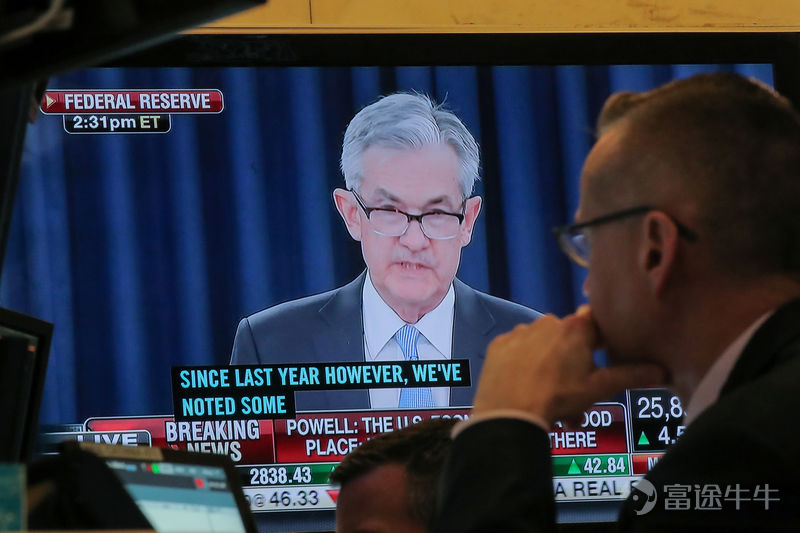
Federal Reserve Chairman Jerome Powell (Jerome Powell) said at a press conference after the meeting at the time, “We are prepared to further raise interest rates under appropriate circumstances. We intend to maintain our policy at a restrictive level until we are convinced that inflation is continuing to decline towards our goals.”
In fact, energy and food prices continue to rise, while inflation alarms are once again sounding. If fuel and food prices continue to soar, it will jeopardize the Fed's progress in reducing inflation and may force the Fed to continue raising interest rates for longer than currently anticipated.
Key issue: It is difficult for the Fed to influence oil prices and food prices
Higher oil prices and food prices are likely to have a greater impact on inflation, yet the Fed has little influence over these prices. If CPI starts to rise from now on, I wouldn't be surprised. In the next few months, overall inflation is likely to rise back to 5%.
Therefore, I don't think the current environment will support the Fed's shift in policy direction, and policymakers still have a long way to go before they are ready to announce that they have completed the inflation task.
Given this, stubborn inflation may force the Fed to maintain high interest rates for longer than currently anticipated.
What should I do?
In order to cope with the uncertain macro environment, the author used the InvestingPro stock selector to find some stocks suitable for holding during periods of high inflation.
Companies on the list include Google parent company Alphabet (NASDAQ: GOOGL), Meta Platforms (NASDAQ: META), Berkshire Hathaway (NYSE: BRKA), UnitedHealth (NYSE: UNH), ExxonMobil (NYSE: UNH), ExxonMobil (NYSE: XOM), Johnson & Johnson (NYSE: JNJ), Snow Chevron (NYSE: CVX), Cisco (NASDAQ: CSCO), Caterpillar (NYSE: CAT), Qualcomm) (NASDAQ: QCOM) (NASDAQ: QCOM), and Deere (NYSE: DE).

InvestingPro Stock Screener
For the full list, please visit InvestingPro with a 7-day free trial for new users.
If you are already an InvestingPro member, click here.

***
Disclaimer: Prior to publication, the author held short positions in the S&P 500 Index, and the Nasdaq 100 Index, and Russell 2000 Index through the ProShares Short S&P 500 ETF (SH), ProShares Short QQQ ETF (PSQ), and ProShares Short Russell 2000 ETF (RWM). Additionally, the author holds multiple positions in the Energy Select Sector SPDR ETF (NYSE: XLE) and Health Care Select Sector SPDR ETF (NYSE: XLV).
The author will also continue to conduct risk assessments based on the macroeconomic environment and the company's financial situation, and regularly rebalance individual stock and ETF portfolios.
The opinions discussed in this article are solely those of the author and should not be considered investment advice.
***
Translation | Liu Chuan
Risk Disclaimer: The above content only represents the author's view. It does not represent any position or investment advice of Futu. Futu makes no representation or warranty.Read more
Comments
to post a comment