

巴倫周刊x富途:港美上市中國公司CFO精英100

Barron's x Futu x International Association of Certified Public Accountants 'Top 100 CFOs of Chinese Companies Listed in Hong Kong and the US' Evaluation Officially Released
To explore and evaluate the evolving role and leadership of CFOs, Futu (Nasdaq: FUTU) has collaborated with the Chinese edition of Barron's and the Association of International Certified Professional Accountants (AICPA® & CIMA®) to jointly release"Top 100 CFOs of Chinese Companies Listed in Hong Kong and the US"((hereinafter referred to as "CFO Elite 100") evaluation.
The evaluation targets are senior financial executives such as Chief Financial Officers, Financial Directors, and Vice Presidents of Finance from over 600 Chinese companies listed on the Hong Kong and US stock exchanges, who have served for more than two years as of June 30, 2022. During the evaluation period, neither the individual nor their company engaged in any negative business practices or had adverse social impacts.
This is a carefully planned and prepared result of an event that was ultimately revealed to the public. To identify the best CFOs of Chinese companies in this era, we established a scientific evaluation system that includes both financial and non-financial metrics. The financial metrics consist of six primary evaluation indicators and 18 secondary financial indicators; the non-financial metrics cover more than ten indicators including personal knowledge, experience and skills, capital operations, corporate security, management practices, and innovation.
Importantly, we received strong support from numerous financial and non-financial experts and scholars from academic institutions, policy research fields, the Big Four international accounting firms, exchanges, law firms, etc. For details on the judging panel, see:CFOs in an Era of Uncertainty: Role Transition and Leadership Reinvention。We would like to extend special thanks to these experts and scholars. It is your support and advice that ensured the successful completion of the "Top 100 CFOs of Chinese Companies Listed in Hong Kong and the US" evaluation activity. Your insights will also resonate with and provoke thought among the corporate world and CFOs.
We firmly believe that such a rich and diverse evaluation system helps us discover the outstanding qualities of excellent CFOs in this "uncertain" era: they are professional yet agile, prioritize corporate financial security, and value innovation. Their role extends beyond being mere "bookkeepers"; they are versatile strategists representing the development direction of today’s corporate financial leaders.
The evaluation activity also received active feedback and support from dozens of company CFOs. They meticulously prepared application materials, which reflected professionalism and precision. With great enthusiasm, they shared their proactive explorations in digitalization and ESG areas, revealing a pursuit of innovation behind what might otherwise seem mundane stories. Their dedication to safeguarding corporate financial security reflects commendable professional ethics, a quality especially precious in this era.
In addition to the main evaluation, the CFO Elite 100 evaluation also includes"Outstanding IPO Case of the Year", "Outstanding Financial Team of the Year", and "Female CFO of the Year"three special sub-evaluations to highlight the unique influence of financial leaders or teams in areas such as corporate IPOs, team building, and promoting women's rights in the financial sector.
Below is the full list of the main evaluation and results of the sub-evaluation for the Barron's Chinese edition 'Top 100 CFOs of China-listed Companies in Hong Kong and US'—the top 20 names on the main list are arranged by score, while the remaining 80 are ordered by the number of strokes in the company’s Chinese abbreviation.




The 'Top 100 CFOs of China-listed Companies in Hong Kong and US' is a comprehensive evaluation program. The scope covers more than 600 China-based companies listed on the Hong Kong and US stock exchanges, and its results are not determined by any specific factor, such as company size, annual profit, annual growth rate, industry category, or company attributes.
Based on the final results, the total market value of the 100 companies on the main evaluation list is 11.3 trillion yuan, with a net profit of 1 trillion yuan in the 2021 fiscal year, accounting for nearly 30% of the total market value and net profit of all evaluated companies. The companies represented by the CFOs on the main evaluation list include both large-scale firms like Tencent, JD.com, and Ping An, as well as emerging companies in niche industries like EHang, Zhihu, and Megaeyes Ophthalmology.
Specifically at the company level, there are new energy EV companies like BYD and Niu Electric, financial services institutions like Ping An and Noah Wealth, and traditional enterprises like Country Garden and CIFI Holdings. There are also large consumer-oriented companies like Nongfu Spring and innovative service enterprises like iHuman. Notably, some technology companies that represent future development directions have not only achieved high growth to make the list, but others have realized significant business growth through digital transformation, such as cloud service providers like Tuya Inc and Linklogis, and platforms empowered by digitization like KE Holdings and Zhihu.
These companies ensure the broad representation and rigor of this list. In fact, regardless of company size or industry type, the overall responsibilities of CFOs are essentially the same, though the challenges they face may vary significantly. Our goal is to identify the best CFOs of this era by observing their outstanding qualities and supporting their growth and development.
Below are some observations and insights from the Barron’s Chinese edition regarding this year’s “Top 100 CFOs of China-listed Companies in Hong Kong and US.” Based on an understanding of the times, feedback from numerous listed company CFOs, and input from experts at institutions and universities, the Barron’s Chinese edition believes that future excellent CFOs should simultaneously embody three expert roles: corporate finance expert, corporate security expert, and corporate strategy implementation expert.
Corporate Finance Expert
Despite changes in the times and a business environment that is significantly different from the past, solid professional knowledge remains a core skill for any company's CFO. Only by relying on professional expertise can one uncover various issues hidden behind data and disclosed information; only with professional knowledge can one navigate today’s highly challenging supply chain, tax, digitalization, and investment-financing environments. Moreover, only through professional expertise can ethical actions be taken to meet the demands of all stakeholders.
Tang Guliang, Professor at the School of Business of University of International Business and Economics, doctoral supervisor, and editor-in-chief of Management Accounting Research, pointed out during a related discussion: 'In the past, we talked about pursuing corporate growth, focusing heavily on the income statement from an accounting perspective, whereas now, the focus of management should shift from the income statement to the cash flow statement.' Clearly, managing this transition cannot be done without the support of professional knowledge. Professor Tang Guliang is also one of the expert judges for the 'Top 100 CFOs of Chinese Companies Listed in Hong Kong and the US.'
In September 2021, a survey conducted by AICPA® & CIMA® (Association of International Certified Professional Accountants), in collaboration with the Central University of Finance and Economics, Beijing National Accounting Institute, Shanghai National Accounting Institute, and the China Association of Chief Financial Officers, covering over 700 well-known Chinese companies, showed that the importance ranking (from high to low) of skills that current management accountants should master are: professional skills, digital skills, leadership skills, business skills, and interpersonal skills.
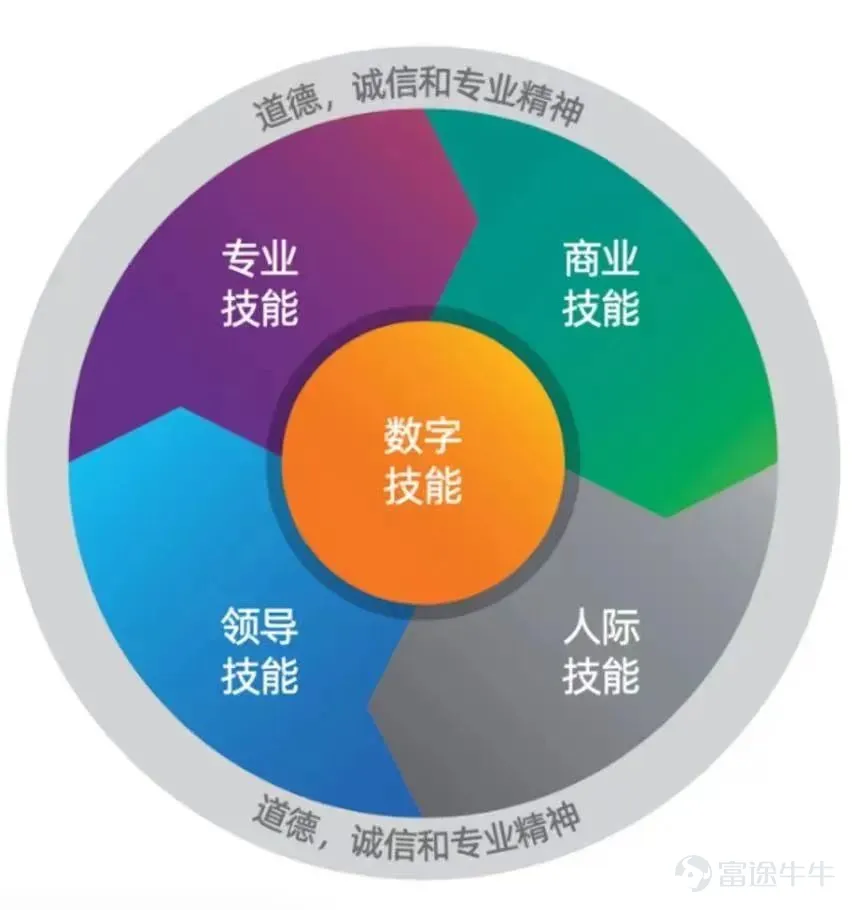
In multiple professional competency frameworks or guidelines for accountants, professional knowledge requirements are prioritized, encompassing content across many fields such as accounting, auditing, finance, taxation, relevant regulations, corporate organization and management, and information technology.
Additionally, during the evaluation process, the Chinese edition of Barron's had close communications with several CFOs in the corporate world. The CFOs we interviewed unanimously listed their own professional skills (e.g., educational background, qualifications, etc.) as the primary factor when presenting themselves.
Factually speaking, among the nearly 600 CFOs of Chinese companies listed on the Hong Kong and US stock markets covered by this evaluation, the vast majority have professional education backgrounds in accounting or hold professional qualification certificates.
Enterprise Security Expert
As the highest leader of the financial department, CFOs face an environment that has never been as uncertain as it is now: the COVID-19 pandemic, geopolitical conflicts, supply chain disruptions, US dollar interest rate hikes, and high inflation have successively impacted global capital markets; the impact of the pandemic has not yet ended, and the global economy is once again facing recession risks.
Safeguarding corporate security is a traditional function of the CFO. However, considering the current complex economic environment, this role has taken on new meanings, extending beyond financial and cash flow security, asset protection, and now including supply chain security, data security, and even challenges like low-carbon transitions.
For CFOs, the issue often isn't just about business risks such as supply chain or data but more importantly, the financial risks these problems might trigger. As a result, the traditional 'bookkeeper' function of CFOs is expanding. CFOs need to integrate into all aspects of corporate operations to ensure the safety of business operations.
Take the supply chain as an example. Amid the impact of the COVID-19 pandemic, the global supply chain system has been disrupted, sparking widespread discussion. Many companies have been unable to produce normally or deliver products due to supply chain issues, which naturally leads to a series of risks such as revenue, costs, cash flow, and debt repayment capacity. To address these challenges, CFOs should closely collaborate with the procurement department to diversify the company’s product supply chain while maintaining low production costs.
During the evaluation activities, Huang Jia, Partner-in-Charge of PwC China Tax Department, stated, 'In the current geopolitical environment, many sudden risks are hard to predict. At this time, the global experience and management capabilities of CFOs are needed, especially their ability to engage with investors and communicate with various stakeholders.'
From the perspective of financial security, Zhang Hongli, former Deputy行长 of ICBC, stated, 'The CFO of a listed company is the key guardian of corporate finance and shareholder asset safety.' The issue raised by Tang Guliang, Professor at the School of Business, University of International Business and Economics, regarding CFOs needing to focus on corporate cash flow, represents a factual 'security view.' Any company's CFO should always pay attention to the company's cash flow, its ability to meet maturing obligations, future debt repayment arrangements, etc. CFOs should also accurately predict the timing of cash flows related to business operations and investments.
Data security is a relatively fresh topic. As governments worldwide strengthen regulatory oversight on data security, this issue has become particularly critical. Any problems arising from the collection, application, or export of data could lead to serious issues in investment, financing, and corporate operations, which would also reflect as financial risks. Li Ying, President of AICPA® & CIMA® (Association of International Certified Professional Accountants) North Asia Region, stated, 'Regulatory frameworks are becoming clearer. For CFOs, there are more complex requirements and new changes, potentially leading to increasing financial risks related to data.'
The survey on Chinese Management Accounting Practices and Competency, primarily initiated by AICPA® & CIMA®, shows that digital skills will be as important as professional skills over the next five years. The survey results indicate that the largest gap between the actual and expected mastery of skills among current management accounting professionals lies in digital skills.
Based on this year’s CFO evaluations, participating CFOs often prioritize cash flow and corporate operational safety. Especially for real estate companies, specific differences in the 'safety view' allow some real estate enterprises to maintain stable development currently.
Financial security issues are crucial to a company’s survival. Experienced CFOs can work closely with their companies to seize specific windows of opportunity for going public. In this year’s evaluation, we found that CFOs of companies including Waterdrop and Brii Biosciences were able to seize fleeting IPO financing opportunities, successfully leading their companies to go public and raising valuable funds for future growth.
Strategy Implementation Specialist
Corporate strategy essentially addresses what a company aims to become and how to get there, encompassing business development, competitive positioning, mergers and acquisitions, risk management, strategy implementation, and strategic assessment at specific levels.
The CFO needs to participate in corporate strategic management and key decision-making, not only as the highest authority in corporate management and financial work but, more importantly, because the mobilization, allocation, and use of all resources during the formulation and implementation of corporate strategy cannot be achieved without the active involvement and cooperation of the CFO. Additionally, as a result of strategy execution—namely performance evaluation and management—the participation of the CFO is equally indispensable.
In recent years, due to the impact of the COVID-19 pandemic and geopolitical factors, the uncertainty of the business environment has increased. This specific environment not only demands agility from CFOs but also places higher requirements on their mid-to-long-term strategic insight: CFOs should possess a strategic perspective and an understanding of business development capabilities.
In October 2020, the Shanghai National Accounting Institute launched a survey questionnaire on the competency framework for corporate CFOs. The results showed that among the five dimensions of knowledge, industry experience, strategic thinking, interpersonal skills, and professional ethics, strategic thinking was identified by the largest number of CFOs as the area most in need of improvement, with CFOs from large enterprises expressing stronger demands than those from smaller companies. Undoubtedly, CFOs will assume responsibility for implementing business strategies and play a leading role in strategy formulation, validation, and execution. An IBM survey also revealed that 'CFOs recognize that financial functions must help the company formulate and execute strategies more effectively.'
Glenn Gao, Chief Representative of the NYSE in China, stated at an event regarding the role of the CFO, 'Apart from crisis management capabilities, the CFO must also possess professional financial management skills, strong capital operation abilities, and strategic planning awareness.'
Taking digital transformation as an example, in response to digital transformation, former EY Asia-Pacific Managing Partner Patrick Yeo highlighted, 'Amidst the broader trend of digital transformation, it is not difficult to foresee that data-driven decision-making will become the future, while operational finance will gradually fade away. Therefore, finance professionals must transition from being operators to controllers and innovators, breaking down barriers between financial and business data.'
The three identities we previously mentioned for CFOs—financial, enterprise security, and corporate strategy—are just three important roles and functions of a company's CFO. In fact, the role of the CFO within a company is even more complex and diverse. They are responsible not only for financial and accounting management but also for participating in corporate strategy formulation and operations, as well as managing the company’s investment, financing, and tax planning. Thus, the CFO is a versatile player within the organization.
Finally, the outcome of an evaluation activity merely marks the end of a specific phase; however, the growth journey of CFOs does not stop here, nor does our pursuit and documentation of their evolution. Futu will continue to track changes in the role of the CFO, aiming to explore the diverse qualities of various types of financial leaders.
Risk Disclaimer: The above content only represents the author's view. It does not represent any position or investment advice of Futu. Futu makes no representation or warranty.Read more


Comments
to post a comment
9
26