English
Back
Open Account
【有獎互動】2022上半年優秀貢獻者,@你在牛牛圈的良師益友

Infobird Software
joined discussion · Sep 20, 2022 14:46

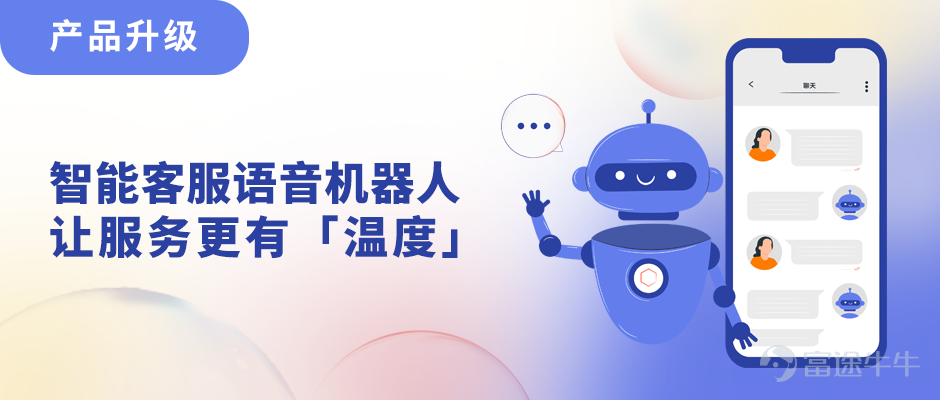
IQ and EQ join forces, and Xunniao Software creates a “smart” customer service voice robot with more “temperature”

Accenture research shows that as many as 75% of executives say their organization will actively deploy some kind of artificial intelligence technology over the next three years, and AI will work side by side with humans in the enterprise as a colleague, collaborator, and trusted advisor. ——Introduction
Accenture research shows that as many as 75% of executives say their organization will actively deploy some kind of artificial intelligence technology over the next three years, and AI will work side by side with humans in the enterprise as a colleague, collaborator, and trusted advisor. ——Introduction Before we talk about product upgrades, let's talk about chatbots. I believe every friend who studies conversational AI knows:There is no perfect chatbot! Of course, when studying chatbots, most companies don't have a best practice guide. They all conduct corresponding research based on the purpose, coverage of business scenarios, and target groups, so the scope of conversation for each chatbot is also different. In China, chatbots are more biased towards pragmatism. The most typical application isCustomer service robot。 In the early days, customer service robots were conversation robots built using keywords and search technology. The goal was to solve users' routine repetitive questions, reduce investment in manual customer service, change the customer service work model, and provide 24/7 consulting services.However, this type of robot has many shortcomings, and the answers are inexplicable and “intellectually disabled”, causing quite a headache for both developers and users. According to the “2021 China Smart Customer Service Satisfaction Survey Report”, only 29.8% of users think that smart customer service can solve many problems, and only 9.6% of users think that smart customer service's ability to solve problems is superior to manual customer service. Answer one thousand one (59.1%)...
Before we talk about product upgrades, let's talk about chatbots.
I believe every friend who studies conversational AI knows:There is no perfect chatbot!
Of course, when studying chatbots, most companies don't have a best practice guide. They all conduct corresponding research based on the purpose, coverage of business scenarios, and target groups, so the scope of conversation for each chatbot is also different.
In China, chatbots are more biased towards pragmatism. The most typical application isCustomer service robot
In the early days, customer service robots were conversation robots built using keywords and search technology. The goal was to solve users' routine repetitive questions, reduce investment in manual customer service, change the customer service work model, and provide 24/7 consulting services.However, this type of robot has many shortcomings, and the answers are inexplicable and “intellectually disabled”, causing quite a headache for both developers and users.
Accenture research shows that as many as 75% of executives say their organization will actively deploy some kind of artificial intelligence technology over the next three years, and AI will work side by side with humans in the enterprise as a colleague, collaborator, and trusted advisor. ——Introduction Before we talk about product upgrades, let's talk about chatbots. I believe every friend who studies conversational AI knows:There is no perfect chatbot! Of course, when studying chatbots, most companies don't have a best practice guide. They all conduct corresponding research based on the purpose, coverage of business scenarios, and target groups, so the scope of conversation for each chatbot is also different. In China, chatbots are more biased towards pragmatism. The most typical application isCustomer service robot。 In the early days, customer service robots were conversation robots built using keywords and search technology. The goal was to solve users' routine repetitive questions, reduce investment in manual customer service, change the customer service work model, and provide 24/7 consulting services.However, this type of robot has many shortcomings, and the answers are inexplicable and “intellectually disabled”, causing quite a headache for both developers and users. According to the “2021 China Smart Customer Service Satisfaction Survey Report”, only 29.8% of users think that smart customer service can solve many problems, and only 9.6% of users think that smart customer service's ability to solve problems is superior to manual customer service. Answer one thousand one (59.1%)...
According to the “2021 China Smart Customer Service Satisfaction Survey Report”, only 29.8% of users think that smart customer service can solve many problems, and only 9.6% of users think that smart customer service's ability to solve problems is superior to manual customer service. Answering one thousand questions (59.1%), repetitive operation (50.6%), and answering not what was asked (47.3%)) are still the main problems users encounter in using intelligent customer service.
Today in 2022, although customer service robots have long been an indispensable part of the Internet customer consumption process, and products are constantly being iteratively upgraded, there are stillCold, lacking in accuracy and humanistic carePain points need to be addressed urgently.
Accenture research shows that as many as 75% of executives say their organization will actively deploy some kind of artificial intelligence technology over the next three years, and AI will work side by side with humans in the enterprise as a colleague, collaborator, and trusted advisor. ——Introduction Before we talk about product upgrades, let's talk about chatbots. I believe every friend who studies conversational AI knows:There is no perfect chatbot! Of course, when studying chatbots, most companies don't have a best practice guide. They all conduct corresponding research based on the purpose, coverage of business scenarios, and target groups, so the scope of conversation for each chatbot is also different. In China, chatbots are more biased towards pragmatism. The most typical application isCustomer service robot。 In the early days, customer service robots were conversation robots built using keywords and search technology. The goal was to solve users' routine repetitive questions, reduce investment in manual customer service, change the customer service work model, and provide 24/7 consulting services.However, this type of robot has many shortcomings, and the answers are inexplicable and “intellectually disabled”, causing quite a headache for both developers and users. According to the “2021 China Smart Customer Service Satisfaction Survey Report”, only 29.8% of users think that smart customer service can solve many problems, and only 9.6% of users think that smart customer service's ability to solve problems is superior to manual customer service. Answer one thousand one (59.1%)...
In the open Internet era, as a leading AI SaaS customer service provider in China, Xunniao Software has not only been upgrading to build an efficient and accurate intelligent customer service system, but has also insisted on continuously iterating customer service robot products.Newly upgraded products“Intelligent customer service voice robot”The customer service experience has been improved, and the efficiency and temperature of intelligent customer service operations have been improved.
Accenture research shows that as many as 75% of executives say their organization will actively deploy some kind of artificial intelligence technology over the next three years, and AI will work side by side with humans in the enterprise as a colleague, collaborator, and trusted advisor. ——Introduction Before we talk about product upgrades, let's talk about chatbots. I believe every friend who studies conversational AI knows:There is no perfect chatbot! Of course, when studying chatbots, most companies don't have a best practice guide. They all conduct corresponding research based on the purpose, coverage of business scenarios, and target groups, so the scope of conversation for each chatbot is also different. In China, chatbots are more biased towards pragmatism. The most typical application isCustomer service robot。 In the early days, customer service robots were conversation robots built using keywords and search technology. The goal was to solve users' routine repetitive questions, reduce investment in manual customer service, change the customer service work model, and provide 24/7 consulting services.However, this type of robot has many shortcomings, and the answers are inexplicable and “intellectually disabled”, causing quite a headache for both developers and users. According to the “2021 China Smart Customer Service Satisfaction Survey Report”, only 29.8% of users think that smart customer service can solve many problems, and only 9.6% of users think that smart customer service's ability to solve problems is superior to manual customer service. Answer one thousand one (59.1%)...
Based on customer service robotsOriginal quick identification and response to customer issues, fixed multi-round conversations, intelligent interruption, contextual semantic understanding, real person recordingOn the basis of functions such as these, the intelligent customer service voice robot after this upgrade has not only been able to do itIQ (IQ) online, more capable ofHigh EQ (emotional intelligence) is answering questions, making robots warmer and more aware of “people.”
1. “Upgrading” intelligent technology
Among a hundred people, there are probably 100 different oral expressions for the same intention. This is the charm of language, and it is also a difficult point of conversation and interaction.
Xunniao software uses cutting-edgeDeep learning technology, and based on a highervoice recognitionaccuracy, especially inSelf-developed NILP natural language understanding technologyThe deep accumulation of aspects ensures that intelligent customer service voice robots can quickly and accurately understand customer intentions and respond quickly.
Multiple rounds of conversation
Support a high degree of freedom of dialogue and abandon complicated expert dialogue methods with fixed processes.The robot is based on importing and tagging conversation content, and is not limited by process settings. The dialogue is more flexible and closer to free conversation with real people, making it easy for enterprises to customize different types of intelligent customer service voice robots to meet the needs of customers in various application scenarios.
 
Accenture research shows that as many as 75% of executives say their organization will actively deploy some kind of artificial intelligence technology over the next three years, and AI will work side by side with humans in the enterprise as a colleague, collaborator, and trusted advisor. ——Introduction Before we talk about product upgrades, let's talk about chatbots. I believe every friend who studies conversational AI knows:There is no perfect chatbot! Of course, when studying chatbots, most companies don't have a best practice guide. They all conduct corresponding research based on the purpose, coverage of business scenarios, and target groups, so the scope of conversation for each chatbot is also different. In China, chatbots are more biased towards pragmatism. The most typical application isCustomer service robot。 In the early days, customer service robots were conversation robots built using keywords and search technology. The goal was to solve users' routine repetitive questions, reduce investment in manual customer service, change the customer service work model, and provide 24/7 consulting services.However, this type of robot has many shortcomings, and the answers are inexplicable and “intellectually disabled”, causing quite a headache for both developers and users. According to the “2021 China Smart Customer Service Satisfaction Survey Report”, only 29.8% of users think that smart customer service can solve many problems, and only 9.6% of users think that smart customer service's ability to solve problems is superior to manual customer service. Answer one thousand one (59.1%)...
inGlucose Test Service ScenarioAmong them, robots can correctly understand the context, dynamically adjust and handle inquiries, achieve close conversations with real people according to different customer responses, respond freely and unrestricted to customer questions, truly be empathetic and knowledgeable, and have smooth, flexible, and warm communication with customers.
Of course, on the premise of ensuring customer freedom of conversation, robots can also provide corresponding business rhetoric guidance to improve the fluency and success rate of business services.
Accenture research shows that as many as 75% of executives say their organization will actively deploy some kind of artificial intelligence technology over the next three years, and AI will work side by side with humans in the enterprise as a colleague, collaborator, and trusted advisor. ——Introduction Before we talk about product upgrades, let's talk about chatbots. I believe every friend who studies conversational AI knows:There is no perfect chatbot! Of course, when studying chatbots, most companies don't have a best practice guide. They all conduct corresponding research based on the purpose, coverage of business scenarios, and target groups, so the scope of conversation for each chatbot is also different. In China, chatbots are more biased towards pragmatism. The most typical application isCustomer service robot。 In the early days, customer service robots were conversation robots built using keywords and search technology. The goal was to solve users' routine repetitive questions, reduce investment in manual customer service, change the customer service work model, and provide 24/7 consulting services.However, this type of robot has many shortcomings, and the answers are inexplicable and “intellectually disabled”, causing quite a headache for both developers and users. According to the “2021 China Smart Customer Service Satisfaction Survey Report”, only 29.8% of users think that smart customer service can solve many problems, and only 9.6% of users think that smart customer service's ability to solve problems is superior to manual customer service. Answer one thousand one (59.1%)...
inCredit card service scenarioIn China, robots can obtain key customer information and provide corresponding business application services to customers as needed. Customers can obtain the information and services they need by stating their needs, and fully enjoy the efficient and convenient experience brought by natural voice interaction.
II. “Heated up” customer service
While solving customers' high-frequency business problems, intelligent customer service also needs to be provided to customersmulti-dimensionalYes, hashuman-like abilitiesoftheAssistant, shopping guide, chat and entertainmentOther service capabilities to improve overall customer satisfaction with intelligent customer service robots. In this process, emotion recognition technology has played a critical role in robot human capacity building.
Xunniao softwareBimodal speech emotion recognition technologybasedTsinghua Human-Computer Interaction LaboratoryThe latest research results,Judging emotions based on large-scale voice datato achieve a “can listen, speak, and understand you” human-like interaction experience.
According to public data and evaluation results, Xunniao Software's dual-mode voice emotion recognition technology ranks first among similar emotion recognition technologies worldwide.
Accenture research shows that as many as 75% of executives say their organization will actively deploy some kind of artificial intelligence technology over the next three years, and AI will work side by side with humans in the enterprise as a colleague, collaborator, and trusted advisor. ——Introduction Before we talk about product upgrades, let's talk about chatbots. I believe every friend who studies conversational AI knows:There is no perfect chatbot! Of course, when studying chatbots, most companies don't have a best practice guide. They all conduct corresponding research based on the purpose, coverage of business scenarios, and target groups, so the scope of conversation for each chatbot is also different. In China, chatbots are more biased towards pragmatism. The most typical application isCustomer service robot。 In the early days, customer service robots were conversation robots built using keywords and search technology. The goal was to solve users' routine repetitive questions, reduce investment in manual customer service, change the customer service work model, and provide 24/7 consulting services.However, this type of robot has many shortcomings, and the answers are inexplicable and “intellectually disabled”, causing quite a headache for both developers and users. According to the “2021 China Smart Customer Service Satisfaction Survey Report”, only 29.8% of users think that smart customer service can solve many problems, and only 9.6% of users think that smart customer service's ability to solve problems is superior to manual customer service. Answer one thousand one (59.1%)...
Emotion recognition
Identify customer emotional intentions accurately, such asPublic opinion crisis, escalation of problems, complaints, abuseWait, it's okay to respond to abnormal customer feelingsReal-time AlertsRemind them to intervene in a timely manner to reduce hidden risks and improve customer satisfaction.
Accenture research shows that as many as 75% of executives say their organization will actively deploy some kind of artificial intelligence technology over the next three years, and AI will work side by side with humans in the enterprise as a colleague, collaborator, and trusted advisor. ——Introduction Before we talk about product upgrades, let's talk about chatbots. I believe every friend who studies conversational AI knows:There is no perfect chatbot! Of course, when studying chatbots, most companies don't have a best practice guide. They all conduct corresponding research based on the purpose, coverage of business scenarios, and target groups, so the scope of conversation for each chatbot is also different. In China, chatbots are more biased towards pragmatism. The most typical application isCustomer service robot。 In the early days, customer service robots were conversation robots built using keywords and search technology. The goal was to solve users' routine repetitive questions, reduce investment in manual customer service, change the customer service work model, and provide 24/7 consulting services.However, this type of robot has many shortcomings, and the answers are inexplicable and “intellectually disabled”, causing quite a headache for both developers and users. According to the “2021 China Smart Customer Service Satisfaction Survey Report”, only 29.8% of users think that smart customer service can solve many problems, and only 9.6% of users think that smart customer service's ability to solve problems is superior to manual customer service. Answer one thousand one (59.1%)...
Intelligent customer service voice robots can support voice emotionsThree categories, four categories, and six categories, the recognition rate exceeds in various application scenarios85%, in mature business scenarios, the recognition accuracy rate can be as high as95%
Accenture research shows that as many as 75% of executives say their organization will actively deploy some kind of artificial intelligence technology over the next three years, and AI will work side by side with humans in the enterprise as a colleague, collaborator, and trusted advisor. ——Introduction Before we talk about product upgrades, let's talk about chatbots. I believe every friend who studies conversational AI knows:There is no perfect chatbot! Of course, when studying chatbots, most companies don't have a best practice guide. They all conduct corresponding research based on the purpose, coverage of business scenarios, and target groups, so the scope of conversation for each chatbot is also different. In China, chatbots are more biased towards pragmatism. The most typical application isCustomer service robot。 In the early days, customer service robots were conversation robots built using keywords and search technology. The goal was to solve users' routine repetitive questions, reduce investment in manual customer service, change the customer service work model, and provide 24/7 consulting services.However, this type of robot has many shortcomings, and the answers are inexplicable and “intellectually disabled”, causing quite a headache for both developers and users. According to the “2021 China Smart Customer Service Satisfaction Survey Report”, only 29.8% of users think that smart customer service can solve many problems, and only 9.6% of users think that smart customer service's ability to solve problems is superior to manual customer service. Answer one thousand one (59.1%)...
Xunniao Software's customer service has always been“Sense of temperature”, “intelligence”Grab it with both hands. On the one hand, through continuous iteration of robots, we“cognition”level, give it“mind”, shorten the time and space distance with customers; on the other hand, we willEmotion recognitionwithCaringIntegrate into service and deepen emotional empathy with customers.
3. “Upgrade” service experience
Intelligent customer service voice robots can carry out multi-dimensional analysis of large amounts of conversation data generated by voice transcription to achieveIn-depth conversation content drillingwithVoice of the customer insight, extract data value information, and form a callBasic content analysis, dynamic recognition and early warning of public opinion, focus on hot businessand other diverse scenes.
The analytical efficiency of intelligent customer service voice robots can reachMinute levelIt can efficiently assist managers to adjust management strategies and promote customer service centersProduct optimization, process improvement, business developmentIt plays a role.
Statistical analysis
Accenture research shows that as many as 75% of executives say their organization will actively deploy some kind of artificial intelligence technology over the next three years, and AI will work side by side with humans in the enterprise as a colleague, collaborator, and trusted advisor. ——Introduction Before we talk about product upgrades, let's talk about chatbots. I believe every friend who studies conversational AI knows:There is no perfect chatbot! Of course, when studying chatbots, most companies don't have a best practice guide. They all conduct corresponding research based on the purpose, coverage of business scenarios, and target groups, so the scope of conversation for each chatbot is also different. In China, chatbots are more biased towards pragmatism. The most typical application isCustomer service robot。 In the early days, customer service robots were conversation robots built using keywords and search technology. The goal was to solve users' routine repetitive questions, reduce investment in manual customer service, change the customer service work model, and provide 24/7 consulting services.However, this type of robot has many shortcomings, and the answers are inexplicable and “intellectually disabled”, causing quite a headache for both developers and users. According to the “2021 China Smart Customer Service Satisfaction Survey Report”, only 29.8% of users think that smart customer service can solve many problems, and only 9.6% of users think that smart customer service's ability to solve problems is superior to manual customer service. Answer one thousand one (59.1%)...
Record reception data in real time, and based on manual transfer, identification, reception, popular issues, and high-frequency issuesMultidimensional statisticswithshowcasing; customerDistribution of issuesandStatistical analysis of hot words, efficient feedback on business indicatorsAnalysis of public opinion on business issuesto provide managers with early warning of business issues.
Public opinion warning
Accenture research shows that as many as 75% of executives say their organization will actively deploy some kind of artificial intelligence technology over the next three years, and AI will work side by side with humans in the enterprise as a colleague, collaborator, and trusted advisor. ——Introduction Before we talk about product upgrades, let's talk about chatbots. I believe every friend who studies conversational AI knows:There is no perfect chatbot! Of course, when studying chatbots, most companies don't have a best practice guide. They all conduct corresponding research based on the purpose, coverage of business scenarios, and target groups, so the scope of conversation for each chatbot is also different. In China, chatbots are more biased towards pragmatism. The most typical application isCustomer service robot。 In the early days, customer service robots were conversation robots built using keywords and search technology. The goal was to solve users' routine repetitive questions, reduce investment in manual customer service, change the customer service work model, and provide 24/7 consulting services.However, this type of robot has many shortcomings, and the answers are inexplicable and “intellectually disabled”, causing quite a headache for both developers and users. According to the “2021 China Smart Customer Service Satisfaction Survey Report”, only 29.8% of users think that smart customer service can solve many problems, and only 9.6% of users think that smart customer service's ability to solve problems is superior to manual customer service. Answer one thousand one (59.1%)...
Relying on data boards, managers can viewHot word trend analysiswithSession DetailsAfter that, quicklyLocate hot customer consultation issues, monitor customer service experience in real time, and warn business service risks in a timely manner.
Although the customer service of Xunniao Software is rooted in technological innovation, it is by no means limited to the gimmick of pursuing new technology.The ultimate goal of intelligent customer service voice robots is always to help customers solve problems, and good service must be people-oriented.
Intelligent customer service voice robotThis is just the first step; new technology will inevitably further disrupt the overall ecological structure of the customer service industry. In the future, Xunniao Software will continue“Upgrade” intelligent technology, “heat up” customer service, and “upgrade” service experience,Further improve the customer service ecosystem, let the sense of service temperature coexist with intelligence, and allow robots to better understand “people”.
Intelligent customer service is only an extension of the service scenario. The integration of intelligent technology plays a “delicate and silent” role.Service is at the front, intelligence is at the back, and the “sense of temperature” is integrated throughout.
Risk Disclaimer: The above content only represents the author's view. It does not represent any position or investment advice of Futu. Futu makes no representation or warranty.Read more
Heart
1
29K Views
Report
Comment (1)
Write a Comment...
1
1