
Shenzhou Holdings' New Technology Statement | Smart City Market Scenario Innovation Driven by Digital Cloud Integration Technology


Ancient people speak new words
Talks about Yashi-shi
There are new technical stories
Talented and eloquent
2022 TECH Digital China Technology Annual Conference
Focus on the cutting edge of innovation
Dig deeper
Towards the top of technology
There you have me
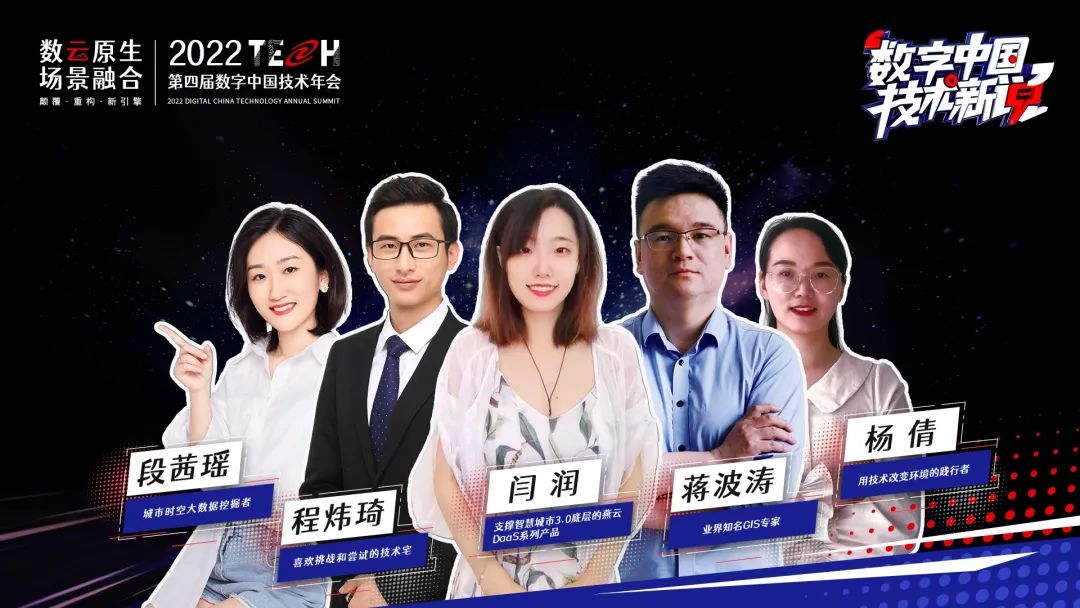
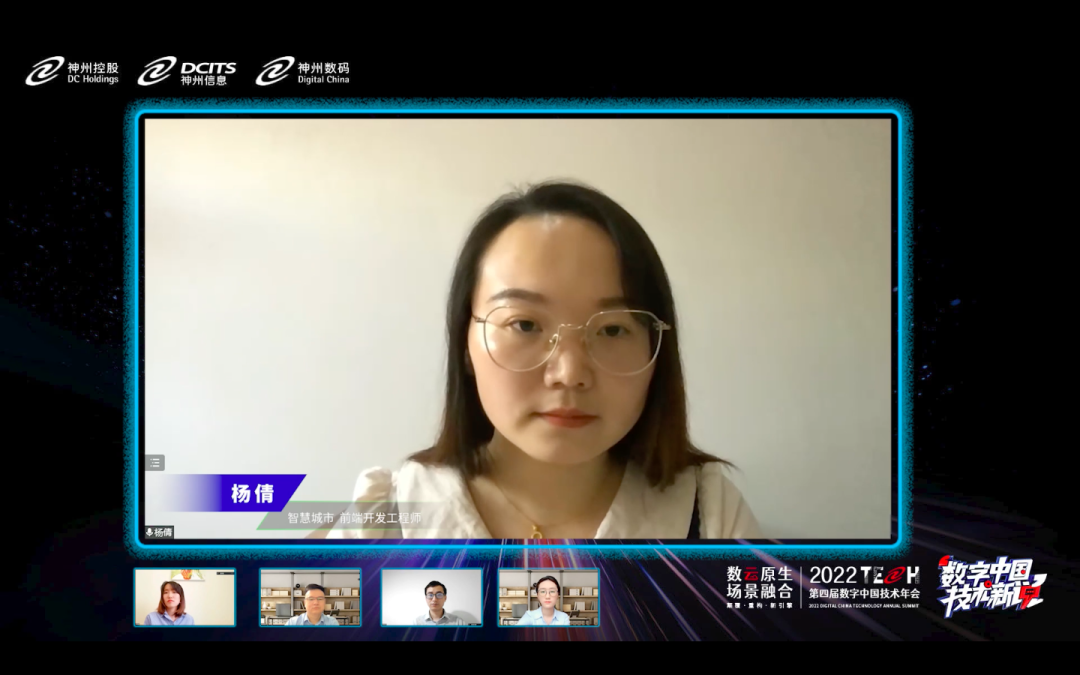
At 8 p.m. on June 8, during the live broadcast of Shenzhou Holdings, several young and thoughtful technology pioneers had a conversation about “Smart City Market Scene Innovation Driven by Digital Cloud Integration Technology” on the future picture of smart cities. Next, let's take a look back and see what cutting-edge ideas they all shared.
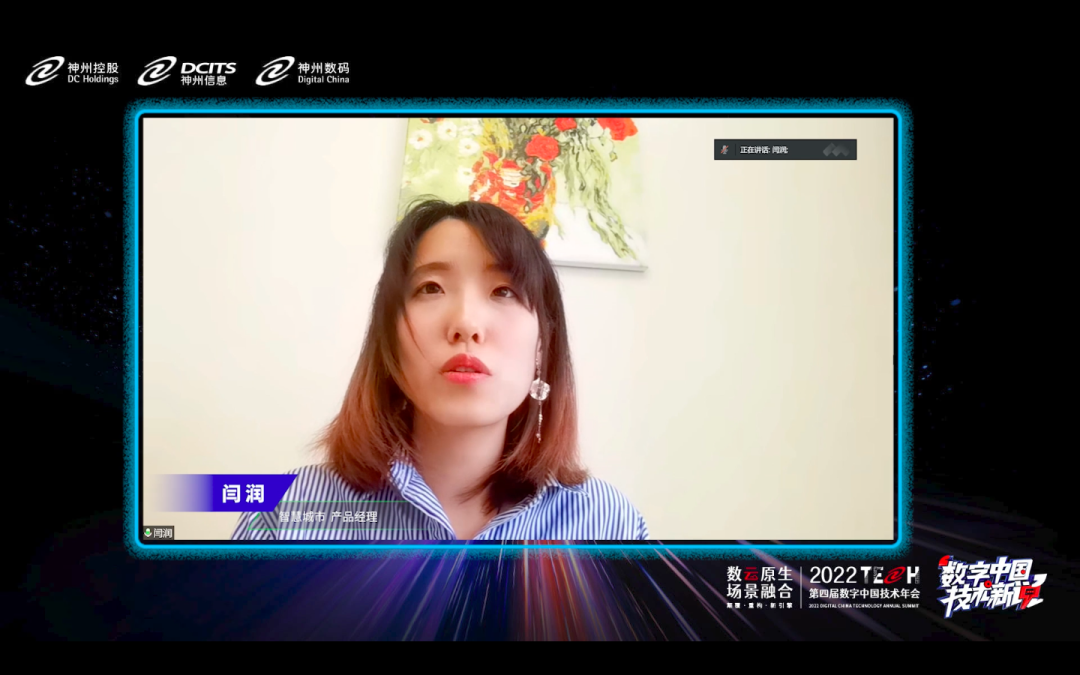
CIM-- “Data-driven innovation in urban governance has become a new trend in current urban management.”
In smart city construction, global data collection and organization, including spatio-temporal data, is the foundation. After decades of construction, application systems in the spatio-temporal information industry have become very common. They meet the needs of their respective business fields, but they have also formed information silos one by one. First, many sharing platforms target a specific range of data. The initial construction of the system defines the scope of data and cannot be well adapted to extended applications; second, the data governance process is invisible and heavily depends on the ability of technicians, making it difficult for business personnel to participate.
As urban elements become more and more complex, traditional urban management, operation and maintenance development models are no longer able to support future urban development needs. CIM came into being. CIM is an abbreviation for City Information Model in English, that is, city information model. Compared with spatio-temporal information platforms, CIM covers L1 to L7 requirements at the hierarchical level, from two-dimensional to three-dimensional, from overall to local; in terms of scale, it requires indoor, outdoor, ground and underground data; in terms of content, it requires from static information management to real-time sensor sensing; and in terms of scope, it requires from effect display to dynamic calculation to support urban operation.
The intelligent digital twin CIM platform in the digital base of Shenzhou Holding City is just such a city-wide data center. It has built a library of shared urban data resources for the city, and also provides many tools to help departments quickly build their own applications on this basis. Business personnel can participate more directly in application development, saving time and being more efficient.
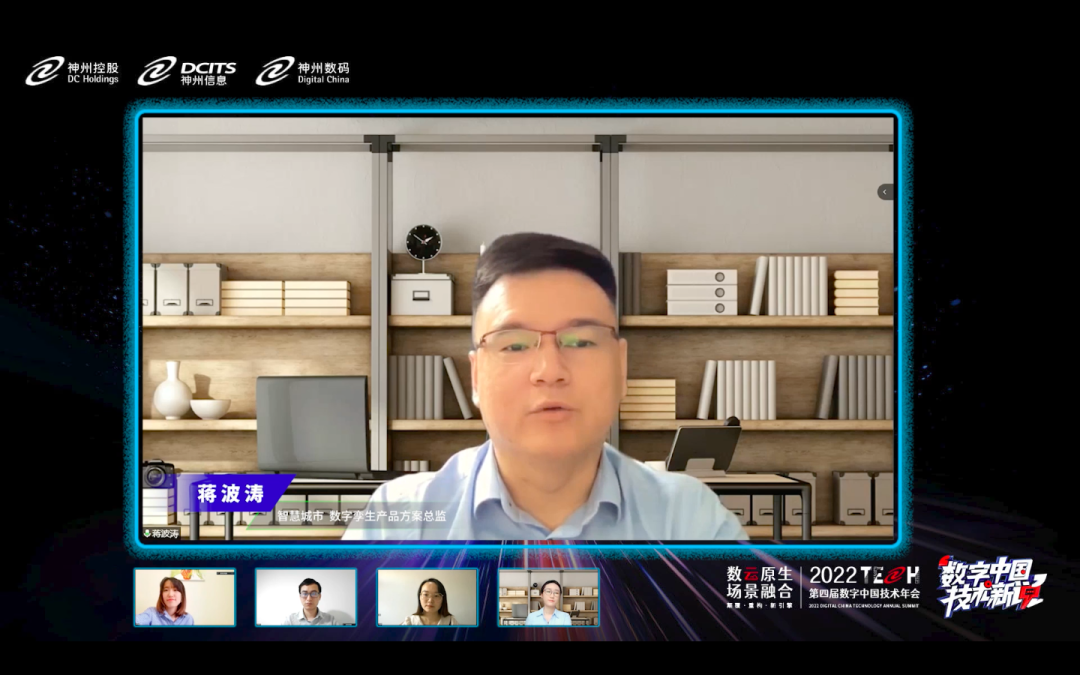
Knowledge maps - “Urban knowledge maps are about gathering scattered data, forming relationships, and generating knowledge.”
Although many cities have extracted data to urban big data centers and achieved local wisdom, the data structure design is still mainly based on traditional methods, so virtual space data cannot be mapped one by one with actual city operation data. To make this data work, it is necessary to organize this data into a large knowledge base and use it as a basic resource for smart cities.
Building an urban knowledge base is inseparable from a knowledge map. As one of the underlying AI technologies, knowledge maps can provide a unified framework for sharing data based on governance agreements. Based on open standards, the relationships between data are used to optimize business and operations, so that data from different sources is linked on a comprehensive, queryable semantic map to show the relevant points in the relationship.
Through the application of knowledge mapping technology, data on clothing, food, housing, and travel in urban life, administrative management, public service management, labor and social security management, land resource management, etc. in urban management are analyzed and mined, and a dynamic knowledge base that is easy for human organization, management and use is built, and ultimately provides strong support for urban residents' applications, government offices, and leadership decisions.
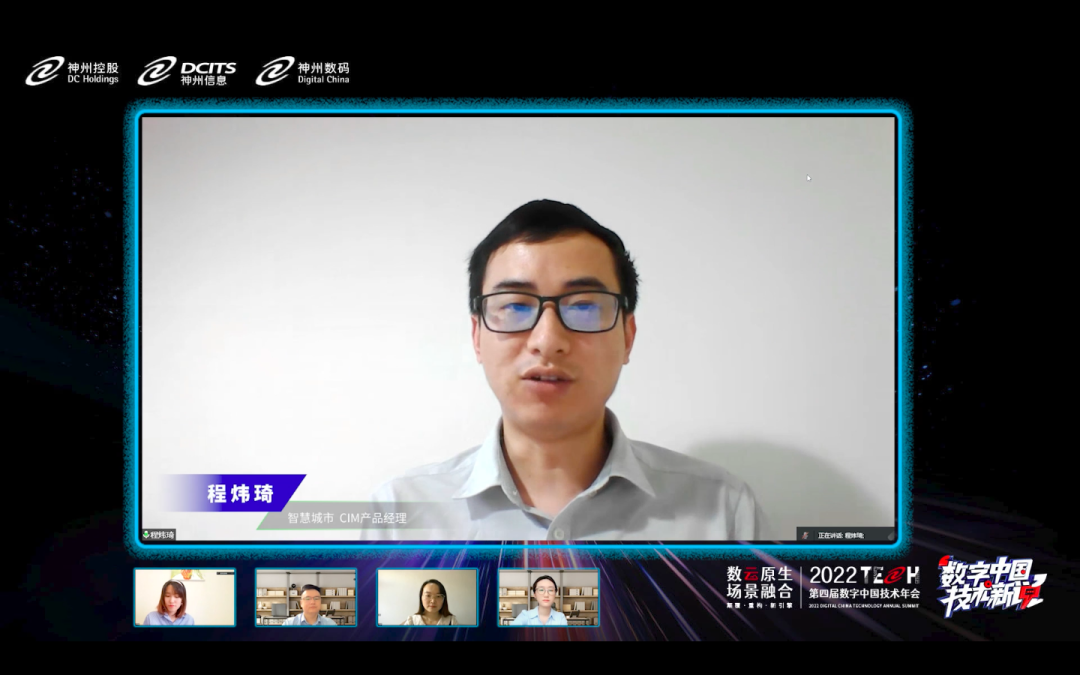
Smart environmental protection - “Innovative application of digital cloud integration scenarios.”
Smart environmental protection solutions based on “digital cloud integration” can more effectively achieve unified management of environmental monitoring equipment, promote the integration of diverse environmental data, and provide more reliable solutions for environmental quality management monitoring and early warning.
In terms of visual scheduling, the intelligent digital twin platform is used to quickly integrate spatio-temporal information, Internet of Things information, and surveillance video information. Through powerful comprehensive information processing and analysis functions, monitoring data and surveillance video are presented in multimedia format to grasp the environmental conditions in key regions in a timely, dynamic and accurate manner, improve response and processing capacity to respond to emergency events, and provide a scientific and accurate decision-making basis for environmental law enforcement, investigation and treatment of pollution accidents, and emergency command and scheduling.
In terms of integrating environmental data resources: Build an environmentally friendly cloud big data center with uniform standards to fully integrate data resources. Data from urban management, transportation, land, meteorology and other units is connected to achieve integrated sharing of environmental monitoring data and information interconnection, and provides basic pollution data support with the most complete categories, the widest range of dimensions, and the largest amount of information for in-depth exploration of massive environmental data. At the same time, environmental data dictionaries are prepared to form a multi-level and multi-level resource catalogue system, and relationships between application system data are established based on urban knowledge maps to achieve the goals of one count, one source for multiple use, and multiple source sharing.
Smart Dual Carbon - “Urban Digital Pedestals Empower the Achievement of Dual Carbon Goals.”
Achieving the “dual carbon” goal requires digitalization. Digitalize and intelligently empower carbon emission activities to form personalized, user-friendly, and intelligent services centered on people, so that parks or enterprises are not only “strong”, but also more “smart”. The digital cloud integration platform supports the rapid implementation and implementation of smart dual-carbon solutions, and realizes innovation in many scenarios.
In terms of visualizing carbon emissions, carbon emissions can be intuitively visualized in a virtual space through the smart digital twin platform, and carbon emissions that were previously invisible or untouchable are truly displayed in front of users, so that every decision is supported by technology.
In terms of carbon data monitoring, spatial geography and IoT data of cities and parks are obtained through CIM platforms, and perception networks linked to people, objects, organizations, etc. become dynamically expandable, achieving infinite information symmetry.
In terms of carbon emission management, the smart data center of Shenzhou Holdings can link information silos, so that a unified, decentralized, and information-based platform can be integrated and upgraded into a diversified, collaborative, and intelligent decision support system to accurately quantify and analyze trends in carbon emissions to provide customers with strong decision support.
In terms of carbon emission simulation and deduction, artificial intelligence is used to perform detailed simulation and spatial deduction of carbon emissions at a small granularity in time and space, reconstruct the value of data, complete the evolution from data to knowledge, to intelligence, and finally to intelligence, and achieve the integration of knowledge and action.
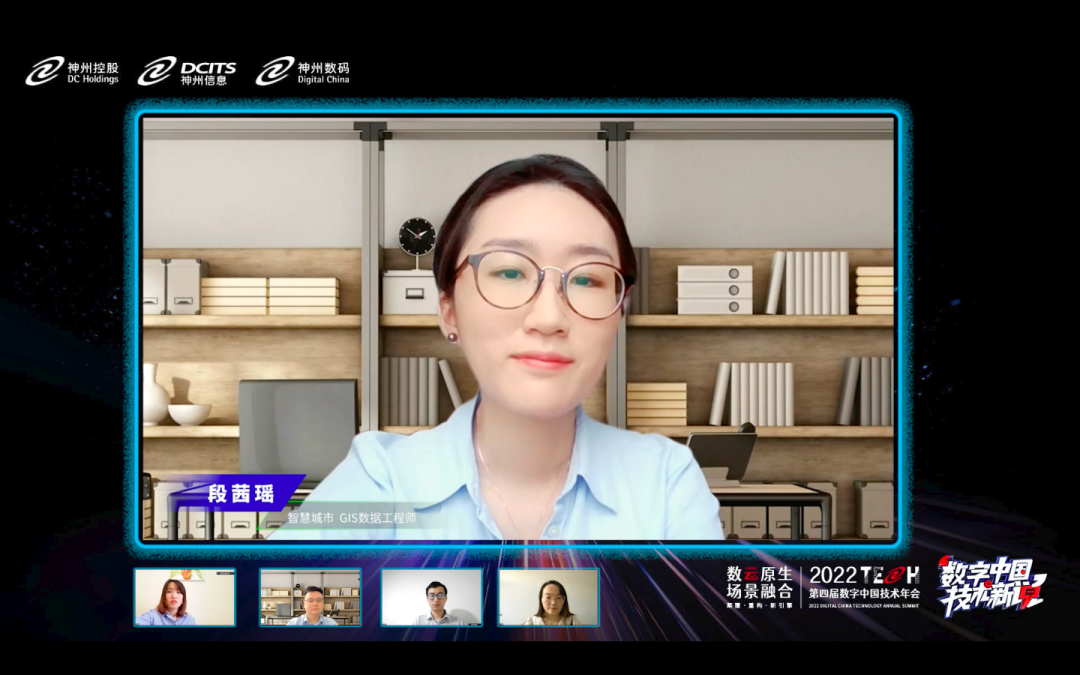
Through conversations between several technology pioneers, the audience further realized that “digital cloud integration” will become a new feature of the digital economy, and also saw the development trend and direction of next-generation smart cities driven by digital cloud integration technology. These innovations will restructure network connections, restructure application models, and restructure data value.
Risk Disclaimer: The above content only represents the author's view. It does not represent any position or investment advice of Futu. Futu makes no representation or warranty.
Read more

Comment
Sign in to view/post comments

Market Insights




HK Tech and Internet Stocks HK Tech and Internet Stocks
Stocks of companies primarily involved in technology and internet sectors in the HK stock market. Stocks of companies primarily involved in technology and internet sectors in the HK stock market.
View More
Nancy Pelosi Portfolio Nancy Pelosi Portfolio
Former U.S. House Speaker Pelosi, renowned as the "Stock Market Queen" in politics, concentrates her investment portfolio on tech giants in AI and semiconductors. Her core strategy involves purchasing call options for leveraged trading to maximize potential returns. Former U.S. House Speaker Pelosi, renowned as the "Stock Market Queen" in politics, concentrates her investment portfolio on tech giants in AI and semiconductors. Her core strategy involves purchasing call options for leveraged trading to maximize potential returns.
Hot Topics Hot Topics
Trump cheers on towards 100,000! Will the Dow continue its surge after breaking through 50,000 point
On February 10 Eastern Time, the Dow Jones Industrial Average hit another all-time high! Previously, on February 6, the Dow surpassed the hi
牛牛課堂
Feb 9 17:49
Is the US stock market entering a recovery phase? Trump and Jensen Huang both 'chiming in' with these three key trends worth watching!
牛头法师
Feb 9 20:39
Wait for the right moment to act