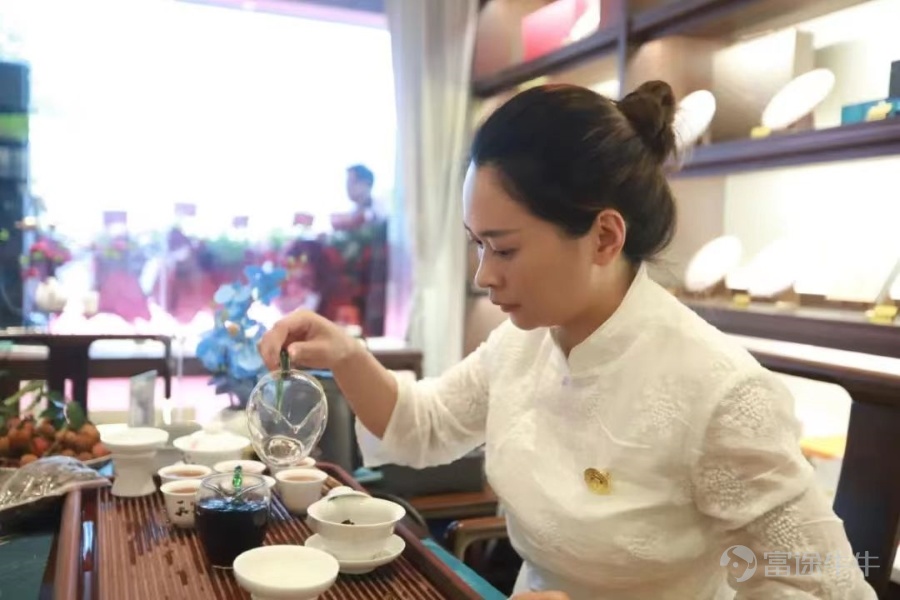

The investment market is not fond of tea companies, and Lincang Ancient Tea is trying to break its fate.
Pu'er Lincang Ancient Tea, with the reputation of being the 'first stock of Pu'er,' is applying for listing in Hong Kong. However, considering the lukewarm response from the investment market to tea companies in the past, it will not be easy for the company to break through and stand out.

Key points:
* Last month, Pu'er Lincang Ancient Tea decided to give up the A-share market and switch to the Hong Kong Stock Exchange for fundraising and listing.
The company's gross margin has declined, coupled with rising inventory, which may put pressure on cash flow.
Author of this article: Liu Ming
China's tea culture has a history of 5,000 years, and it is well known that Chinese people love to drink tea. However, this popular hobby is not favored in the capital markets, and there are relatively few tea companies listed. Recently, the second largest Pu'er tea company in China,Puerh Lancang Ancient Tea Co., Ltd.With the name of "the first listed Pu'er tea company", it has applied for listing in Hong Kong. Will it be able to escape the fate of the capital market's "no tea drinking" or successfully break the curse?
As the world's largest tea producing and exporting country, China's total domestic tea consumption reached 2.3 million tons last year, a year-on-year increase of 5%, and the total value increased by 8% to 312 billion yuan. Among the various types of tea, Pu'er tea, known as the "drinkable antique", is the most popular. According to a Frost & Sullivan report, the compound annual growth rate of China's tea market in terms of revenue from 2021 to 2026 is 6%; among them, the Pu'er tea market is growing at a faster rate, with a compound annual growth rate of 11%.
The Pu'er tea market has been performing well, and Puerh Lancang Ancient Tea, which focuses on Pu'er tea, seems to have a bright future. Puerh Lancang Ancient Tea has two production lines: "1966" and "Tea Mama". The former focuses on classic Pu'er tea products, with retail prices ranging from 500 yuan to 0.06 million yuan per kilogram, covering the middle and high-end consumer levels; the latter is a mass consumption product, providing convenient tea packaging such as cup teas and tea bags. According to the prospectus filed by the company on May 30th, the company's operating income for the years 2019 and 2020 was 0.377 billion yuan and 0.405 billion yuan respectively, and it increased significantly by 37.8% to 0.559 billion yuan last year, reflecting that sales were unaffected by the COVID-19 pandemic.
Profits did not increase significantly with the increase in revenue.
But in the past two years, the net income of Lancang Ancient Tea was 0.123 billion yuan and 1.29 billion yuan, which means that although the company's revenue recorded high growth last year, the net income increased by less than 5%, which is clearly related to its gross margin, which fell from 70.4% in 2020 to 65.9% last year, a decrease of 4.5 percentage points.
According to the company's explanation, the launch of more products increased processing costs, leading to a decrease in gross margin, while sales, marketing, and employee expenses surged, dragging down the profit performance.
But the bigger concern is that as the revenue scale continues to expand, the inventory of Lancang Ancient Tea has surged. From 2019 to 2021, the company's inventory has increased by half from 0.414 billion yuan to 0.636 billion yuan; the inventory turnover days are 934 days, 1,345 days, and 1,061 days respectively. The increase in inventory and low turnover rate not only puts pressure on financial and cash flow, but also increases the risk of inventory write-offs.
At the same time, Lancang Ancient Tea's income is heavily dependent on dealers. Over the past three years, the company's dealers have contributed 79% to 83.5% of total revenue, which not only means that the company has difficulty controlling the service of dealers, but also that the dealers' accounts are independent, and Lancang Ancient Tea cannot grasp the actual sales, profits, and inventory situation, which may lead to incorrect marketing decisions.
Aside from these financial and operational concerns, Lancang Ancient Tea's path to listing is also not smooth. It applied for an A-share listing as early as 2020, aiming to become the "first stock of Pu'er Tea" in China, but terminated the application at the end of May this year and shifted its focus to the Hong Kong stock market, citing the potential attention from foreign capital in the Hong Kong market.
In fact, when it submitted the A-share listing application in 2020, the China Securities Regulatory Commission had raised concerns about Lancang Ancient Tea's equity changes and the situation of the upstream and downstream industry chain. On May 27th this year, the China Securities Regulatory Commission raised feedback on the overseas listing application of Lancang Ancient Tea, mainly focusing on concerns similar to those in 2020, which apparently did not dispel its concerns about the company.
The significant increase in inventory is not conducive to turnover.
Furthermore, in addition to the company's own craftsmanship, the stable supply and quality of raw materials are also key to the success of tea companies. Most of Lancang Ancient Tea's flagship tea products are located in specific Pu'er tea production areas, which has also been a concern for the China Securities Regulatory Commission, raising the question of whether there is instability in ensuring stable supply of raw materials and meeting quality standards. Lancang Ancient Tea also mentioned in the prospectus risk factors that the growth process of Pu'er tea leaves is easily affected, which may cause a shortage of raw materials for the company.
Do you still remember the "missing scallops" farce in the A-share market? At that time, the company claimed that its main breeding material, scallops, had disappeared, causing a sharp drop in the company's stock price. Imagine the impact of an accident like "withered tea trees" on Lancang Ancient Tea. To avoid this situation, Lancang Ancient Tea needs to store Maocha from different years to stabilize production. However, as the business scale grows larger, the company needs more inventory, which leads to a significant increase in stock and brings about funding turnover issues.$Zoneco Group (002069.SZ)$It's not just Lancang Ancient Tea that has set its sights on becoming the "number one tea stock". Mainland China also has well-known tea companies, such as Bama Tea and Anxi Tie Guan Yin.
Bama Tea and Anxi Tie Guan Yin, both of which are well-known tea companies in mainland China.Bama Tea。Anxi Tie Guan Yin。Xie Yuda。Yunnan is like a colorful painting.Before, they all wanted to go public on the A-share market, but they all failed and chose to abandon the A-share market and list in Hong Kong stocks. Currently, only Lancang ancient tea is still striving for an A-share listing.COFCO Group holds the majority stake.byChinese tea.
On the Hong Kong stock market, although there have been successful listings of tea companies in the early years, butPingshan Tea Company.。Longrun Tea.Has been delisted due to poor management. In addition, the company listed in 2018 has been continuously losing money since its listing.$YING KEE TEA (08241.HK)$In recent years, the company's income and profits have steadily increased, but its products are no longer limited to tea, but also include diversified products such as tea snacks. The current price-earnings ratio of the company is about 12 times.$TENFU (06868.HK)$The size of China's tea market has exceeded 310 billion, but no well-known listed tea company has emerged. One of the main reasons is that the standardization of the tea industry is difficult. Firstly, it is difficult to determine the fairness of prices, which can range from tens of yuan to millions of yuan. Secondly, although the tea market is large, 90% of the products come from small workshops built by tea farmers themselves. There are few branded companies that have reached a certain scale and have the complete industry chain of planting, processing, and sales, resulting in uneven tea quality and increased difficulty in industry standardization and regulation. In the face of this industry environment, it is not easy for Lancang Ancient Tea to stand out.
China's tea market size has reached over 310 billion yuan, but has not produced a well-known listed tea enterprise. One of the main reasons is the difficulty of standardization in the tea industry. Firstly, it is difficult to determine the fairness of prices, ranging from tens of yuan to millions of yuan. Secondly, although the tea market is large, 90% of the products come from small workshops built by tea farmers themselves. There are few branded companies that have reached a certain scale and have the complete industry chain of planting, processing, and sales, resulting in uneven tea quality and increased difficulty in industry standardization and regulation. In the face of this industry environment, it is not easy for Lancang Ancient Tea to stand out.
Risk Disclaimer: The above content only represents the author's view. It does not represent any position or investment advice of Futu. Futu makes no representation or warranty.Read more

Comments
to post a comment
1
3