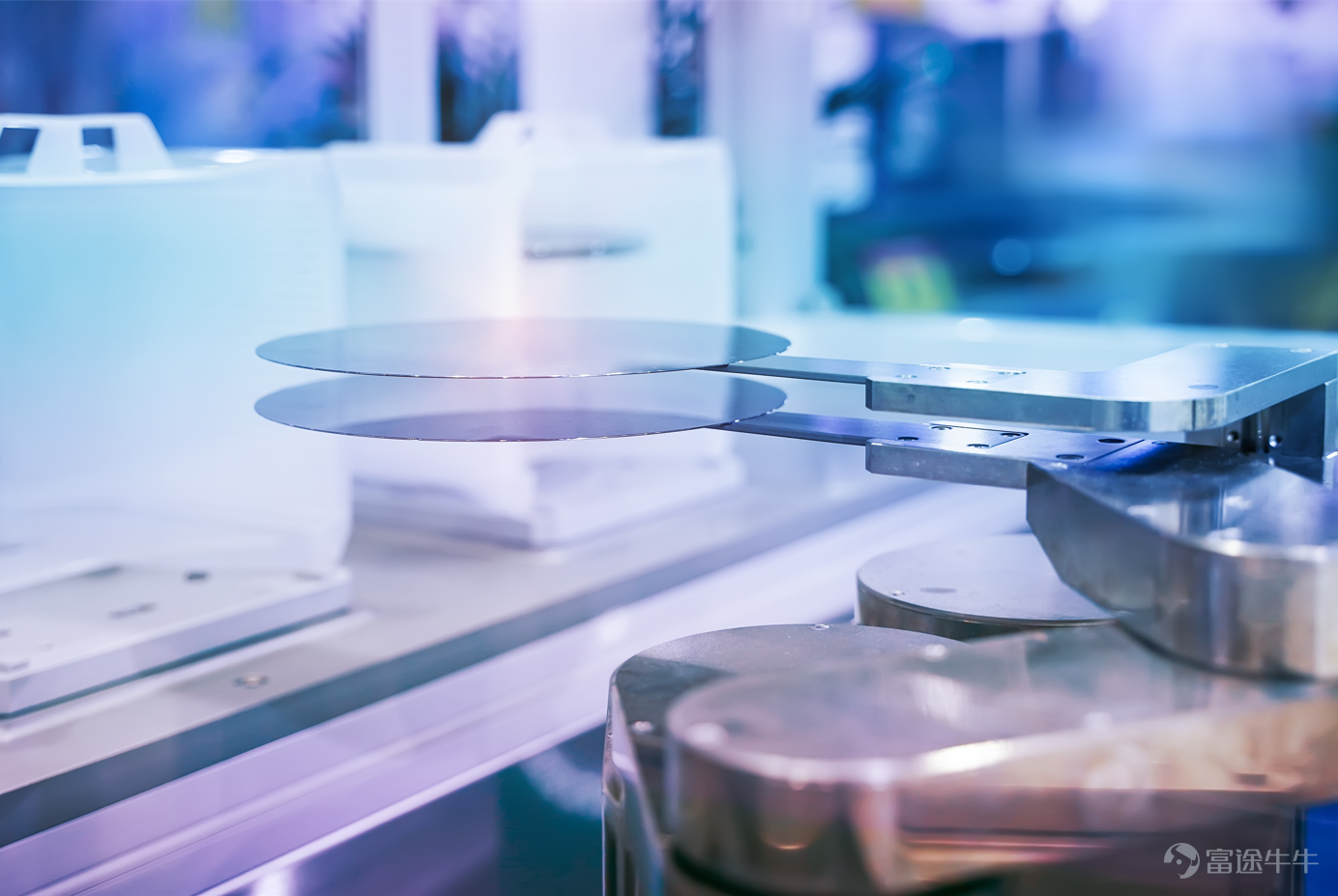

The wafer foundry market is once again stirring.
"Has wafer fabrication gone up in price again—yet again?"
I had originally assumed that the 2021 wafer‑foundry market would already be more than enough to keep things exciting—back-to-back price hikes and massive investments in capacity expansion. I figured that, adhering to the principle of "alternating between intensity and restraint, with balanced development," after such a vigorous push throughout 2021, the industry would at least need a mid‑season break before gearing up for the second half.
It turns out the author was still overly naive: before the previous wave of price hikes and capacity expansions had even subsided, a new surge has already swept in, sending ripples through the 2022 wafer foundry market. This time around, in addition to rumors of price increases from the three industry giants—Taiwan Semiconductor, Samsung, and UMC—there are also aggressive new entrants in the foundry space, cutting-edge process technologies eyeing the market, and a crowded landscape of mature processes vying for dominance.

Emerging forces are surging forward.
Since 1987, when Morris Chang founded Taiwan Semiconductor and pioneered the foundry business, this market has been destined to be extraordinary. Over more than three decades of development, some have exited, others have persevered, and still others have joined—players coming and going—right up to the present day.
When it comes to Foxconn, the first thing that springs to mind is its role as Apple's contract manufacturer; and when we talk about India, we think of its robust chip design capabilities—seemingly unrelated to wafer fabrication, yet it has emerged as a rising force in this field.
Foxconn
As the global leader in contract manufacturing, Foxconn has long harbored ambitions in the semiconductor sector. As early as 2017, its founder, Terry Gou, disclosed to the media his intention to acquire Toshiba; though that plan ultimately fell through, it did not deter the company from pressing ahead with its aspirations. In 2019, Foxconn invested in building a power‑semiconductor fab, and in 2020 it launched an investment to construct a packaging and testing facility.
Starting in 2021, Foxconn's ambitions to enter the wafer‑fabrication sector began to take shape. In June 2021, it acquired approximately a 5.03% stake in Malaysia's DNeX through a subsidiary and, via DNeX, gained control of about 60% of SilTerra, an 8‑inch wafer fab in Malaysia. In August 2021, Foxconn once again invested NT$2.52 billion (roughly RMB 560 million) to purchase the facilities and equipment of Macronix's 6‑inch wafer fab, with the aim of producing automotive‑grade semiconductors.
This year, Foxconn has broadened its strategic footprint, moving beyond merely acquiring and indirectly holding stakes in wafer fabs to embarking on a path of building its own facilities. In February, Foxconn announced that it would partner with India's Vedanta Group to establish a chip manufacturing plant in India, with Foxconn planning to invest US$118.7 million and hold a 40% stake in the joint venture. The facility is expected to be completed within two years.
In May this year—just a few days ago—Taiwanese media outlet Economic Daily reported that Foxconn will partner with DNex to jointly build a 12-inch wafer fab in Malaysia, with a monthly capacity of 40,000 wafers, targeting mature 28nm and 40nm process technologies. Hon Hai Chairman Liu Yang-wei stated directly that Hon Hai is highly interested in expanding its wafer‑fab footprint; as early as three to four years ago, the company had already planned for a 12-inch facility, aiming to produce products related to power management, RF, and CMOS sensor components.
With this, Foxconn now controls, on the wafer‑fabrication side, a 6‑inch fab acquired from Macronix, an 8‑inch fab under Sharp that it has invested in, the SilTerra 8‑inch fab, as well as a chip plant in India and a 12‑inch fab in Malaysia.
India
India's achievements in chip design are widely recognized, yet its wafer‑fabrication sector has remained unable to take off. However, since 2021—following the two-year chip shortage that swept across the manufacturing industry—India's "chip‑making spirit" has begun to awaken.
Indian Prime Minister Narendra Modi has stated that, in the realm of semiconductor manufacturing, India has no choice but to move beyond reliance on foreign imports; it must reduce imports and strengthen its domestic production capacity. To this end, India has not only formally approved a Rs 760 billion chip‑manufacturing promotion scheme but has also endorsed measures to support 100 domestic firms engaged in integrated circuit and chipset design.
"Where there's money, there are brave souls," the Indian government said in February, adding that it had received plans from five companies to manufacture various chips and displays locally, with total investments exceeding US$20 billion; Foxconn, mentioned earlier, is one of them. In addition, in April, Intel CEO Pat Gelsinger visited India and met with Prime Minister Modi. Although he did not commit to investing in chip manufacturing in India, Intel proposed acquiring the Israeli chipmaker Tower Semiconductor, which has teamed up with Abu Dhabi's Next Orbit Ventures to establish a factory in India.
This news was confirmed on May 1, when officials in Karnataka, a state in southern India, announced that the semiconductor consortium ISMC will invest $3 billion to build a chip‑manufacturing facility using a 65nm process node. ISMC is a joint venture between Abu Dhabi‑based Next Orbit Ventures and Israel's Tower Semiconductor.

Image source: Twitter @CMofKarnataka
Judging from the Indian government's policy stance, it is firmly committed to revitalizing the wafer‑fabrication industry. In a report, India's Ministry of Electronics and Information Technology stated that the country's semiconductor market was estimated at roughly US$15 billion in 2020 and is projected to grow to around US$63 billion by 2026. However, given the capital‑intensive nature of wafer manufacturing, its financial support remains far from sufficient. Whether India can finally turn the tide and produce chips of its own remains to be seen.
Advanced processes are looming ominously.
In recent years, advanced manufacturing processes have been like a pancake that keeps getting flipped back into the pan—repeatedly fished out for a couple of bites before being tossed back in—yet they still retain their irresistible aroma. This is hardly surprising, given that Moore's Law is already 57 years old and advanced nodes have already reached 3 nm. Meanwhile, ASML has yet to ship its 0.55‑NA lithography tools capable of supporting sub‑3‑nm processes. As a result, the question of how the chip industry will evolve going forward continues to command widespread attention.
Judging from the current situation, when it comes to both foundry market share and advanced process technology, few would dispute that Taiwan Semiconductor is number one. Since chip manufacturing entered the era of advanced process nodes, Taiwan Semiconductor has been the first to mass‑produce 7nm and 5nm processes. Now at the 3nm node, although there were reports that Taiwan Semiconductor faced challenges in achieving satisfactory yield rates for its 3nm process, C. C. Wei, president of Taiwan Semiconductor, stated clearly at the Q1 2022 earnings call that 3nm is expected to begin shipping in the second half of this year and enter mass production in 2023. Meanwhile, the N3E process will go into production one year after 3nm mass production; currently, R&D progress is ahead of schedule, suggesting it may be launched even earlier than planned.
From this perspective, Taiwan Semiconductor appears to be making fairly smooth progress in 3nm technology. However, the company faces considerable pressure regarding mass-production timelines, and the source of that pressure is none other than Samsung. In the foundry business, Samsung has been firmly holding its ground against Taiwan Semiconductor. Recently, in its earnings report, Samsung Electronics projected its performance for the second quarter of 2022, stating, "It will strengthen its technological leadership by achieving world‑first mass production of the 3nm process (GAA 3‑nano)." It is precisely this remark that has led many to believe that Samsung's 3nm process may overtake Taiwan Semiconductor and become the first to reach mass production.
Taiwanese media outlet Economic Daily reported that although Samsung claims its 3nm process is about to enter mass production, in terms of key metrics such as transistor density and power consumption, Samsung's 3nm is actually comparable to Taiwan Semiconductor's 4nm and Intel's Intel 4 (formerly Intel 7nm) process, and yield rates may also be problematic. However, regardless of how Samsung's 3nm technology truly stacks up, the relentless pace at which it is closing the gap clearly demonstrates Samsung's keen ambition to seize the leading position in advanced manufacturing processes.
Of course, Samsung isn't the only one eyeing the prize—Intel is in the mix too. While they don't quite make a full table of mahjong players, the rivalry is still thrilling enough to keep us jumping back and forth between several competing fronts. If Taiwan Semiconductor and Samsung are locked in a fierce battle primarily at the 3nm node, then the tension between them and Intel is even more intense at the 2nm process node.
At Taiwan Semiconductor, research and development on 2nm technology began as early as 2019, and four ultra-large-scale fabs have been planned in Hsinchu, Taiwan. Just last month, C. C. Wei stated, "So far, our progress on N2 is on track. By the end of 2024, N2 will enter risk production. In 2025, it will go into mass production, likely in the second half of the year or by the end of 2025. That's our schedule."
Meanwhile, Intel, a latecomer to the foundry business and once the dominant player in semiconductors, has been making big moves right from the start. In March 2021, it announced a $20 billion investment to build two 2nm fabs in Arizona, USA. Then, this past March, it revealed plans to invest approximately €17 billion (about $19 billion) to construct two new facilities in Magdeburg, Germany, aiming to produce chips at 2nm and below. Along the way, it also acquired a major Israeli foundry—Tower Semiconductor, mentioned earlier—but since Tower does not engage in advanced process technologies, I won't go into further detail here.
As for advanced process technologies, Intel explicitly stated in its process and packaging roadmap unveiled last July that it plans to launch the "20A" process (equivalent to what we call 2nm) in 2024, officially entering the angstrom era. Perhaps finding this news not sensational enough, at the beginning of this year another bombshell followed: ASML announced in a company statement that Intel is the first customer for its next-generation NA 0.55 lithography tool.
As everyone knows, "to do a good job, one must first sharpen one's tools." To manufacture 2nm chips, EUV lithography machines are indispensable, and in this regard, Intel has already taken the lead. Moreover, in April, Intel even moved up the timeline for its second-generation "E" node—originally slated for mass production in 2025, it is now scheduled for the second half of 2024.

In addition, Intel stated that its 2024 Intel 3 process node will officially surpass Taiwan Semiconductor, becoming the company with the best foundry technology. This sense of rivalry could easily be felt all the way from the United States to Taiwan.
Under the pressure from these two forces, even Taiwan Semiconductor may be feeling a bit rattled. According to a recent report by the Taiwanese media outlet United Daily News, Taiwan Semiconductor's 3-nanometer process will enter mass production this August. However, in order to secure dominance and prevent Intel from poaching orders, Taiwan Semiconductor has decided to shift its 3-nanometer R&D team to develop the 1.4-nanometer node, with plans to kick off the first phase (TV0) of development—aimed at finalizing technical specifications—next month.
The report also noted that Taiwan Semiconductor recently finalized plans to simultaneously launch 3-nanometer mass production at its P8 fab in the Hsinchu Science Park and its P5 fab in the Tainan Science Park this August. Following this, the company aims to counter Intel's threat—stemming from its breakthrough in 2-nanometer technology to vie for Apple's next-generation processors—by advancing its own cutting-edge process technologies, thereby maintaining its leading edge in the foundry business.
With that, our overview of the latest developments in advanced manufacturing processes is largely complete. To see how the situation unfolds going forward, stay tuned for the next installment of Semiconductor Industry Watch.
Mature process nodes see fierce competition among industry players.
Even in the advanced-node segment, where only three manufacturers are eligible to compete, the market is already buzzing—so it goes without saying that the mature‑node space is even more frenzied. Although last year foundry companies launched a wave of capacity expansions in the mature‑node segment (for details on specific expansion projects, see…),"28nm Competition Enters a New Phase") This has sent the industry into a panic, with fears that by 2024 capacity will be collectively oversupplied. However, for manufacturers, this concern appears to be unfounded.
As for why there is no cause for concern, according to a recent report published by Semiconductor Industry Watch,"Is the Semiconductor Market Oversupplied?"The article notes that equipment remains a major bottleneck constraining production capacity. Consequently, although global semiconductor manufacturers appear to be aggressively acquiring land and expanding facilities, reality is constrained by equipment and other uncontrollable factors, meaning the overcapacity resulting from such expansions may merely be an "illusion." Taiwan Semiconductor also stated during its earnings call that future demand is exceptionally strong, forecasting that the semiconductor industry—excluding memory—will accelerate growth over the next five years, while expressing concern about insufficient capacity to meet this demand.
So, what was the landscape like in the mature process node segment in 2022?
Taiwan Semiconductor
Last year, Taiwan Semiconductor's capacity expansion in the mature process segment was mainly reflected in the construction of new fabs in Kumamoto, Japan, and Kaohsiung, Taiwan, while production lines in Nanjing, Jiangsu, China, have already undergone capacity upgrades. Earlier, at its January investor conference, Taiwan Semiconductor announced that this year's capital expenditure would be approximately US$40 billion to US$44 billion, with 10% to 20% earmarked for expanding mature specialty processes. In other words, Taiwan Semiconductor will allocate between US$4 billion and US$8.8 billion this year to expand capacity in mature processes—a substantial investment.
Samsung
Last year, Samsung's expansion plans primarily focused on its 5nm fab in Taylor, Texas. This year, however, reports have also emerged indicating that the company will expand capacity for mature process technologies.
In mid-March this year, South Korean media outlet Business Korea reported that Samsung Electronics plans to increase production capacity for mature‑process technologies, including CMOS image sensors (CIS), in order to attract new customers and boost product profitability. Furthermore, according to Samsung Electronics' 2021 annual report, market demand for mature‑node chips is expected to continue growing at a robust pace, prompting the company to consider expanding its mature‑node manufacturing capacity going forward.
UMC
UMC announced in February this year that its board of directors had approved a US$5 billion (approximately S$6.8 billion) investment to build a state-of-the-art new fab in Singapore, offering 22/28-nanometer process technology. The first phase of production is expected to commence by the end of 2024, with an anticipated monthly output of 30,000 wafers.
GlobalFoundries
In early February this year, GlobalFoundries CEO Tom Caulfield noted that the company secured 30 major long-term partnerships in 2021, with these 30 customers collectively committing over $3.2 billion to further expand GlobalFoundries' global manufacturing capacity and meet robust demand. As a result, GlobalFoundries is expected to deliver another strong performance in revenue and profitability in 2022.
Simply put, 30 customers are supporting GlobalFoundries' capacity expansion, and under these circumstances, GlobalFoundries is also poised to continue ramping up production at its mature process nodes.
SMIC
As the leading contract manufacturer in mainland China, SMIC also launched an ambitious expansion plan last year, building 12-inch wafer fabs in Beijing, Shanghai Lingang, and Shenzhen.
Meanwhile, this year, SMIC noted in its investor relations activity record released in February that the company's expansion plan comprises both capacity upgrades at existing facilities and the construction of new fabs; the new fabs located in Beijing, Shanghai, and Shenzhen are all 12-inch fabs. This year, capital expenditures of approximately US$5 billion are expected, to be allocated toward acquiring new land and building new production facilities. In 2022, equivalent 8-inch monthly capacity is projected to grow by between 130,000 and 150,000 wafers.
HuaHong
HuaHong and SMIC can be regarded as the twin giants of wafer foundry in mainland China. According to HuaHong Semiconductor's first-quarter 2022 results, the company's capital expenditure for the quarter totaled US$124 million, with US$108 million allocated to HuaHong Wuxi. Tang Junjun, President and Executive Director of HuaHong Semiconductor, stated that the company will accelerate the expansion of production capacity at its 12-inch fab in Wuxi to meet growing market demand.
In addition, HuaHong's announcement on May 12 stated that approximately 70% of the funds raised—RMB 12.5 billion—will be allocated to the HuaHong Wuxi project.
Written at the End
Although high demand for semiconductors has persisted for more than two years, the industry remains red-hot. Perhaps precisely because of this situation, even in the face of longstanding supply-chain pressures, major manufacturers are left with no choice but to ramp up production capacity. Yet the global landscape is highly volatile, and the future remains uncertain, with no clear trajectory. Nevertheless, how to ease the current supply‑demand imbalance remains a pressing challenge that the entire semiconductor value chain must address.
Source: This content is originally authored by Semiconductor Industry Observation (ID: icbank), with the author being Gong Jiajia. Thank you.
Risk Disclaimer: The above content only represents the author's view. It does not represent any position or investment advice of Futu. Futu makes no representation or warranty.Read more
Comments
to post a comment
3