

Alibaba sends “rural revitalization technical officers” to write code into green water and green mountains

“If you teach someone to fish, teach someone to fish.”
This old saying is a particularly apt expression of what we wantCultivating digital soil for rural areas and cultivating technical talentsThe original intention.
At the 2021 World Internet Conference, Xiao Yaozi said that “rural revitalization technical officers” should be sent to the fields.“Send technology to the countryside to teach people to fish”.
Today, we officially announce it to the public“Rural Revitalization Technical Officer”It is planned and will launch the recruitment of the second batch of technical officers.
If you want to solve rural problems, there is no use talking on paper; you have to go down to the fields and work hard, smell the scent of the soil in the fields, listen to the farmers' real difficulties, and find reliable and useful solutions.In other words, programmers have to write code into Oyama and Daji.
At the end of November last year, Alibaba selected the first batch of 160 technical officers and expert volunteers to set out in separate groups. In the internal trial operation phase, the students visited the five provinces of Shanxi, Sichuan, Hebei, Hunan, and Shaanxi. The project coveredField cultural relics protection, agricultural product traceability, digital governance, smart cultural tourism, planting trees and raising pigsetc., in the field of helping farmers and benefiting farmers. Today, let's listen to their stories of raising pigs and planting trees in the countryside.

Han Kang: Local pigs raised by “coders” can run very well
Han Kang is an architect and was selected as one of the first “Technical Officers for Rural Revitalization”. He came out of the countryside. He knows the countryside, cares about the countryside, and has always had an idea in his heart:We need to bring back what we have known and learned over the years to the countryside, and use technology to make the “good things” in the countryside visible to the market.
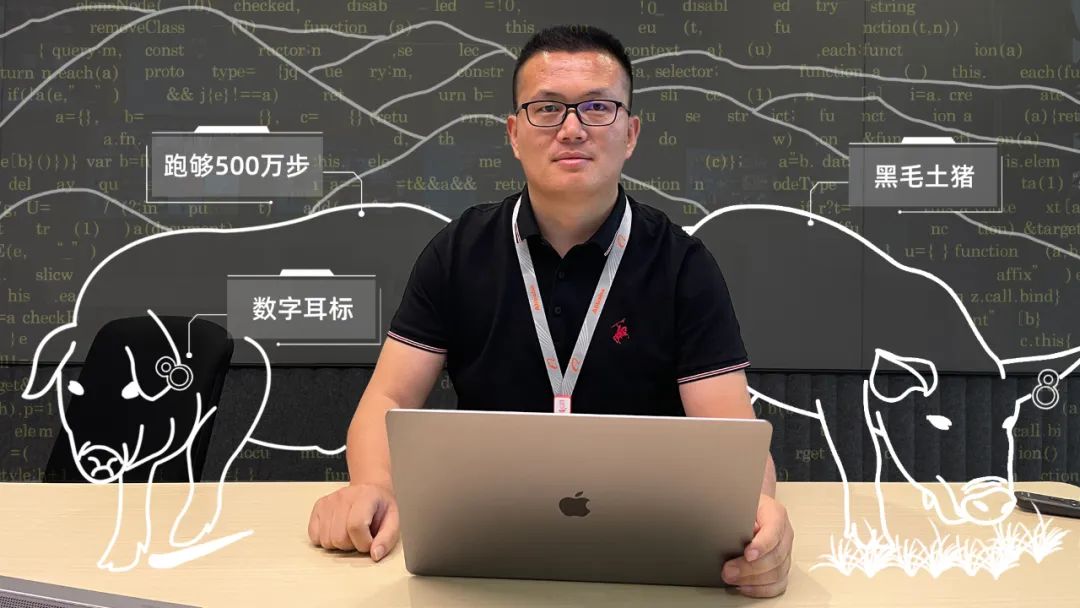
This is the opportunity. Liang Yu, a rural revitalization commissioner of Ali Charity stationed in Qingjian County, Shaanxi, asked Han Kang, “Are you interested in helping farmers raise pigs?” Han Kang immediately agreed. On a snowy winter day, he came to Qingjian to see free-range black pigs in the mountains.
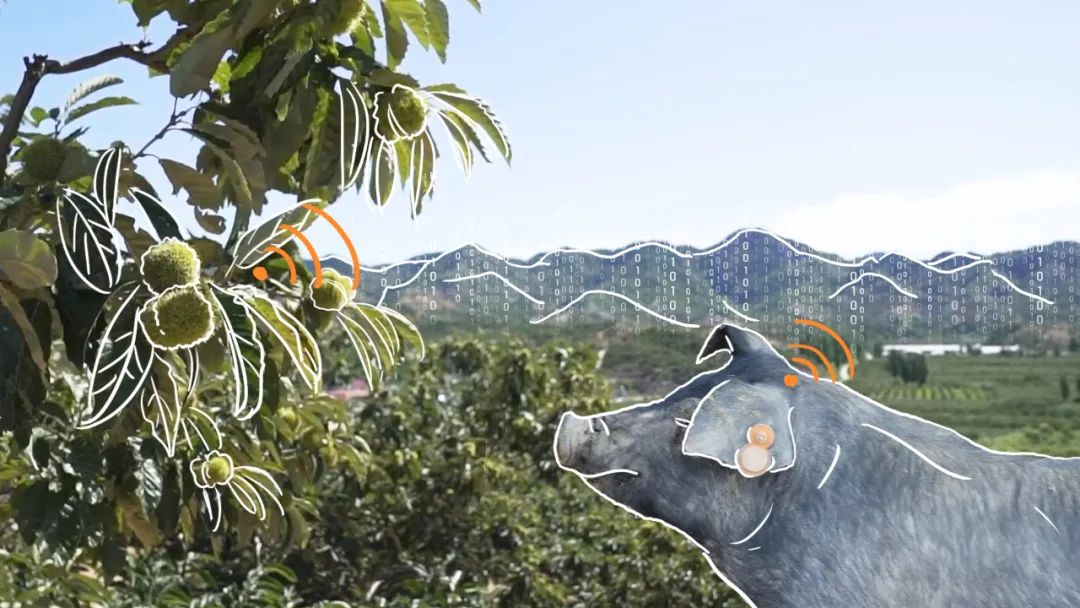
Fat, healthy, and well-shaped, these black pigs run wild in the mountain jujube groves, drink mountain spring water when they are thirsty, and help them run and jump when hungry, enough to eat jujube on trees.
Qingjian County is located on a loess slope in northern Shaanxi. Although it has been lifted out of poverty, it still has “five deficiencies”: lack of people, lack of water, lack of land, lack of industry, and lack of enterprises. There is an urgent need to find the right path to consolidate the results of poverty alleviation.
Due to lack of water, only jujube can be grown in the mountains of Qingjian County. Growing jujube alone is not enough; if you want to get rich, you have to develop more industries. Raising pigs is one of the options. Due to its great energy, the local black pork is of excellent quality, has a clear texture, and has a delicious aroma when cooked. I have eaten it well.
As early as 2016, the local government encouraged farmers to raise black pigs. The brand was registered in 2018, and 100,000 heads were kept in 2019. However, since brands and differentiation have not been developed, the townspeople are worried about market risks and are afraid to raise more. Currently, there are only 50,000 heads left in the inventory.
The county sees it and is anxious. When making the “14th Five-Year Plan,” it included pig farming, set a goal of 100,000 heads, and formulated the “Thousand Households Plan,” that is, to help 1,000 farmers raise 100,000 pigs and make their families rich.
Han Kang and their research concluded that if you want to be rich by raising pigs, you must brand a brand and use technical means to prove to consumers that the local pork here is really different. They are free-range, need to be fed for 10 months, exercise a lot, eat a lot of food, and contain 3/4 less fat than normal pigs. Expensive because the cost is high and because the meat is of good quality.
How can consumers see and believe all of this? Han Kang thought of it“5 million steps of free-range pigs”The idea is that every pig has to run 5 million steps before it comes out of the field.
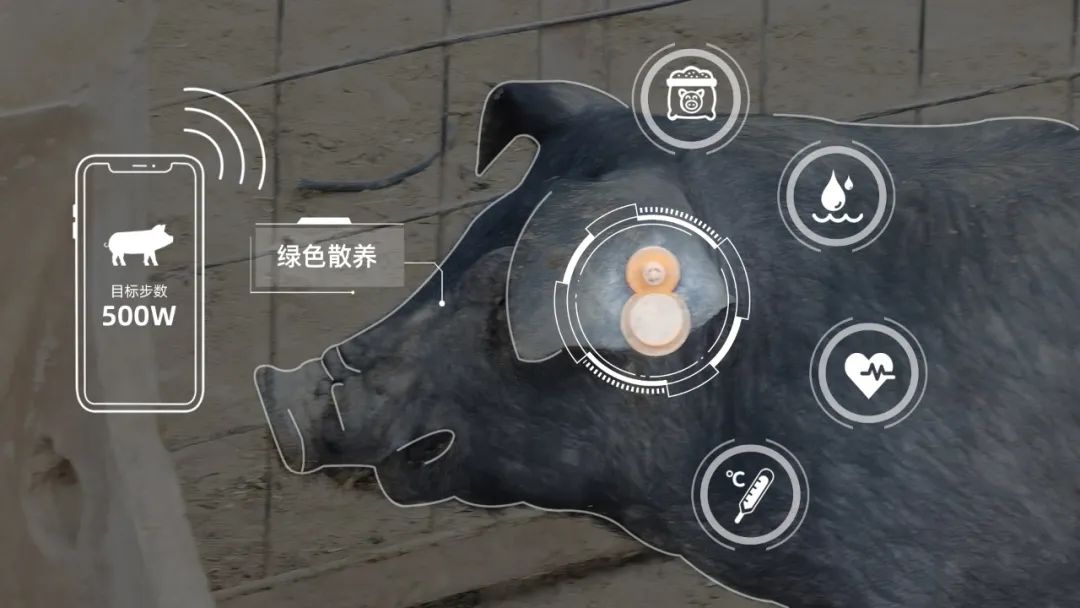
Han Kang and two other technical officers, Gao Peng and He Wen, covered the pig factory with signals, gave each pig a digital ear tag, and recorded its entire life cycle and various living environment parameters. It's clear at a glance what temperature the body temperature is, how many steps are taken, how to get from the pig factory to the slaughterhouse, and how to send it to the supermarket through the cold chain after splitting.
At present, the first batch of local pig traceability codes have been put into use. By scanning Alipay, consumers can see how this pig spent its life, and every step can be traced back.
With the support of digital technology, Qingjiantu pork was finally seen by the market, and recently successfully placed on Hema's shelves. Starting off well, Han Kang and his colleagues set goals:We need to help 1,000 local farmers increase their income by an average of 100,000 yuan.

Hao Lihui: Develop a small program to protect old chestnut trees
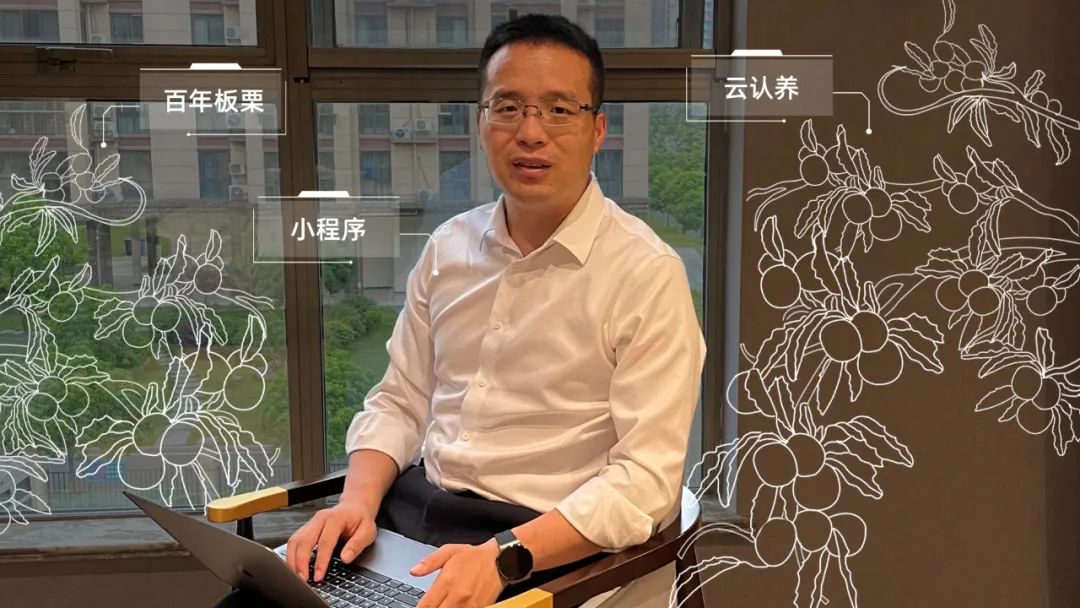
At almost the same time, in Qinglong County, Hebei“Qinglong 100 Golden Chestnut”A mini program has also been launched on Alipay. Netizens can adopt chestnut trees online, support the protection of century-old trees, and help local farmers increase their income.
Hao Lihui is an Alibaba Cloud programmer. He was selected for the “Rural Revitalization Technical Officer” program at the end of last year. He and his colleagues Huang Meilong, Xue Fei, and Sun Xiaoguang organized a group to go to Qinglong County in Hebei to help farmers with Liu Lin, a rural revitalization commissioner stationed there.
Qinglong County used to be a poor county. The most famous local souvenir is chestnuts. There are more than 2,000 old chestnut trees over 100 years old in the county. Chestnuts produced in old trees are delicate, soft and sweet, and have high nutritional value. What is puzzling to outsiders is that many old trees have been cut down in recent years, leaving only bare stumps.
They visited and found the reason: the chestnuts produced by old trees have small grains, low yield, and high prunings. Many farmers simply cut down old trees and replant two or three new ones to increase yield and income. Old trees that have been cut down are sold as ordinary lumber.
Everyone was very heartbroken to watch the old trees fall one by one.“We hope to have a two-pronged strategy that will not only help farmers increase their income, but also protect these old trees.”Hao Lihui said.
Everyone thought about it, thought of the adoption model, and decided to develop a small program to pack the chestnuts, fruits, grains, and scenery (tickets) of Qinglong County, attract netizens from all over the country to adopt them, and send them home with free shipping when the harvest is good.
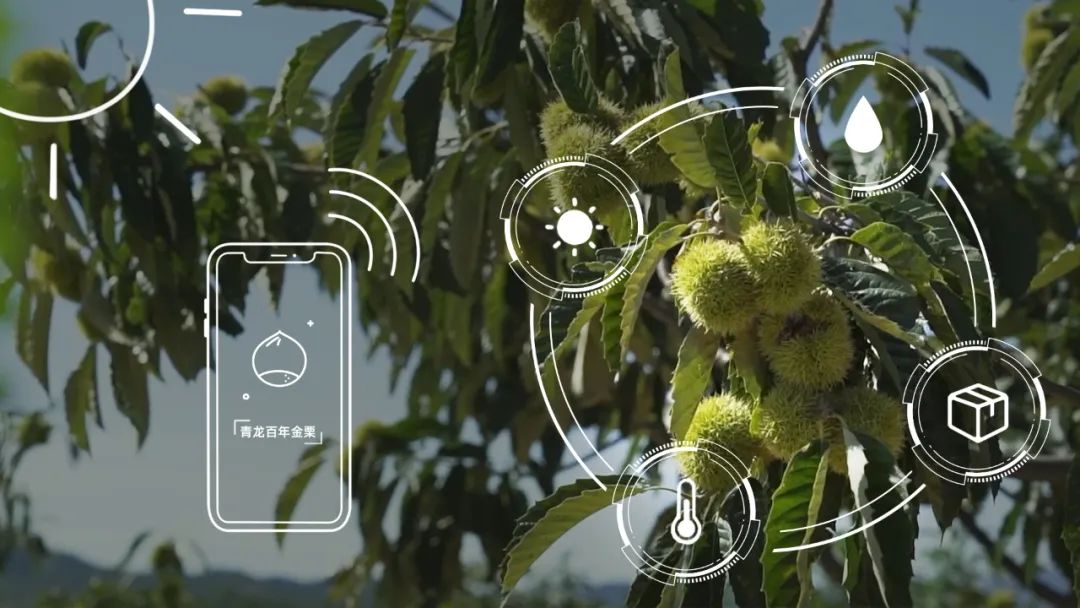
Since everyone usually has their own job to do, the biggest difficulty is personnel coordination. Hao Lihui said, “For example, if you find a problem with the front end, you have to wait until the backend has time to adjust. At first, progress is slow. We simply rushed to work together on the weekend, worked from 8 a.m. to 10 p.m., and finally got out.”
After completing development, the team handed over product operation to a local team in Qinglong. Hao Lihui kept in mind the purpose of his trip and was not just developing a product: “'Teaching people to fish' is the company's requirement for every rural revitalization technical officer. There is a shortage of digital talents in the local area. We had a lot of exchanges with the two college students returning home. In addition to teaching product operation, we also brought them simple technology such as low code.”

Using technology to help public welfare,Make technology warmer
We have always persevered in the field of technical public welfare.
In March 2019, Alibaba formally established a technical public welfare committee to call on employees to “use technology to help public welfare and make technology more friendly”. Over the past few years, we have tried a lot and achieved some breakthroughs, such as open information barrier-free technology, open carbon reduction invention patents, etc.
CTO Lu Su said:“Technicians can use code to make a difference in the world. To fulfill their social responsibilities, technology companies must give full play to the role of technology and platform capabilities. Technological public welfare has become an important part of Alibaba's ESG strategy and is one of the main means for Alibaba to participate in social welfare.”
With this understanding, more and more Ali people are participating in technological public welfare, using technology as a fulcrum, leveraging greater energy, and bringing some changes to the world.
Deeply cultivate high technology for self-reliance and self-improvement, and practice“Everyone benefits, takes responsibility, and is open and shared”Good technology, we're doing both things. In the vast land of the countryside, technology is spreading its temperature to more people.
Risk Disclaimer: The above content only represents the author's view. It does not represent any position or investment advice of Futu. Futu makes no representation or warranty.Read more


Comments (3)
to post a comment
13
7