
蔚來成功登陸新交所,首日漲幅3.84%

The triple strategic significance brought by NIO's listing on the SGX Exchange: from capital, R&D to business
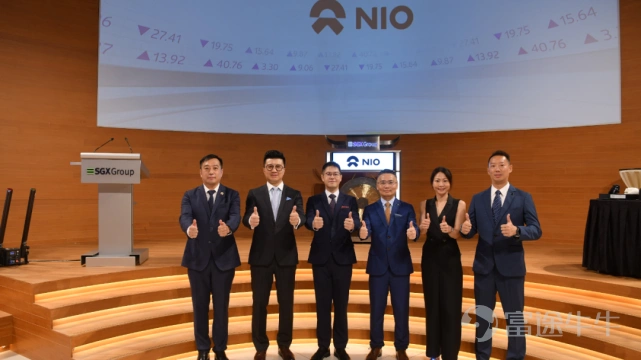
Going public in Singapore is an important step for NIO to deepen its international layout.
This article is about IPOs that I have known originals for a long time
Author | Stone Jin
According to early information from the IPO, NIO was officially listed on the main board of the Singapore Stock Exchange under the stock code “NIO” on May 20, 2022. As of 11:30, NIO was trading at $18.26 per share on the SGX, up 9.60% from the issue price.
This means,NIO officially became the world's first automobile company listed in three regions, and the first Chinese company listed in the US, Hong Kong, and Singapore. On September 12, 2018 and March 10 of this year, NIO has successively listed on the New York Stock Exchange and the Hong Kong Stock Exchange.
More specifically, NIO's successful listing in three listings also shows the global capital market's recognition of NIO's long-term competitiveness to a certain extent. Since its establishment in 2014, NIO has always attached importance to scientific and technological innovation, insisted on positive independent research and high efficient investment, and has a certain technological leadership in full-stack self-developed technology for autonomous driving, power batteries, etc.
Up to now, NIO has delivered four high-performance smart electric models, namely the smart electric flagship SUV ES8, the smart electric all-purpose SUV ES6, the smart electric coupe SUV EC6, and the smart electric flagship sedan ET7 with autonomous driving capabilities.
According to NIO's plan, NIO will successively deliver three new models based on the NT2.0 technology platform in 2022. Among them, the smart electric flagship sedan ET7 was delivered on March 28; the mid-size smart electric coupe ET5 is expected to begin delivery in September 2022; and another medium to large SUV, the ES7, will be released and delivered this year.
As of April 30, 2022, NIO has delivered a total of 197,912 smart electric vehicles to users. In the first four months of 2022, NIO delivered a total of 30,842 new vehicles, an increase of 13.5% over the previous year。
In terms of financial data. In 2021, NIO's revenue was 36.136 billion yuan, an increase of 122.27% over the 16.257 billion yuan in 2020. In 2021, NIO's gross vehicle margin was 20.1%, which is about 8 percentage points higher than 12.7% in 2020.
As of February 28, 2022, NIO's available liquidity sources include cash and cash equivalents of $11.829.1 billion, short-term investments of $37.780.4 billion, and undrawn credit lines of $30.757.9 billion, for a total of $80,367.4 billion.
Regarding the successful listing on the SGX, Li Bin, founder, chairman and CEO of NIO, said:”Today is a new milestone for NIO, and the listing in Singapore is significant to NIO's global business development plans. Taking advantage of Singapore's important strategic position in the global capital market, NIO has further improved the global capital market layout; we will also use the advantages of Singapore's international economic and technology center to develop in-depth cooperation with local research institutions in Singapore to establish an artificial intelligence and autonomous driving R&D center in Singapore to further improve NIO's global R&D and business layout。”
SGX CEO Luo Wencai said at the listing ceremony:”NIO will receive many opportunities from global investors on the SGX, and clients in the Asia-Pacific region can also trade NIO shares during the Asian session. As an international financial and financing center, Singapore will contribute to its global development plans. NIO has arrived. We are waiting for NIO's future in Singapore. We will work with NIO to move towards a brighter, better, longer and more stable tomorrow!”
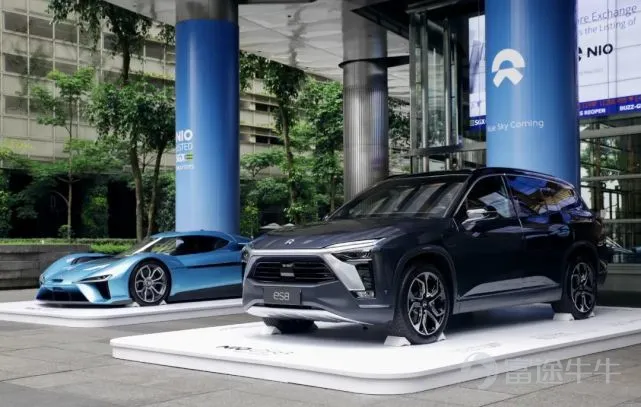
Advance investment boosts sustainable development
Four intelligent R&D bureaus will soon be formed
As a high-end smart electric vehicle company, R&D capabilities and technological innovation are undoubtedly the foundation for NIO, and this is also the foundation for its continuous improvement of product layout.
As of April 30, 2022, the total number of patents applied for and granted by NIO exceeds 4,800At the same time, a complete independent research and development system including motors, electronic controls, battery packs, smart gateways, smart cockpits, and autonomous driving technology has been established. Let's take a few of NIO's core technologies as examples:
First, autonomous driving technology NAD (NIO Autonomous Driving) — NIO has established full-stack autonomous driving technology capabilities including perception algorithms, map positioning, control strategies, and underlying systems, which will gradually achieve an easy and safe point-to-point autonomous driving experience. After completing development verification, NAD will gradually provide services. The service subscription model is “monthly activation and monthly payment”. The service fee is 680 yuan per month, and the service will be gradually provided after the development verification is completed.A research report released by CICC a few days ago indicates that NIO's self-development capabilities are expected to be more reflected in NAD, and the subsequent implementation of new features will be NIO's decisive victory in intelligence。
Second, Panocinema, a panoramic digital cockpit — NIO has jointly developed exclusive AR glasses with innovative AR equipment company Nreal, which can project an oversized screen; NIO VR Glasses have been developed in cooperation with NOLO to achieve binocular 4K display; while the 10.2 inch digital instrument uses HDR high dynamic range image technology to present a full sensory immersion experience.
Third, the vehicle voice assistant NOMI - Based on next-generation neural network technology and with exclusive customized vocals, NOMI can fit the segmented functional areas and conversation content of the vehicle scene to enhance the sensory experience of voice interaction during driving.
Fourth, high-performance electric drive systems — Up to now, NIO has obtained and is applying for 215 patents for electric drive systems, including 81 invention patents. For example, the NIO ET7 is equipped with a 180kW permanent magnet synchronous motor at the front and a 300kW induction asynchronous motor; the NIO ET5 is equipped with a 150kW induction asynchronous motor at the front and a 210kW permanent magnet synchronous motor at the rear.
Fifth, ternary lithium iron battery pack — As the world's first car company to mass-produce ternary lithium iron battery packs, the NIO standard battery pack (75kWh) uses a mixed arrangement of ternary lithium and lithium iron phosphate cells, and uses next-generation CTP (Cell to Pack) technology to achieve the same level of performance as ternary lithium battery packs.
In summary, it is easy to see that NIO continues to insist on full-stack self-research and continuously invests in underlying technology and long-term technology. In 2021, NIO's R&D investment increased 84.58% year on year to 4.592 billion yuan, and R&D investment is expected to double in 2022, increasing the number of R&D personnel to 9,000 by the end of the year.
Also,After landing on the SGX today, NIO will also open an R&D center in Singapore, thus forming an intelligent R&D center in China (Beijing, Shanghai), the United States (San Jose), Europe, and Singapore. In particular, given that Singapore is the country with the highest level of maturity in autonomous driving in the world, NIO can bring in more professional technical talents to further enhance the technical level。
A leader in domestic electricity exchange models
Infrastructure creates long-term “competitive barriers”
In addition to the smart electric technology experience, NIO's innovative service model is also one of its core competencies, covering NIO Power, NIO Service NIO Service, NIO Battery Rental Service BaaS, flexible battery upgrades, and NIO Certified, an official NIO used car.
It is worth mentioning that,NIO is the first and currently the only brand to do large-scale 2C power exchange. In “Fortune” magazine's latest list of 100 companies that changed the world in 2020, NIO was successfully selected for launching a BaaS battery rental service based on vehicle electricity separation, and became the only automobile company on the list。
What is undeniable is that the electricity exchange model is increasingly being recognized by society and the market — in 2020, the electricity exchange model was included in the “New Infrastructure” category and was included in the “Report on the Work of the Government” of the two sessions for the first time. The “construction of charging piles” in the construction of new energy infrastructure was expanded to “add facilities such as charging piles and power exchange stations”. In 2021, the government work report once again mentioned the need to increase facilities such as power exchange stations.
As of May 20, NIO has deployed 927 power exchange stations, 804 overcharging stations, and 4,424 overcharging piles across the country; 702 destination charging stations, 4,045 destination charging stations, and a total of more than 490,000 charging stations connected to third parties. By the end of 2025, the total number of NIO Power exchange stations worldwide will exceed 4,000, while fully opening NIO Power charging and switching systems and BaaS services to the industry。
On April 19, 2021, NIO officially released the Power North plan to enhance the driving experience of electric vehicle users across the country in the North. As of April 18, 2022, NIO has opened a total of 9 intercity charging routes, including the G1 Beijing-Harbin Expressway, the Inner Mongolia G6/G7/G65 Expressway, the Power Up Plan Qinghai-Tibet Line, and the Hexi Corridor, with a total mileage of over 9,300 km.
Furthermore, NIO has made many innovations in power exchange and energy supplementation — on April 15, 2021, NIO and Sinopec collaborated to launch NIO's first second-generation power exchange station, and the world's first mass-produced power exchange station to automatically park vehicles — this intelligent power exchange system combines a software-defined cloud. The power exchange time is about 5 minutes.
To a certain extent, NIO can be regarded as the pioneer and leader of domestic power exchange networks — on May 12, 2021, the Ministry of Industry and Information Technology and the Energy Administration jointly announced plans to launch pilot applications of the NEV power exchange model across the country in the second half of 2021. In November of the same year, China implemented the first national standard in the field of power exchange.
Up to now, about 10 industrial chain companies, including State Grid, Ningde Era, Geely, and BYD, have successively laid out the electricity exchange market.
Currently, NIO has more than 1,400 patents related to power exchange stations, and has participated in the preparation of more than 20 national power exchange standards。
It can be said that at a time when various traditional car companies and “new car builders” are developing core technologies such as autonomous driving, NIO's emphasis on user experience and service has become its “moat” for a long time to come. After all, infrastructure is not something that can be built overnight, and consumers' perception of use will surely create a “word of mouth” effect among potential customers, thereby occupying more users' minds while continuously increasing sales.
The pace of internationalization continues to advance
The Singaporean market has multiple natural advantages
Currently, NIO has established R&D, production, sales and service organizations in Shanghai, Hefei, Beijing, Nanjing, San Jose, Munich, Oxford, and Oslo.
On May 6, 2021, NIO announced its Norwegian strategy and officially entered the Norwegian market. This is NIO's first step in entering markets outside of China; in 2022, NIO plans to officially launch its products and services in Germany, the Netherlands, Sweden, and Denmark; by 2025, NIO plans to provide services to users in more than 25 countries and regions around the world.
The current listing in Singapore is also an important step for NIO to deepen its international layout.
Just like when it landed on the Hong Kong Stock Exchange in March, NIO also used the method of introducing a listing, and did not involve the issuance of new shares or capital raising. In other words, NIO's Class A shares listed on the SGX can be completely converted to its American Depositary Shares listed on the NYSE.
As one of the important international financial centers that keep pace with New York, London, and Hong Kong, Singapore has gathered more than 600 local and multinational financial institutions, including commercial banks, insurance companies, fund companies, futures companies, securities companies, etc.
In terms of a policy that has a close relationship with NIO — in 2013, the Singapore Government took the lead in proposing the “Singapore Autonomous Vehicle Plan” and officially launched the path of autonomous driving applications in Singapore. This plan mainly revolves around the viability of the actual application of autonomous vehicles, regional transportation systems, and possible technologies and legal policies; in 2016, Singapore began the world's first public Robotaxi trial operation, becoming the first country in the world to launch Robotaxi services; in 2017, the Singapore Government amended the “Road Traffic Law” to allow autonomous vehicles to be tested on public roads. By 2019, more than 1,000 kilometers of roads in the west could be tested for autonomous vehicles, accounting for one-tenth of the city-state's total area.
Furthermore, in order to phase out all internal combustion locomotives by 2040, Singapore will increase the number of electric vehicle charging points from 1,600 to 28,000 by 2030.
Precisely because of these benefits,Leading companies in the automotive manufacturing sector, such as Volkswagen, Daimler, and Bosch, have chosen Singapore as a strategic manufacturing hub and set up R&D centers; Hyundai (Hyundai) invests SGD 400 million to set up an electric vehicle factory in the Jurong Innovation Zone, and the production scale is expected to exceed 30,000 vehicles by 2025: Continental (Continental) has more than 1,300 R&D personnel in Singapore.
Of course, Singapore's scientific research strength is also impressive — as the world's fourth largest exporter of high-tech products, Singapore has 2,700 precision engineering companies and 300 semiconductor companies, and is an important industrial chain center for R&D and manufacturing in the global semiconductor industry. This has also led to Qualcomm, Nvidia, Broadcom, Infineon, and Intel among the top 10 semiconductor companies in the world all set up their Asia-Pacific headquarters or R&D centers in Singapore.
In summary, Singapore's market position as a global financial center, policy support for autonomous driving and electric vehicles, strong technical talent reserves, and even the natural advantage of having a time difference with New York will all help NIO enhance its R&D capabilities and further enhance the company's global competitiveness in the future.
Risk Disclaimer: The above content only represents the author's view. It does not represent any position or investment advice of Futu. Futu makes no representation or warranty.Read more


Comments
to post a comment
4
2