
English
Back
Open Account
MEILLEUREHEALTH
wrote a column ·

Academician Wang Fusheng: Umbilical cord mesenchymal stem cells significantly improve liver function in decompensated cirrhosis

news
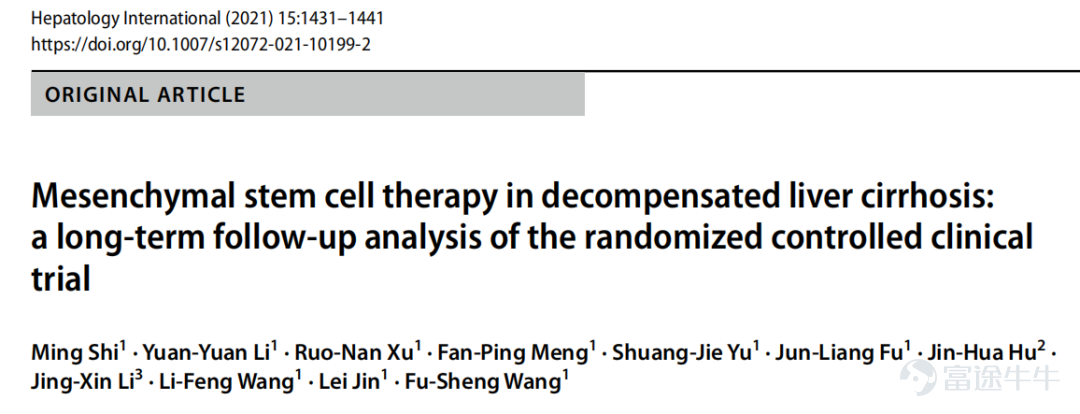
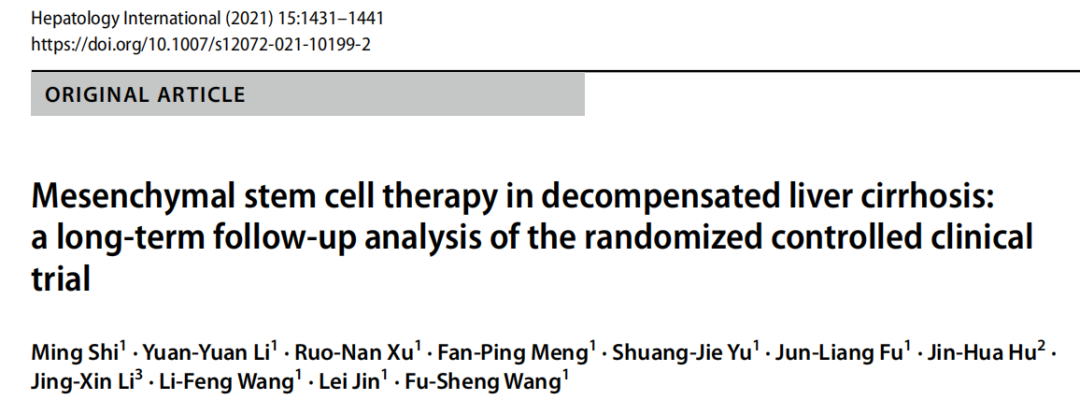
Recently, the latest research results by Academician Wang Fusheng in China show that umbilical cord mesenchymal stem cells significantly improve liver function and long-term survival in decompensated cirrhosis. The relevant findings (preprint) are being reviewed in the International Journal of Hepatology (Hepatology International).
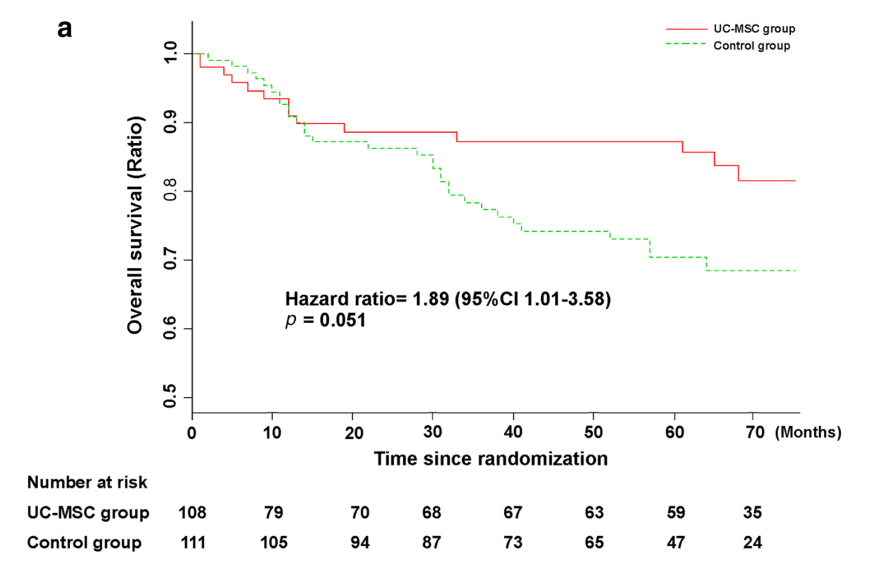
A total of 219 patients were included in the study. Of these, 108 patients were treated with stem cells, 111 patients were treated as controls, and followed up for 75 months. The results showed that umbilical cord mesenchymal stem cells can reduce the amino transfer of heparin, significantly improve liver function, and the overall survival rate of the stem cell treatment group was higher than that of the control group. This study provides new evidence on the safety and efficacy of mesenchymal stem cells in treating cirrhosis.
★ news ★ Recently, the latest research results by Academician Wang Fusheng in China show that umbilical cord mesenchymal stem cells significantly improve liver function and long-term survival in decompensated cirrhosis. The relevant findings (preprint) are being reviewed in the International Journal of Hepatology (Hepatology International). A total of 219 patients were included in the study. Of these, 108 patients were treated with stem cells, 111 patients were treated as controls, and followed up for 75 months. The results showed that umbilical cord mesenchymal stem cells can reduce the amino transfer of heparin, significantly improve liver function, and the overall survival rate of the stem cell treatment group was higher than that of the control group. This study provides new evidence on the safety and efficacy of mesenchymal stem cells in treating cirrhosis. 01 Academician Wang Fusheng's research results Research method: The study included 291 patients with decompensated liver cirrhosis, divided into a control group of 111 people and a 108-person umbilical cord mesenchymal stem cell treatment group. The treatment group received an infusion every 4 weeks, for a total of three infusions. All patients were followed up for 7 years starting in October 2010. Results: The overall survival rate of the treatment group was significantly higher than that of the control group. Judging from indicators such as serum blood protein, cholinesterase, and total bilirubin levels, mesenchymal stem cell treatment significantly improved liver function, and no obvious side effects or treatment-related complications were observed. Conclusion: Mesenchymal stem cell treatment is not only well tolerated, but also significantly improved...
01 Academician Wang Fusheng's research results
Research method: The study included 291 patients with decompensated liver cirrhosis, divided into a control group of 111 people and a 108-person umbilical cord mesenchymal stem cell treatment group. The treatment group received an infusion every 4 weeks, for a total of three infusions. All patients were followed up for 7 years starting in October 2010.
Results: The overall survival rate of the treatment group was significantly higher than that of the control group. Judging from indicators such as serum blood protein, cholinesterase, and total bilirubin levels, mesenchymal stem cell treatment significantly improved liver function, and no obvious side effects or treatment-related complications were observed.
Conclusion: Mesenchymal stem cell therapy is not only well tolerated, but can also significantly improve long-term survival and liver function. As a result, mesenchymal stem cells may be a novel treatment for decompensated liver cirrhosis.
★ news ★ Recently, the latest research results by Academician Wang Fusheng in China show that umbilical cord mesenchymal stem cells significantly improve liver function and long-term survival in decompensated cirrhosis. The relevant findings (preprint) are being reviewed in the International Journal of Hepatology (Hepatology International). A total of 219 patients were included in the study. Of these, 108 patients were treated with stem cells, 111 patients were treated as controls, and followed up for 75 months. The results showed that umbilical cord mesenchymal stem cells can reduce the amino transfer of heparin, significantly improve liver function, and the overall survival rate of the stem cell treatment group was higher than that of the control group. This study provides new evidence on the safety and efficacy of mesenchymal stem cells in treating cirrhosis. 01 Academician Wang Fusheng's research results Research method: The study included 291 patients with decompensated liver cirrhosis, divided into a control group of 111 people and a 108-person umbilical cord mesenchymal stem cell treatment group. The treatment group received an infusion every 4 weeks, for a total of three infusions. All patients were followed up for 7 years starting in October 2010. Results: The overall survival rate of the treatment group was significantly higher than that of the control group. Judging from indicators such as serum blood protein, cholinesterase, and total bilirubin levels, mesenchymal stem cell treatment significantly improved liver function, and no obvious side effects or treatment-related complications were observed. Conclusion: Mesenchymal stem cell treatment is not only well tolerated, but also significantly improved...
02 What is cirrhosis?
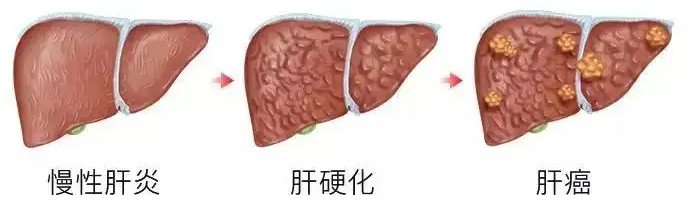
Liver cirrhosis is a common chronic, progressive, and diffuse liver lesion caused by different causes. It causes diffuse proliferation of liver fiber tissue based on extensive hepatocyte degeneration and necrosis, and forms regenerated nodules and pseudolobules, leading to damage to normal liver lobule structure and vascular anatomy. The disease progresses gradually, and liver failure, portal hypertension, and various complications occur in advanced stages.
In China, it is more common in men aged 20-50. Most cases are post-hepatitis cirrhosis, and a small number are alcoholic cirrhosis and schistosomitic cirrhosis.
★ news ★ Recently, the latest research results by Academician Wang Fusheng in China show that umbilical cord mesenchymal stem cells significantly improve liver function and long-term survival in decompensated cirrhosis. The relevant findings (preprint) are being reviewed in the International Journal of Hepatology (Hepatology International). A total of 219 patients were included in the study. Of these, 108 patients were treated with stem cells, 111 patients were treated as controls, and followed up for 75 months. The results showed that umbilical cord mesenchymal stem cells can reduce the amino transfer of heparin, significantly improve liver function, and the overall survival rate of the stem cell treatment group was higher than that of the control group. This study provides new evidence on the safety and efficacy of mesenchymal stem cells in treating cirrhosis. 01 Academician Wang Fusheng's research results Research method: The study included 291 patients with decompensated liver cirrhosis, divided into a control group of 111 people and a 108-person umbilical cord mesenchymal stem cell treatment group. The treatment group received an infusion every 4 weeks, for a total of three infusions. All patients were followed up for 7 years starting in October 2010. Results: The overall survival rate of the treatment group was significantly higher than that of the control group. Judging from indicators such as serum blood protein, cholinesterase, and total bilirubin levels, mesenchymal stem cell treatment significantly improved liver function, and no obvious side effects or treatment-related complications were observed. Conclusion: Mesenchymal stem cell treatment is not only well tolerated, but also significantly improved...
03 Causes of liver cirrhosis
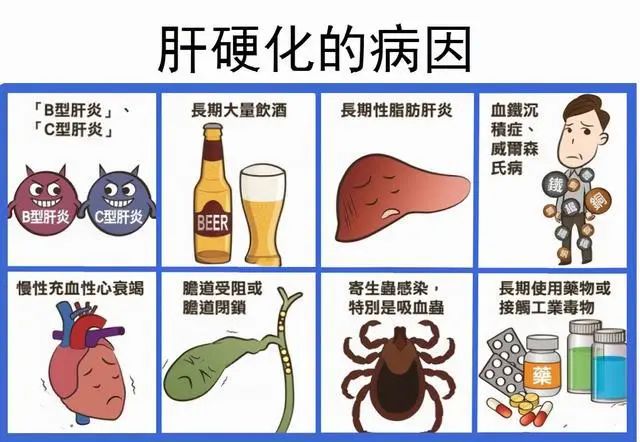
There are many causes of cirrhosis of the liver. Cirrhosis caused by viral hepatitis B is the most common in China, with few being alcoholic cirrhosis and schistosomal cirrhosis. Alcoholism is most common abroad, especially in North America and Western Europe.
1. Viral hepatitis: Chronic hepatitis caused by hepatitis B, C, and D viruses is the main cause of liver cirrhosis in China, accounting for 50 to 60%. The persistence of the virus, moderate to severe liver necrosis and inflammation, and fibrosis are the main causes of cirrhosis.
2. Chronic alcoholic liver disease is the most common cause of cirrhosis in European and American countries.
3. Non-alcoholic fatty liver disease is the most common pre-cirrhosis disease after the above two causes, and there is an increasing trend.
4. Long-term cholestasis, drugs or toxins, genetic and metabolic diseases, schistosomiasis, immune disorders, etc. can all cause hepatocyte degeneration, necrosis, and fibrosis, and then progress to liver cirrhosis.
5. Predisposing factors: Liver cirrhosis progresses from various chronic liver diseases. Therefore, any adverse factor affecting the normal function of the liver can be regarded as an inducing factor for cirrhosis, such as alcohol addiction, obesity, diabetes, hypertriglyceridemia, overwork, chemical drugs, certain health products, etc.
★ news ★ Recently, the latest research results by Academician Wang Fusheng in China show that umbilical cord mesenchymal stem cells significantly improve liver function and long-term survival in decompensated cirrhosis. The relevant findings (preprint) are being reviewed in the International Journal of Hepatology (Hepatology International). A total of 219 patients were included in the study. Of these, 108 patients were treated with stem cells, 111 patients were treated as controls, and followed up for 75 months. The results showed that umbilical cord mesenchymal stem cells can reduce the amino transfer of heparin, significantly improve liver function, and the overall survival rate of the stem cell treatment group was higher than that of the control group. This study provides new evidence on the safety and efficacy of mesenchymal stem cells in treating cirrhosis. 01 Academician Wang Fusheng's research results Research method: The study included 291 patients with decompensated liver cirrhosis, divided into a control group of 111 people and a 108-person umbilical cord mesenchymal stem cell treatment group. The treatment group received an infusion every 4 weeks, for a total of three infusions. All patients were followed up for 7 years starting in October 2010. Results: The overall survival rate of the treatment group was significantly higher than that of the control group. Judging from indicators such as serum blood protein, cholinesterase, and total bilirubin levels, mesenchymal stem cell treatment significantly improved liver function, and no obvious side effects or treatment-related complications were observed. Conclusion: Mesenchymal stem cell treatment is not only well tolerated, but also significantly improved...
04 Symptoms of liver cirrhosis
The onset and course of cirrhosis is generally gradual, and may persist for several to ten years (average 3-5 years). The onset of the disease may be asymptomatic, and the condition may progress gradually. The liver is enlarged in the early stages and hardens and shrinks in the late stages.
The clinical symptoms of liver cirrhosis are divided into a compensatory period and an decompensated period. The compensatory period can have clinical signs of hepatitis or conceal the onset of the disease. There may be symptoms such as mild fatigue, bloating, mild liver and spleen enlargement, mild jaundice, liver palm, and spider mole. The decompensation period includes impaired liver function and portal hypertension syndrome:
① Systemic symptoms: fatigue, weight loss, dark face, lack of urine, lower extremity edema.
② Digestive tract symptoms: loss of appetite, bloating, gastrointestinal disorders, etc.
③ Bleeding tendencies and anemia: bleeding gums, nasal discharge, purpura, anemia.
④ Endocrine disorders: spider mole, liver, skin pigmentation, menstrual disorders in women, breast development in men, etc.
⑤ Hypoproteinemia: edema of both lower extremities, lack of urine, abdominal fluid, hepatogenic pleural effusion.
⑥ Portal hypertension: splenomegaly, hypersplenism, esophagogastric varices, abdominal wall varices.
05 Treatment for liver cirrhosis
Currently, there is no cure. The main prevention method is to detect and stop the progression of the disease at an early stage. Treatment mainly includes symptomatic supportive treatment, medication, endoscopic or surgical treatment. The outcome of liver cirrhosis is usually chronic liver failure. Apart from symptomatic treatment, liver transplantation is currently the most effective treatment, but due to factors such as high cost of liver transplantation, insufficient liver source, and immune rejection, it cannot be applied clinically on a large scale, and most patients cannot receive effective treatment.
With the continuous development of stem cell technology, breakthrough progress has been made in stem cell isolation, culture, transplantation, etc., and is being applied to the treatment of more and more diseases, including central nervous system diseases, myocardial damage, osteoarthritis, premature ovarian failure, chronic kidney disease, diabetes, and liver disease. As a new medical technology, numerous studies have proven that MSC can stop or slow the progression of cirrhosis.

★ news ★ Recently, the latest research results by Academician Wang Fusheng in China show that umbilical cord mesenchymal stem cells significantly improve liver function and long-term survival in decompensated cirrhosis. The relevant findings (preprint) are being reviewed in the International Journal of Hepatology (Hepatology International). A total of 219 patients were included in the study. Of these, 108 patients were treated with stem cells, 111 patients were treated as controls, and followed up for 75 months. The results showed that umbilical cord mesenchymal stem cells can reduce the amino transfer of heparin, significantly improve liver function, and the overall survival rate of the stem cell treatment group was higher than that of the control group. This study provides new evidence on the safety and efficacy of mesenchymal stem cells in treating cirrhosis. 01 Academician Wang Fusheng's research results Research method: The study included 291 patients with decompensated liver cirrhosis, divided into a control group of 111 people and a 108-person umbilical cord mesenchymal stem cell treatment group. The treatment group received an infusion every 4 weeks, for a total of three infusions. All patients were followed up for 7 years starting in October 2010. Results: The overall survival rate of the treatment group was significantly higher than that of the control group. Judging from indicators such as serum blood protein, cholinesterase, and total bilirubin levels, mesenchymal stem cell treatment significantly improved liver function, and no obvious side effects or treatment-related complications were observed. Conclusion: Mesenchymal stem cell treatment is not only well tolerated, but also significantly improved...
06 The safety of mesenchymal stem cell therapy has been proven
Clinical studies have shown that mesenchymal stem cell transplantation has a good therapeutic effect, has an obvious effect on improving liver function in patients with decompensated liver cirrhosis, reduces patients' clinical symptoms, and increases the chances of survival!
And none of the patients reported short-term clinical adverse events, including upper right abdominal pain, rash, infection, coma, or shock. At the same time, by monitoring the incidence of complications throughout the trial, it was found that there was no statistical difference in the occurrence of complications between the mesenchymal stem cell treatment group and the control group, including hepatocellular carcinoma, upper gastrointestinal bleeding, hepatic encephalopathy, and primary peritonitis. These data confirm the safety of mesenchymal stem cell therapy.
All in all, more and more studies have confirmed the good therapeutic effect of mesenchymal stem cells in liver disease. I believe that with the progress of clinical research, mesenchymal stem cell treatment will become a better choice for patients with liver disease.
Risk Disclaimer: The above content only represents the author's view. It does not represent any position or investment advice of Futu. Futu makes no representation or warranty.Read more
12K Views
Report
Comment (1)
Write a Comment...
1
1