
美聯儲加息50基點,美股將如何演繹?

[mooer Discusses Topics] The Federal Reserve's interest rate hike and balance sheet reduction have started, increasing volatility in US Stocks. Where is the market headed?
This Wednesday, the US stock market experienced an extremely strong interest rate day, with the Dow Jones Industrial Average posting its largest single-day gain since 2020; however, who could have predicted that just 24 hours after the strong market, the US stock market changed overnight, filled with wailing, facing the largest reversal since the onset of the pandemic, welcoming the biggest single-day decline of the year.
Market reversals and increased volatility are keeping investors in a state of suspense. With the Federal Reserve raising interest rates and reducing its balance sheet, combined with the tumultuous international situation, where is the market headed? Will it continue to bear?
Faced with persistently high inflation, the current tumultuous international situation, and the continuous adjustments in the US stock market since late November 2021, investors are paying more attention to this interest rate meeting.
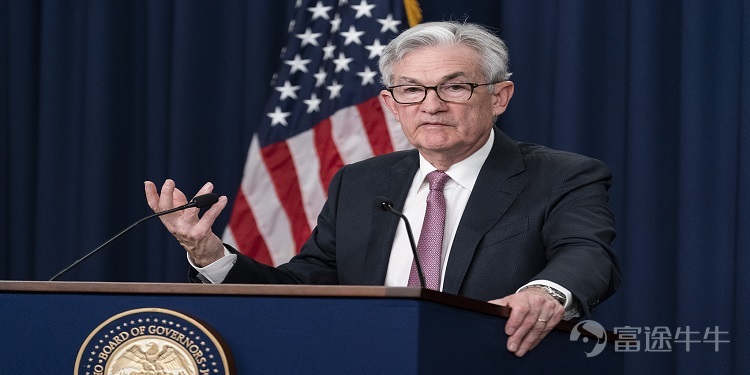
In the early hours of May 5, Beijing time, the Federal Reserve's interest rate meeting announced its decision: raising the target range for the federal funds rate from 0.25% to 0.50% to 0.75% to 1.00%. This marks the first 50 basis point increase since May 2000 and the first time since 2006 that rates were raised in consecutive meetings.
What chain reactions will such aggressive interest rate hikes and balance sheet reductions by the Federal Reserve bring to the global capital markets?

1. What is an interest rate hike? What is a balance sheet reduction?
As discussions about "interest rate hikes" and "balance sheet reductions" become heated, every investor in the market waves should first clarify the relevant basic concepts to be clear-headed and targeted.
Interest rate hike:The Federal Reserve raises the federal funds rate. This is the borrowing rate between commercial banks and between commercial banks and non-bank financial institutions. In simpler terms, it is the borrowing rate among banks when they lack funds; if banks cannot borrow from each other and can only borrow from the Federal Reserve, this rate will also be applied. An interest rate hike increases the cost for banks to obtain funds, which will also increase the interest for everyone borrowing from banks. An interest rate hike will lead to more funds flowing into banks, reducing consumption, thereby suppressing inflation and an overheated economy, and it will also put pressure on stock market valuations.
Quantitative Tightening:Reducing the balance sheet, each country, each enterprise, and each household has its own balance sheet. Quantitative Tightening means reducing the total asset scale of the Federal Reserve.
The difference between interest rate hikes and quantitative tightening:The former directly affects short-term interest rates, while the latter can directly influence long-term interest rates.
Dollar Repatriation:The Federal Reserve implements tight monetary policy, such as raising interest rates. An increase in interest rates means higher rates of return for funds deposited in banks. There exists a 'Dollar Tide' in the market, where every round of dollar easing drives cheap dollar funds to emerging countries for investment and arbitrage; and every round of dollar rate hikes causes capital to flow back to the USA, accompanied by a strengthening dollar and weakening stock markets and exchange rates in emerging countries.
II. Why focus on the Federal Reserve's interest rate hikes? What impacts do interest rate hikes and quantitative tightening have?
As the most influential central bank globally, the Federal Reserve's monetary policy, whether tightening or loosening, has significant spillover effects on itself and the global economy. Historically, interest rate hike cycles have always been a point of fragility for the market. A 'sneeze' from the Federal Reserve might cause a 'shock' to the global market.
According to statistics, from the end of February 2020 to the end of March 2022, the total asset size of the Federal Reserve rapidly expanded from 4.21 trillion USD to nearly 9 trillion USD, a cumulative growth of more than 100% in two years. Under the expectation of a policy shift from "loose" to "tight," global attention will focus on the Federal Reserve, which can influence the entire financial system, analyzing and predicting every step it takes.
Based on the impact of previous rate hikes and balance sheet reductions, popular analysts have compiled the general impact pathways. Let's take a look together~
The impact of rate hikes on the global economy:
From the perspective of capital liquidity, as the Federal Reserve raises interest rates, the global monetary easing cycle ends, putting simultaneous pressure on Emerging Markets and European countries. For Emerging Markets, the rapid appreciation of the USD following rate hikes leads to large-scale withdrawals of USD from these countries, resulting in currency depreciation and significant fluctuations in financial markets. In the European market, on one hand, Europe is closely connected with the USA's economy but is not growing as strong; on the other hand, the negative effects of the Russia-Ukraine conflict primarily impact Europe, with soaring oil prices driving inflation. Therefore, in the context of capital flowing out of Europe to the USA following the Fed's rate hikes, it adds further pressure to the European capital market.
From the perspective of debt risk, the Fed's interest rate hike raises the global default risk on debts. On one hand, with the US federal government's debt already at historic highs, the global rise in rates triggered by interest rate hikes will likely exacerbate America's debt risks; on the other hand, under the USD-dominated international financial system, emerging economies are bound to the cycles of the USA and the USD, exhibiting systemic vulnerabilities. Rate hikes will increase the cost of repaying USD-denominated debt for Emerging Markets and developing economies, causing difficulties for some countries with poor economic conditions, excessive reliance on external financing, and weak repayment capacities, even pushing them to the brink of a financial crisis and recession, thereby transmitting these risks through trade and financial channels back to the global economy, endangering global economic recovery and financial stability.
Generally, balance sheet reduction will closely follow the pace of interest rate hikes. Unlike rate hikes, the Federal Reserve's actions of reducing its balance sheet can directly affect long-term interest rates, influencing the supply-demand structure of long-term US Treasuries. When the Federal Reserve reduces its balance sheet, it will decrease its holdings of various securities (including government bonds and MBS), and when the Fed stops reinvesting or even begins to sell off long-duration government bonds, long-term yields on US Treasuries will trend upwards.
Three, Institutional Views
The Federal Reserve's rate hikes are aggressive, and the stock market is fluctuating drastically, like "one day in KTV, another day in ICU." What are the views and disagreements of foreign media and large institutions on this extreme market behavior, inflation, and market direction? Let's take a look together~
What are the reasons for the market crash?
Bloomberg: Inflation concerns lead to a double whammy for stocks and bonds.
Bloomberg reported that the reason behind the turbulence in the US stock market on Thursday was that the Federal Reserve exited its most aggressive economic stimulus measures since 1994; and the Federal Reserve, which once stabilized the market, has shifted its main direction and vowed to curb the hottest inflation in four decades. This has also led to expectations of continuous inflation and continuous interest rate hikes in the market.

CICC: What is driving the renewed sharp decline in US stocks?
China International Capital Corporation believes that the drastic fluctuations in market expectations over the past two days indicate that the market is still grappling with the Federal Reserve's actual accelerated tightening versus faster tightening beyond easing expectations, and the balance’s direction depends on the judgment of inflation and growth prospects. The underlying logic is: if both inflation and growth prospects are relatively bleak and pessimistic, the existing tightening path has been sufficient to severely impact valuations and profits; whereas if there is hope for a turning point in inflation and growth prospects are relatively robust, then the market may focus more on the alleviation of concerns regarding faster tightening in the future.
What are the views and disagreements among institutions regarding the market outlook?
Institutional Opinions - Bullish Side:
Tom Lee, former Chief Strategist at JP Morgan Chase and founder of Fundstrat Global Advisors, pointed out.The market may have overlooked an important trend pointing to an upward movement in the stock market; in five of the last six Federal Reserve meetings, the stock market rebounded afterward. Given that the stock market experienced a significant decline before the May Federal Open Market Committee (FOMC) meeting, we believe there is a high probability of a rebound similar to the previous five occasions, and the stock market may bounce back in May. Most importantly, compared to Bonds, Stocks remain an attractive investment, reinforcing the years-long TINA trade, which means there is no alternative to Stocks. We believe that over the next five years, the stock market will still provide the best risk/reward profile.
Sylvia Jablonski, the Chief Investment Officer for the Defiance ETF, expresses optimism for the future market.Inflation may have peaked, and growth may be slowing, but remains positive. Consumers are still spending, and employment levels are at historic highs.
Institutions debate - Bears:
Analyst Ven Ram from Bloomberg noted:The market is currently "very dangerous" and is experiencing systemic pressures not seen since the financial crisis; the level of market volatility is unusual.
Hedge fund moguls: the financial environment is worse than ever; don't think about making money, focus on preserving capital first.USA billionaire and hedge fund manager Paul Tudor Jones states: due to the Federal Reserve continuing to raise interest rates amid increasingly tightening financial conditions, the environment for investors is worse than ever. Investors are now in "unknown territory," and in such a challenging environment, they should prioritize capital preservation.
Sam Stovall, Chief Equity Analyst at CFRA, one of the largest independent investment research companies globally, warns that: even after the significant drop on Thursday, the S&P 500 Index still has more room to move downward, and further declines could drag the index below 4,000 points. For a while, I have been saying that I believe the 3,800 points level for the S&P 500 Index seems appropriate for several reasons:
1. From a fundamental perspective, since 2000, the average PE ratio for expected 12-month earnings has been 17 times. A PE of 17 for expected earnings in 2022 would bring us to around $3,860.
2. Two technical indicators—the Fibonacci retracement level and the head and shoulders pattern—also suggest that the S&P 500 Index will fall to 3,800 points, which indicates a further decline of about 8%.
Perhaps we are about to be eliminated by the market. But I still think there is more room for downside potential, and certainly more volatility.
4. mooer's perspective
The mooer community has always been a place for talent, with mooers accurately predicting the dramatic market fluctuations after the Federal Reserve's interest rate meeting, some mooers searching for patterns in history and cycles, others conducting market assessments, and many patiently sharing investment experiences. Come and take a look with the popular sister~
Recent market fluctuations will be very intense. The current market situation: taking one step down and looking back three times. Intuition: it may enter an acceleration phase, leading to a circuit breaker, then rebound upward in a couple of days. What I am saying is not fortune-telling. Rather, it is to inform you: Volatility.

@yello少了w:Twenty-two years since the US stock market's millennium bubble: humanity never learns from history.
The crash of the US stocks back in the millennium was not as obvious compared to previous events, such as the leveraged crash in 1929 and the subprime crisis in 2008; the reasons are more complex.It was merely a bubble formed from over-investment at that time, which must undergo a series of reshuffling. The technology companies that emerged from that crisis have now become the giants of the US stock market.
The past three US stock market crises share a common mechanism:Federal Reserve rate cuts—overheated investment—speculation + leverage—overvaluation—Federal Reserve rate hikes—market crash.During these periods, there were different triggers for bull markets (post-war economic expansion, storytelling, real estate boom), and the catalysts that burst the bubbles were also different (Federal Reserve rate hikes, the collapse of bull market leaders' beliefs).
Putting everything else aside, just in terms of valuation, it is already obvious beyond doubt.The main current issue is how the excessive MMF will be withdrawn by the Federal Reserve in the future? Or can it even be withdrawn?
@郭二侠鑫金融:Solidify the market bottom.
@郭二侠鑫金融:Solidify the market bottom.
The US stock market is currently in a downward trend, with no signs of stopping the decline, and is expected to continue searching for a bottom, which has a significant impact on Hong Kong stocks. In the bottom fluctuation market, the Hang Seng Index is at 20,000 points, and the Hang Seng TECH Index is below 4,000 points without trapping individuals, continue to buy low and sell high to reduce costs, keeping the original position unchanged and slowly enduring. Most sectors and individual stocks in Hong Kong have already emerged in the bottom area, but there is no clear leading sector visible now. The previous few times were all rebounds after excessive declines, and we must wait for a clear logic to appear.
Currently, the risk in Hong Kong stocks has mostly been released, and it is now a period of fluctuation and bottoming. Even if the risks in the US stock market increase, the impact is very limited. Speculators who should have run have already left, and what remains are investors who believe that Hong Kong stocks will revert to the mean. After this bottom exploration, it will solidify the market bottom. Prepare the bullets; the market always favors those who are prepared (with bullets).
@大藍天 小雨點:Oh, it has indeed been officially announced that we have entered a bear market.
我想说的是,不要以为在熊市做空就能赚钱,市场输得最多钱的时间就是在熊市。除非你有一定基础,否则你作为一个普通散户,所看到的沽空机会往往大家都看到,就已经为时已晚。当然你想沽空的时候,往往就是反弹后抽的开始。而你看到反弹开始想追入的时候,真不好意思,大盘反弹差不多了又要跌了,就像这两天的行情一样。所以,空仓最好。
我想说的是,不要以为在熊市做空就能赚钱,市场输得最多钱的时间就是在熊市。除非你有一定基础,否则你作为一个普通散户,所看到的沽空机会往往大家都看到,就已经为时已晚。当然你想沽空的时候,往往就是反弹后抽的开始。而你看到反弹开始想追入的时候,真不好意思,大盘反弹差不多了又要跌了,就像这两天的行情一样。所以,空仓最好。
在了解了加息、缩表的基础概念、影响链路以及机构对于市场走势的讨论,牛友们都有哪些思考和收获呢?那么问题来了:
1、在“加息缩表”双刹启动之际,你如何看待美股的后市?
2、对于当下动荡的市场,你又有哪些应对策略呢?
Welcome, mooers, to discuss around the comments section (suggested to be no more than 300 words). The selected opinions from mooers and the wonderful comments in the comments section will have the opportunity to receive.188 points reward.Come share your unique insights ~
Risk and disclaimer notice: The above opinions are for reference only and do not constitute any investment advice. The stock market carries risks; investment should be cautious.
Risk Disclaimer: The above content only represents the author's view. It does not represent any position or investment advice of Futu. Futu makes no representation or warranty.Read more


Comments (42)
to post a comment
149
365