
內房、物管股走高,行情修復能否持續?

What signal did the rapid rise in domestic housing stocks send?
The first trading day after the holiday season ushered in another rise in real estate stocks. Among them, Greenview China Real Estate (00095) once rose more than 47% to HK$1.58, leading the Hong Kong real estate sector.
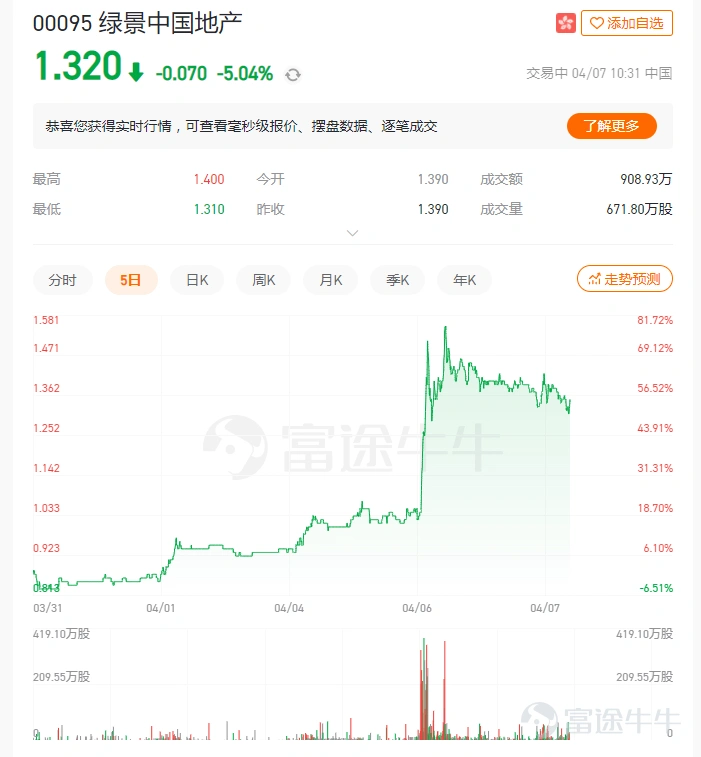
Careful investors will find that this round of growth in real estate stocks was not achieved overnight. The data showed that from March 15 to April 4, the Hong Kong real estate index rose 16.7%. It is worth noting that the direct benefit of boosting stock prices is the recent introduction of a series of policies to relax purchase restrictions.
On April 5, after Dalian, Quzhou, Qinhuangdao, and Mianyang, another provincial capital city, Lanzhou, announced the relaxation of housing purchase policies.
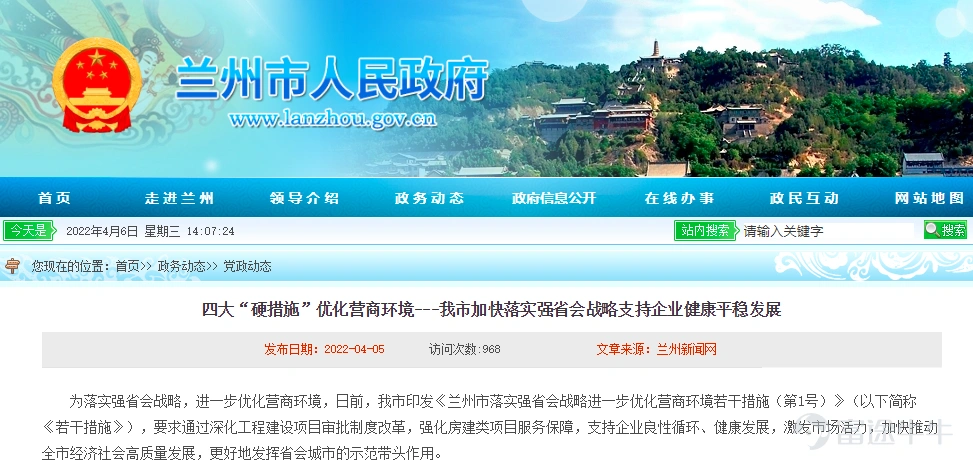
According to the Lanzhou Municipal Government website, Lanzhou has introduced four “hard measures” to optimize the business environment. One of these measures includes lowering the threshold for individuals to buy a home; a minimum down payment ratio of 20% for a first home loan and a minimum down payment ratio of 30% for a second home loan; reducing the burden of personal housing consumption; following a first-home loan policy for settling loans and purchasing a second home; and easing regional purchase restriction policies for the elderly.
From the easing of purchase restrictions to rising stock prices, many people can't help but wonder. Is the real estate stock winter really over?
There is a saying circulating in the real estate market. Real estate development trends mainly focus on the following three types of situations, namely: “Looking at population in the long term, land (policy) in the medium term, and finance in the short term.” However, some industry insiders pointed out that out of the three factors, it ultimately depends on policy regulation. Why do you say that?
According to data from the National Bureau of Statistics, the value added of the real estate industry in 2020 was 7.45 trillion yuan, an increase of 7% over 2019. The contribution rate of the real estate industry to the national economy in 2020 was 7.34%, an increase of 1.65 percentage points compared to 2011. Looking at the contribution rate of China's real estate industry to the economy over the past ten years, it has basically maintained a steady growth trend.
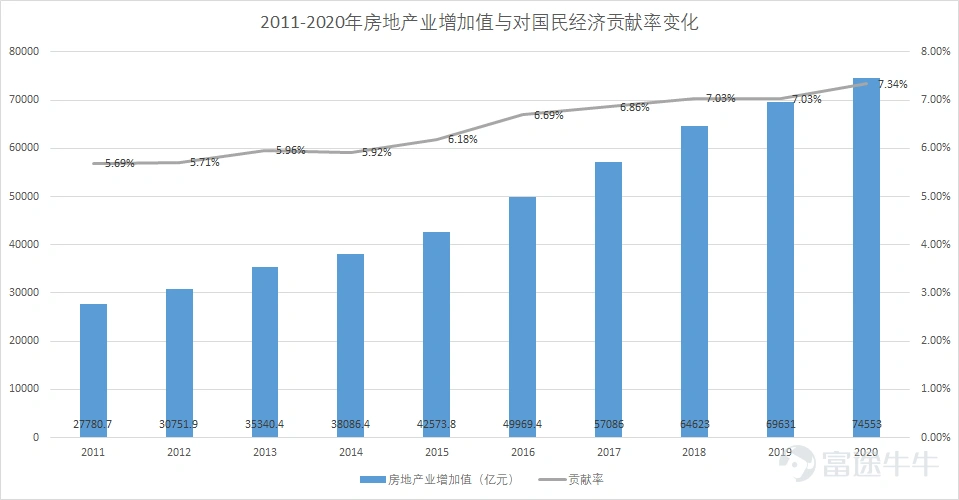
The data comes from the National Bureau of Statistics
However, in the current context of increased external instability and uncertainties and repeated domestic epidemics, “steady growth” has become the top priority of economic work this year. Whether viewed from the perspective of stabilizing the economy or preventing risks, the stability of real estate this year is essential.
The famous economist Ren Zeping pointed out that since May 2021, the real estate market has experienced the coldest winter in 20 years, which is the result of a combination of short and long cycles. However, real estate is one of the keys to achieving steady growth of 5.5% this year, and the situation has reached a critical point where action can be taken. It can be said that if real estate is stable, then the economy is stable.
It is worth noting that the country has also sent positive signals one after another in recent years:
The March “Report on the Work of the Government” stated that “urban policies promote a virtuous cycle and healthy development of the real estate industry.”
On March 16, the Financial Services Commission of the State Council proposed, “With regard to real estate companies, it is necessary to promptly study and propose strong and effective risk prevention and mitigation plans, and propose supporting measures for transformation to a new development model.”
On March 29, the Executive Council of the State Council proposed, “Put steady growth in a more prominent position, policies to stabilize the economy come out quickly, without measures that are not conducive to stabilizing market expectations, and formulate plans to deal with the possibility of greater uncertainty.”
The first quarter regular meeting of the Central Bank's Monetary Policy Committee on March 30 stated, “Safeguard the legitimate rights and interests of housing consumers, better meet the reasonable housing needs of buyers, and promote healthy development and a virtuous cycle in the real estate market.”
Judging from the above measures, various regions have already begun to bail out the market, and efforts have begun to be stepped up. The effects of implementation have also begun to show, and the property markets in some hot cities have begun to pick up in volume.
Some institutions predict that in cities such as Dalian, Quzhou, Qinhuangdao, and Lanzhou, where market confidence has not clearly recovered and short-term adjustment pressure is high, demand side policy relaxation is increasing, which is conducive to promoting the release of reasonable demand for home purchases, stabilizing market expectations, and having a positive effect on the improvement of buyers' buying expectations and the steady recovery of the market. It is expected that more cities may follow suit in the future.
Since the policy is improving, how should investors who prefer domestic housing stocks deploy operational strategies?
Bank International believes that as the physical market is picking up and the financing channels of high-quality housing enterprises tend to be normal, the bank expects the sector to continue to be reassessed to a more reasonable level. Safe haven investors can focus on state-owned developers and property management companies. However, in the case of revaluation, investing in a basket of high-quality private enterprises may increase risk and return.
$LVGEM CHINA (00095.HK)$
$LVGEM CHINA (00095.HK)$
Risk Disclaimer: The above content only represents the author's view. It does not represent any position or investment advice of Futu. Futu makes no representation or warranty.Read more

Comments
to post a comment
2
2