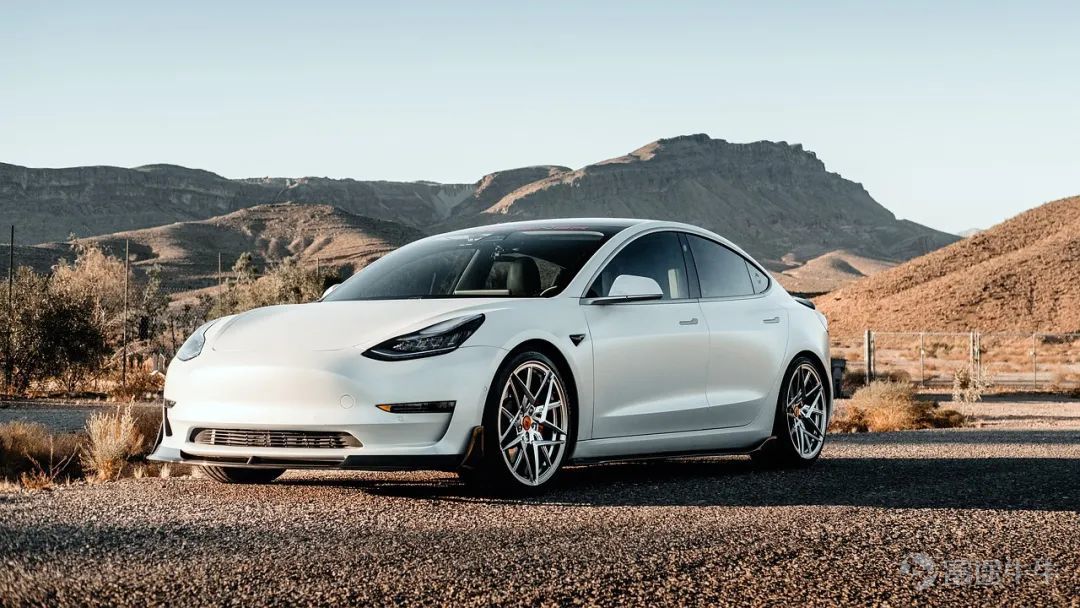
王者歸來?特斯拉能否站穩千元關口?

Back above $1000! Price increases and supply chain risks cannot stop Tesla from rising for seven consecutive days.
Amid a general decline in the US stock market, Tesla has risen for the seventh consecutive trading day, with its stock price surpassing $1000.
As of March, Tesla's stock price has risen by 18.3%, potentially becoming Tesla's best performing month since October 2021, when Tesla's stock price surged nearly 44%.
"Barron's" pointed out that currently the commodity market is driving inflation, bond yields are increasing, and the market is constantly digesting the increasingly aggressive interest rate policies of the Federal Reserve. Even though these factors will continue to pressure Tesla's stocks, Musk will push forward.$Tesla (TSLA.US)$

Stock prices continue to rebound.
The recent optimistic sentiment reflected in Tesla's stock price may be due to many reasons. Prior to this, CEO Elon Musk posted the 'Third part of the Tesla master plan' on Twitter, which will build on his 'Part 1' from 2006 and 'Part 2' from 2016, aiming to continue advancing the breakthroughs and manufacturing smaller, lower-priced, and more abundant electric vehicles with more advanced battery facilities to sustain its rapid growth.
On the other hand, investors may also be optimistic about Tesla's first-quarter delivery outlook. Currently, Wall Street estimates Tesla to deliver around 0.322 million cars, higher than the 0.306 million cars delivered in the fourth quarter of 2022. This data is expected to be officially announced around April 2nd.
Looking at the long-term plan for the whole year, Tesla is expected to deliver approximately 1.5 million cars in 2022, higher than 0.936 million cars in 2021, and hopes to increase production and sales by an average of 50% per year in the foreseeable future. For this reason, Tesla opened a brand new factory in Berlin, Germany on March 22nd, seen as a milestone for Musk's entry into the heart of the European auto industry, which to some extent boosted the stock price in the short term.
The trend of Tesla is closely intertwined with the 'China factor'.
Looking back at the full year of 2021, Tesla achieved astonishing performance growth. Out of the 0.936 million cars delivered, over 0.48 million were produced in China. Barron's pointed out that the most impressive part of Tesla's China factory is its construction speed, saving nearly ten months of construction time compared to the Berlin and Texas factories. In 2022, Tesla's China factory will enter its third year of operation, with an expected production of 0.8 million to 0.9 million vehicles in that year, accounting for 60% of its global production plan.
The China factory has played a huge role in driving Tesla's aggressive production expansion and sales plans, but it has also sparked some negative concerns from some American investors about Tesla's over-reliance on the Chinese supply chain. Previously, due to a recent wave of new coronavirus outbreaks in Shanghai leading to temporary shutdowns and parts shortages, some American institutions even considered buying Tesla put options for 12 months to hedge against short-term investment risks caused by factory closures - although this was a short-term problem that Tesla has already resolved. Some media reports mentioned that the factory resumed operations after being shut down for a few days.
The even greater supply chain risk lies in the continuous surge in battery material prices, partly offsetting the increased demand for electric vehicles due to more expensive gasoline. With the escalating conflict between Russia and Ukraine causing inflation and supply chain disruptions, prices of metal minerals used for lithium-ion battery materials have risen by about 40% since the beginning of this year. Citigroup analyst Jeff Chung wrote on March 15th that manufacturers have raised the prices of various batteries by 27%-41% since September last year. Considering the changes in raw material costs from the beginning of the year until now, the market currently needs to raise prices by another 15% to 40% to maintain the profit margins of battery manufacturers.
Currently, this situation has significantly increased the production costs and supply chain pressure for 'Tesla', leading various car manufacturers to raise prices. According to information changes on the Tesla official website, the prices of various models under Tesla have increased by about 4% to 7%.
In the particularly scarce battery material sector, Tesla also closely relies on China. According to related statistics, China's share of battery material production accounts for approximately 80% of the global total, dominating the global production of battery materials, with Contemporary Amperex Technology (300750.China) being the world's most valuable battery manufacturer, expected to surpass a $35 billion market share by 2022.
Furthermore, in the whole vehicle sales market, as the world's largest electric vehicle market, in 2021, China's electric vehicle penetration rate accounted for about 15% of all new car sales in China, while in the USA, this number is only close to 5%. This also becomes one of the core factors closely related to Tesla's future performance trends and the Chinese market.
3. Multiple factors affecting full-year profit expectations.
While battery prices surge, the entire automotive industry is also coping with the high prices of plastics, aluminum, and steel. Analyst Mike Ward from Benchmark Capital estimated in a research report in mid-March that non-battery related raw materials are collectively driving up automotive costs by approximately $500.
Barron's pointed out that overall, price increases may not be the key factor affecting Tesla's stock price. After all, this is not the first time Tesla or the electric vehicle industry has raised prices: in 2021, Tesla raised prices several times without harming the stock price. Following a more than 740% surge in 2020, Tesla's stock price still rose by about 50% in 2021. However, the price hikes in 2022 may have some impact on its stock price as investors are more alert to inflation recently.
Moreover, what investors should really pay attention to is the semiconductor shortage in 2021, which led car manufacturers to tend to place chips in high-end models, thereby allowing Tesla to achieve strong per-vehicle profits in 2021. However, the impact of ongoing shortages of raw materials and inflationary effects on its profit expectations beyond 2022 remains a pending issue.
At the same time, companies like Ford and Toyota have recently announced various challenges such as shortages of raw materials and production suspensions, causing pressure on their production plans and stock prices. Toyota stated on March 17: 'From April to June, the global average production plan is about 0.8 million units. Apart from the semiconductor shortage, factors such as the spread of the epidemic make it difficult to foresee the coming months, and production plans may consequently be reduced.'
In addition, another slightly negative impact on the global electric vehicle market in 2022 is the changing incentive measures for electric cars. Starting in 2022, China's incentives for purchasing electric cars have slightly decreased, while American electric car buyers are still awaiting some relevant incentive measures in Biden's yet-to-be-passed "Rebuild Infrastructure Act."
These common factors currently facing the electric vehicle industry may also affect Tesla.
By Sun Erxi
Edited by Juan Kang.
Copyright Statement:
"Barron's China" original article, reproduction without permission is prohibited.
(This article is for reference only and does not constitute investment, accounting, legal, or tax advice.)
Risk Disclaimer: The above content only represents the author's view. It does not represent any position or investment advice of Futu. Futu makes no representation or warranty.Read more


Comment (1)
to post a comment
10
91