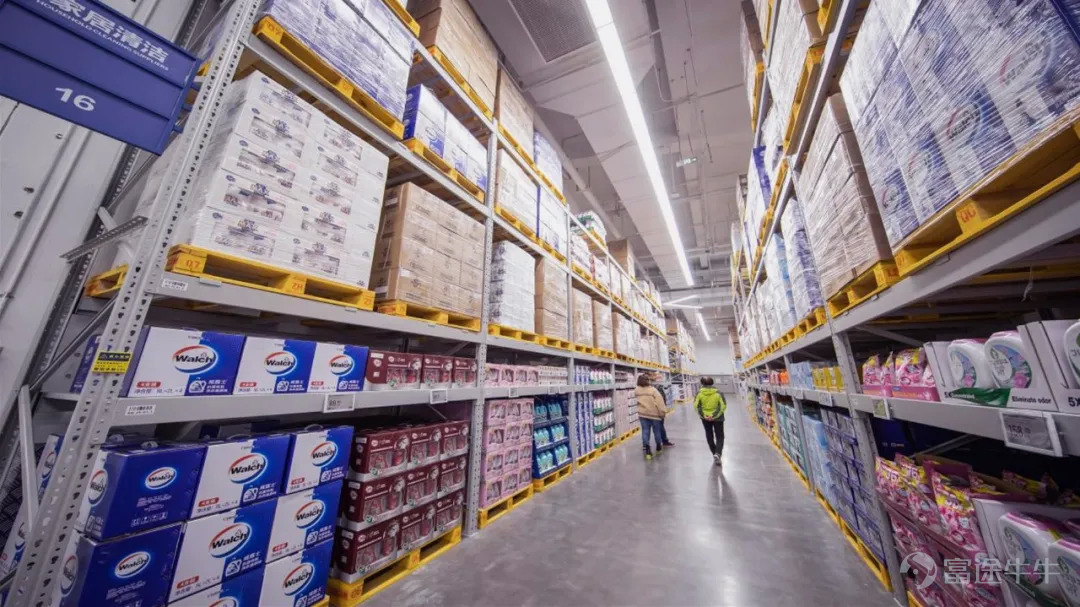

How can warehouse membership stores break free from the 'scale trap'?
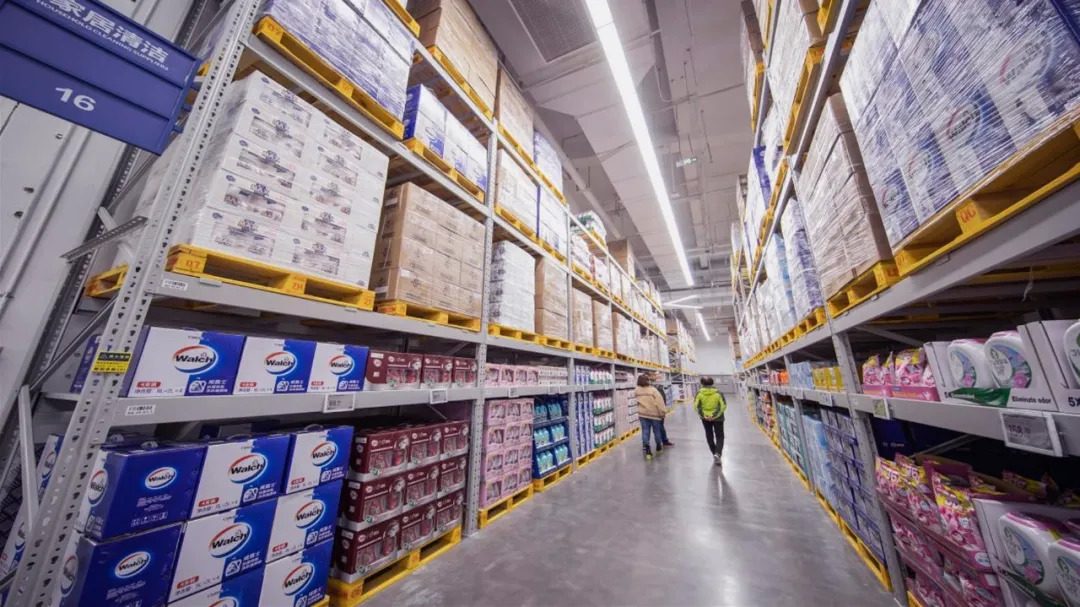
$Walmart (WMT.US)$$Costco (COST.US)$
The competitive landscape of domestic warehouse membership stores has entered the "Three Kingdoms Era": represented by foreign players such as Costco and Sam's Club, and represented by new forces such as Hema.
In recent years, under the impact of e-commerce and community group buying on physical retail, some veteran hypermarket players, constrained by declining performance, have begun to enter the field of warehouse membership stores seeking new growth. Hualian, Carrefour, and Jiajiayue are typical examples. Their first warehouse membership stores were all opened last year. At the same time, emerging players like Hema and Fudi are also not weak. The former opened 7 stores intensively within 8 months, mainly concentrated in the Yangtze River Delta region; the latter just opened their second store in Shunyi, Beijing.
Warehouse membership stores originated in the USA, different from traditional retail, the core is to earn the price difference of goods, playing the role of consumer trading counterpart. Warehouse membership stores position themselves as the "trustees" of users, targeting medium to high consumption customer groups, transforming from the traditional retail commodity price difference model to a membership service model, earning profits through extreme low margin, high turnover, and membership fee income.
In the current competitive situation, the domestic warehouse membership track has entered the 'Three Kingdoms Era': the foreign players represented by Costco and Sam's, and the new forces represented by Hema.
These three, each have their own strengths on the capability side, but looking at the recent 'card withdrawal tide' of Sam's Club, the arrogance of overseas forces and the rise of national trend have actually created development space for domestic players. Hou Yi (Hema CEO) has also publicly stated, "The essence of retail is that retailing requires stores." In other words, in the future, whoever can create a membership store that understands Chinese consumers better will win, and this will greatly test the players' localization and differentiation operation capabilities.
How to determine the value curve of a warehouse membership store?
How can warehouse membership stores avoid the "scale trap" of the Internet?
Trying to explore the possible outcome of warehouse membership stores.
Scenario subscription era
From the perspective of warehouse membership business format, there are fundamental differences between domestic and foreign markets.
Most foreign warehouse membership stores were established in the 1990s: Costco and Sam's Club were founded in 1983, BJ's Wholesale was founded in 1984. At that time, the United States was in a severe stagflation phase, with high unemployment and inflation coexisting. In this context, consumers were mostly price-sensitive. A typical example is that Costco, in its early stages of development, did not carry the labels of middle class and petit bourgeois.
On the other hand, to a certain extent, the evolution and iteration of warehouse membership stores in China are mostly based on the new retail format, gradually evolving from a dual-track paid membership and free membership mechanism to a single-track membership.
Since the concept of new retail emerged in 2016, the industry has been going through three stages of development:
The first stage is to cover specific markets as a new channel form, whether it is alibaba's Hema Fresh or jd.com's Yonghui 'super species', both appear in the form of covering new segmented markets; The second stage is the stage of comprehensively improving retail efficiency. Soon after the opening of 'Xiaomi Home', it achieved a sales per unit area of over 0.2 million, which is almost a height that traditional retail cannot reach; The third stage is a commercial form that meets the full-scene needs of consumers, which, relative to traditional retail, requires a scene revolution in terms of experience.
Returning to warehouse membership stores, what this reflects is actually that the supermarket consumer market is transitioning from the past 'product-centered' to 'consumption scene-centered', and the fundamental of a single-track membership lies in the fact that it no longer relies on price differentials for profit like traditional supermarkets, but selects higher-quality products in a strict manner, shortens consumer decision time, and domestically, warehouse membership stores have added some 'localization upgrades'.
If you look at it superficially, you might think that warehouse membership stores are a gimmick, but in fact, its core lies in meeting consumers' demands for high cost performance and offline scene experience, more like a scene subscription, the player's moat barrier includes but is not limited to 'selected SKUs', 'cost management', 'supplier resource mobilization', 'private brand construction' and other dimensions.
This also explains why it wasn't until last year that domestic warehouse membership stores began to make an impact: on the one hand, the old-fashioned operating model of traditional supermarkets can no longer meet the new needs of first- and second-tier consumers; on the other hand, foreign forces represented by Sam's are unfamiliar with the domestic retail formats, showing a certain degree of discomfort.
Here we need to mention Hema. In fact, if we go back three years, Hema may not necessarily have been able to become a membership store. Over the past five years, Hema has laid the groundwork for running membership warehouse stores through its own products (PB), building a domestic and global supply chain from scratch, and honing all kinds of experiences in food and store operation based on three meals a day. These are the cornerstones for Hema to establish membership warehouse stores. Hema has also transformed from the previous 'single' Hema store model to today's 'multi-format coordinated development model'.
As Clayton Christensen discussed in 'The Innovator's Dilemma', 'Behind the product structure is a value network, and the value network determines what products and services companies must provide to solve customer problems. As experience gradually accumulates within a specific network, they are likely to develop capabilities, organizations, and cultures that meet the unique requirements of that value network.'
The Temptation of Traps
'Boutique department store strategy' and 'hypermarket strategy' are two common retail business models of the past.
The former focuses on high gross profit and low turnover, while the latter tends to have low gross profit and high turnover. These two retail models were competitive in the traditional retail era. However, in the new era, the internet and information technology are forcing a redivision and coordination of retail flow, with differentiated operation and efficiency revolution of warehousing membership stores on the verge of breaking out.
From the perspective of the supply side, the efficiency of warehousing membership stores is determined by the operational level of the retail flow composed of various retail activities. The retail flow can be divided into logistics, capital flow, information flow, commercial flow, ordering flow, payment flow, risk flow, etc., which are often completed by retail channel members through division of labor and cooperation, making it an extremely complex commercial system.
In this system, if one only uses internet thinking or traditional supermarket channel supply methods, they are likely to fall into a scale trap. The misconception principle is actually very simple; it mainly overlooks the service essence of warehousing members, providing valuable consumption scenarios. The manifestation of scenario capabilities is absolutely not simply replicating overseas symbols but rather understanding the shopping preferences of regional consumers better.
Taking Costco as an example, it entered the market in Taiwan in 1997 and established its first store in Kaohsiung City. Due to different consumption habits, Costco's large-volume, membership-based consumption model was not initially favored by the locals. Kaohsiung suffered losses for 5 consecutive years. Later, Costco actively made changes to cater to the needs of local customers, such as reducing salad acidity, reducing chicken sandwich calories, etc., to cater to **** tastes, and the flagship store slowly turned losses into profits.
Similarly, the membership growth data of Hema X Warehouse Club (new member applications increased by 120% compared to the previous month) also proves the importance of differentiated operations. Taking the Yanzi Ji store in Nanjing as an example, Hema X Warehouse Club's approach is, in addition to strict screening and building of proprietary brands on the product side, to cooperate with suppliers and the supply chain to prepare for the March spring vegetable season, as Nanjing residents enjoy wild vegetables like chrysanthemum brains, malan heads, goji heads, which will also appear in the store.
Of course, those familiar with the purchasing process and supply chain will know that this will greatly test the flexible operational capabilities of warehousing membership stores.
The Game between Old and New Mechanisms
"I defeated all my opponents, but lost to the times." In 2018, when Alibaba acquired Sun Art Retail, Huang Mingduan, the founder of Runfeng, said this when he resigned. It is easy to imagine that in the warehousing and membership race track, confrontation and fierce battles are inevitable.
China Merchants once emphasized in the "Warehousing Member Store Series Report" that "the core of warehousing member stores lies in meeting consumers' demand for high cost-effective products and offline experiential scenarios, which are difficult to be replaced by e-commerce. Recently, many players have actively entered the warehousing member store competition. Referring to the format of overseas warehousing member stores and Costco's development experience in Japan and Taiwan, the domestic warehousing industry is expected to enter a rapid development period."
It is not difficult to imagine that the golden age of warehousing member players has arrived.
For warehousing member players, a clear strategic choice determines the future development direction of the company. This is the starting point of retail logic. When we study warehousing member stores, we cannot ignore the discussion of retail logic (people, goods, place). However, it is important to note that players need to first propose a clear strategy, then see if they have the corresponding capabilities to implement the strategy, or how to enhance their capabilities through development at a later stage.
Hou Yi admitted in an interview, "Hema made many wrong turns in 2018 and 2019. One is focusing too much on localization, neglecting differentiation and consumption upgrade. This is mainly reflected in the previous expansion emphasizing internet thinking, pursuing balanced layout excessively, focusing more on offline network coverage and the number of customers around each store. Consumers seek consumption upgrades, not just meeting basic needs."
Currently, we are in a new era of retail competition. The 'new middle class' represented by post-90s and Generation Z has become the main force in the domestic consumer market. They have discerning eyes, higher requirements for product quality and service. Creating personalized consumer scenarios cannot be achieved solely through burning money and capital, but the focus will be on optimizing the combination of services and outputs to deliver the best products to the most suitable customers at the best time and in the best context.
New retail business work by the author | Sang Mingqiang
Risk Disclaimer: The above content only represents the author's view. It does not represent any position or investment advice of Futu. Futu makes no representation or warranty.Read more

Comments
to post a comment
3
1