

New drugs | Class 2.2 new drugs, how to overcome the hurdles of clinical trials & marketing registration applications

New drug development generally requires drug discovery, pre-clinical development, IND application, clinical phase I-III, NDA application, and approval before the drug can be marketed. Every step of the drug development process is full of challenges, butClinical Trials & Drug Marketing Registration ApplicationsThese are the two major hurdles for new drugs to market, and Class 2.2 new drugs cannot avoid these hurdles. Next, let's talk about the challenges faced in clinical research and marketing registration applications for Class 2.2 new drugs.
01
Challenges faced in clinical research of Class 2.2 new drugs
What are the clinical research challenges for Class 2.2 new drugsThere is little domestic experience in clinical research on this type of drugThere is insufficient experience accumulation. In order to support the research and development of Class 2.2 new chemical drugs, the State Administration issued the “Technical Guidelines for Clinical Trials of Improved New Drugs” in December 2020, then issued the “Technical Guidelines for Clinical Pharmacokinetics Research of Improved New Drug Modulation Formulations (Draft for Comments)” and “Technical Guidelines for Clinical Trials of Improved New Drugs for Children (Trial)” in July and September 2021, respectively. These three documents are of great significance to clinical research on Class 2.2 new chemical drugs.

Clear clinical advantagesIt is the core of the “Technical Guidelines for Clinical Trials of Improved New Drugs of Chemical Drugs”.
Clinical advantages
Clinical advantages can be understood as patients' unmet clinical needs. In other words, the clinical goal of an improved new drug development project is to significantly improve efficacy compared to existing standard treatments in target indications; or significantly reduce adverse reactions or risks associated with medication use in current drug users while not reducing efficacy, or significantly improve patients' medication compliance. Similarly, this is the direction of clinical trial design for improved new drugs. Through good trial design, it is proved that new drugs have clinical benefits of improving efficacy or improving safety or compliance.
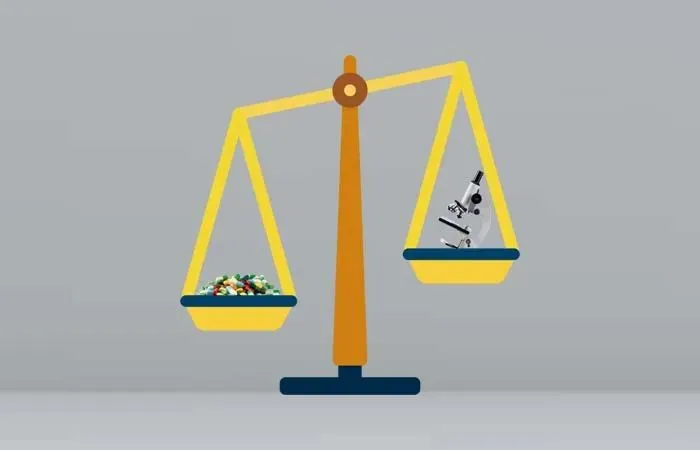
Keywords of the “Technical Guidelines for Clinical Pharmacokinetics Research of Improved New Drug Delivery Formulations (Draft for Comments)”The first one isImproved new drug release formulations,It was followed byClinical pharmacokinetic studies.
Modulation preparations
Modulated release preparations are a major category of Class 2.2 new drugs. They are preparations with a release rate, release time, or release site of active ingredients different from normal dosage forms, and include various routes of administration such as oral, intramuscular, and subcutaneous administration.
Clinical pharmacokinetic studies
Clinical pharmacokinetic studies of improved new drug release formulations are aimed at obtaining pharmacokinetic characteristics of modulated agents in the body, including the rate and degree of absorption; fluctuations in steady-state drug concentration; individual variations in pharmacokinetic parameters; dose ratio relationships; factors affecting the characteristics of modulated agents; and risk of unexpected release. Proposed studies include single-dose studies; multiple-dose studies (exempt in certain cases); food effect studies; dose ratio studies (multiple specifications or multiple doses of medication required); and unintended release (mainly in vitro studies). The guidelines also recommend that applicants consider the following factors for self-developed formulations: gastrointestinal physiological conditions, effects of the site of use on blood drug concentration, prolonged stay in the stomach, and dosage form conversion. This guideline also applies to transdermal preparations.
The “Technical Guidelines for Clinical Trials of Improved New Drugs for Children (Trial)” willImproved new drugsversusMedication for childrenCombined, it will be an important direction for children's drug research and development.
Modified New Drugs for Children
For improved new drugs for children, in clinical research design, it is also necessary to follow the basic principles of clinical research on pediatric drugs, that is, to use existing research evidence as much as possible to reduce unnecessary repeated research in children. Encourage the rational application of clinical pharmacology/quantitative pharmacology research methods in the development of improved pediatric drugs, and it is recommended to use models/simulations to predict doses for children of different ages. In addition, it is also important to note that new improved drugs for children are not completely consistent with improved adult drugs in terms of clinical value judgment. For new improved drugs for children, it is encouraged to take into account various aspects of optimization related to children's application during an improved development process. The development of compound formulations for children is discouraged in the absence of clear clinical needs and evidence of drug concomitant use. In order to improve R&D efficiency, it is also critical for R&D companies to maintain good communication with CDE for specific development projects of improved new drugs for children.
Clinical research on Class 2.2 new drugs of chemical medicine shall follow the applicable part of these three guidelines. Of course, these three documents do not solve all the problems; after all, these three documents are only the overall research framework and direction. Furthermore, considering the internationalization of the development of Class 2.2 new chemical drugs, it is also necessary to understand the clinical development status of improved new drugs marketed through the FDA 505 (b) (2) route. The following table provides a retrospective summary of the development pathways and clinical trials of 112 new improved drugs approved in recent years, and provides a reference for the US declaration of new improved drugs in China.
Prevalence of Various Studies Prevalence for Different Types of 505 (b) (2) NDAs
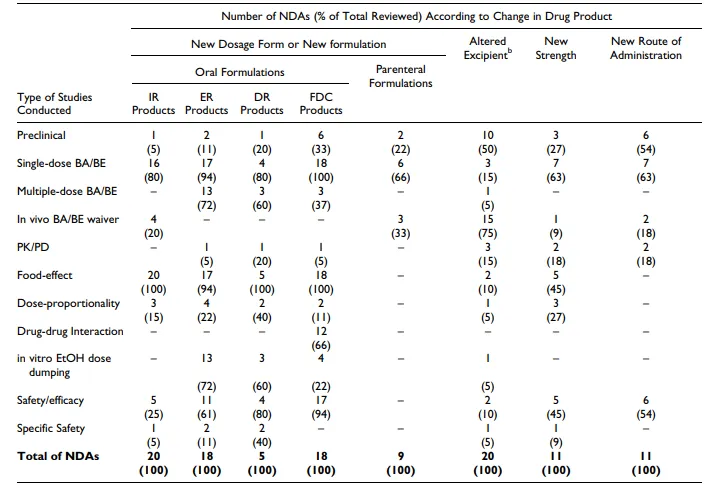
In order to bridge the data of the original drug research, it was carried outBA/BEThe number of varieties tested accounted for 78%.
Overall, clinical research on Class 2.2 new chemical drugs is still crossing the river, but the main direction of the effort is clear. At this stage, domestic pharmaceutical companies and CRO have no mature experience or system. Therefore, it may be a shortcut for R&D companies to work closely with CRO companies to give full play to their respective strengths. Excellent clinical trial design can highlight product advantages, successfully bridge existing efficacy and safety data, simplify trial design, and accelerate the R&D process.
02
Challenges facing marketing registration applications for Class 2.2 new chemical drugs
Like clinical research, the registration of Class 2.2 new chemical drugs also faces great challenges.
Challenge 1:The registration path for Class 2.2 new chemical drugs is also limited by the lack of relevant cases to be referred to, and there is insufficient accumulation of experience.
Challenge 2:Development strategies for improved new drugs vary greatly, and targeted registration strategy design is required.
Challenge 3:The registration process also requires continuous communication with the supervisory authorities and continuous accumulation of experience, so someA powerful large-scale CRO companyThe registration team is relatively more advantageous. A good registration strategy will save a lot of R&D expenses and enable the product to market in the morning.
The development of new drugs is a high-tech industry with large investment, long cycle, high risk, and great return once successful,Choosing the right CRO partner company can efficiently advance the R&D process. Fangda Pharmaceuticals is a comprehensive pharmaceutical research and development CRO company.We have bioanalysis centers, pharmaceutical product development centers, clinical operation centers, pharmacochemical centers, and pre-clinical safety assessment centers in China and North America, respectively, to provide one-stop R&D outsourcing services.

Fangda Pharmaceutical
Fangda Pharmaceutical is a comprehensive pharmaceutical R&D CRO company.ChinaundNorth AmericaBuilt separatelyBioanalysis Center,Formulation Product Development Center,Clinical Operations Center,Medicinal Chemistry CenterundPreclinical Safety Assessment Center。 Provide one-stop R&D outsourcing services to pharmaceutical companies worldwide, including pharmacochemistry, drug activity screening, pharmacological research, DMPK, preclinical safety assessment, bioanalysis, central laboratory and BE clinical research.
Fangda Pharmaceutical has always insisted”China and the US, same quality system” Guidelines, obtained test data to support global declarations. In the 20 years of operation, Fangda Pharmaceutical has established an experienced research team and a solid quality management system, which has now been successfully passed50Many times the US FDA and more than100Site inspection of the sub-NMPA.
Fangda Pharmaceutical
★
news
★
Risk Disclaimer: The above content only represents the author's view. It does not represent any position or investment advice of Futu. Futu makes no representation or warranty.Read more

Comment (1)
to post a comment
3
2