
Meituan has entered deep waters.
After enjoying nine years of growth dividends from food delivery, Meituan once again finds itself at a turning point.
On the evening of November 26, Meituan released its third-quarter 2021 results. In the previous quarter, Meituan's total revenue reached RMB 48.8 billion, up 37.9% year over year; its adjusted net loss was RMB 5.53 billion, compared with a net profit of RMB 2.05 billion in the same period last year.
Despite turning from profit to loss, overall, this remains a…Relatively healthyThe financial report.
Meituan's business is divided into three major segments: food delivery, in-store dining and travel, and new businesses that encompass community group buying, bike-sharing, and more.
During the reporting period, the average daily number of food delivery orders increased by 24.9% year over year to 43.6 million; GMV (gross merchandise value) rose by 29.5% year over year to RMB 197.1 billion. Revenue climbed accordingly, up 28% year over year to RMB 26.5 billion, and Meituan remainsRevenue pillar.
The in-store travel business is relatively small, generating RMB 8.6 billion in revenue last quarter, up 33.1% year over year. It remains Meituan's most profitable segment, with an operating profit of RMB 3.8 billion and an operating margin that rose to 43.9%.
Revenue from new businesses totaled RMB 13.7 billion, while operating losses reached RMB 10.9 billion, directly contributing to the company's overall loss. This loss was primarily driven by investments in infrastructure—such as supply chain management and warehousing and logistics—representing a strategic allocation of resources where spending was focused on critical areas.
In addition, over the 12 months ending September 30, Meituan had 670 million transacting users, up 40.1% year over year; active merchants numbered 8.3 million, a 28.2% increase from the same period last year, with strong performance on both the supply and demand sides.
Judging from various indicators, Meituan delivered a solid performance last quarter. Given that domestic retail sales grew at a slower pace during the pandemic, it is no small feat that Meituan still maintained double-digit percentage growth.
However, if we consider the "long-termism" championed by Wang Xing,Meituan's new round of strategic transformation is already imminent.

Wang Xing
The most significant issue revealed in this earnings report is that the growth of food-delivery revenue has been steadily decelerating, with a year-over-year increase of 28%, markedly lower than last year's 32.8%.
During the earnings call with analysts, Meituan CFO Chen Shaohui attributed the slowdown in last quarter's food-delivery business growth primarily to stringent epidemic-control measures, flooding in certain regions, and an overall deceleration in the catering industry. He cautioned that, due to the high base effect from the same period last year, "year-on-year growth in the fourth quarter of this year may be lower than in previous quarters."
In fact, even after the pandemic has completely ended, the domestic food-delivery industry will still…It will be difficult to return to rapid growth.
Food delivery is a mature market with few untapped opportunities. This year's series of regulatory policies has imposed strict constraints on the collaborative relationships among platforms, merchants, and riders, effectively banning practices that leverage dominant positions to extract excessive profits.
The long-standing Meituan story, built on food delivery, may well be at a point where it needs to be told in a different way.
Before announcing its third-quarter results, Meituan had already embarked on a transformation. Its three-year-old "food+platform" strategy was replaced by a "retail+technology" approach, and Wang Xing led the establishment of a five-person team dedicated to overseeing retail.
During last night's earnings call, when asked about the aforementioned strategic upgrade, Wang Xing stated that,"Meituan was a retail company from its very inception,"Retail remains the company's core business and the foundational capability that must be continuously strengthened going forward. This statement officially underscores the strategic importance of the retail segment in Meituan's next decade.
A
However, from the perspective of revenue composition, Meituan has been a company that…Food delivery company.
At the end of 2012, Meituan officially entered the food-delivery market. This essential, high-frequency business brought Meituan massive traffic and cash flow, providing crucial support for its HK$1.6 trillion market capitalization.
Especially after 2016, Meituan Delivery expanded into third- and fourth-tier cities, increasing the number of covered cities from 200 to over 1,100 within a year, thereby widening its lead over competitors.
In April 2018, Meituan's main rival, Ele.me, was acquired by Alibaba for a staggering $9.5 billion. Meituan ultimately emerged victorious in the protracted food-delivery battle, and the 7:3 market-share split has persisted to this day.
In the same year,The food delivery business contributes more than half of Meituan's revenue.In the third quarter of this year, this segment accounted for 53.2% of revenue, remaining the largest source of income.
However, over the past few years, the food-delivery industry has gradually moved away from its period of rapid growth. According to a report by iiMedia Research, from 2018 to 2020, the domestic and international food-delivery market expanded from RMB 425 billion to RMB 664.6 billion, yet the annual growth rate plummeted from 55.1% to 15%.
During this period, Meituan, leveraging its dominant market position, continued to post growth rates higher than the broader market.But it has also begun to show signs of fatigue.
In terms of transaction volume, in the first two quarters of this year, boosted by the low base in the same period last year, Meituan Takeaway's GMV grew by 99.6% and 59.5% year over year, showing a very strong rebound.
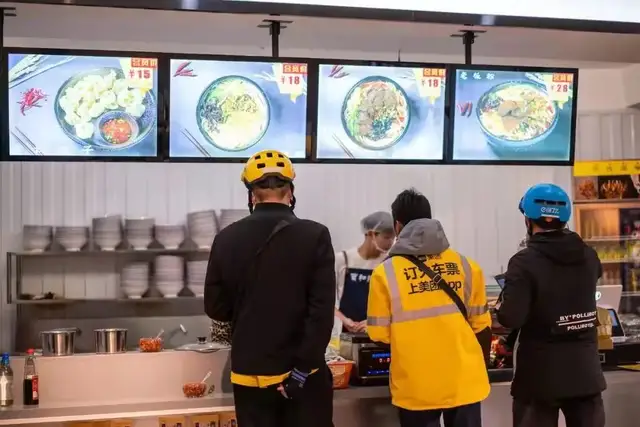
However, in the third quarter, as the pandemic's impact eased, the year-over-year growth rate of food-delivery GMV slowed to 29.5%, falling even below last year's third-quarter figure of 36%. Correspondingly, the year-over-year growth rate of food-delivery revenue also declined by nearly 5 percentage points compared with the same period last year.
Takeout growth has slowed sharply, partly due to shifting consumer dining habits—high‑fat, high‑salt takeout is becoming less popular—and partly because stricter regulatory requirements—such as ensuring riders' incomes, improving their social security coverage, and prohibiting excessive fees charged to merchants—are inevitably weighing on the financial prospects of this business.
In addition, Meituan Takeaway still faces"Revenue up, profits down"A difficult problem.
In the third quarter of this year, the food-delivery business generated RMB 26.48 billion in revenue and an operating profit of RMB 880 million, up 14% year over year—roughly half the pace of revenue growth. Meanwhile, the operating margin declined from 3.7% in the same period last year to 3.3%.
By contrast, during the reporting period, the in-store hospitality business generated RMB 8.6 billion in revenue and delivered an operating profit of RMB 3.78 billion, up 35.8% year over year, with an operating margin as high as 43.9%.
The profit margin of the food-delivery business is already very slim, and with the rising cost of rider salaries and benefits—the biggest expense—this profit could be further squeezed. Meituan did not disclose its rider-costs for the third quarter; however, in the second quarter, these expenses totaled 15.5 billion yuan, up 53% year over year, and are expected to remain at a similar level in the third quarter.
On the other hand,In-store wine and travel is also a mature business segment,Moreover, its performance is closely tied to domestic and international pandemic-control requirements. With the global pandemic far from over, Meituan cannot pin its hopes for accelerated growth on it.
Beyond its two traditional business segments, identifying new growth drivers has become Meituan's top priority.
B
Huxiu previously reported that as early as 2019, Meituan had already begun discussing the future of its food-delivery business. At that time, everyone had already recognized that, with the public's dining preferences constantly evolving, the traditional food-delivery model was "by no means a permanent one."
However, at the beginning of 2020, the COVID-19 pandemic broke out, causing offline business activities to come to a prolonged standstill. It wasn't until the second half of the year, when the domestic epidemic was brought under control, that Meituan began to accelerate its transformation. The most promising area is offline retail, with the vanguard beingMeituan Youxuan.
At that time, the community group-buying sector was fiercely competitive. After Meituan Youxuan launched in July 2020, it quickly became one of the leading platforms thanks to aggressive marketing and massive investment. By the first quarter of 2021, it had expanded into 2,600 cities and counties nationwide.
During the quarterly earnings call, Wang Xing stated that Meituan Select's goal is to add 300 to 400 million new users over the next few years. In other words, compared to making a profit,"Acquiring new users" is the top priority for this business segment.
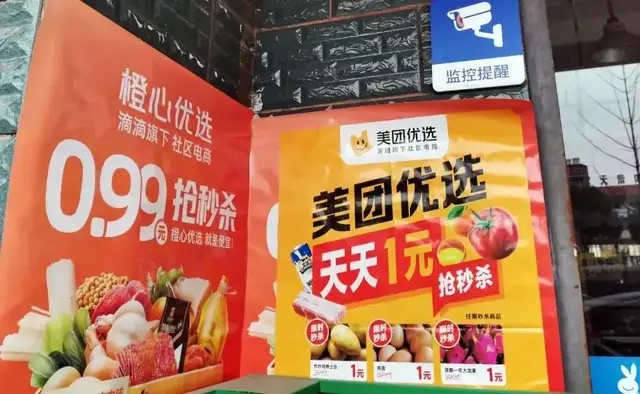
Based on the performance in the first three quarters, Meituan Select has exceeded its KPI:
In the 12-month periods ending March 31, June 30, and September 30 this year, Meituan's transacting users numbered 569 million, 628 million, and 668 million, respectively, with net month-over-month increases of 58 million, 59 million, and 40 million, bringing the cumulative addition for the first three quarters to 157 million. Wang Xing has already achieved half of the target he set initially.
In addition, Meituan's other two mainstays in the retail sector—Meituan Grocery and Meituan Flash DeliveryIt is also accelerating.
Meituan Maicai launched in Shanghai in early 2019, and subsequently expanded into Beijing, Shenzhen, Wuhan, and other cities, focusing on delivering fresh produce to customers' doors within one hour. Its target demographic was positioned higher than that of community group-buying services offering next-day self-pickup. However, due to high operating costs and other factors, the business put its expansion on hold and withdrew from cities such as Wuhan and Dongguan.
However, according to a report by Digage.com, Meituan Maicai has recently relaunched in Wuhan, bringing its total number of operating cities to seven, and plans to enter Suzhou early next year. In addition, the number of Meituan Maicai's前置仓 has doubled compared to before the second quarter of this year.
Meituan Flash Sale launched earlier, with the original intention of leveraging Meituan's delivery network to develop so‑called "instant retail," focusing on categories beyond food and beverage, such as supermarket essentials and fresh flowers and plants. In a research report released mid-month, BOC International revealed that in September this year, Meituan Flash Sale's daily order volume exceeded 5 million, with projected potential growth 2 to 3 times its current level.
Meituan's financial report states that Meituan Select, Meituan Grocery, and Meituan Flash Delivery—its "three major business models"—meet the diverse needs of consumers across various categories in different consumption scenarios.
However, on the other hand, these three business segments…The funding requirements are also exceptionally large.
In 2019 and 2020, Meituan's new business segment posted losses of RMB 6.7 billion and RMB 10.9 billion, respectively. However, after accelerating its expansion into the retail sector, the pace of cash burn in this area has noticeably picked up.
In the third quarter of this year, Meituan's new business segment generated revenue of RMB 13.72 billion, up 66.7% year over year; its operating loss reached RMB 10.9 billion, more than quadrupling compared with the same period last year. Moreover, the operating loss margin approached 80%.
Adding the 17.2 billion yuan loss in the first half of the year, Meituan's losses from expanding into new businesses in the first three quarters of this year have reached 28.1 billion yuan—2.6 times the total for all of 2020.
The financial report indicates that the sharp increase in losses in the retail segment stems from the company's ongoing business expansion, which includes investments in infrastructure such as cold-chain logistics.
Among them,Meituan Youxuan is a major loss-maker.36Kr, citing sources familiar with the matter, reported that Meituan Youxuan's loss margin in the third quarter was around 20%, with no significant improvement; the average order value remains hovering around 9 yuan. The segment's losses are expected to approach 6 billion yuan, accounting for more than half of the entire retail division's losses.
Based on current trends, guided by its "new user acquisition" goal, Meituan's new business segment will continue to prioritize growth, making substantial ongoing investments inevitable and impacting its profitability over the next few quarters.
However, in Meituan's handsCash reserves are very ample,As of the end of the last quarter, the company held RMB 50.9 billion in cash and cash equivalents, along with RMB 70.0 billion in short-term wealth-management investments, sufficient to sustain its cash outflows for an extended period.
C
There have long been signs of shifting priorities between food delivery and retail within Meituan.
In September this year, Wang Xing announced that the company's strategy would be upgraded from "food + platform" to "retail + technology," with "food" primarily referring to food delivery. The shift from food to retail carries an obvious underlying message.
During the earnings call this Thursday, Wang Xing provided a detailed explanation of this adjustment in response to analysts' questions:
"In our view, the concept of retail is very broad. By its very definition, retail involves selling goods or services to end consumers. Therefore, retail can be divided into two categories: merchandise retail and service retail. From this perspective, Meituan has been a retail company since its inception."
Wang Xing emphasized,Retail will remain the company's core business,It is a foundational capability that the company must continuously strengthen going forward.
Starting from its food-delivery network, continuously improving infrastructure, and expanding the range of products sold to meet the needs of diverse customer segments is Meituan's fundamental retail strategy.
In its earnings report, Meituan believes that the ultimate evolution of its online retail business will be from a "store with everything" to "everything delivered to your door." Compared with simply delivering food and selling vegetables, this vision clearly offers much greater potential.
Among Meituan's three main retail businesses,Meituan Flash Sale has gone the furthest in "everything delivered to your home."The financial report stated that during this year's Qixi Festival, Meituan Flash Sale expanded its popular product categories from flowers to beauty products, 3C electronics, and more, with daily order volume reaching a new high. Meanwhile, Meituan Flash Sale also ventured into the sale of over-the-counter medications and launched the "Little Yellow Light" initiative.
This endless game of category expansion already subtly smacks of encroaching on the backyards of Alibaba and JD.com. In some cases, Meituan Flash Delivery's delivery speed is even faster than that of traditional e-commerce platforms.
But before it can enjoy the cake, Meituan faces many challenges. The first issue it must address is,How to strike a balance between losses and growth.
According to a report by Caijing magazine mid-month, at its semi-annual meeting in June this year, Meituan Youxuan set its long-term goal as "high-quality development," which includes reducing costs and increasing efficiency, building infrastructure, and improving gross profit margins.
In its recently released third-quarter earnings report, Meituan reiterated this goal, stating that Meituan Select "is focused on high-quality growth while complying with regulations and ensuring a reasonable pricing policy."
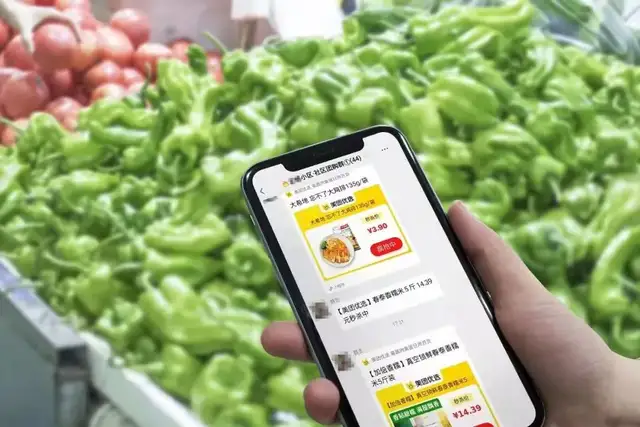
However, in the last quarter, Meituan Select and other new businesses continued to see their losses grow rapidly, diverging from the goal of "cost reduction." In addition, Caijing quoted insiders as saying that Meituan Select's GMV for the first three quarters fell short of 100 billion, making it quite challenging to achieve its full-year target of 150 billion.
In addition, unlike food delivery, Meituan has a presence across all retail fronts.A formidable competitor.
In the community group-buying sector, last year's industry reshuffle has forced many second-tier players out of the market, allowing Meituan Select to potentially expand its share. However, there are still plenty of competitors remaining at the table. In addition to PDD Holdings, which holds a strong position in agricultural products, Alibaba merged Hema Market and Taobao Maicai into "Taocaicai" this September, clearly aiming to make a big push as well.
In the fresh-food and instant-retail sectors, Meituan not only has to contend with competitors such as Hema Fresh, JD.com's fresh-food business, and JD Daojia's "Hourly Purchase" service, but also guard against smaller players like Daily Youxian and DingDong.
PDD Holdings, JD.com, and Meituan all belong to Tencent's camp, so they may still leave some room for each other and avoid vicious competition; however, Meituan and Alibaba have been locked in a long-standing battle, inevitably leading to a full-blown showdown. Even if Meituan ultimately prevails, it is bound to extend the timeline for turning losses into profits.
Over the past few years, Meituan's core food-delivery business had no real competitors. Now, having shifted into the retail sector, Meituan faces sharply increased financial and operational pressures, and Wang Xing, who adheres to "long-termism," along with Meituan's investors, are about to confront a genuine challenge.
Risk Disclaimer: The above content only represents the author's view. It does not represent any position or investment advice of Futu. Futu makes no representation or warranty.Read more

Comments (6)
to post a comment
23
91