

The 'mindset' hidden in the third-quarter Internet report

作者|李婷婷
Currently, as Chinese concept stocks are gradually disclosing their third-quarter reports, although 'pleasures and sorrows between people are not interconnected,' through the financial reports of star companies such as Alibaba, Tencent, Baidu, JD.com, Bilibili, Kuaishou, Xiaomi, we have discovered a tacit 'trick' — nearly all of them have confirmed substantial investment losses at almost the same time.
Taking JD.com as an example, its own performance growth exceeded market expectations, however, the losses in investments dragged down its profit performance. In the third quarter, JD.com's revenue increased by 25.5% year-on-year to 218.7 billion Chinese yuan, but the total losses from the valuation provision for primary market investments and the losses from the decline in secondary market investment stock prices amounted to as high as 4.91 billion yuan, ultimately resulting in a net loss of 2.8 billion yuan, turning from profit to loss year-on-year once again.
For example, Bilibili, in this quarter, faced controversy due to the slowdown in gaming business growth and sharp increase in content costs. At the same time, its high investment net loss of 0.724 billion yuan further widened the overall loss margin.
And others are similar in their operations:
Alibaba's interest income and net investment income resulted in a net loss of 11.456 billion yuan;
Baidu's non-cash, market value-priced losses from long-term investments amounted to 18.9 billion yuan;
Tencent's financial asset fair value changes (measured at fair value with changes recognized in other comprehensive income) resulted in a loss of 36.4 billion yuan;
Kuaishou's primary source of other losses was 0.19 billion yuan due to fair value losses;
Xiaomi's investment fair value changes recognized in profit or loss amounted to 2 billion yuan.
It's as if everyone has made secret plans, taking the opportunity to recalibrate, proactively keep a low profile, and prepare for future actions.

Calm 'impairment'.
The last time a tech giant attracted attention due to investments was the release of Meituan's Q3 financial report last year. At that time, the fair value change income brought mainly by the investment in Li Auto reached as high as 5.8 billion RMB, directly driving Meituan's operating profit far beyond expectations for that quarter. However, the domestic new energy vehicle sector has shown mediocre performance this year, making it difficult for Meituan to replicate the story of making a big profit through equity investments in the short term again.
In fact, the development of leading domestic internet companies is mostly accompanied by the establishment of their own investment layout, especially Tencent and Alibaba, whose capital strength once radiated across the entire internet market. In addition, players like Meituan and Bilibili have also become active emerging CVCs.
Investment is a probabilistic event, and the synergistic effect achieved by external investments at the business level is difficult to quantify. However, the success or failure of investments, and the resulting financial losses, will directly reflect in the financial reports of listed companies.
Enterprise's external investments can be divided into two categories: primary and secondary markets.
Let's first talk about the primary market, which refers to investments in early-stage companies, unicorns, such as Bilibili investing heavily in small and medium-sized studios related to animation and gaming. Investments in the primary market are more like a black box, making it difficult from the outside to clarify which companies in the giants' vast investment portfolios have appreciated, lost money, or even gone bankrupt.
The core reason why the gains and losses of primary market investments are difficult to reflect in financial statements is that in general, a company's external investments are usually minority equity investments, meaning that after investing in target companies, the company does not achieve ultimate control over the invested company (usually controlled by the founder and founding team of the target). This also means that after investing in target companies, big corporations do not consolidate the invested companies into the group's financial statements but hold them as long-term equity investments.
In accordance with corporate financial regulations, for minority equity investments, the initial investment amount is recorded in the financial statements, and the operating profit and loss of the investee company will be included in the group's financial statements each quarter based on the investment ratio. For most venture companies, their businesses are relatively new, so even if they are in a loss-making state, the impact on the overall financial indicators of the investment company is relatively minimal.
Until the operating condition of the investee company is irrecoverable, the group needs to impair the initial investment. Since most startups, even with small business scales, are valued at billions or even tens of billions, the corresponding initial investment amount is usually relatively large. Once impaired, it will lead to huge losses.
For example, if we invest in a non-principal-protected wealth management product, generally, regardless of profit or loss, the impact of the interest rate is relatively small, but if the wealth management product defaults in the end, the principal will not be recoverable, resulting in a significant impact on us.
However, in daily operations, companies generally have some flexibility in determining when to make impairment provisions for investee companies since the so-called "irrecoverable operating condition" is difficult to quantitatively determine. It requires companies to make judgments from a business perspective, such as whether a company becoming as small as 100 employees from 1000 is irrecoverable or if it must reach the point of closure and bankruptcy liquidation to be considered irrecoverable.
From the perspective of the company itself, the timing and amount of impairment provisions are usually adjusted continuously based on the company's strategic needs.
During a bull market phase, when companies need better profit data to present to the market, they can temporarily not make an impairment provision for some investee companies on the brink of recovery, retaining higher profits for the group as a whole.
If a company needs to maintain a low profile during a specific period, without showcasing its strong money-making capabilities to the market, the company can impair all underperforming investee companies.
If a company's performance is average in a particular financial year, it can also adopt a "restoring strength and waiting" strategy, recognizing impairment losses for that year. When the performance improves in the following year, the company's data can exhibit a V-shaped rebound, conveying positive signals to the market.
This quarter, many large factories have focused on devaluing their investment targets, largely in line with the current environment and their own development needs.

Looking at the second type, the secondary market—this mainly refers to the success of startups invested by large factories going public, or direct investments in already listed companies. In the secondary market, the rise in the stock price of the invested companies can essentially determine whether the holders are making a profit or loss—this also reveals some of the reasons why various giants suffered huge losses in Q3 this year.
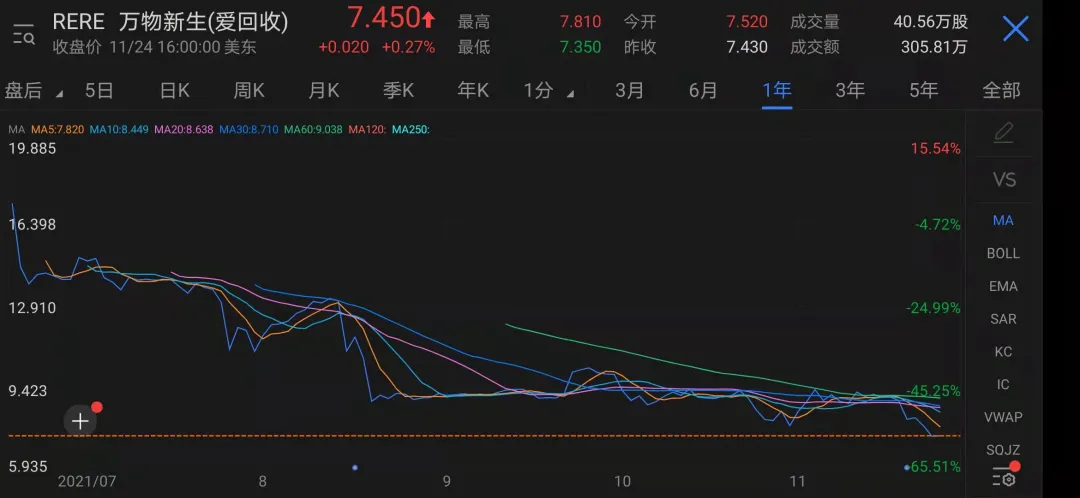
This quarter, in addition to recognizing a RMB 1.9 billion long-term investment impairment (primary market investment), JD.com also recognized a RMB 3.1 billion fair value loss on secondary market investments. This is mainly due to JD.com's investments in companies like Ai Huishou (Wanwusheng), Vipshop, and Zhihu that are listed. However, unfortunately, the sustained decline in the share prices of these companies in the third quarter has resulted in huge losses for JD.com.
Ai Huishou (Wanwusheng) is JD.com's newly acquired IPO in Q3, with JD.com still holding a 32.3% stake after the IPO. On June 18, Ai Huishou went public on the NYSE, opening with a 30.6% surge, but its stock price subsequently plummeted. By the end of the third quarter, Ai Huishou's stock price had dropped by 28.36% from the IPO price. Vipshop experienced a massive 51.68% drop in the third quarter, with JD.com holding a 7.5% stake in it as of March 31, 2020.
In comparison, the 0.86% decline in Zhihu's stock price in the third quarter may bring some relief to investors. However, JD.com only subscribed to $0.1 billion during Zhihu's IPO, not considered a major shareholder. Tencent and Kuaishou hold a higher proportion in Zhihu's equity structure, with Kuaishou's Cosmic Blue holding a 7.1% stake post-IPO.
While Zhihu did not cause significant investment losses for Kuaishou, as a shareholder of Ai Huishou and CMGE, Kuaishou's investment returns in the third quarter were also not impressive. As mentioned earlier, Ai Huishou continued to decline after going public, and CMGE was affected by the overall shakeup in the gaming sector.
Bilibili also suffered from the collective decline in gaming stocks. In April, Bilibili successively invested in CMGE and XD Inc., holding a 7.15% stake in CMGE and a 4.72% stake in XD Inc. Due to negative news like restrictions on minors and license suspensions in the third quarter, CMGE's Q3 stock price fell by 6.90%, while XD Inc.'s stock price plummeted by 31.08%.
In addition, Bilibili also acquired a stake in Huanxi Media last year, holding approximately 9.9% of Huanxi Media's shares, but Huanxi Media also experienced a 20.53% decline in stock price in Q3.
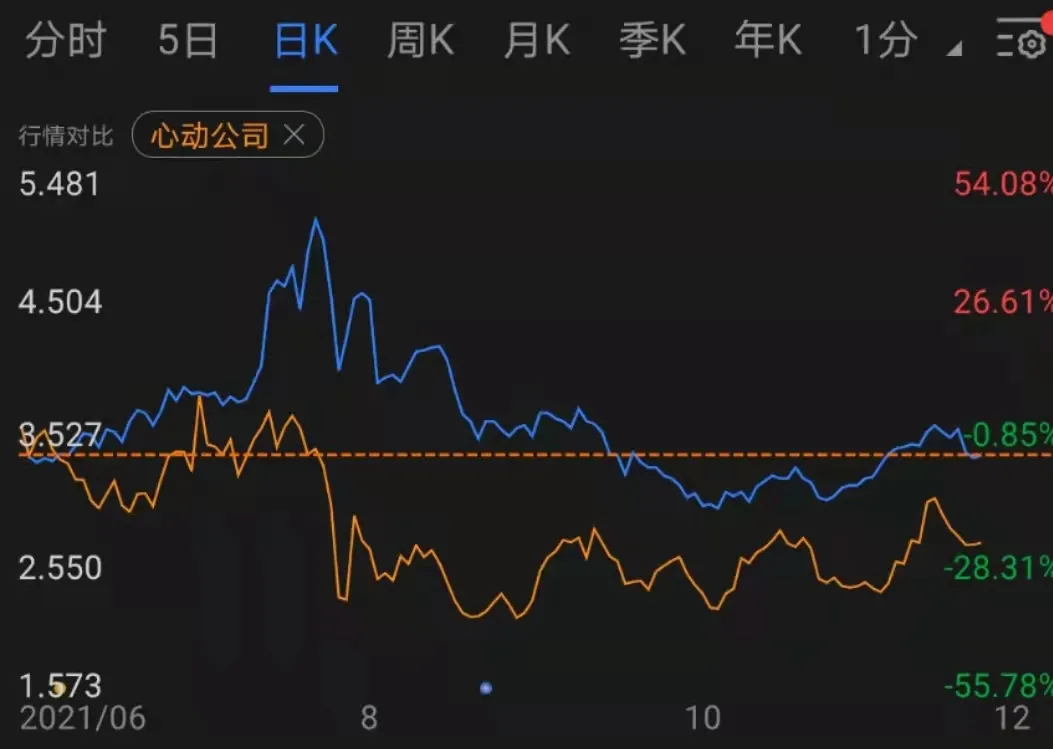
Compared to the several listed companies invested in by Bilibili, Bilibili itself is also not doing well. Bilibili's stock price plummeted by as much as 38.26% in Q3, and its market cap has been halved since last year's peak. Interlinked, Bilibili's decline also affects the companies holding its stocks. For example, Alibaba announced in its latest 13F holding report that its holding value of Bilibili stocks is $0.66 billion.
Furthermore, among Alibaba's major holdings, several companies including Toutiao, Momo, and Weibo saw varying degrees of stock price declines in Q3, with Toutiao dropping by 40.78% and Momo by 24.59%. The best performer was Best Inc., with its stock price rising by 17.61% in the third quarter.

Investment losses amounting to hundreds of millions easily unsettle retail investors, but for big companies, this account is obviously not calculated so simply. CVC's external investments may have strategic significance far more important than financial returns. Additionally, as major shareholders, the portion of profits from investment companies will also flow into the giants' pockets, a part of the profits that may be more enticing than the gains or losses in stock prices.
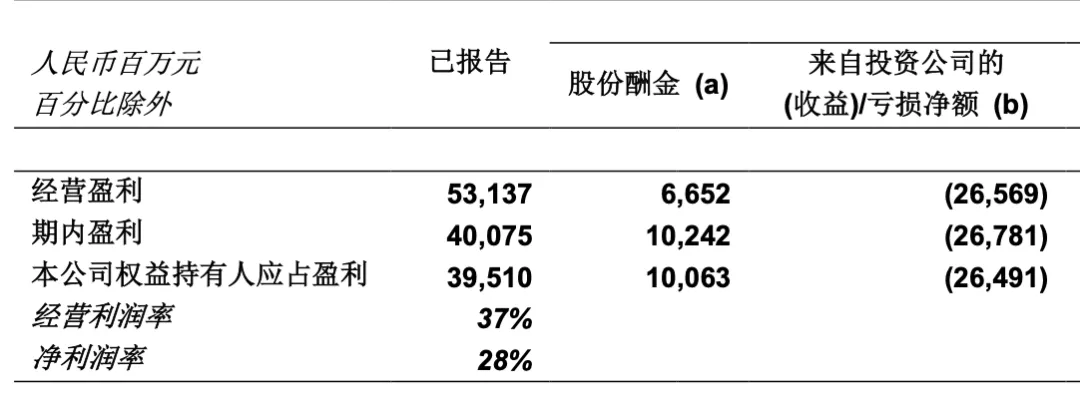
Taking Tencent as an example of an investment master, this quarter recorded an attributable profit to equity holders of 39.51 billion yuan, while the income from investment companies reached 26.491 billion yuan.
Why is it happening now?
In this third quarter, whether it's the US or Hong Kong stocks, the overall market is not doing well.
In terms of US stocks, the S&P 500 only rose by 0.23% in the third quarter, while the Dow Jones Industrial Index and the Nasdaq Index fell by 1.91% and 0.38% respectively, completely unable to compare with the hot first half of the year. As for Hong Kong stocks, the market has been continuously declining this year. In the first three quarters of the year, the Hang Seng Index fell by 9.75%, and the Hang Seng Tech Index fell by 27.59%.
In a relatively cold market environment, Chinese technology companies, especially those holding Chinese concept stocks, suffered heavy losses due to the concentrated release of policies in the third quarter. For example, in the online education sector. On July 23, news of 'double reduction' spread on the internet, causing educational stocks to collectively plummet, with New Oriental dropping by 40.61%, Scholar Education by 28.53%, Beststudy Edu by 21.48%; in pre-market trading, TAL Education fell by 46.64%, New Oriental by 46.25%, Gaotu fell by 42.17%. After the policy implementation, online education stocks continued to struggle. The IPO plans of unicorn companies in online education were also aborted. Homework assistance has been rumored to go public multiple times earlier this year, but with tighter regulations, its listing plans failed, leaving Baidu, as the largest shareholder, in a difficult position. Additionally, the gaming sector investors are also feeling low due to news of restrictions on minors and copyright issues.

By examining subtle signals and applying lessons to oneself, a large amount of capital fled from Chinese concept stocks at one time, causing almost all Chinese concept stocks to decline in the third quarter. In Q3, Alibaba's US stocks dropped by over 30%, Tencent by over 25%, and Baidu's US stocks by over 20%. Since Q3 has been like this, it's better to bring hidden risks from past investments to light, remove any poison, and maintain a low profile. This is indeed a shrewd adjustment.
And recently, some subtle changes have emerged. According to the disclosure of holdings by top international investors in recent times, Goldman Sachs has made large purchases of Boss Zhipin, increased holdings in Alibaba, and Jlinvest newly entered KE Holdings and bottom-fished education stocks.
Winter is already here, will the time for a turnaround be far behind?
Risk Disclaimer: The above content only represents the author's view. It does not represent any position or investment advice of Futu. Futu makes no representation or warranty.Read more


Comments (12)
to post a comment
33
159