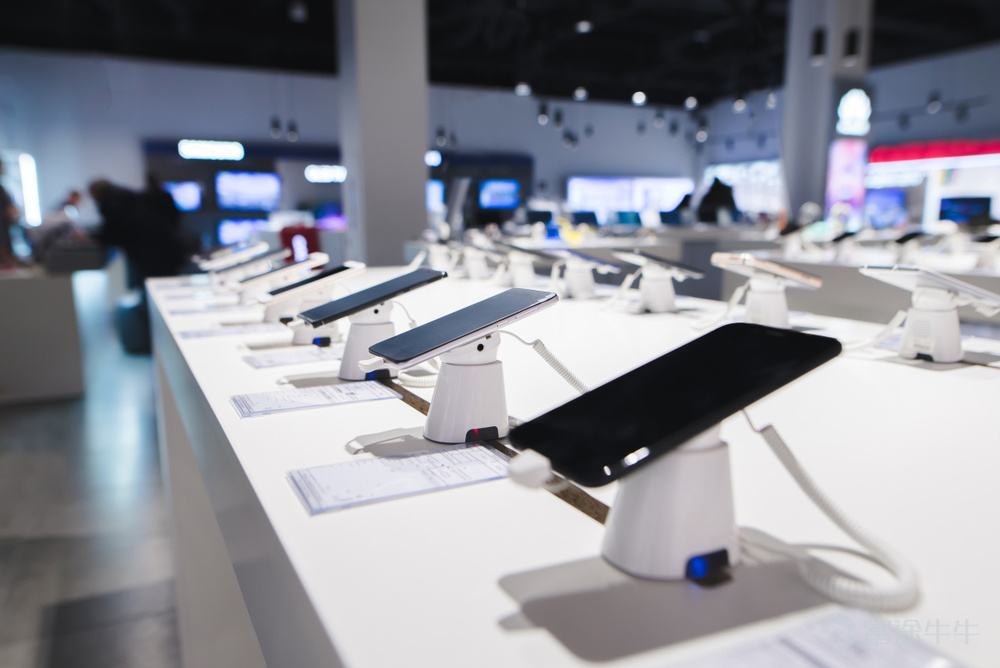

At year-end, smartphone manufacturers still rely on mid- and low-end models to meet their KPIs.
By Zhang Fei
Editor/Li Xin
As the year draws to a close, smartphone manufacturers are increasingly eager to launch mid-range and entry-level models.
"These past few days, the smartphone market has seemed calm on the surface. Among high-end phones, only Google's Pixel 6 series has drawn some attention; otherwise, there's been little buzz. But the mid- and low-end segment is already in full swing—Qualcomm Snapdragon 778G–powered models in the 2,000–3,000 yuan price range have been aggressively pushed down into the thousand-yuan bracket," Gong Lei told Lianxian Insight excitedly. With Double 11 approaching, many phone models are on sale, and he plans to buy a mid-range device as a secondary phone.
September and October have traditionally been the peak season for new smartphone launches, and with Double 11 just around the corner, major manufacturers are leveraging fresh models and promotional campaigns to expand their market share before year-end, positioning themselves to gain a competitive edge in next year's market.
Two days before the first wave of pre-sales kicked off on October 20, vivo launched four new models in quick succession—the S10e, T1, T1x, and iQOO Z5X. Notably, the S10e went straight to pre-sale on the official website without even holding a launch event.
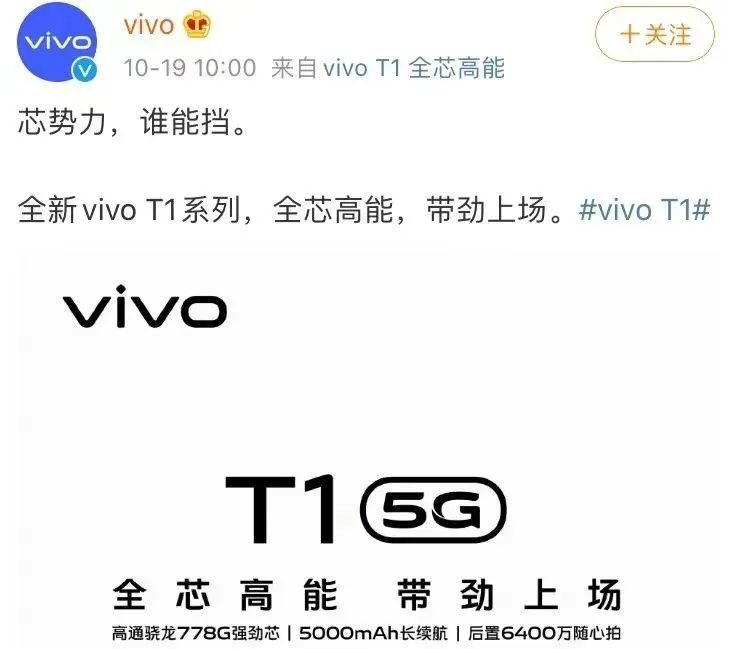
vivo T1 series, image source: vivo's official Weibo account
In addition to vivo, many other manufacturers also unveiled new models on the 20th, including OPPO's K9s and Xiaomi's Redmi Note 11 series. A few days later, Honor's Play5 was officially launched as well. Even LeEco and Coolpad—brands that had largely faded from the market—recently announced their plans to re-enter China's smartphone sector, targeting the mid- to low-end segment.
Realme's intentions are even more straightforward. On October 19, at the launch event for the Realme GT Neo2 series, Realme Vice President Xu Qi stated bluntly, "This year marks Realme China's breakout year. This Double 11, Realme aims to surge toward 10 million units in sales across the Chinese market, striving to achieve its annual target ahead of schedule."
It's no exaggeration to say that this year's Double 11 smartphone market has turned into a battle among budget-friendly models priced around one thousand yuan.
In contrast to the fiercely competitive landscape among mid- and low-end models, during the first quarter of this year, new smartphone releases in the domestic market were still dominated by high-end devices.Wang Zhiqin, Vice President of the China Academy of Information and Communications Technology, stated at the 5G Innovation and Development Summit Forum of the 2021 China International Intelligent Industry Expo that, from January to July this year, a trend toward mid- and low-end 5G smartphones has become evident, with the share of 5G smartphone shipments priced below RMB 2,000 rising to 39%.
Since Huawei's output plummeted due to sanctions, Xiaomi, OPPO, and vivo have ramped up shipments and pushed into the high-end market. However, sales of their flagship models have fallen short of channel partners' expectations, and coupled with semiconductor supply shortages, the premium segment remains relatively subdued—while the mid- and low‑end markets are increasingly crowded.
For now, the primary motivation behind manufacturers' flurry of launches of sub‑1,000‑yuan smartphones is to boost sales and drive performance, as competing solely on high‑end models has yet to yield significant market gains.
Over the next few months, smartphone manufacturers will launch another round of fierce competition centered on the mid- and low-end segments. So, among them, how many will be able to meet this year's KPIs by relying on sales of mid- and low‑end models?
1. As the year draws to a close, the mid- and low-end smartphone market has become even more bustling.
The critical moment has arrived for smartphone manufacturers to sprint toward their KPIs.
As is customary in the industry, the fourth quarter of each year is a critical period when smartphone manufacturers unveil their promotional strategies and launch new models.As a result, Double 11 has become a key battleground for smartphone manufacturers each year.
While at the beginning of the year, brands were all vying to capture the high-end segment, by year's end, they had shifted their focus to the mid- and low‑end markets. Even long‑gone players like Coolpad and LeEco, upon their return, have opted for the mid‑ and low‑end segments as well.
Zhang Yang, a senior analyst at Beijing Boruiheng Consulting Co., Ltd., explained in an interview with China Business News that,"The recently released mid- and low-end smartphones are volume‑driving models for various phone manufacturers. The aggressive discounts on these new models highlight the extent of price cuts and stimulate consumers' purchasing desire. At the same time, with major brands rolling out new devices and slashing prices, there's also an underlying intention to counter Apple's iPhone 13 through upgraded pricing."
Starting in the second quarter of this year, smartphone manufacturers have been rolling out a series of mid-range and entry-level models.
According to the "Q2 2021 China Smartphone Industry Online Attention Analysis Report" released by the Micro Hotspot Big Data Research Institute, new smartphone models launched in Q2 2021 were predominantly concentrated in the mid- and low-end price segments.
Among the price segments of newly launched smartphones, models priced under RMB 2,000 account for the largest share, each representing approximately 33%; next are models in the RMB 2,000–3,000 range, accounting for about 25%, followed by those in the RMB 3,000–4,000 range, which make up roughly 22%.As can be seen, starting in the second quarter, all major smartphone brands have stepped up their efforts in the mid- and low-end segments.
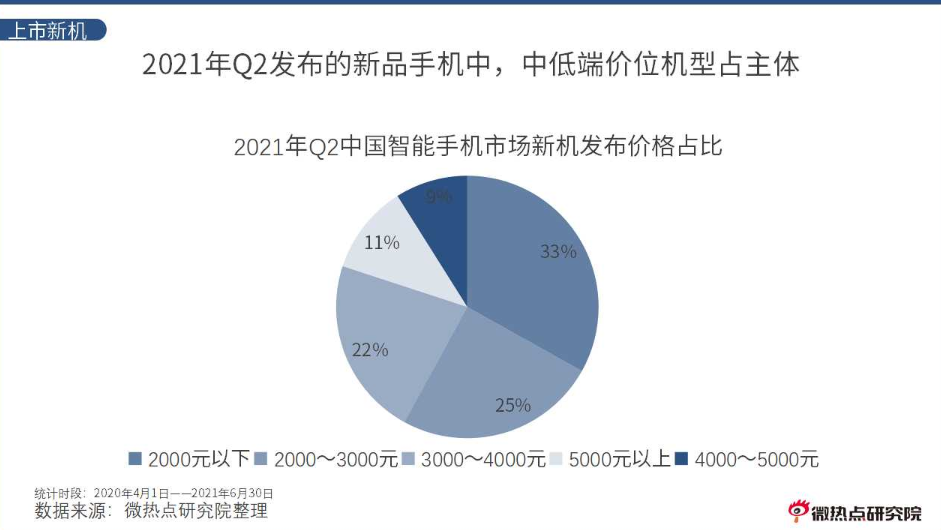
In the second quarter, the smartphone market was dominated by mid- and low-end models, according to data from the Weiru Hotspot Research Institute.
In particular, Xiaomi, OPPO, and vivo—dominant players in the mid- to low-end market—are also stepping up their efforts.
According to market monitoring data from Counterpoint Research, in the second quarter of this year, vivo emerged as the leading brand in the mid-range 5G smartphone segment, capturing 30% of the global market share, with the Chinese market accounting for 90% of its shipments. Meanwhile, OPPO held a 23% share in the mid-range 5G smartphone market, ranking second.
According to an incomplete tally by Wired Insight, since the second half of this year, vivo has successively launched four mid- to low-end models—namely the S10e, T1, T1x, and iQOO Z5X—while OPPO has introduced two such models—the A93s and the K9s, which is primarily targeted at e‑commerce channels. Xiaomi has specifically rolled out the Xiaomi Civi, aimed at the female market, and Huawei has likewise focused on women with its Nova 9 series.
In terms of specific specifications, the Xiaomi Civi, Huawei Nova 9 series, OPPO K9s, and vivo T1 all feature Qualcomm's new-generation mid-range 5G processor, the Snapdragon 778G. This chip stands out for its low power consumption and affordable price, making it a popular choice among many mid-range smartphones.
Meanwhile, the vivo S10e, vivo T1x, and iQOO Z5X are equipped with MediaTek's latest high-end Dimensity 900 chip; only the OPPO A93s features the MediaTek Dimensity 700—which, strictly speaking, is the most entry-level processor in the Dimensity lineup—making it the weakest of the bunch.
In terms of displays, the OPPO A93s, OPPO K9s, vivo T1, and iQOO Z5X all feature LCD panels, while the Xiaomi Civi, Huawei Nova 9 series, and vivo S10e use LED screens. The vivo T1x, meanwhile, is equipped with an FHD display. Compared to the LED panels commonly found in mainstream smartphones, LCDs fall significantly short in aspects like color accuracy and smoothness. As for FHD displays, they're now accessible even on budget phones, which aligns well with the vivo T1x's positioning in the mid‑to‑low‑end market.
In terms of target demographics, Xiaomi Civi stands out as a smartphone specifically designed for female users. However, data shows that Xiaomi, which originally built its reputation on cost‑effectiveness, remains more popular among male consumers. According to the "Smartphone & Smart Hardware: 2019 China Internet Users' Purchasing Power Report" published by Penguin Research, men account for the majority of Xiaomi's user base, making up 61.8%, while women comprise only 38%.
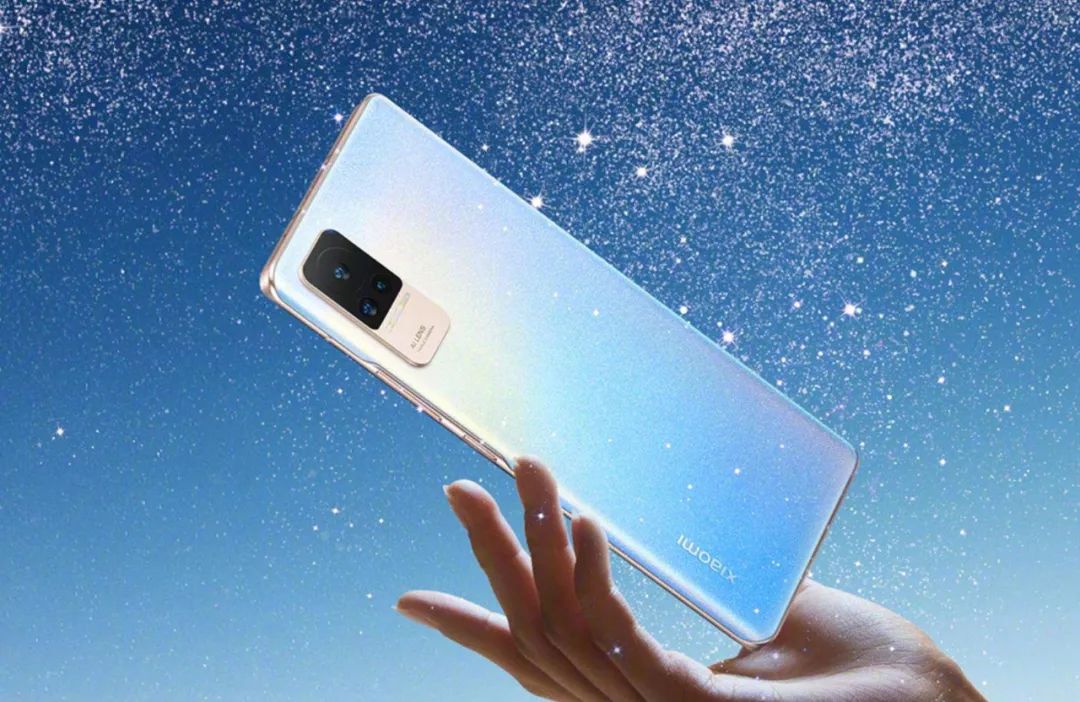
Xiaomi Civi, image source: Xiaomi official website
Meanwhile, Huawei's nova series of smartphones was also designed to address the imbalance in the gender distribution among its users.By all accounts, the Xiaomi Civi seems to have been designed primarily to compete with Huawei's Nova series and OPPO and vivo's offerings. Therefore, for Xiaomi today, achieving a more balanced gender ratio among its user base as soon as possible—thus enabling its smartphones to gain further traction in the female‑oriented market—is a crucial next step.
Interestingly, at the launch events for their new models, OPPO and vivo have stopped emphasizing traditionally feminine attributes and instead are highlighting performance.For example, at the OPPO K9s launch event, the device upheld the K series' hallmark of robust performance, highlighting its excellent gaming frame-rate stability, along with the Hyper Boost game‑acceleration engine and adaptive frame‑stabilization technology tailored for gamers.
It's clear that Xiaomi is vying for OV's female users, while OV is poaching Xiaomi's male customers.
Beyond the chip, display, and target user demographic, mid- to low-end models don't differ much in other specs. For instance, most feature a triple‑camera setup on the rear, a 5,000 mAh battery, a 120 Hz refresh rate, and support for 44 W fast charging, with prices clustered between 1,500 and 2,500 yuan.
It's worth noting that, perhaps in an effort to capture the low-end market vacated by Huawei and Honor, smartphone manufacturers have begun equipping mid- and entry-level models with features once reserved for high-end devices—such as 5,000 mAh batteries, 120 Hz displays, and fast charging. By contrast, the iPhone 13 series sports a modest 4,352 mAh battery and supports only 20 W fast charging.
Additionally, many smartphone review bloggers have pointed out on social media that while these phones offer good value for money, they lack significant innovation. For example, the vivo T1 is essentially a rebranded version of the iQOO Z5x, and the OPPO K9s is a rebranded realme Q3s. This "rebranding" strategy involves simply giving older models new names and appearances before relaunching them for sale.
With product configurations becoming increasingly similar and brand equity relatively weak, companies can only rely on price wars or the sheer number of new products to both staunchly defend their market share and strive to attract more customers.
2. The mid- to low-end market is where smartphone manufacturers truly generate their revenue.
Not a single smartphone manufacturer has a high-end dream.
In 2016, the incident of exploding Samsung phones allowed the domestic brands "Huami OV" to begin filling the market gap left by this international giant. However, over the following three years, aside from Apple, only Huawei truly managed to establish itself in the high-end segment.
According to an IDC report, in the first half of 2020, total sales of high-end smartphones (priced at 4,000 yuan or above) in China reached 23.5 million units. Huawei ranked first with a 44.1% market share, while Apple came in second by a narrow margin, holding 44%. Together, the two accounted for 88.1% of the domestic high-end smartphone market, leaving only 11.9% for other numerous brands.
Xiaomi, OPPO, and vivo have long been striving to break into the high-end market.After all, compared with the mid- and low-end market, which relies on cost‑performance to drive volume, securing a foothold in the high‑end segment means capturing greater market share, higher per‑unit margins, and enhanced brand equity.
But they have been unable to break through the defenses of Huawei and Apple, and even the market space for Xiaomi, OPPO, and vivo has been further squeezed.This led to Lei Jun's public appeal two years ago: "I hope everyone will support Xiaomi, which is even younger, just as they support Huawei."
It wasn't until 2020, when Huawei's growth was constrained and Honor was forced to go "independent," that the Chinese smartphone market underwent another shift.
As Richard Yu, who heads Huawei's consumer business, remarked on his WeChat Moments in April,"In the domestic market for Huawei smartphones and tablets, the high-end segment has been ceded to Apple, while the mid- and low-end segments have gone to OPPO, vivo, Xiaomi, and others; overseas, the market has been handed over to Apple, Samsung, and domestic competitors."
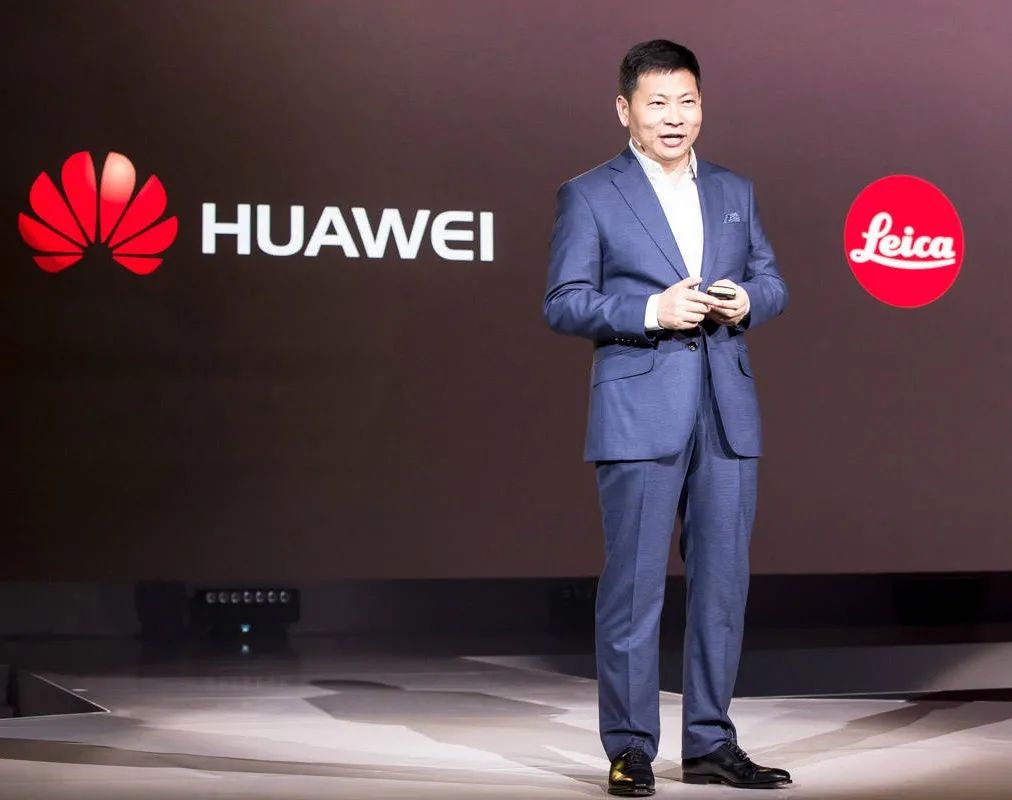
Richard Yu, CEO of Huawei's Consumer Business Group; image source: Richard Yu's personal Weibo account.
According to IDC's recently released quarterly mobile phone tracking report, in the second quarter of 2021, among domestic Chinese smartphone manufacturers, Xiaomi, OPPO, and VIVO all ranked within the top five in market share, while Huawei has been categorized under "other" manufacturers. Notably, China has surpassed the United States to become the largest single market for Apple's iPhone, with the U.S. falling to second place for the first time in history.
According to data from Wired Insight, in the first quarter of fiscal year 2021, Apple's revenue in Greater China reached US$21.313 billion, up 57.0% year over year. By the second quarter, growth was even more remarkable, with Apple's Greater China revenue hitting US$17.7 billion, a year-over-year surge of 87.5%.
Specifically, let's examine the market share of domestic smartphones across different retail price tiers. According to data released by @Anhu Duduhufu Changshi, a well-known Zhihu blogger who has long been publishing retail sales figures for China's smartphone market, in the high-end segment above 5,000 yuan, Apple and Huawei continue to dominate most of the market, maintaining a duopoly.
In Q1 2021, although OPPO, vivo, and Xiaomi had already entered the RMB 5,000–8,000 price segment, their combined market share remained below 2%.
Clearly, Apple has captured a significant share of the high-end market in China that Huawei left behind, while domestic smartphone brands like Xiaomi and OPPO, though still vying for the high-end segment, have yet to stem Apple's advance. Under these circumstances, the main battleground for domestic manufacturers remains the mid- and low-end market.
Since Huawei's market position has weakened, Xiaomi and the OV brands have seen a noticeable boost in sales.According to data from Canalys, in the second quarter of 2021, Xiaomi's global shipments surged by 83% year over year, with a market share reaching 17%. Specifically, among the top five—Samsung, Xiaomi, Apple, OPPO, and vivo—their respective shipment shares of the overall market were 18%, 17%, 14%, 10%, and 10%.
Meanwhile, according to data released by the research firm Counterpoint on global mobile phone market revenue shares for the second quarter of this year, Xiaomi, OPPO, and vivo each accounted for roughly 9% of sales, while Apple topped the list with a commanding 41%.
A comparison of the two sets of data reveals that Xiaomi, OPPO, and vivo have significantly lower revenue shares than their respective shipment market shares.
Especially Xiaomi—although its sales volume surpasses Apple's, its revenue is far lower than Apple's.This can be explained by Xiaomi's first-half financial report: the company shipped 102.3 million smartphones globally in the first half of the year, while its smartphone segment generated RMB 110.58 billion in revenue. A rough calculation suggests an average selling price of just RMB 1,080 per phone, indicating that the bulk of its revenue is driven by budget‑friendly models priced around RMB 1,000.
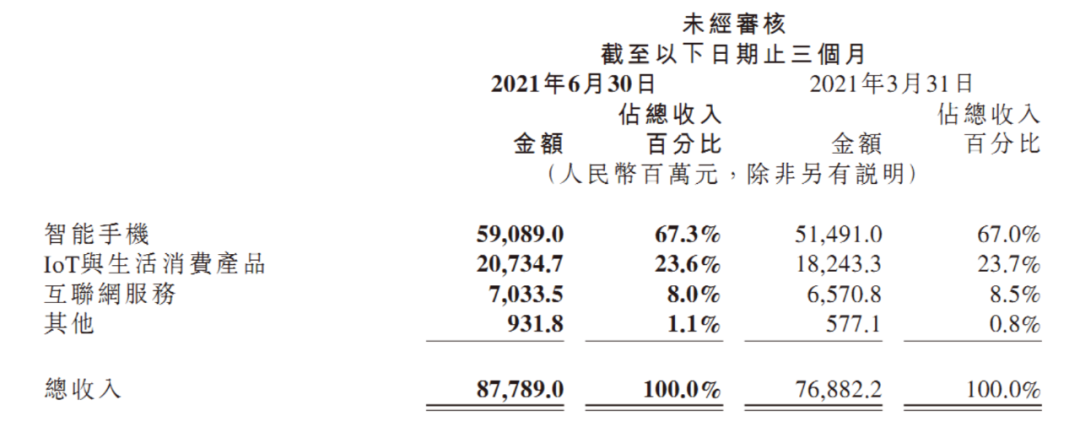
Xiaomi's smartphone revenue, image source: Xiaomi's Q2 financial report.
Although Huawei has yet to succeed in capturing the high-end market, as Richard Yu put it, "In China's domestic smartphone and tablet market, the mid‑range and low‑end segments have been ceded to brands like OPPO, vivo, and Xiaomi." Data shared by the aforementioned Zhihu user show that these three companies have all seen varying degrees of growth in both sales volume and market share within the sub‑4,000‑yuan price bracket.
The mid- to low-end market is where domestic smartphone brands generate the bulk of their revenue.
3. How far has the mobile phone manufacturers' push into lower-tier markets progressed?
Domestic smartphone brands targeting the high-end market are, on the one hand, biding their time and staying committed to their premium‑segment ambitions, while, on the other, leveraging a strategy of market penetration into lower tiers by expanding offline distribution channels and focusing on the mainstream mid- to low‑end segment.
In 2020, Huawei's supply‑disruption crisis created new opportunities for other smartphone brands. Prior to this, Huawei had launched an ambitious "Thousand Counties, Ten Thousand Towns" initiative; with its own supply constrained, the resulting vacated channel share became a hotly contested battleground for competitors.
In particular, as the benefits of the online channel begin to plateau, the offline market—where there is still ample room for growth—is emerging as a new battleground. Smartphone brands like Xiaomi and Honor, which originally built their businesses on online channels, are naturally eager to seize this opportunity.
At the end of 2020, Lu Weibing, Xiaomi's vice president and president of the China region, set a new goal: "Within the next year, ensure that every county-level city has a Xiaomi Home store." Expanding into third- and fourth-tier cities as well as county and rural markets has become one of Xiaomi's key growth drivers—yet in these lower-tier markets, OPPO and vivo have already established deep roots over many years.
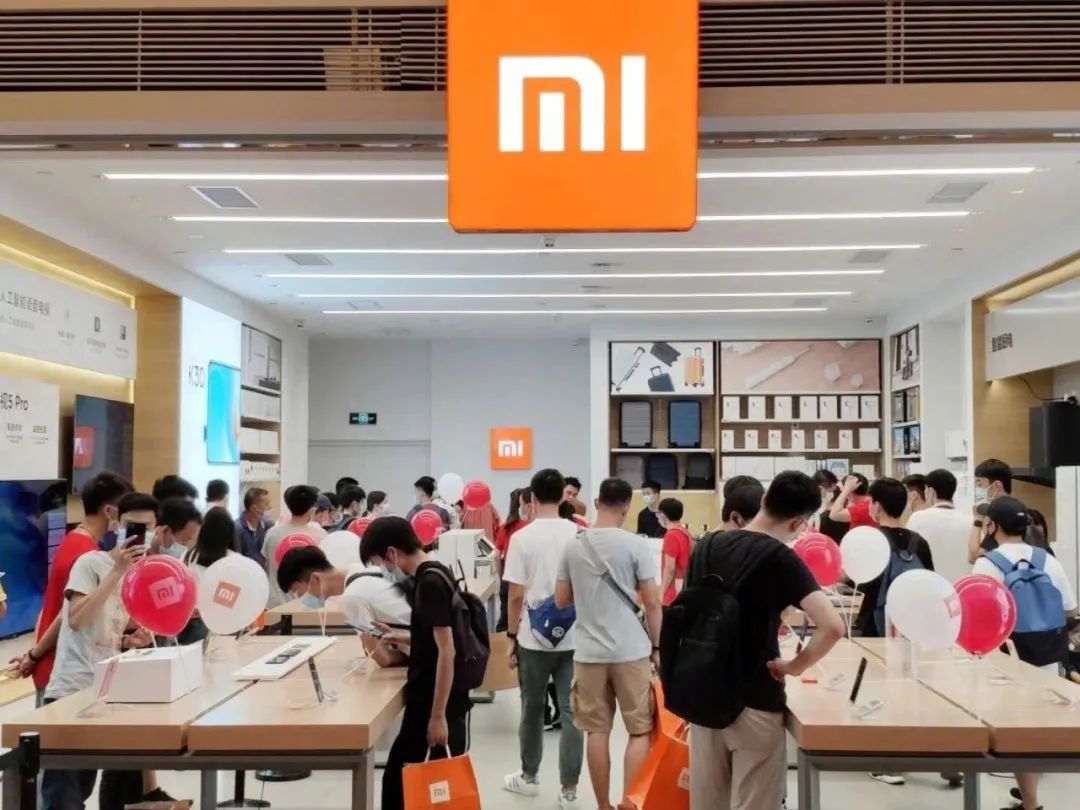
Xiaomi Home store, image source: Xiaomi's official Weibo account.
Not only Xiaomi, but Honor CEO Zhao Ming has also stated that the fourth- to sixth-tier markets represent an incremental growth opportunity for Honor, and the company plans to gradually expand into these segments in the next phase. The smartphone industry is now ushering in a new round of competition in the lower-tier markets.
This has put significant pressure on OV, the "king of the sinking market" that has long cultivated offline channels. In fact, however, OV's main competitive challenge comes from Xiaomi.
Xiaomi, which had previously focused on mid- and low-end smartphones, has entered the lower-tier markets, becoming a "catfish" that shakes up the industry.The sinking market caters to price‑sensitive consumers. In China, nearly 900 million people living in rural areas earn less than 2,000 yuan per month. For this segment, prices must be slashed to the thousand‑yuan range to spark their desire to buy a smartphone. Xiaomi's pricing is clearly lower than that of OPPO and vivo, posing an obvious threat to the latter.
Faced with Xiaomi's formidable challenge, OPPO and vivo have their own secret weapons to defend their turf.Since 2020, when OPPO appointed Vice President Liu Bo as President of its China region—tasking him with overseeing the Chinese market and brand development—the company has rolled out a series of channel‑strategy initiatives. For instance, it has targeted consumers within Beijing's Fifth Ring Road, accelerated the opening of new shopping‑mall‑based flagship stores and integrated sales‑and‑service outlets, and prioritized securing supply for core customers—all part of a strategy to stabilize its offline distribution network.
Prior to this, OPPO adopted an "integrated manufacturer‑distributor" channel model, tightly aligning the manufacturer with provincial distributors. Provincial distributors were responsible for nationwide distribution, giving them substantial authority—effectively wielding decisive influence over all OPPO shipments within their respective provinces—while retailers could only negotiate procurement directly with these provincial distributors.
Since Liu Bo shifted the strategy, distributors can now negotiate cooperation terms and shipment volumes directly with Suning's headquarters, with package dealers solely responsible for execution. In addition, OPPO has expanded its financing support for distributors, offering loan limits of up to RMB 8 million, which significantly eases their financial constraints.
Even more attractive, of course, is direct rent subsidies.Starting in 2020, OPPO significantly increased its rental subsidies for dealers: flagship stores located in major shopping malls can receive a direct subsidy of 50% of their rent, while stores in prime urban commercial districts are eligible for subsidies of around 40%.
As a result, OPPO has managed to secure its core distributors through a series of strategic moves, and with its already extensive offline sales network, it still holds a distinct advantage in the lower-tier markets. Moreover, OPPO and vivo began building out their offline channels back in the BBK era, now operating more than 200,000 physical stores nationwide—far surpassing Xiaomi's current offline footprint.
By contrast, Xiaomi, which once surged ahead with rapid growth, has run into challenges in the lower-tier markets after an initial phase of breakneck expansion.According to Photon Planet, Xiaomi not only has thin profit margins and numerous after-sales issues, but its online‑centric business model may also be another key factor hindering its expansion into rural markets.
Typically, mobile phone retailers in lower-tier markets source their inventory from channel distributors. Xiaomi procures its products through online channels and does not dispatch dedicated representatives to visit stores in person, whereas OPPO, vivo, Honor, and Huawei all send dedicated staff directly to retail outlets to engage with shop owners, coordinate operations, and gauge demand. As a result, while Xiaomi places great emphasis on consumers, its failure to establish a physical presence among merchants has hindered the pace of its expansion.
Honor also recognized early on the advantages of offline channels. At its new Honor offline distributor conference held on December 29, 2020, the company announced that one of its 2021 goals was to open more than 30,000 offline experience stores and dedicated zones or counters.
However, its expansion does not appear to be going smoothly. While Honor publicly touted more than 2,300 stores in 2019, according to this year's data from "Jidian Business," only 1,315 authorized offline stores are actually listed on Huawei's official online store.
Having been spun off just one year ago, New Honor still faces significant challenges in both product development and channel management.
For a long time, the mid- and low-end smartphone market has been the primary battleground for most domestic manufacturers. As the year draws to a close, competition in this segment has grown increasingly fierce, with this year's Double 11 serving as a decisive sprint that puts each company's overall strength to the test.$XIAOMI-W (01810.HK)$$Suning.com Co.,LTD. (002024.SZ)$
Risk Disclaimer: The above content only represents the author's view. It does not represent any position or investment advice of Futu. Futu makes no representation or warranty.Read more

Comments (3)
to post a comment
3