
The New Payment Battle: Who Is Snatching a Slice of the WeChat Pay and Alipay Pie?

Author: Good-looking Business$TENCENT (00700.HK)$ $BABA-W (09988.HK)$
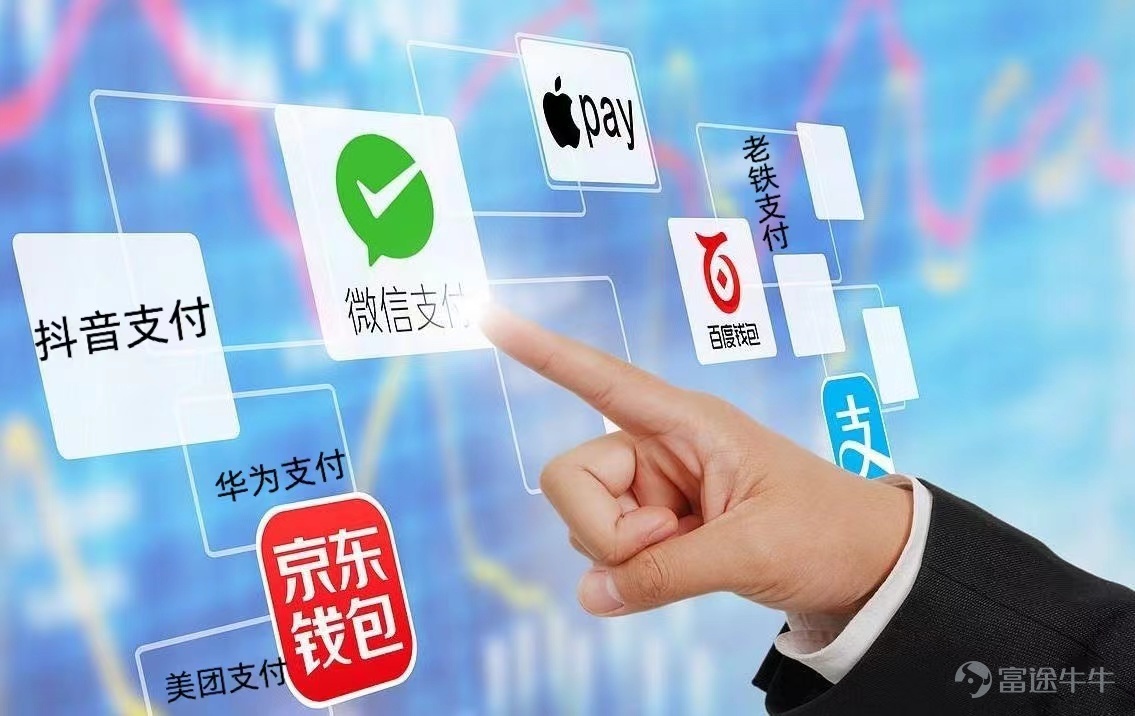
As WeChat Pay and Alipay gradually 'tear down the walls' and move toward interoperability, the payments market is quietly simmering with undercurrents, ushering in a new round of intense competition.
On October 4, Huawei dropped a bombshell on the payments market: with the 2021 Developer Conference just around the corner, users can now link their bank cards through 'Huawei Pay' in the Huawei Wallet app to purchase tickets.
This means that, following Huawei's acquisition of a payment license this year, a key use case has been unlocked for 'Huawei Pay'.
By mid-October, Kuaishou's payment business had made new progress: the status of their applied-for "Laotie Payment" trademark had changed to "Registered," with international classifications covering social services, advertising and sales, education and entertainment, and website services; however, the "Laotie Payment" trademark involving financial property management, communication services, and scientific instruments was still in the "reexamination after rejection" stage.
Earlier, in late September and early October, WeChat Pay and Alipay each issued statements announcing that they were collaborating with China UnionPay to enable mutual recognition and mutual scanning with the UnionPay QuickPass app, thereby promoting greater openness and resource sharing in the payments market.
WeChat Pay and Alipay have already established an overwhelming dominant position in the domestic mobile payment market.
As early as Q4 2016, data from Analysys and iResearch both showed that the combined market share of Alipay and WeChat Pay (Tenpay) had, for the first time, exceeded 90%.

Since 2016, Alipay and WeChat Pay have maintained a duopoly, with their combined market share consistently exceeding 90%.
However, in line with regulatory requirements in the payment and clearing sector, interoperability among payment instruments and the opening up of payment services within the ecosystems of internet giants have become an inevitable trend.
As Alipay and WeChat Pay are opening up their platforms, other internet/tech giants are quietly stepping up their efforts in the payment sector with frequent moves. Since the end of 2020, PDD Holdings, Douyin, Kuaishou, and Huawei have all been obtaining licenses and launching payment services.
As of now, in the domestic mobile payment sector, from BAT to TMD, from the "Huami OV" trio in the smart terminal field to short-video platforms such as Douyin, Kuaishou, and Bilibili, and even to OTA giant Ctrip, almost all well-known Internet and technology companies are deploying payment businesses.
With WeChat Pay and Alipay—two industry giants—already achieving near-complete market coverage, how much room is left for latecomers? And what changes can they bring to the payments landscape?
Later entrants competing for payment market share
In China, to conduct payment business in a compliant and lawful manner, one must first obtain a license—specifically, a "Payment Business License"—which is a qualification certificate for operating in the non-financial sector issued by the People's Bank of China.
Since 2011, the People's Bank of China has issued a total of 271 payment licenses; however, since 2016, the issuance of new payment licenses has been suspended.
For internet companies that only began developing payment operations in 2016 or later, there is only one way to obtain a payment license: acquisition.
Since 2016, Xiaomi, Meituan, Didi, ByteDance, Kuaishou, and Huawei have all secured payment licenses through acquisitions. It should be noted that PDD Holdings did not directly acquire FPTong; instead, Shanghai Yiyi Information Technology Co., Ltd. (referred to as "Yiyi Technology") holds a controlling stake in FPTong. Currently, Chen Lei, co-founder of PDD Holdings and its current CEO, is the de facto controller of Yiyi Technology.

In the short-video field, apart from Douyin and Kuaishou, which have obtained payment licenses, there is currently no public information proving that Bilibili has obtained a payment license.
However, multiple indicators suggest that "Bilibili Pay" is also imminent. In January of this year, information on the Ministry of Industry and Information Technology's government service platform revealed that the ICP filing applications for the domain names "bilibilipay.cn" and "bilibilipay.com," submitted by Shanghai Huandian Information Technology Co., Ltd. (referred to as "Huandian Technology"), have been approved.
Huandian Technology is an affiliate of Bilibili, and the two domain names it has been authorized to use are widely regarded as "Bilibili Pay." Bilibili has also posted recruitment advertisements related to its payment business on its official website and several job-search platforms.
OPPO and vivo are also actively expanding into payment and related financial services. In 2019, the two companies partnered with China UnionPay to launch mobile payment solutions—UnionPay Mobile QuickPass—under the brand names OPPO Pay and vivo Pay. Furthermore, in 2020, "OV" jointly secured a micro-lending license.
Following Huawei's acquisition of Xunlian ZhiFu's payment license, rumors have emerged that OPPO and vivo are also in talks with the license holder about potential collaboration; however, these reports have not been officially confirmed.
For internet and technology companies that only started deploying payment and financial services in 2020 or later, most aim to leverage a "small effort, big impact" strategy to carve out greater market share.
They see sponsoring the CCTV Spring Festival Gala as a crucial lever for boosting payments, after all, BAT has already demonstrated the value of this approach.

In 2015, WeChat invested 53.03 million yuan to secure the exclusive partnership for CCTV's Year of the Sheep Spring Festival Gala. On New Year's Eve, WeChat also distributed 500 million yuan in WeChat cash red envelopes, which users could claim by tapping the "Discover—Shake" feature within the app.
On New Year's Eve alone, a total of 1.01 billion WeChat red envelope transactions were sent and received; from New Year's Eve through the fifth day of the Lunar New Year, the total number of such transactions surged to 3.27 billion. By May 2015, the number of WeChat Pay users had grown to 300 million, accounting for 54.6% of WeChat's monthly active users.
In 2015, WeChat Pay and Alipay were locked in a fierce battle for dominance in the mobile payment market. Leveraging the Year of the Sheep Spring Festival Gala, WeChat managed to turn the tables on Alipay, an event Jack Ma later described as a "Pearl Harbor-style surprise attack."
The latecomers in the payment sector, PDD Holdings and ByteDance, as well as Kuaishou, have all recognized the value of the CCTV Spring Festival Gala.
In 2020, Kuaishou became the exclusive interactive partner of the CCTV Spring Festival Gala for the Year of the Rat, distributing 1 billion yuan in cash red envelopes on New Year's Eve.
In September 2020, PDD Holdings won the bid and became the exclusive interactive partner of the 2021 CCTV Spring Festival Gala. However, in January 2021, PDD Holdings withdrew for some reasons, and Douyin quickly stepped in, spending 1.2 billion yuan to distribute red envelopes to people across the country.
According to public data, Kuaishou and Douyin have both reaped the benefits on the CCTV Spring Festival Gala's 1-billion-traffic high ground.
During the 2020 Spring Festival Gala, global viewers engaged in red-envelope interactions a cumulative total of 63.9 billion times; in the 2021 Gala, Douyin's red-envelope feature recorded a total of 70.3 billion interactions.
The more gains PDD Holdings makes from sponsoring the Spring Festival Gala, the greater the potential losses may be for PDD Holdings.
On December 31, 2020, PDD Holdings, which missed the CCTV Spring Festival Gala, sponsored the Hunan TV New Year's Eve Gala and planned to distribute red envelopes worth 10 billion yuan, with the maximum amount reaching 2,021 yuan.
PDD Holdings, known as the 'sponsorship fanatic,' continued to allocate a large budget to television variety shows and sports events in 2021.
In July this year, China Media Group announced that PDD Holdings has become the 'Top-tier Event Strategic Partner—Exclusive E-commerce Cooperation Platform,' and the two sides will jointly carry out event marketing and live-streaming cooperation.
PDD Holdings launched Duoduo Wallet at the end of last year. To promote Duoduo Wallet, PDD Holdings even started offering refunds to users.
After the launch of Duoduo Wallet, PDD Holdings gradually transferred merchant compensation funds, funds related to platform activities, refunds for abnormal or failed orders, and freight insurance claims into users' Duoduo Wallets. Users must register for a Duoduo Wallet using their real names and link a personal bank card before they can withdraw funds.
However, PDD Holdings' approach has also sparked backlash from users. 'Is it safe to link a bank card to Duoduo Wallet?' 'Why was money transferred to Duoduo Wallet without my consent?' Such complaints are quite common online.
In addition to PDD Holdings, Meituan and Douyin are also actively promoting their own payment products.
Currently, on Meituan Waimai's payment interface, Meituan Pay is listed as the top payment method, followed by WeChat Pay, with Alipay and Apple Pay ranked third and fourth, respectively. Last July, Meituan made headlines when users accused it of discontinuing Alipay.
When placing orders on Douyin, Douyin Pay ranks as the second most popular payment method, ahead of WeChat Pay.
Why are major players all investing in the payments space?
According to data from the People's Bank of China, in 2020 alone, non-bank payment institutions processed 827.297 billion online payment transactions totaling RMB 294.57 trillion, representing year-on-year increases of 14.90% and 17.88%, respectively, with over 1 billion active payment users.
However, in recent years, the central bank has continuously intensified its stringent regulatory crackdown on online payment services, particularly addressing industry malpractices. As a result, securing a payment license has become an essential requirement for internet and technology giants to conduct online transactions in compliance with the law.
Since 2016, a nationwide special rectification campaign targeting internet finance has been launched, which includes a focused crackdown on third-party payment institutions.
In November 2017, the People's Bank of China issued Document No. 217—"Notice on Further Strengthening the Rectification of Unlicensed Payment Business Operations." The Notice states that efforts to rectify unlicensed institutions must be intensified, penalties must be imposed more rigorously, and payment service channels for such institutions must be resolutely severed; at the same time, market entities that illegally provide payment services to unlicensed institutions must be severely punished. Document No. 217 also requires that all penalties be imposed and a comprehensive summary be completed by the end of June 2018.
With the issuance of Document No. 217, "second-tier clearing" institutions are now undergoing the most stringent regulatory overhaul in history. These so-called "second-tier clearing institutions" are entities that have not obtained a payment license but, with the support of licensed acquiring institutions, engage in illegal payment activities in practice. Such entities may include ordinary merchants registered with the industrial and commercial authorities or online platform operators.
According to the People's Bank of China's definition, online payment services provided by e-commerce platforms operate under a "second-tier clearing" model: customer funds are first transferred to the platform's account and then settled by the platform with its secondary merchants.
In addition, electronic wallets that establish quasi-payment accounts for users and provide payment functions such as top-ups, spending, and withdrawals also constitute unlicensed payment business operations and are likewise subject to regulatory rectification.
In recent years, many platforms such as Meituan, JD.com, Youzan, Mogujie, and PDD Holdings have been plagued by the issue of "second-level clearing."
In February 2016, a lawyer filed a real-name report alleging that Meituan Payment was operating without a license. In June of the same year, the People's Bank of China held talks with Meituan and ordered it to suspend operations, leading to the shutdown of Meituan Wallet's top-up function for rectification.
In March 2017, the People's Bank of China conducted successive interviews, investigations, and on-site guidance sessions with Mogu Street, Erwei Huo, Youzan, and other companies regarding 'secondary clearing' issues.
From 2018 to 2019, PDD Holdings was repeatedly reported for suspected 'secondary settlement' and unlicensed payment business operations.
For internet companies, obtaining a payment license is an essential step in monetizing their e-commerce operations; only with such a license can they mitigate the compliance risks associated with 'second-tier clearing.'
In addition, the entry of internet giants into the payments space is driven by several key considerations: first, security - by establishing a closed-loop business model through payments, they can maintain full control over user transaction and payment data, thereby preventing third-party payment providers from accessing such information and reducing their reliance on WeChat Pay and Alipay; second, cost savings on channel fees; and third, the ability to leverage the payments platform to expand into other financial services.
For internet companies that regard 'the marketplace as a battlefield' as their guiding principle, user data is their core asset, and maintaining independence and competitive advantage is their survival mantra. Therefore, it is entirely justifiable for internet giants to enter the payments space for these very reasons.
As transaction volumes on various platforms grow, the cost of routing payments through payment channels rises steadily in the absence of a payment license.
According to iResearch's estimation, in 2020, if Meituan's in-scenario transaction volume is estimated at 870 billion yuan and all these transactions are settled via Meituan Pay, the payment service fee that can be saved would be 0.38%.
Kuaishou's financial report also offers a glimpse into just how high the payment service fees are. In the first half of 2021, Kuaishou's revenue reached 36.2 billion yuan, up 42.8% year on year; during the same period, its payment channel service fees amounted to approximately 680 million yuan, compared with 430 million yuan in the same period last year, representing a year-on-year increase of 58%.

An increasing share of Kuaishou E-commerce's GMV is coming from Kuaishou Stores, reaching 90.7% by Q2 this year. This means that as Kuaishou E-commerce's GMV grows rapidly, the transaction fees it pays to payment channels are also rising quickly, with channel fee growth outpacing revenue growth in the first half of this year.
Currently, the main payment methods for products in Kwai Shops include WeChat Pay, Alipay, Huabei, and Huabei installment payments; Kwai's "Lao Tie Payment" has not yet been launched.
Securing a payment license will not only save Kwai a substantial amount of channel fees, but more importantly, it will enable the company to completely put an end to "unlicensed operation" and avoid the compliance risks associated with "second-level clearing."
It seems only natural for internet giants to obtain payment licenses and then leverage those licenses to launch financial services.
Take Meituan as an example: in May 2020, Meituan launched "Meituan Monthly Payment." According to the official introduction, active Meituan users who are at least 18 years old and have completed real-name authentication can apply to activate the service through the Meituan app. Once activated, users can use the credit limit granted by Meituan Monthly Payment to make payments when shopping on Meituan's apps, with a maximum interest-free period of 38 days.
Since 2015, Meituan has been seeking financial licenses. By the time of its IPO in 2018, Meituan had obtained payment, micro-loan, private bank, and insurance licenses.
According to public reports, ByteDance has been aggressively acquiring financial licenses since 2018, and has now secured four such licenses, including payment, online micro-lending, insurance brokerage, and securities investment advisory.
However, "Meituan Monthly Payment" has now been quietly taken offline. When you open the Meituan Takeaway app, it currently mainly offers Meituan Pay, WeChat Pay, Alipay, and Apple Pay.
Regulatory authorities have repeatedly emphasized that third-party payment institutions must return to the core of the payment business and sever improper linkages between payment products and other financial products. As a result, internet giants face increasing regulatory pressure as they seek to monetize their payment businesses by expanding into credit services.
However, in the payments business, Huawei differs from internet companies that rely heavily on e-commerce for monetization.
Several years ago, Su Jie, then president of Huawei's Cloud Services Division, repeatedly stressed publicly that Huawei would not enter the payments business. Yet this March, he was thoroughly proven wrong: Huawei acquired Xunlian ZhiFu and secured a payment license.
Huawei stated in its public explanation, "Through this acquisition, Huawei aims to deliver a richer array of digital lifestyle services to consumers and create a safer, more convenient, all-scenario smart experience."
Indeed, Huawei Pay is an integral part of Huawei's all-scenario smart services ecosystem. At this stage, obtaining a payment license first enables Huawei to meet its own in-house payment needs while also mitigating the risk of "second-tier clearing."
Is the battle for payments far from over?
With the advent of antitrust enforcement and the entry of new players, WeChat Pay and Alipay are bound to see some erosion of their market share, leading to a decline in the concentration of the payments market. That said, these two industry leaders have already cultivated strong customer stickiness among end consumers, making it difficult for competitors to significantly chip away at their market position in the short term.
However, the development of the digital RMB is also worth watching for all players in the third-party payment market.
The digital RMB is a digital form of legal tender issued by the People's Bank of China. At present, its design and applications are primarily geared toward meeting domestic retail payment needs.
According to the People's Bank of China's White Paper on the Research and Development Progress of China's Digital RMB, as of June 30, 2021, the number of pilot scenarios for the digital RMB had exceeded 1.32 million, covering areas such as bill payments, catering services, transportation, retail shopping, and government services. More than 20.87 million personal wallets and over 3.51 million corporate wallets had been opened, with a cumulative total of over 70.75 million transactions amounting to approximately RMB 34.5 billion.
What impact will the digital RMB have on third-party payment institutions?
An executive from a third-party payment institution once told All-Weather Technology that the biggest downside of the digital RMB for third-party payments is "account value."
He believes that, as digital RMB accounts continue to develop, the central bank may assume dominant control over personal funds accounts, thereby diminishing the account value of third-party payment wallets and significantly impacting their financial businesses that rely on monetizing payment traffic.
The extent to which the digital RMB will reshape the mobile payments landscape in the future remains to be seen.
For third-party payment providers, as the B2C payments market undergoes a transformation, strengthening services geared toward merchants has become an inevitable trend.
According to a report by iResearch, as personal payment services mature and compliance requirements for monetization-related offerings such as credit and wealth management tighten, third-party payment institutions will increasingly focus on B2B payment services.

iResearch forecasts that the transaction volume of industrial payments will further increase its share of total third-party integrated payment volume, rising from 37.5% in 2020 to 42.4% in 2025.
According to Zhou Ye, Chairman and CEO of Huifu Tianxia, 'China's B2C payment capabilities are undoubtedly world-class, but its B2B payment infrastructure still lags behind the global cutting edge by about a decade.'
For third-party payment providers, there remains significant opportunity in transitioning to a B2B model, as the digital transformation of merchants is an overarching trend.
Risk Disclaimer: The above content only represents the author's view. It does not represent any position or investment advice of Futu. Futu makes no representation or warranty.Read more


Comments (19)
to post a comment
41
187