

The second half of livestream e-commerce: "long-termism" has become the dominant theme driving industry development.
Only livestream e‑commerce businesses that embrace a long-term mindset can prevail in fierce competition; to ensure lasting success, they must make friends with time.
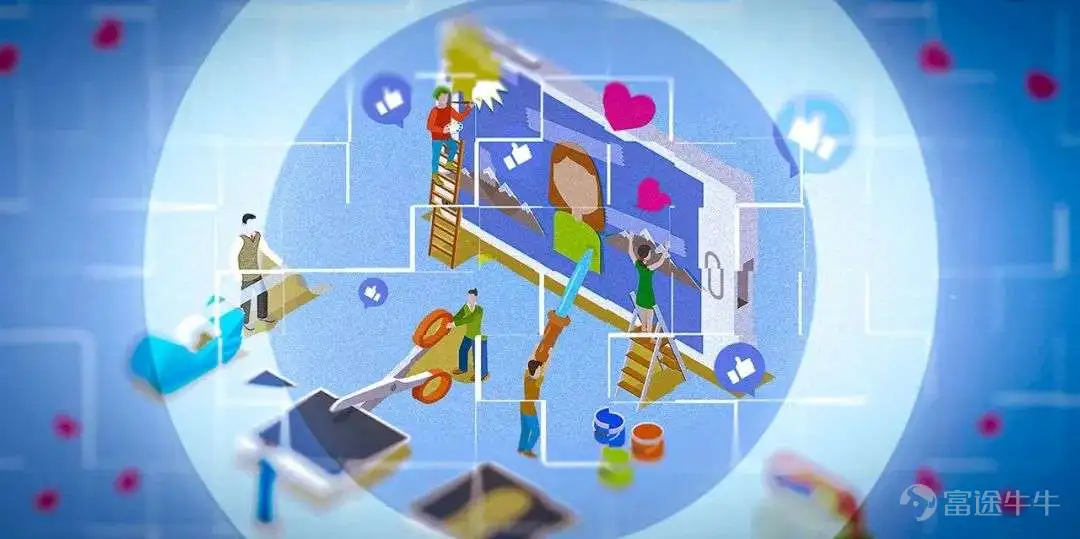
Live-streamed e-commerce has been growing increasingly popular lately. Many netizens can simply tap their fingers in a livestream and add their favorite items to their carts. However, this new shopping model has only taken about three to five years to evolve from its early beginnings to widespread adoption.
When livestream shopping was first taking off, some streamers on video platforms, capitalizing on the industry's nascent stage and regulatory loopholes, hawked all sorts of unregulated, unlisted, and uncertified products in their live streams. By exploiting these regulatory gaps to rake in quick cash and amass huge fortunes, they earned a reputation among many as a profession with high returns but short lifespans.
Meanwhile, MCN agencies have also recognized the industry's growth opportunities and have begun cultivating KOLs (Key Opinion Leaders), replicating successful content‑creation models in hopes of mass‑producing KOLs through systematic strategies—yet few such efforts have proven successful.
As successful players become increasingly scarce and industry competition intensifies, some are beginning to realize that the era of quick profits in the live‑e‑commerce sector is over. "The mighty Yangtze River flows eastward, its waves washing away all heroes." With industry standards now firmly in place and regulatory oversight fully enforced, the true victors in the live‑e‑commerce space will ultimately be those who can endure—time itself.
01Security and compliance are the most fundamental requirements.
Whether shopping on online e‑commerce platforms or in brick‑and‑mortar stores, consumers' primary concern is certainly not whether a product is safe. For all goods on the market, safety and harmlessness are the most basic requirements—fundamental prerequisites that take precedence over every other attribute.
However, in livestream e‑commerce, not all hosts can guarantee this. Some pass off inferior products as high‑quality ones, others engage in exaggerated or misleading advertising, and some even recommend items that are harmful to health—actions that not only harm consumers but also tarnish the reputation of the entire livestream e‑commerce industry.
Xue Li, a top-tier livestreamer on Taobao, began hosting medical‑beauty‑related livestreams in March this year and has since achieved outstanding sales performance. During a June broadcast, her single medical‑beauty‑focused livestream drew 8.5 million viewers, with the total GMV of her livestreamed sales approaching RMB 200 million.
However, behind the glamour lies a shadow. Online, complaints and criticisms regarding Xue Li's medical‑beauty livestream sales are numerous and countless. In June this year, Weibo user Wei Zi posted in Xue Li's official fan‑club super‑topic, stating that she had purchased the "all‑ceramic veneers" service recommended by Xue Li during her livestream. Yet, during the in‑person consultation, only a nurse handled all aspects of the reception and procedure, and no licensed, qualified physician was present at the clinic throughout the entire process.
"All the hustle and bustle under heaven is driven by the pursuit of profit; all the clamor is for the sake of gain." The reason some livestreamers cannot even meet basic requirements like safety and compliance is that doing so entails substantial costs. What appears to be a straightforward practice—livestreamed sales—is, in fact, extremely resource‑intensive when it comes to partnership management and product selection.
Take MeiYuan, the company behind top livestreamer Li Jiaqi, as an example: its product‑selection and compliance teams now account for roughly two-thirds of the entire workforce. Team members typically hold relevant academic backgrounds, and when evaluating the products featured in Li Jiaqi's livestreams, they assess not only the brand's vertical category, its R&D pedigree and manufacturing capabilities, and consumer trial feedback, but also the benefits the team can secure. In addition, they conduct a comprehensive review from multiple angles—covering quality risks, labeling risks, packaging risks, non‑quality‑related legal risks, and public‑opinion risks.
From recruitment to product selection and compliance, it's clear that managing live‑stream product‑selection partnerships is labor‑intensive, time‑consuming, and costly—placing a heavy burden on the team—yet often fails to deliver immediate, tangible returns. Consequently, unless a team approaches its work with absolute respect for consumers and a genuine commitment to long-term growth in this industry, it will be difficult to devote the necessary effort and attention to every stage of the product‑selection process.
02Consumers want high-value, quality products.
When consumers shop, they're not just paying for the price of a product—they're also paying for the intrinsic value it embodies. Those who tune into livestreams to watch hosts promote products aren't merely seeking items that meet basic needs; they have higher aspirations, aiming to sift through the overwhelming array of choices and select goods that can enhance their quality of life.
In livestream shopping, consumers in front of the screen exhibit both situational consumption and impulse‑buying tendencies, which underscores the need for influencers to prioritize the intrinsic value of the products they promote.
When selecting products, livestream sellers must not only ensure that the items are safe and compliant but also, on that basis, assess whether they possess sufficient intrinsic value and resonate with consumers' aspirations for a better life. For shoppers, the products they choose in livestreams should be not only functional but also aesthetically appealing; not only practical but also stylish; and not only something they need but also something they can proudly show off.
Consumers' high standards and exacting demands have posed a significant challenge for livestream e‑commerce professionals. For product‑selling hosts, the task of selecting the best, highest‑quality, and most suitable products in a market where "a dazzling array of choices can easily bewitch the eye," and of recommending these premium items—"searching through countless options"—to consumers in the livestream room, tests not only their discernment but also their original intentions.
Practice is the sole criterion for testing the truth of knowledge. As live-stream e‑commerce teams continue to evolve, they have gradually developed their own product‑selection methodology.
For example, when Li Jiaqi's team first started doing livestream sales, they relied on their own initiative and self-discipline to recommend products to consumers. Later, as the team grew and matured, it gradually distilled a twelve-character guiding principle: "Carefully select products, prioritize compliance, strengthen operations, and ensure after-sales service."
At the same time, beyond ensuring product safety and compliance, Li Jiaqi's team has consistently upheld the values of "love and companionship, warmth," making them the guiding vision for the entire team and striving to convey this ethos to consumers during live streams. Throughout their livestream‑shopping sessions, they not only give shoppers access to carefully curated, high‑quality products but also aim to let them feel the genuine care and dedication behind each item.
Livestream e‑commerce isn't a 100‑meter sprint—it's a marathon. Only the teams that can win consumers' emotional buy‑in will maintain their support and keep powering ahead over the long haul.
03Brands need enablers.
Everything can be connected. For live‑commerce, the livestream host serves as the intermediary between consumers and brands. To sustain live‑commerce as a viable business and maintain a long‑term foothold in today's fiercely competitive market, hosts must not only deliver exceptional service and meet consumers' diverse needs but also generate value for the brands they promote, thereby empowering those brands within the livestream environment.
Lately, "national trend" products have been gaining widespread attention—from Hongxing Erke to Warrior sneakers, and from Jianlibao to Zhang Xiaoquan—more and more domestic brands are winning consumers' favor. At the same time, an increasing number of Chinese brands are partnering with livestream e‑commerce platforms to boost their influence and brand awareness.
On July 24, livestreamer Li Jiaqi, serving as Tmall's Chief Discovery Officer for New Chinese Brands, took part in the "Tmall National Style Awards" Hanfu Gala, using his livestream to promote Hanfu brands such as HaiMati, Shiyu, and Zhonghui Hantang. Earlier, in April, Li Jiaqi also teamed up with 11 Chinese designers to debut at Shanghai Fashion Week, helping to elevate China's original design brands and emerging designers.
Affected by the pandemic and other factors, the global economy is currently sluggish, with China standing out as an exception. The world looks to China for consumption; its steadily growing market has not only helped many domestic brands expand but has also created opportunities for numerous foreign brands.
The information‑driven program "Li Jiaqi's New Product Showcase," launched by the company Mei Yi, has helped several internationally renowned brands take their presence to the next level. According to incomplete statistics, top-tier global labels—including LANVIN, GUCCI, PRADA, GIVENCHY, GUERLAIN, SEPHORA, and JO MALONE LONDON—have all chosen Li Jiaqi's livestream as the platform for debuting their latest collections.
In addition to international luxury brands, several niche designer labels have also gained favor in livestream e‑commerce. From August 19 to 22, "Li Jiaqi's New Collection Show" held its first offline exhibition at Shanghai's K11. Emerging designer brands—including 8ON8, GARÇON BY GARÇON, SUSAN FANG, YUEQI QI, and SHUTING QIU—presented their latest collections, marking their debut in person with audiences.
Some pioneering livestream‑e‑commerce teams have continuously explored and innovated in the industry, ultimately achieving outstanding results—shattering many longstanding stereotypes about livestream shopping. Thanks to their efforts, livestream rooms have evolved from mere sales venues into a new battleground for the fashion world; livestreaming not only serves consumers but also empowers brands. The livestream‑e‑commerce sector is gradually shifting from pure sales toward a model that seamlessly integrates brand building with performance.
04Lu Jiu's commentary: Society needs long-termism in livestream e-commerce.
With the explosive growth of livestream e‑commerce, massive resources have poured into the industry. Thanks to their teams, capital, and rising fame, some streamers can effortlessly amass enormous traffic.
However, traffic is a double-edged sword. It can help streamers quickly break into the mainstream, boosting their fame and income in no time. At the same time, it magnifies every shortcoming, placing ever greater pressure and responsibility on them. Therefore, how to effectively manage and leverage traffic is not only a challenge for individual streamers but also a critical consideration for all agencies and professionals in the live‑streaming industry.
Lu Jiu Finance believes that livestream e‑commerce has entered its second half, with a long‑term mindset set to become the dominant theme of industry development. Only livestream e‑commerce platforms that embrace this long‑term approach can prevail in an increasingly competitive landscape; to ensure lasting success, they must learn to work in harmony with time.
For livestreaming companies, a long-term mindset means fostering mutually beneficial, sustainable co‑creation among partners. This approach not only accelerates and enhances each other's growth but also empowers team members to take greater ownership and drive their own initiatives.
For consumers, a long-term mindset means that the bond between livestream hosts and their fans isn't fleeting—lasting just a few days—but endures for five years, or even a decade. When trust is built between hosts and their audience, livestream e‑commerce can sustain itself over the long haul.
For the live-streaming industry, a long-term approach means establishing fundamental, standardized entry barriers that foster trust across the board. Only when consumers place their confidence in the sector can it achieve sustainable, healthy growth.
At its core, livestream e‑commerce is simply a form of commerce, and embracing a long‑term mindset benefits all sectors of society. In the past, the lure of profit drew a wide array of players into the industry, while its low‑barrier entry allowed both high‑quality and substandard operators to coexist. Today, as regulatory frameworks become increasingly detailed, public awareness continues to grow, and top‑tier livestreamers steadily rise to prominence, the era of quick‑profit‑driven livestream e‑commerce will ultimately be weeded out by time.
Meanwhile, livestream e‑commerce platforms that embrace a long-term mindset will continue to thrive, becoming allies of time.
Risk Disclaimer: The above content only represents the author's view. It does not represent any position or investment advice of Futu. Futu makes no representation or warranty.Read more

Comments
to post a comment
1
6