
How does the world's largest classical music label "subvert the classical music industry"?
The following article is from Daolu Music Industry, written by Curtis.
Kuke Summary:
As the first Chinese service provider to introduce content from the Naxos Music Group library, Kuke Music is also the first music service provider to cooperate on copyrights with Naxos Music Group in China, maintaining a long-term and positive cooperation with the group.
Whether in terms of innovation on its own platform or revolutionizing the industry's business models, Naxos is always the first to boldly explore new territories. Kuke Music will continue to leverage the advantage of Naxos' copyright library, collaborate closely with Naxos in the rapidly developing technology-driven Chinese market, and remain committed to driving innovation forward.
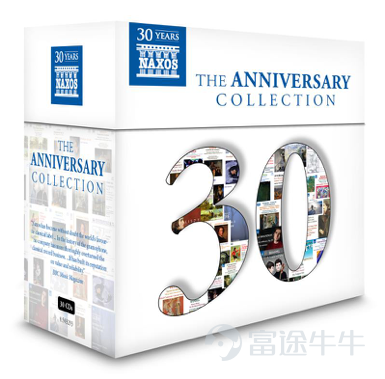
"Now this is a lifelong push! I also listen to chillout music, electronic dance music, and original soundtracks, but classical music still resonates with me." In a music platform's comment section, a user expressed great joy when discussing the 'Naxos Music Group 30th Anniversary Commemorative Box Set'. This compilation, integrating works by classical music masters such as Bach, Beethoven, Chopin, and Dvořák, not only marks a milestone in classical music's evolution, but also witnesses Naxos' transformation from an affordable CD label to a phenomenal classical music record giant.

If the three major record companies reshape the history of pop music, Naxos is undoubtedly the force behind the continuous brilliance of classical music. Since its establishment, Naxos has released nearly 0.014 million records, with nearly 4,000 records released under Naxos' sub-brands, and has achieved record sales of 0.13 billion globally.
In addition to the record release business, Naxos launched the world's first classical music streaming platform as early as the 1990s.In the music education industry, it not only produces educational CDs and paper books based on classical music, but also successively launches digital content such as audiobooks, e-books, and mobile apps. It is no exaggeration to say that in the field of non-popular music where the three major record companies do not dominate, Naxos is becoming the innovator and absolute leader.
“Unconventional”Naxos
When it was first established, this classical music label, which started with CDs at affordable prices, appeared somewhat "alternative" in the industry. It used CDs, still considered "luxury goods" at the time, to produce and distribute music content, and then sold them at extremely affordable prices. At the same time, it chose to collaborate with some unknown but outstanding professional musicians and orchestras from Central and Eastern Europe. Back then, Naxos's series of actions and operations were unconventional and even groundbreaking.
In the 1980s, the price of CD records was still extremely expensive. From the release of the first CD album to the founding of Naxos, only five years had passed. As a new product, at that time the average selling price of a music CD could reach $40, a staggering price. Nevertheless, thanks to its more portable and compatible nature, CDs still gained popularity among music fans.
Initially, for music labels still relying on vinyl records for distribution, adopting CDs posed higher costs and risks than vinyl. However, Klaus Heymann, the founder of Naxos, had an equal passion for classical music and seizing business opportunities. CDs, with longer playing time than vinyl records, and the classical music enthusiasts' preference for Hi-Fi high-resolution audio equipment, led them to switch to CD consumption earlier. Naxos decided to record quality music works with digital technology. At that time, Naxos's strategy of selling CDs at affordable prices did not attract mainstream market attention. However, a significant turnaround quickly occurred. According to data from the Recording Industry Association of America (RIAA), by 1988, just one year after Naxos was founded, CD sales officially surpassed vinyl records in the American record market, replacing tapes in 1991 to become the best-selling audiovisual product.
With the CD production technology becoming more mature, and costs decreasing, Naxos, already ahead of its market competitors, began to enjoy more dividends.Naxos usually collaborates only with some lesser-known symphony orchestras, not only minimizing its costs but also laying the foundation for its future reputation to soar.
Initially hiring musicians and orchestras from Slovakia and Hungary, Naxos's 'Marco Polo' label has been recording records in these two countries since its establishment in 1982. After recording some of the most popular classical pieces, Naxos began working on complete works collections. For example, the complete Haydn string quartets performed by the Kodály Quartet was the first work that brought international acclaim to Naxos. With its growing reputation, Naxos started collaborating with some top symphony orchestras in Europe and America, such as the Bournemouth Symphony Orchestra, Seattle Symphony Orchestra, Buffalo Philharmonic Orchestra, and Milwaukee Symphony Orchestra, all gradually joining the roster of Naxos's regular collaborating orchestras.
In the Chinese market, Naxos's 'Yellow River' and 'Marco Polo' labels have also recorded a large number of traditional Chinese music works, making it a leading collector of Chinese non-pop music in the international record companies. As early as the 1990s, 'Marco Polo' collaborated with Ma Sicong, known as the 'First Violinist of China,' to record and release his composition "Second Symphony / Songs of the Forest." In addition, Naxos collaborated with Western and Japanese symphony orchestras or artists to record and release several Chinese classical music pieces, as well as a significant number of records featuring performances on traditional Chinese instruments.

Public information shows that the repertoire under the 'NAXOS' and 'MARCO POLO' labels alone has exceeded over 0.01 million records. If we include the other independent classical music labels later acquired by Naxos, the total number of records has exceeded 0.014 million, with a total duration of around 0.03 million hours.Today, Naxos has not only successfully crowned the throne of the world's largest independent classical music label, but also rapidly expanded its music library to areas such as opera, early music, and contemporary music at an astonishing speed.Behind this, of course, is the sharp commercial acumen of founder Klaus Heymann.
Naxos' "treasure trove music library"
For the industry, Klaus Heymann and Naxos are considered as outsiders. Before founding Naxos, Heymann played tennis in Frankfurt, and was just a faithful music enthusiast. But perhaps because of this, Naxos was able to operate outside conventional thinking and achieve its current position.
In 2012, Klaus Heymann told his biographer that this independent classical label, now apart from the three major mainstream record companies, may have succeeded in innovating classical music due to his three "traits": "(1) I don't know musical notation; (2) I don't play musical instruments; (3) I have never worked in a music label before."
Indeed, Heymann initially started his career in China Hong Kong by importing high-end audio equipment and promoting products through organizing classical music concerts. When he realized the gradual maturation of the Asian classical music record market, he began doing business by selling CDs to fill market gaps. Heymann's unorthodox background allows him to constantly change Naxos' development direction through innovation, seeking new profit models for this classical record company.
After recording music CDs, Naxos' audiobooks business also flourished. In addition to expanding their recording catalog, Naxos also works as an agent for other independent classical labels for distribution and sales. In addition to these relatively small independent labels, Naxos also acts as a distributor for classical music labels under the three major record companies. Besides, Naxos has always stood at the forefront of the digital content trend and even launched its own streaming music service platform - Naxos Music Library (NML) earlier than Spotify, in 2003.
Naxos is a company that dares to embrace new things.Compared to those emerging classical music labels, Naxos' advantages are more pronounced. Its advantage lies in its vast music library and the breadth of works it covers. For example, from 2009 to 2018, in nearly a decade, through acquisitions and investments, Naxos has repeatedly expanded its territory in the non-pop music industry, not only opening up new territories in specific regions and music fields, but also obtaining more unique copyright content.
In 2015, the German classical label Orfeo was acquired by Naxos. Founded in the late 1970s, this label has a unique style in the opera field, especially in live performances of star institutions and artists, such as recordings of performances at the Bayreuth Festival, Salzburg Music Festival, Vienna and Munich National Opera House, and many live solo concerts of superstar singers.
In 2017, Naxos acquired the German label Oehms Classics. In the recordings under this label, there are both classic works belonging to the standard repertoire category and many particularly rare recording works, especially opera works. Examples include Richard Strauss' 'Ariadne auf Naxos', Mascagni's 'Iris', and Granados' 'El mar'.

In 2018, Naxos' acquisition of Opus Arte was considered one of the largest mergers and acquisitions in recent years. Opus Arte enjoys a high reputation in the industry, with a wide variety of products from CDs to DVDs, and Blu-rays, including content from the Royal Opera House, as well as highlights from the Glyndebourne Festival, Madrid Royal Opera House, German National Opera House and Ballet, Shakespeare's Globe Theatre, Royal Shakespeare Company, and more. After acquiring Opus Arte, Naxos has a spectacular collection of opera and theatrical content, including Verdi and Wagner from Bayreuth and Covent Garden, a variety of excellent Mozart operas from the Paris Opera, Tchaikovsky ballet productions by top European dance companies, and even opera works by important contemporary composers like John Adams and Tan Dun.
Through the acquisition of numerous classical music labels, Naxos continues to expand its content resource library. In the current lively copyright trading environment, its foresight is even more remarkable. In addition, with the revival of world music and national music at the same time, Naxos appropriately acquired ARC, considered the world's largest world music label in 2019, and simultaneously revived the Naxos World label, signing many excellent world music artists from home and abroad.

Due to a series of acquisitions, Naxos' strength in terms of copyrights is no less than the three major record companies, and is even more diversified. Compared to the fierce competition of the three majors in the pop music business, Naxos is more secluded, with copyrights that are more unique and the possibility of diversified cooperation in various fields with other clients.
As of the deadline (August 27th), Naxos' online music library has over 0.2 million albums, more than 3 million tracks, not including the content of Naxos' audiobook library with over 13,000 audiobooks, and the music library is growing daily. If a person listens continuously 24 hours a day, they can listen non-repetitively for at least half their life.
It is worth mentioning that Naxos million treasure trove music library can not only meet the needs of individual users to cleanse their ears, but also uniquely provide rich background music for scenes such as movies, TV shows, and commercials.For example, well-known movies such as "La La Land," "Kingsman," "Guardians of the Galaxy," "The Great Gatsby," and "Alien: Covenant" have all used music from Naxos's music library.
Obviously, whether in innovation on its own platform or in revolutionizing the industry's business model, Naxos is always the pioneer who dares to try new things.
Naxos meets the library patrons, carrying forward innovative genes to develop music education.
Taking a step ahead of its predecessors, Naxos also excels in music education.
As early as the launch of the Naxos Music Library, Naxos had already synchronized artist information into the platform, allowing users to access composer or performer profiles while listening to music. In 2015, NML synchronized over 6000 terms related to composers and music works to the platform's database.

Four years later, NML once again launched the "Music Learn" international exchange platform, dedicated to connecting educational institutions, scholars, students, critics, and industry professionals from around the world to contribute articles on music-related topics with academic standards and value. At the same time, Naxos also serves numerous world-renowned institutions such as Stanford University, Columbia University, and Northwestern University, transmitting classical music and related knowledge to millions of university students through collaborations with their libraries.
Furthermore, in 2020, Naxos launched an interactive music teaching platform for children aged 4 to 12 called the "Naxos Music Box," providing a series of engaging educational content for children. With vibrant colors, clear design, and specially tailored text, the Music Box attracts the attention of many young parents and children.

The launch of the Naxos Music Box embodies and implements Mr. Kraussmaffei's philosophy of 'bringing classical music to as many audiences as possible.' Mr. Kraussmaffei said, 'Making a contribution to the public's classical music education has always been our core vision. We provide different music services for different age groups and never forget the importance of nurturing young people because they are the audience of the future.' This new product Music Box not only provides knowledge about orchestras, classical music history, and world music, but also carefully selects 4000 classic works from the world's top composers from Naxos's massive copyright music library.
The Education version of Music Box also provides separate login systems for students and teachers, providing teachers with as much support resources as possible in terms of guided notes, extension tasks, and teaching ideas. According to reports, Naxos Music Box has been adopted and used by over 300 schools and music institutions globally. For music education institutions, Music Box can also save them a lot of budget as it provides various flexible pricing models.
But these are just the tip of the iceberg in Naxos's involvement in music education.With a strong library of copyrighted content, Naxos has also been quietly cultivating the Chinese market in recent years. Naxos started strategic cooperation with KUKE.US, founded by Mr. Yu He, who comes from a musical family, in 2006, allowing hundreds of millions of music users in China and tens of millions of music-enlightened children to easily listen to and learn from their content library works and music learning knowledge.
Like Naxos, KUKE.US first launched the Chinese local version of the Digital Music Library and strengthened the database's smart search function and the relevance of classical music knowledge. As of June 30, 2021, KUKE.US has 775 institutional subscribed users, including 458 universities, music colleges, and 317 public libraries, distributed in most provinces, autonomous regions, and municipalities in China.
Later, KUKE.US independently launched the KUKE Internet Music AI Course, pioneering an intelligent, digitized, and Internet-based path for music education. Mr. Yu He once said, 'Currently, the penetration rate of age-appropriate children's music learning in China is only about 5% to 9%, compared to 40% to 45% in countries like Europe, America, Japan, and Korea. There is still a five to tenfold improvement. In the future, we hope to cover over 30% of kindergartens nationwide with our Internet music learning content, intelligent musical instruments, and SaaS products. We also hope that our diversified high-end classical music services can penetrate into every family and user, driving the development of universal music learning in the country.'

Undoubtedly, Naxos has a strong classical gene, as well as a bold spirit of innovation, daring to embrace new things by 'going against the conventional.'As for KUKE.US, as expressed in its newly released brand slogan 'The Sound of Innovation,' it is an innovative company that combines the two genes of music and the Internet. After fifteen years of deep cultivation and development in the field of classical music, it has accumulated a wealth of experience in the integration of technology and music, becoming the only full industry chain company in China that integrates classical music copyright operation, Internet music AI courses, and live music events.
For KuKe Music, Naxos, which has the advantage of mastering the copyright music library, is an indispensable perpetual motion machine on its road to rapid progress; for Naxos, meeting KuKe Music in China, Naxos will join forces with this best partner in China, a cutting-edge market where technology is rapidly developing, to continue to carry out innovation to the end.
Risk Disclaimer: The above content only represents the author's view. It does not represent any position or investment advice of Futu. Futu makes no representation or warranty.Read more
Comments
to post a comment
1