
行情波動加劇,當下市場投資邏輯變了麼?

[Fellow Investors Discuss Hot Topics] With market volatility intensifying, has the current investment logic changed?
Background of the Incident
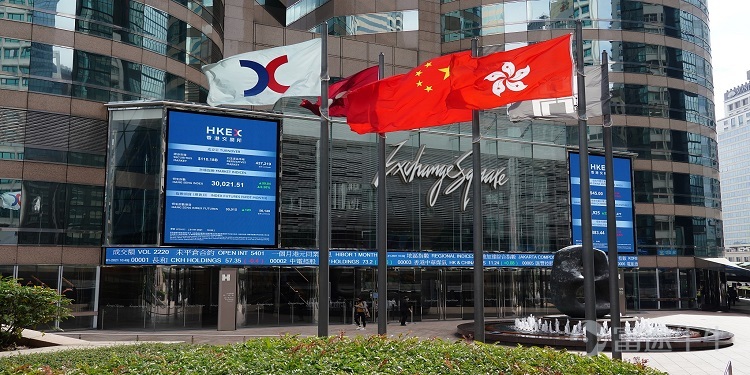
On July 28, the Hong Kong stock market saw some recovery from the recent plunge, with the Hang Seng Index, Hang Seng Tech Index, and CSI Hong Kong China Enterprises Index all rebounding, closing up by more than 1.5%.
Since July 26, the Hong Kong stock marketThe education sector continued its collective plunge, while new economy stocks also suffered heavy losses, with consumer and pharmaceutical sectors experiencing sharp sell-offs; only a few sectors like semiconductors maintained upward momentum.and othersIn the US stock market, education stock prices plummeted dramatically, with several popular Chinese concept stocks retreating over 10% in two days.
![Background of the Incident On July 28, the Hong Kong stock market rebounded compared to the previous sharp declines, with the Hang Seng Index, Hang Seng Tech Index, and CSI HK Enterprises Index all rising by more than 1.5%. Since July 26, the education stock sector in Hong Kong stocks continued to experience a collective plunge, while new economy stocks also suffered significant losses. Consumer goods and pharmaceutical sectors were hit hard, leaving only a few sectors like semiconductors maintaining an upward trend. Meanwhile, in the U.S. stock market, education stock prices plunged dramatically, with several popular Chinese concept stocks retreating over 10% in two days. Fellow investors are paying close attention Following the collective crash of education stocks in Hong Kong and U.S. stocks on July 23 (last Friday), market panic sentiment escalated over the weekend, leading to a broad selloff on July 26 (Monday) and July 27 (Tuesday). In just three trading days, the Hang Seng Index dropped nearly 10%, and the Hang Seng Tech Index fell over 16%. The extreme market conditions quickly sparked discussions among fellow investors about changes in investment logic and strategies.[Thinking Face][Thinking Face]. What valuable insights do fellow investors have?[Wow][Wow]? Let’s follow Hot Topic Girl to take a look.[Drool][Drool]~ [Microphone]How do you view this wave of market decline? [Microphone]What do fellow investors think about the view that 'prioritizing manufacturing and de-emphasizing services' will become the main investment theme for the next 3-7 years? [Microphone]Under intensified market volatility, what investment strategies do you have? How do you view this wave of market decline? @心中無股 : Success and failure often have the same cause. Although past criticisms cannot be directly applied this time, it...](https://nnqimage.futunn.com/16274766156076-999987-web-e3f1bab223caf8a8.jpg/big?imageMogr2/ignore-error/1/format/webp)
Fellow investors are paying close attention
Following the collective crash of education stocks in Hong Kong and US markets on July 23 (last Friday), market panic sentiment escalated over the weekend, leading to a full-scale decline on July 26 (Monday) and July 27 (Tuesday). In just three trading days, the Hang Seng Index fell nearly 10%, and the Hang Seng Tech Index dropped over 16%. This extreme market movement quickly sparked discussions among fellow investors about market investment logic and strategies.、Strategyand response strategies. What insights do fellow investors have?? Let’s follow Hot Topic Girl to take a look.~
What insights do fellow investors have?? Let’s follow Hot Topic Girl to take a look.~How to interpret this wave of market decline?Regarding the view that 'emphasizing manufacturing and de-emphasizing services' will become the main investment theme for the next 3-7 years, what do fellow investors think?What investment strategies do you have amid the increasing market volatility?How do you view this wave of market decline?
Success and failure often stem from the same source. While past criticisms cannot be directly applied to the current situation, the recent downturn in Hong Kong stocks is fundamentally still due to issues with underlying assets and capital flow.
First, let's talk about the underlying assets. In recent years, Hong Kong stocks have embraced a wide range of new economy leading enterprises. Although it's certainly beneficial in the long run, in the short to medium term, it’s hard not to see Hong Kong as somewhat of a 'scapegoat' for these companies.
Now, regarding capital flow. The bigger issue with Hong Kong stocks lies in marginal influences. Traditional institutional investors in the Hong Kong market are mostly long-term funds. It can be said that much of the gains in Hong Kong stocks over the past few years were driven by the influx of southbound capital. However, once this capital becomes hesitant, the shallow liquidity of Hong Kong stocks makes it vulnerable to collapse, like a kite losing its support.
@股市药丸 :The essence of timing strategies is to conduct qualitative analyses of trading behavior, simulating the inner thoughts of market participants. Even the best stocks getting hammered indirectly indicates that various funds in the market are feeling helpless and even desperate. Therefore, the correction of strong stocks often signals a potential bottoming-out phase in the market.
@17488193 :Whether it’s a shift in style or a change in belief, both tell us an age-old truth: 'What goes up must come down.' While everyone in the capital markets understands this principle, during the investment process, greed and fear often cloud judgment. When the market develops a certain belief, it starts viewing it as a profitable 'track,' and the profit-driven reinforcement strengthens trend-based investing. Greed for returns pushes this style to extremes, causing valuations to become inflated. Once a valuation bubble forms, it indicates the 'track' has reached its end, forcing funds to reverse course—this is the process of deflating the bubble. The pullback in stock prices reflects the disappearance and collapse of that belief.
@额外收益 :There are three main reasons for the sharp market downturn. First, recent regulatory tightening in key sectors such as education, internet, and real estate has led to a significant drop in market risk appetite. Second, some companies reported weaker-than-expected interim results, disproving the logic that high growth could offset high valuations. This caused valuation corrections in still-high sectors like food and beverage, and leisure services, with funds shifting from consumption to growth stocks, exacerbating market divergence. Third, external headwinds remain, with limited progress seen in the ongoing Sino-US talks in Tianjin.
What do you think about the viewpoint that 'prioritizing manufacturing while de-emphasizing services' will become the main investment theme for the next 3-7 years?
@翻倍集团 :China’s industrial structure is undergoing adjustments, and the focus of the stock market is shifting. Traditional tertiary industries and services are slowly transitioning towards advanced intelligent manufacturing. Companies without core technologies or high R&D investment will gradually be phased out, while those with cutting-edge technology—even globally leading tech—are receiving strong capital interest. Look at how legacy leaders like Ping An, Vanke, and Gree are transforming into new leaders like CATL, Zhuoxin Microelectronics, Will Semiconductor, and BYD. The rise of new manufacturing giants across new materials, new technologies, new intelligence, and new consumption represents a complete industrial upgrade and points to China’s future development direction.
@英雄中华 :Historical experience tells us that we need to guard against right deviations, which means overdoing something in one aspect; but more importantly, we need to prevent left deviations, which involve negating an aspect and falling into a closed and conservative state. Focusing on the real economy is correct as it is the ballast stone of China's economy, but this should not lead to the denial of the virtual economy. The virtual economy adds value to the real economy, and without the integration of both, we will forever remain at the bottom of the global economic ladder, exploited by others with high profits taken by them. The virtual economy should not only be unshakable but also vigorously developed. Previously, the virtual economy was developing normally while the real economy lagged behind. Now, emphasizing the real economy must not come at the expense of suppressing the virtual economy!
What investment strategies do you have amid heightened market volatility?
@粽哥 :The ones unduly punished are naturally those excellent companies and core assets with strong performance and solid fundamentals. Where are the future investment opportunities? One must follow four words: go with the trend. Where is the 'trend'? Economist Ren Zeping has provided direction.。Ultimately, it boils down to four words: technological innovation. This is also why recently sectors like chips and third-generation semiconductors...、New energy and automotive parts supply chains...and othersHave risen instead of fallen for fundamental reasons.
@27757962Tencent's mediocre stock performance this year is actually easy to explain, as it is an investment company with numerous platform investments. As these platforms slow in growth, Tencent naturally feels the impact, but the long-term logic remains solid. Buying on dips is still worthwhile because the strong tend to stay strong, an eternal law. As for Meituan, as a company with millions of delivery drivers, it still needs to shoulder corporate responsibility and cannot simply shift the burden onto the market and society through outsourcing riders. Buying on dips remains worthwhile.
@郭二侠鑫金融 :Novices die from chasing highs, veterans from trying to catch bottoms, and experts from leveraging too much! For most ordinary investors, the correct approach to stock trading is — buy some index funds, using the 'lazy person’s stock trading method' to outperform those hardworking little bees in the stock market. ETF index funds are passively managed, completely replicating the index components as the fund portfolio, thus having no relation to the fund manager's skill level. Broad-based indexes can be invested in without much thought since indices inherently retain the strong and weed out the weak. Industry indexes require attention to sector development prospects and valuations.
Note: The above insightful perspectives were selected based on comprehensive consideration of content views and interaction levels. To ensure smooth reading, minor edits have been made to some fellow investor comments without altering the original viewpoints. If you have any concerns, please feel free to contact Today's Popular Feedback at any time.
The selected fellow investors will receive a reward of 188 points for 'Excellent Comment.' We welcome more fellow investors to follow community hot topics, participate actively, and share your insightful perspectives!
Risk Disclaimer: The above content only represents the author's view. It does not represent any position or investment advice of Futu. Futu makes no representation or warranty.Read more


Comments (7)
to post a comment
43
50