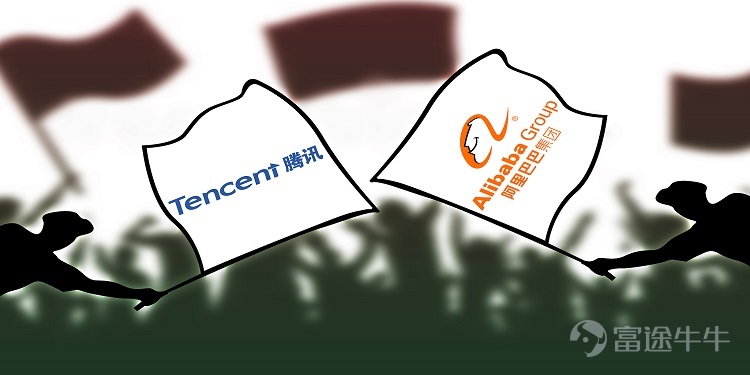

消息稱阿里、騰訊考慮互相開放生態系統

[Fellow Investor Discussing Hot Topics] Reports suggest that Alibaba and Tencent are considering opening up their ecosystems to each other
Background of the incident
On the evening of July 14, according to Dow Jones, sources reported that Alibaba and Tencent are considering opening up their ecosystems to each other. Alibaba's initial measures may include integrating WeChat Pay into Taobao and Tmall, while Tencent might allow Alibaba's e-commerce information to be shared on WeChat or permit WeChat users to access some of Alibaba’s services via mini-programs.
![Background of the Event On the evening of July 14, according to Dow Jones, insiders said that Alibaba and Tencent are considering opening up their ecosystems to each other. Alibaba's initial measures may include integrating WeChat Pay into Taobao and Tmall; while Tencent may allow Alibaba's e-commerce information to be shared on WeChat, or allow WeChat users to access some of Alibaba’s services via mini-programs. Market Impact Influenced by the news, Alibaba opened more than 3% higher that night, and Tencent's ADR opened more than 2% higher. On July 15, both Tencent and Alibaba closed higher in the Hong Kong stock market. Fellow investors are all paying attention The rumor about Tencent and Alibaba considering opening up their ecosystems quickly became a hot topic among fellow investors. As the two giants of the Chinese internet, the 'handshake' between Tencent and Alibaba is like throwing a huge stone into a seemingly calm lake, creating ripples that could become overwhelming waves for other companies. What insights do fellow investors have?[Wow][Wow]? Let’s follow Hot Topic Girl to take a look.[Blowing Kisses][Blowing Kisses]~ [Microphone]The Past and Present of Tencent and Alibaba Considering Opening Up Their Ecosystems [Microphone]If they open up their ecosystems to each other, what will be the impact on the two giants and other companies? [Microphone]How to view the two giants considering opening up their ecosystems to each other? The Past and Present of Tencent and Alibaba Considering Opening Up Their Ecosystems @晚点LatePost : In 2013, Alibaba initially blocked WeChat citing user security concerns. At the time, when users clicked on Taobao links within WeChat, they were not directed to shopping pages but instead to...](https://nnqimage.futunn.com/16264284415263-999987-web-dffc3bd92e1a69a7.jpg/big?imageMogr2/ignore-error/1/format/webp)
Market Impact
Following this news, Alibaba opened over 3% higher that night, while Tencent's ADR opened over 2% higher. On July 15, both Tencent and Alibaba shares closed higher in the Hong Kong stock market.
Fellow investors are all paying attention
The rumors about Tencent and Alibaba considering opening up their ecosystems quickly became a hot topic among fellow investors. As two giants of the Chinese internet, the 'handshake' between Tencent and Alibaba is like throwing a massive stone into a seemingly calm lake, creating ripples strong enough to become overwhelming waves for other companies. What insights do fellow investors have on this? ? Let’s follow Hot Topic Girl to take a look.~
? Let’s follow Hot Topic Girl to take a look.~The history behind Tencent and Alibaba’s consideration of opening up their ecosystemsWhat would be the impact on these two giants and other companies if they open up their ecosystems to each other?How to view the consideration of opening upMutualtheir ecosystems?The history behind Tencent and Alibaba’s consideration of opening up their ecosystems
In 2013, Alibaba first blocked WeChat citing the protection of user security. At that time, when users clicked on Taobao links in WeChat, they were directed not to a shopping page but to the mobile Taobao download page. Unwilling to direct traffic to its competitor, Tencent quickly responded by stopping the redirection of links to the download page within WeChat, instead showing a message stating that the link 'has been blocked by Taobao.' The subsequent countermeasure was WeChat blocking Taobao's shopping links. Taobao responded with 'Taobao code.' In 2018, WeChat upgraded its external link guidelines, one of which was to restrict the spread of special identification codes and code information; external speculation suggested this move was targeting Taobao.
What would be the impact on the two giants and other companies if their ecosystems were to open up to each other?
If Alibaba and Tencent were to open up their ecosystems to each other, it might be an active dismantling of barriers. This is in contrast to passive actions under mandatory requirements from external forces, resulting in fewer losses for both sides. The mutual openness between Alibaba and Tencent would be beneficial for the internet industry, promoting competition and supporting innovation.
For Alibaba, the advantages outweigh the disadvantages. The origin of e-commerce is traffic, and the end point of traffic is e-commerce. Since Alibaba lacks traffic while Tencent, especially WeChat, has China's largest traffic pool, Alibaba would naturally be willing to pay a higher price to acquire this traffic.
For Tencent, the use of WeChat Pay on Alibaba’s platforms can only result in considerable incremental growth but won’t affect the core business logic. In the long term, however, it would be an active embrace of creating a healthier competitive environment as ByteDance's rise has already made Tencent feel the crisis.
@王春龙 :Some media outlets believe that if Alibaba and Tencent open up their ecosystems, PDD Holdings could suffer the most because its product, which relies on social sharing, would lose its previous advantage in mobile traffic and social sharing. However, the benefits of the WeChat ecosystem have almost been fully exploited by PDD Holdings in recent years, so even if there is an opening, it won't be significantly impacted. Even if WeChat stops blocking Taobao and Tmall, it wouldn't make much difference to PDD Holdings.
@生财有术事务所 :If the speculations turn out to be true, then both parties are really ceding previously fiercely defended battlegrounds to allow the other side to enter, presenting new growth points for both. When the top player and the second-largest shake hands, what do the third, fourth, fifth, and sixth players think? Exactly, JD.com fell 2.4% pre-market, while PDD Holdings dropped 6%.
How to view the consideration of the two giants toMutualopen up their ecosystems?
All along, Alibaba and Tencent have dominated their respective ecosystems without intersection, providing a poor experience for users. Alibaba initially relied on Taobao and gradually expanded into e-commerce platforms like Tmall, Alibaba, and AliExpress. Through a series of acquisitions and investments, it has occupied a significant share in the e-commerce sector and holds substantial influence domestically. Tencent mainly started with QQ and later developed WeChat due to internal competition, subsequently launching WeChat Pay. Through a series of acquisitions and investments, it has garnered over a billion highly engaged users, making it an undisputed giant in personal social networking and entertainment.
The two companies have always been in competition, building their own ecosystems while consistently trying to encroach on each other's territory, only to fail every time. Now that they’ve reached a cooperative agreement and opened up their ecosystems to each other, it is undoubtedly good news for users. The two internet giants can continue to focus on their respective areas of expertise.
@翻倍集团 :JD.com faces little pressure, PDD Holdings has suffered a major blow, Alipay is faltering somewhat, and Tencent Pay maintains its leading position. The Taobao ecosystem can remain at the top of the e-commerce industry. Overall, Alibaba has unlocked the largest traffic entry point in China’s domestic internet, while Tencent has secured the biggest channel connecting e-commerce to customers' wallets. In terms of business models, Tencent’s decentralized, open investment approach has become mainstream, whereas Alibaba’s unified strategy has ultimately fallen behind.
This event holds epoch-making significance, signaling that China’s internet industry is moving away from the zero-sum game era into one of coexistence and shared prosperity. This is a positive development for both Alibaba and Tencent themselves, as well as for millions of users.When Alibaba and Tencent join hands, the competition among internet companies will no longer be a capital-driven land grab, but rather a game truly focused on serving end-users.With the onset of diversified competition, players are no longer solely focused on expanding and strengthening their own ecosystems but are instead starting to think about how to provide better products and services to users.
Note: The above insightful perspectives were selected based on comprehensive consideration of content views and interaction levels. To ensure smooth reading, minor edits have been made to some fellow investor comments without altering the original viewpoints. If you have any concerns, please feel free to contact Today's Popular Feedback at any time.
The selected fellow investors will receive a reward of 188 points for 'Excellent Comment.' We welcome more fellow investors to follow community hot topics, participate actively, and share your insightful perspectives!
Risk Disclaimer: The above content only represents the author's view. It does not represent any position or investment advice of Futu. Futu makes no representation or warranty.Read more


Comments
to post a comment
21
19