【有獎】下半年港股市場走勢你怎麽看?

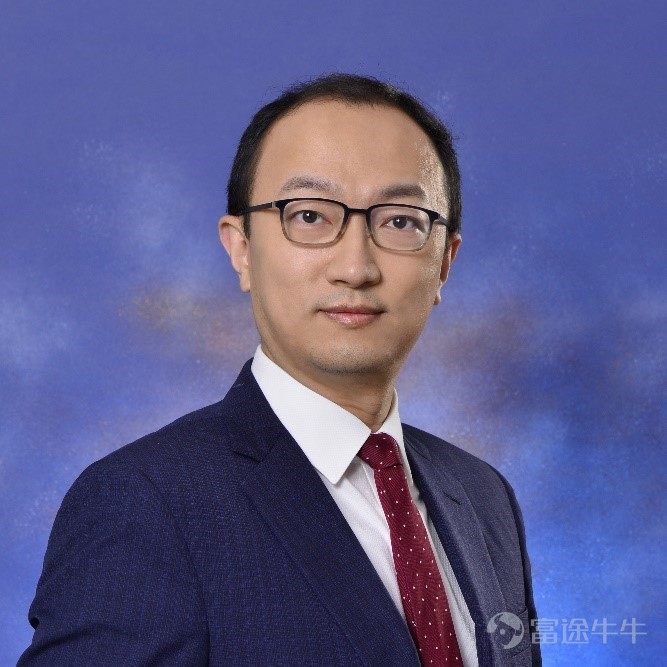
<五星级CIO-泰康资产香港基金经理陈济专访>
For Chinese fund managers in the first half of this year, the operation was quite challenging. Since mid-February, the Chinese and Hong Kong stock markets have faced retracement pressure. During this period, investors have worried not only about inflation and the shift in monetary policies of central banks in China and abroad, but also about some industries facing regulatory pressure, adding to stock market volatility. As of June 30th, the index constituents, including both domestic and foreign Chinese enterprises, rose by 2.33% in the MSCI China 10/40 index. During this period, the Morningstar China Fund Classification averaged 3.13%, while the Taikang Asset Hong Kong Fund managed by Chen Ji, Chief Investment Officer of Taikang Asset (Hong Kong), defied the trend with a rise of 14.57%, outperforming its performance benchmark by 12.24%, ranking among the top in its category of funds. Its performance has been ranked first among similar funds over the past year and is also rated the highest five-star grade by Morningstar. Below is an exclusive interview with Mr. Chen Ji, discussing his trading principles and outlook on the Chinese stock market.

Performance of Taikang Asset Hong Kong Fund

(Data Source: Taikang Asset Hong Kong, Bloomberg, Similar fund series refer to funds that can be sold in Hong Kong under the Morningstar China stock fund classification)
As of June 30, 2021; * Class I Hong Kong dollars cumulative; Date of establishment: February 15, 2017; The reference index was changed from MSCI China Index to MSCI China 10/40 Index in 2020; Past performance is not indicative of future performance. Investors may not necessarily recover all of their invested capital.
Q: The fund you manage has performed exceptionally well. Where does the excess return mainly come from?
A: Bottom-up stock selection has always been the main source of medium to long-term excess returns for the fund. Of the 13% excess returns in the first half of the year, over 80% came from stock selection. Especially after the lunar new year, when the market lacked clear trends and continued the pattern of range volatility, in a situation where the expected index space was limited, I paid special attention to structural opportunities and the safety margin of stocks, considering the confidence in company performance growth, reasonable valuation, and the long-term attractiveness of the industry they belong to.
Despite the fact that the consumer discretionary sector, which had the highest weightage in the index in the first half of the year, was the worst-performing sector, we were able to outperform by heavily holding the leading companies in the sportswear sector. We also did not miss out on the strong-performing healthcare sector. Furthermore, companies related to photovoltaics supported by carbon neutrality policies, and industry leaders in the consumer electronics, semiconductor, and software services (saas) sub-sectors under the information technology sector, all made positive contributions to performance.
Q:Q: This year, what changes have occurred in the portfolio allocation?
A: Since 2019, we have observed changes in the market structure, with new economy sectors such as information technology, communication services, and consumer discretionary consistently holding a higher proportion in the investment portfolio. We have been overweight in information technology and communication services, with sub-industries under information technology including hardware and software, while under communication services, apart from blue-chip Tencent, it also includes telecom and other media-related companies. Although we have long been overweight in these two major sectors, we also adjust positions within their sub-industries to find the best investment opportunities.
It is worth mentioning that value stocks like banks and insurance, although they have been in a very cheap state for a long time and their dividends are attractive, still lack long-term growth potential compared to growth stocks. Some stocks are prone to falling into value traps. We saw at the beginning of the year that this market style switch was more pronounced than the previous two years, and with the economic recovery favoring banks and the strong performance supporting insurance at the beginning of the year, we quickly added financial stocks to the portfolio. However, the subsequent expected returns may be relatively limited. Therefore, we chose to take profits on these Beta plays and increase positions in other Alpha stocks with more long-term growth potential.
Q:Your operation seems quite flexible, could you talk about your investment style?
A: As mentioned before, I highly value judgment of the market environment, adapt and adjust constantly through continuous learning to cope with the structural changes in the market, to avoid falling into the trap of a single investment style, such as growth or value. As an investment manager, I adhere to the investment philosophy of 'maintaining normality and being extraordinary.'
If investment is likened to a long-term war, we need to identify which are the 'normal soldiers' that can benefit from the medium to long-term trends, excavate high-quality companies within them to form the core part of the investment portfolio. Even if there are fluctuations in stock prices during this period, there is no need to overly worry because these Alpha stocks have the opportunity to generate excess returns in the medium to long term, and most of them exist in the new economy sector. On the other hand, in order to maximize total returns, we also need some 'surprise soldiers' to win the battle, grasping the market opportunities brought by short to medium term cycle turning points or event-driven market opportunities with reverse thinking. For example, as mentioned earlier, the layout of some value stocks this year has seized good trading opportunities.
In exploring investment opportunities, our entire team at Taikang emphasizes what we call 'left-side research and layout,' actively searching for opportunities not fully recognized by the market. This includes different reverse opportunities, such as investment opportunities related to new energy, which we may research years ahead of the market, as well as opportunities aligned with the market direction but have a deeper and more certain understanding, such as sports apparel, innovative pharmaceuticals. Personally, due to my keen observation and ability to make connections from details in life, this may also be one of the reasons for being able to discover good investment opportunities early.。
Another point worth emphasizing is that in terms of the dimensions of investment, we believe that the medium term is the most important dimension to discover opportunities. Because buyers in the short term rely on deep data mining to make the market increasingly efficient and opportunities become fewer. At the same time, unlike the past large cycles, the current non-index development of technology and the Internet of Things gradually transform the economy into a super complex network. The characteristic of a complex network is the emergence of various unpredictable self-emergent phenomena, so in the long term, the market is unpredictable. In fact, this is also reflected in the performance of funds. In recent years, there has been an emphasis on the strategy of long-term holding (buy and hold). If falling into the value trap, it is very difficult to adapt to the changes in the entire market structure. However, a strategy of excessive trading may also lead to the fate of chasing highs and selling lows. I think this is a clear distinction between us and other foreign or Chinese institutions.
Q:How do you reduce the magnitude of drawdowns in risk control?
A: Firstly, at the stock selection level, I prefer companies that are growth-oriented but reasonably valued (Growth At Reasonable Price, GARP) or good companies that are not expensive. We focus heavily on fundamental research of companies, in addition to competitiveness, moats, sustainable growth analysis, the research team must also make forecasts on the ratos of rise and fall for each covered company, which serves as a reference for worthiness, as well as risk analysis to help portfolio managers avoid possible underperforming stocks.
On the other hand, our proprietary FVM model covers in-depth research on fundamentals, valuations, and momentum, through collaboration between the algo team and economists, provides top-down recommendations on medium-term asset allocation, providing a reference framework for portfolio managers to capture turning points from a medium-term perspective. If there are signals that require hedging, we can also hedge through futures contracts to avoid short-term market risks, while still maintaining a portion of the investment portfolio to create Alpha.
Through active management and balanced portfolio risk, we actively seize individual stock opportunities, especially through in-depth team research, leading the market to explore investment opportunities with long-term explosive stock price potential. The active position of the investment portfolio is currently above seventy percent, including a significant proportion of non-index stocks, but maintaining reasonable overall tracking error level, in order to outperform the benchmark index significantly in bull and volatile markets, control drawdowns in bear markets similar to the market, avoiding extreme ups and downs.
Q:Where do you see the opportunities and risks in the Chinese stock market in the second half of the year?
A: Looking back at our forecast for the whole year at the beginning of the year, at that time we expected 2021 to be a volatile market or a small index market for the year. In the first quarter, influenced by the spring frenzy, we will have a more positive position, if there is pressure from rising costs, we may slightly reduce positions in the second and third quarters or pay more attention to the safety margins of individual stocks. Looking at it now, this idea has not changed much. Talking about risks, although the recent unexpected decline in US Treasury yields surprised the market, the Fed's discussion on tapering bond purchases at Jackson Hole could still bring some volatility to the market.
On the other hand, if US Treasury yields continue to hover at low levels, does it also imply concerns about the extent of economic cooling, which is also worth paying attention to. Although the recent macroeconomic data released by the US and China have shown marginal slowdown, easing market concerns about premature tightening, it is still better to be cautious. If the slowdown in economic growth is too sharp or too large, it is not good news for the stock market. We still need to closely monitor inflation expectations, US Treasury rate trends, and the evolution of differences in economic cycles among major economies, and be alert to market volatility risks that may arise.
Although the market volatility in the third quarter may increase, the structural industries, thematic opportunities, and individual stock Alpha opportunities from the bottom up are still there. Despite regulatory risks that may affect short-term market sentiment, the valuation has become relatively attractive since the correction after the lunar new year. In the context of supporting the healthy development of industries and promoting innovation, once the rectification activities come to an end, it will also become a catalyst for related industries. Therefore, there is now even less reason to be overly pessimistic about growth stocks that were considered core assets just a few months ago. Especially considering that the market's outlook for corporate earnings in 2022 is relatively positive, when investors move past the fear and concerns about the shift in monetary policy, their focus may return to assessing the fundamentals for the coming year in the fourth quarter.
Disclaimer:
• Unless otherwise stated, all information contained in this report is as of the date listed in the report.
• The above content is for reference purposes only, intended for general reading and not considering any specific investment objectives, financial situation, or any specific needs of any particular recipient. It should not be considered as advice, an offer, or a solicitation to buy or sell any investment products.
• This document is prepared by Taikang Asset Management (Hong Kong) Co., Ltd. ("Taikang Hong Kong") and has not been reviewed by the Securities and Futures Commission.
• Any research or analysis used in the preparation of the above information was obtained by Taikang Hong Kong for its own purposes and purposes and is from sources believed to be reliable as of the date of this document; however, no statement or warranty is made regarding the accuracy or completeness of data from third-party sources.
• Any forecasts or other forward-looking statements about future events or performance may not be indicative and may differ from actual events or results. Any opinions, estimates, or forecasts are subject to change without prior notice. Taikang Hong Kong shall not be liable for any losses resulting from the use of this material.
• This document and the data contained herein may not be copied, distributed, or transmitted to anyone without the prior written consent of Taikang Hong Kong. This document and its data may not be distributed or published in any jurisdiction where it is prohibited.
The views, recommendations, suggestions, and opinions in this report may not necessarily reflect the position of AIA Hong Kong and are subject to change at any time without notice. AIA Hong Kong also disclaims any responsibility for providing updates on any information or opinions.
Investment involves risks. Past performance is not an indicator of future performance.
Before making investment decisions, you should consult your investment advisor.
Risk Disclaimer: The above content only represents the author's view. It does not represent any position or investment advice of Futu. Futu makes no representation or warranty.Read more


Comments (2)
to post a comment
41
241