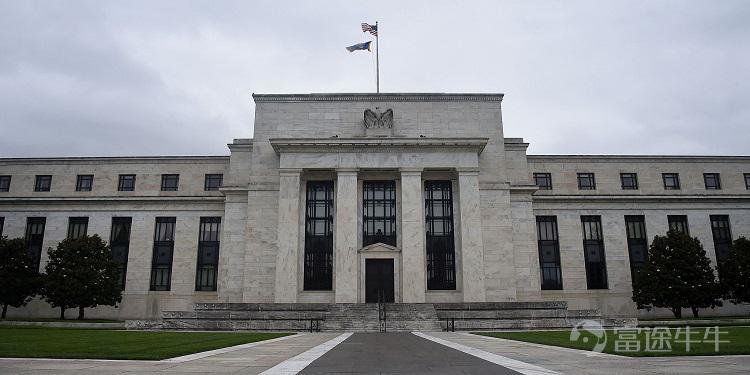

What signals have been released by many Fed officials in their speeches?

[Fellow Investors Discuss Hot Topics] What signals were released in the speeches by multiple Fed officials?
Background of the Event
Since June 29, multiple Fed officials, including Barkin and Kaplan, have commented on the prospects of the U.S. economy and monetary policy. Following the June FOMC interest rate meeting and Powell’s congressional testimony, the market has increasingly strengthened its view of the Fed's hawkish stance, thus focusing on statements from various Fed officials to speculate on the direction of U.S. monetary policy.
![Background of the Event Since June 29, multiple Fed officials, including Barkin and Kaplan, have commented on the prospects of the U.S. economy and monetary policy. Following the June FOMC interest rate meeting and Powell’s congressional testimony, the market has increasingly strengthened its view of the Fed's hawkish stance, thus focusing on statements from various Fed officials to speculate on the direction of U.S. monetary policy. Market Impact FOMC voter Barkin, Fed official Kaplan, and others made remarks, combined with the release of non-farm payroll economic data, boosting market optimism which pushed the dollar higher. The Nasdaq hit a new high and then saw minor pullbacks in the last two days, while the S&P 500 index reached record highs for several consecutive days, and the Dow Jones Industrial Average closed higher for multiple days. Fellow investors are all paying attention As the U.S. economy steadily recovers and concerns over high inflation grow, the market is becoming increasingly sensitive about when the Fed will shift its monetary policy. Therefore, recent speeches by Fed officials have become one of the hot topics in the Fellow Investor community. What insights do Fellow Investors have? Let’s follow Hot Topic Girl to take a look.[Drool][Drool]~ What is the current system of the Fed's FOMC? @熔断大师傅: The Federal Open Market Committee (FOMC) of the Federal Reserve consists of seven members of the Board of Governors and five of the twelve regional Fed presidents. Among the regional Fed presidents, the New York Fed president is a permanent voting member like the governors, while the other four are rotating voters, changing annually. In 2021, Richmond Fed President Barkin and others will no longer have voting rights, but they still...](https://nnqimage.futunn.com/2021070200581640c04900b3053.jpg/big?imageMogr2/ignore-error/1/format/webp)
Market Impact
FOMC voter Barkin, Fed official Kaplan, and others made remarks, combined with the release of non-farm payroll economic data, boosting market optimism which pushed the dollar higher. The Nasdaq hit a new high and then saw minor pullbacks in the last two days, while the S&P 500 index reached record highs for several consecutive days, and the Dow Jones Industrial Average closed higher for multiple days.
Fellow investors are all paying attention
As the U.S. economy steadily recovers and concerns over high inflation grow, the market is becoming increasingly sensitive about when the Fed will shift its monetary policy. Therefore, recent speeches by Fed officials have become one of the hot topics in the Fellow Investor community. What insights do Fellow Investors have? Let’s follow Hot Topic Girl to take a look. ~
~
~What is the current system of the Fed's FOMC?
@熔断大师傅 :The Federal Open Market Committee (FOMC) of the Federal Reserve consists of seven board members and five of the twelve regional Federal Reserve Bank presidents. Among the regional Fed presidents, the president of the New York Fed is a permanent voting member, similar to the governors, while the other four are rotating voters, changing annually.In 2021, rotating voters like Richmond Fed President Barkin will no longer have voting rights, but they will still attend FOMC meetings and participate in policy discussions. Although the rotation of voting members rarely has a significant impact on the Fed's policies, voting members attract more market attention than non-voting members because if they dissent on decisions, their objections are formally recorded at interest rate meetings; their opinions expressed in public also receive more attention from investors.
What are the main viewpoints of various Fed officials?
@冷血玩家 :President of the Richmond Federal ReserveBarkin stated that although the inflation rate has already exceeded the Fed’s 2% target level, it is necessary to see further employment growth before scaling back bond purchases. He said he does not believe there are 'structural' reasons hindering the recovery of employment, and expects strong job growth in August and September.Minneapolis Federal Reserve President Kashkaristated: 'There is still a long way for the U.S. economy to fully recover from the pandemic’s impact, but I expect employment to increase after the summer. I anticipate the labor market will be very strong in the fall.'
@富途资讯-股海阿婆主 :Robert Kaplan, President of the Federal Reserve Bank of Dallas, stated, 'The tapering of asset purchases should be gradual. I hope the Fed can begin reducing the pace of asset purchases before the end of the year. Although next year's inflation rate will drop from 3.5% this year to 2.4%, the range of influence may be broader. Moreover, people have already noticed that these adjustments are coming, the only question is when.'
How to interpret signals released by Fed officials?
@27757962 :An 80% probability of a rate hike in November? Can the US stock market continue to rally before that? But will some institutions jump the gun? Pay attention to the volume-price relationship during the next new high. If prices rise but volume decreases, divergence becomes more apparent, it might be time to reduce positions and get ahead of the curve. Let the bullets fly for a while~
@上海滩她强哥 :The Federal Reserve unexpectedly showed a hawkish stance at the June meeting, catching the financial markets off guard, leading to a stock sell-off as funds rushed into US Treasuries for safety.In the Reuters poll from June 17 to 24, over 60% of fixed-income strategists (25 out of 41 analysts who answered an additional question) indicated that there could be significant selling in the global bond market over the next three months.
What is the impact of the signals released by the Federal Reserve on the market?
@紫荆财智 :The Federal Reserve's guidance on market expectations has somewhat alleviated panic. Learning from the 2013 'Taper Tantrum,' the Fed is very focused on ensuring policy does not make abrupt turns. Although the US Dollar Index rose rapidly after the June interest rate meeting, looking ahead, since the Fed has already set the tone for starting to discuss and implement tapering, the market currently expects the Fed to formally discuss tapering in Q3 this year and officially implement it by the end of this year or early 2022. The gap between future Fed actions and market expectations won't be too large, meaning even if the dollar rebounds, its upward trajectory will be more moderate.
Expectations of a Federal Reserve rate hike have stabilized. Even hawkish comments from Williams are unlikely to push gold out of its current range around $1,770. Moreover, non-farm payroll data coming on Friday may provide direction for gold prices, and barring any surprises, this could present a relatively low entry point for gold.
After all, the hawkish stance has already started to be priced into the interest rate market, and the timetable for advancing interest rate normalization is gradually becoming clearer:
The FOMC will discuss tapering in July, provide forward guidance at the September meeting, officially announce tapering of asset purchases between March and June 2022, and begin the first rate hike between March and June 2023.
Therefore, the precious metals rally you're waiting for is essentially a rebound; future gains in gold are not unanimously favored in the investment community. JPMorgan noted in its latest report that bullish sentiment towards gold and commodities has significantly declined.
How should we view and understand the current inflation situation?
@赚钱回家 :The massive amount of currency injected in the post-pandemic era is hard to retract. Quantitative easing policies address symptoms but not root causes, and demand driven by debt is unlikely to create genuine prosperity.Considering the special circumstances of 2020, the second quarter might be the peak of inflation for the year, with a slowdown in the third quarter, followed by a plateau. Before the end of the year, inflation will likely remain above 3%. In the medium to long term, taking into account the forces of technological progress, debt burdens, and monetary policy tightening, we tend to believe that the probability of sustained inflation above 4% is low unless extreme situations like large-scale war occur. Currently, foreseeable uncertainties still stem from currency; if inflation spirals out of control, it would signify the resurgence of monetarism.
Note: The above insightful perspectives were selected based on comprehensive consideration of content views and interaction levels. To ensure smooth reading, minor edits have been made to some fellow investor comments without altering the original viewpoints. If you have any concerns, please feel free to contact Today's Popular Feedback at any time.
The selected fellow investors will receive a reward of 188 points for 'Excellent Comment.' We welcome more fellow investors to follow community hot topics, participate actively, and share your insightful perspectives!
Risk Disclaimer: The above content only represents the author's view. It does not represent any position or investment advice of Futu. Futu makes no representation or warranty.Read more


Comments (3)
to post a comment
16
57