

[Awarded] Looking ahead to Asian high yield bond

Live Minutes (Chinese) | Hardcore insights! Where are the opportunities for high yield market going? (Outlook)
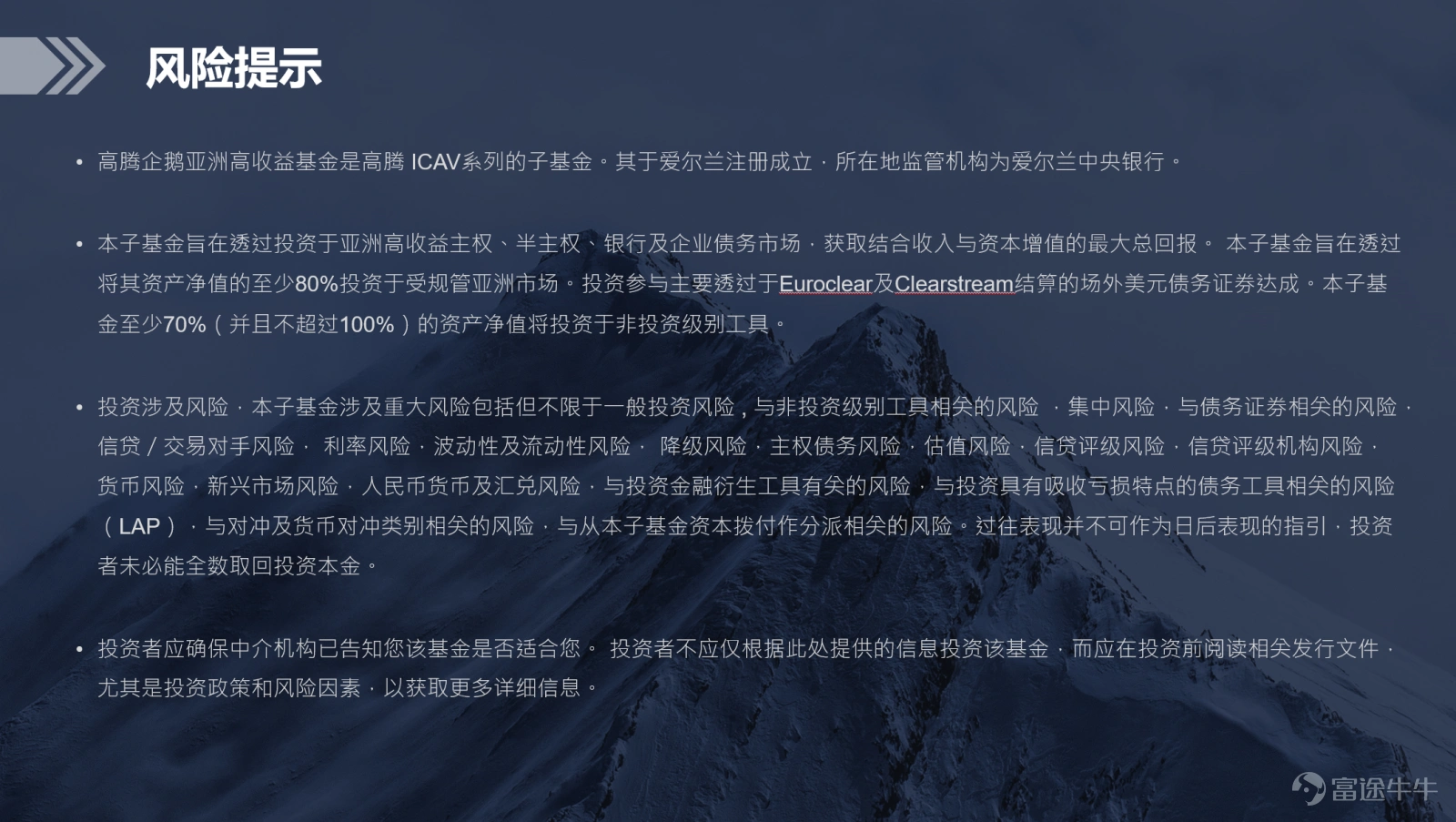
$GaoTeng Penguin Asian High Yield Fund (IE00BLDGL423.MF)$ $GaoTeng Penguin Asian High Yield Fund (IE00BLDGL753.MF)$
[Fixed Income Summit Dialogue: Grasp the Extraordinary Year and Tap into High Yield]
Guest lineup.
Hou Mingwei, Director and General Manager of Gao Teng International, Head of Fixed Income Investment
Zhang Jihao, S&P Global Ratings Chief for Greater China Enterprise Ratings
Li Chao, Executive Director and Head of Global Financial Markets Division at China CITIC Bank (International)
Deng Haili, Credit Bond Trader at Standard Chartered Bank (Hong Kong)
Market Outlook for Asia's High Yield Market in the Second Half of the Year / Future Year
I. The scale of first-tier market bond issuance is expected to remain the same, while the supply of non-real estate sectors may increase
Li Chao:In 2019/2020, there will be an issuance of around 90-100 billion US dollars. In the first half of this year, including one-year bonds, there was an issuance of around 50-60 billion US dollars. The issuance in the second half of the year is relatively stable. It is expected that if there are no major market fluctuations and risk events, the overall supply for the year will reach a similar level as last year.
What industries/themes are expected to drive growth in the primary market? Will there be a boom in ESG bond issuance?
Li Chao:The real estate sector is relatively stable, and it is expected to have limited growth as new borrowing is only allowed to repay old debts during regulatory approval.
Demand from non-real estate sectors is increasing, and it is expected that the supply in the non-real estate sectors will increase in the second half of the year, including the chemical industry, aluminum industry, car rental, etc. The issuance of ESG bonds will also increase in line with investor preferences. Currently, the issuance of green bonds as a whole accounts for about 3% of the total issuance in China, which is relatively low. It is believed that there is still room for development and growth in the future.
II. Market liquidity expectations for the second half of 2021
Based on comprehensive macro factors and your personal observations, do you expect the trading volume in the secondary market to be more active in the second half of the year? What factors will drive overall liquidity?
Deng Haili:In the second half of the year, newly-entered funds and the settlement of risk events will be beneficial to liquidity expectations.
1. Compared to previous years, the liquidity in the secondary market this year has relatively tightened.
As the gamma increases in the short term, the stock price fluctuates greatly, but you may actually lose money by selling shorter options (more suitable for moderate bullishness). The differences in monetary policies between China and the US have led to Asian investors becoming more cautious in their investment styles.
b. Several major risk events this year, as well as policy regulation in the domestic real estate industry, have led to a tightening of overall risk appetite. The trading style has shifted towards focusing on holding returns rather than pursuing trading gains.
c. Credit risk preference tends to be consistent, and credit differentiation is becoming more pronounced.
2. Overall, attention needs to be paid to the influx of new capital in the southbound bond channel in the second half of the year, corporate annual report performance, and the development of several key credit events, as well as the pace of the Federal Reserve's balance sheet reduction.
As the gamma increases in the short term, the stock price fluctuates greatly, but you may actually lose money by selling shorter options (more suitable for moderate bullishness). The influx of new capital helps to differentiate risk preferences.
b. The confirmation of performance can enhance investors' confidence in secondary market trading.
c. The landing of risk events can help stabilize overall market sentiment.
d. The confirmation of the Federal Reserve's balance sheet reduction speed can provide a more clear expectation for the capital trend, thereby smoothing the overall price fluctuations in the secondary market.
3. Federal Reserve interest rate hike expectations: Asian high yield can provide interest rate buffer.
In recent Federal Reserve meetings, there seems to be some changes in expectations for interest rate hikes. Mr. Hou, I would like to ask, what impact do you think inflation and interest rates will have on the Asian US-dollar bond market in the next year?
Hou Mingwei:Asian high yield's attractive credit spread can provide a buffer for interest rate hikes. Post-pandemic inflation trades are actually a good investment theme for cyclical credit.
Hou Mingwei: There are still many assumptions in the market. Looking back at 2008 and 2011, when oil prices skyrocketed to 120-140 yuan, the inflation pass-through effect was still limited. Currently, I agree more with the views of the Federal Reserve, believing it is just transitory inflation. Indeed, the dot plot shows that the Federal Reserve will raise interest rates twice by the end of 2023, but I believe it will not have a big impact on the high-yield sector in Asia.
First, the average duration of this asset class is only 2.3 years, relatively short, with little impact; second, the average credit spread of high yield in Asia is still ample, about 590 basis points, able to withstand moderate interest rate hikes, providing a buffer space for rate hikes. In addition, the global credit cycle has already entered a bullish phase, and trading on reflation is a very good investment theme worth paying attention to cyclically related sectors.
Four, Asia high yield risks and opportunities in the next 6-12 months
What kind of trend do you expect for the overall industry risk of Asian high yields in the next 6-12 months?
Zhang Jihao:It is expected that the Asian high yield market will continue to show a dualistic phenomenon in the near future. Well-established companies with good quality financing should not have major issues, such as companies with strong operations and steady cash flow management. However, companies with poor quality may continue to face financing risks, such as those that expand too rapidly but cannot support their funds and profits, with the possibility of downgrades or defaults.
The most important thing is that as long as investors have enough experience and decision-making ability, risks should be reasonable and controllable.
Which sectors do you think have the opportunity to become Rising Stars in the next 6-12 months?
Zhang Jihao: The performance differentiation of the issuer will become increasingly significant, and it is more important to pay attention to company choices now.
Zhang Jihao: The current market conditions are gradually easing the pressure of the epidemic and the withdrawal of government stimulus policies. Therefore, the risk of default by companies will shift from the market level to the company level. This means that what needs attention now is not macro strategies but company choices. Well-operated companies with good risk control will have outstanding performance in many industries, and the corresponding bonds will also have higher ratings and performance. Companies with poor operation and inadequate risk control may face downgrades and even default.
After a general rating adjustment, what kind of impact will there be on prices and operations in the secondary market?
Deng Haili:
1. Generally, rating upgrades and downgrades do not have a balanced impact on prices.
As the gamma increases in the short term, the stock price fluctuates greatly, but you may actually lose money by selling shorter options (more suitable for moderate bullishness). The conversion between investment grade and high yield has a significant impact on prices (investor type conversion).
b. The expected rating adjustment has a smaller impact on the secondary market price when there is an expectation and sufficient communication of the rating adjustment.
c. The impact of upward and downward adjustment. (Downward adjustment has a greater impact.)
2. Although the market price reaction will lead the rating adjustment, a large number of unilateral trade requests in the short term will still cause excessive price adjustments. At this time, it is a good trading opportunity for investors who have done their homework.
Hou Mingwei:To distinguish the source of market fluctuations, whether it is market risk caused by emotional influences or default risk. The default rate in Asia is relatively low compared to other emerging markets or developed countries, but one must still guard against sudden defaults. In specific arrangements, it depends on the entry point, maintain caution, avoid greed, focus on high-quality high-yield on one hand, and take advantage of opportunities to position some credits that have been incorrectly penalized.
V. Investment themes for high yield in Asia in the second half of the year

Hou Mingwei:
Theme One: Commodities welcome the next super cycle.A typical commodity cycle lasts for 10-20 years, with bull and bear market phases in each cycle. From approximately 1999 to 2019, commodities experienced a super cycle lasting for twenty years. We predict that the current bull market phase marks the start of the next super cycle for commodities. Mainly because China is the largest consumer of global commodities, although China's GDP trend growth rate is 6%, it contributes a significant 40% of the global growth margin. In the upcoming super bullish cycle, commodities are expected to perform well.
Theme Two:Exploring the potential of special credit with the potential for a "salmon turning over".In the black swan event last year, the industry's default rate has slightly increased. However, we cannot judge the whole situation based on a single event. We can explore bonds with doubling opportunities in the special credit. Especially in the second half of the year, with the opening of the refinancing window, more opportunities will arise. Therefore, we have also spent a lot of time researching and setting up in this area.
Theme Three:There are many headlines about Chinese real estate companies, and a "swinging sword" approach is needed.The overall systematic risks of the Chinese real estate market are controllable, but policies like the three red lines make investors feel uneasy. In addition, the sector is driven by public opinion, so a more tactical and flexible approach is needed for investment. When high-quality developers are affected by reputational risks from their peers and sell off, it is a good opportunity for selective allocation.
How to select an excellent high-yield bond product? What aspects should be considered?

Hou Mingwei: Investing in high-yield bonds requires stable steering and a broad-mindedness to navigate through bull and bear markets.
Hou Mingwei:Any investment in a product requires a comprehensive evaluation of long-term investment performance, investment philosophy, investment process, and management team. Investing in high yield bonds requires entrusting experienced individuals who have gone through multiple cycles, capturing profits while prudently managing risk budgets.
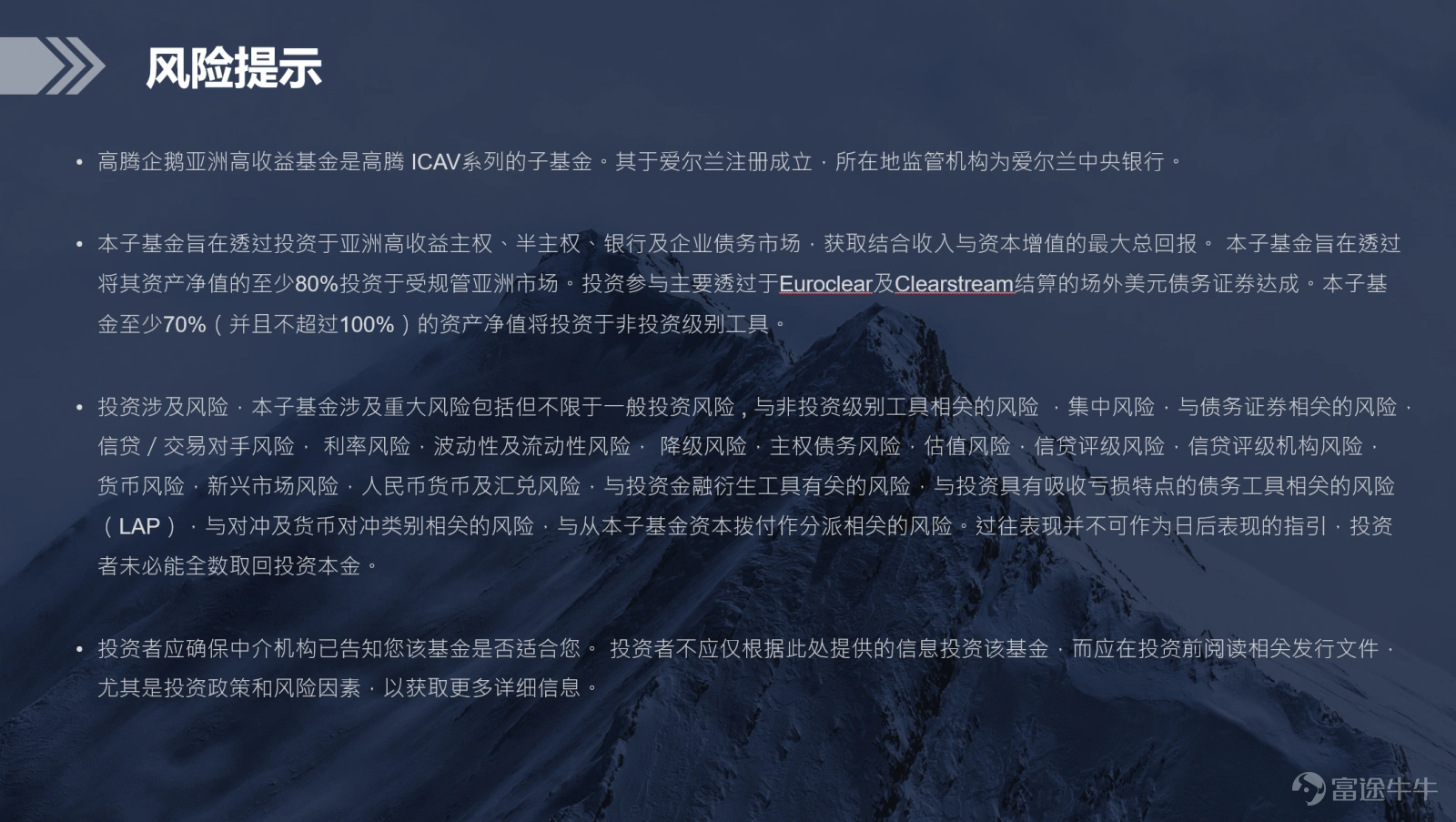
Risk Disclaimer: The above content only represents the author's view. It does not represent any position or investment advice of Futu. Futu makes no representation or warranty.Read more


Comments
to post a comment
22
17