Is XPeng Running Low on Cash? Operating Cash Flow Remains Negative; Seeks Hong Kong IPO Following U.S. Listing

Produced by Radar Finance | Written by Li Yihui | Edited by Shenhai
After submitting documents to the Hong Kong Stock Exchange in a confidential manner, XPeng Motors' IPO process moved quickly: the company passed the hearing on June 23 and launched its share offering on June 25.
According to relevant information, XPeng Motors plans to issue 85 million shares at a price of no more than HK$180 per share, with an expected listing date of July 7. Based on this estimate, XPeng Motors is expected to raise approximately HK$15.3 billion in this IPO, with a valuation exceeding HK$300 billion at its peak.
Having completed its U.S. stock market listing on August 27 last year, XPeng Motors is seeking funding in Hong Kong again within less than a year, which the industry believes indicates the company's strong need for capital. In its prospectus, XPeng Motors stated that it is currently still operating at a loss and generating negative operating cash flow, a situation that may persist for some time.
It is widely believed that, for the new EV manufacturers that have yet to turn a profit, intense market competition and continuous capital investment necessitate additional financing in order to survive.
Two IPOs within one year
XPeng Motors was officially founded in 2015 by He Xiaopeng, Xia Heng, He Tao, and others. On August 27, 2020, XPeng Motors rang the opening bell on the New York Stock Exchange and completed a secondary offering in December, raising a total of US$2.4 billion.
During this period in the U.S. stock market, XPeng Motors' share price has experienced a roller-coaster ride. On its IPO day, the stock opened at $23.1; by the end of November, boosted by the Tesla theme, XPeng's share price once surged to a peak of $74.49. However, as of press time, XPeng closed at $42.16 per share, nearly 50% lower than its previous high of $74.49, with a market capitalization of $33.8 billion.
Nio and Li Auto, both listed on the US stock market, have also reportedly planned to list on the Hong Kong stock market; however, XPeng Motors is currently making faster progress.
As XPeng Motors has been listed on the U.S. stock market for less than a year, it does not meet the conditions for a secondary listing on the Hong Kong stock market. According to reports, this Hong Kong listing is a dual listing of XPeng's Class A ordinary shares on the Hong Kong Stock Exchange, meaning investors will only be able to purchase ordinary shares rather than American depositary shares, similar to the "A+H" model. However, after the listing, the shares listed in Hong Kong will be convertible with the American depositary shares listed on the New York Stock Exchange.
Some securities analysts point out that the dual-listing process is more rigorous than a secondary listing, as companies are simultaneously listed on two stock exchanges and must comply with regulatory requirements from both jurisdictions. In contrast, for a secondary listing, the primary listing regulator retains main supervisory authority.
Furthermore, a dual listing on the Hong Kong Stock Exchange would meet the eligibility criteria for inclusion in the Shanghai-Hong Kong Stock Connect and Shenzhen-Hong Kong Stock Connect programs, making it easier for A-share investors to invest through the Stock Connect and thus opening up an investment channel for domestic capital.
The equity structure behind Xpeng Motors has also been disclosed with the release of the prospectus. Prior to this initial public offering, founder He Xiaopeng holds 21.7% of the shares, making him the largest shareholder with 56.3% of the voting rights; Xpeng Motors co-founder and president Xia Heng holds 3.8% of the shares, with 9.9% of the voting rights; Gu Hongdi holds 2.2% of the shares, with no more than 1.0% of the voting rights; He Tao holds 1.2% of the shares, with 3.2% of the voting rights; all directors and senior executives collectively hold 29.8% of the shares, with a combined 70.2% of the voting rights.
Among other shareholders, Taobao China holds 11.9% of the shares and 14.6% of the voting rights; IDG Capital holds 4.8% of the shares and 1.2% of the voting rights; Wuyuan Capital holds 3.2% of the shares and less than 1% of the voting rights; and GGV Capital holds 2.8% of the shares.
Among them, Gaorong Capital, an early investor in Xpeng Motors and a shareholder holding 44.5345 million shares of the company, has committed to retaining at least 50% of its equity held at the time of listing for a period of no less than six months after the completion of the global offering.
Due to the differentiated equity structure design, Xpeng Motors' Class A, Class B, and Class C shares grant holders 1, 10, and 5 voting rights, respectively. The Class C shares held by Taobao China will be converted into Class A shares, and after the share swap, they will no longer have the right to appoint or remove directors.
According to the document, Xpeng Motors' future funding will primarily focus on two areas: first, continuing to expand its product lineup by delivering the mid-cycle facelift of the G3 model and launching the P5 sedan equipped with lidar within the year, along with introducing a brand-new model in 2022; second, Xpeng Motors will continue to increase its investments in technologies such as electronic and electrical architecture, XPILOT autonomous driving, and Xmart OS smart cockpit systems.
Additionally, the company will increase its investment in brand communication, sales and service systems, charging networks, overseas expansion, and production capacity.
Continuous losses and the lowest gross margin among 'NIO, Xpeng, and Li Auto.'
Xpeng Motors delivers an innovative mobility experience through its intelligent electric vehicles, software, and services, generating revenue in the process.
The prospectus shows that in 2018, 2019, and 2020, Xpeng Motors' operating revenues were RMB 0.1 billion, RMB 2.321 billion, and RMB 5.844 billion, respectively. In the first quarter of 2021, its revenue reached RMB 2.951 billion, a year-on-year increase of 616% from RMB 0.412 billion in the same period last year.

However, compared with Nio and Li Auto, Xpeng Motors has the smallest revenue scale among the "Nio, Xpeng, and Li Auto" trio. In the first quarter of 2021, Nio's revenue reached RMB 7.98 billion, a year-on-year increase of nearly five times; Li Auto's revenue was RMB 3.58 billion, up more than threefold year on year.
With rising revenues, Xpeng's deliveries of smart electric vehicles increased from 29 in 2018 to 12,728 in 2019 and then to 27,041 in 2020. According to official data, Xpeng delivered 5,686 vehicles in May this year, a substantial year-on-year increase of 483% and a month-on-month increase of 10.5%. This delivery figure is lower than Nio's 6,711 vehicles in May but higher than Li Auto’s 4,323.
As of the end of May 2021, Xpeng Motors' cumulative deliveries for the year reached 24,173 units, more than five times the figure for the same period last year.
According to IHS Markit data, in 2020 China had 54 automotive brands that sold 1,000 or more new-energy vehicles, accounting for 99.1% of the country's new-energy-vehicle market share. Among them, Xpeng's market share in China's electric-vehicle market was 2.8% in 2020, ranking it 12th; in the Chinese mid-to-high-end electric-vehicle segment, its market share was 6.6%, placing it fourth.
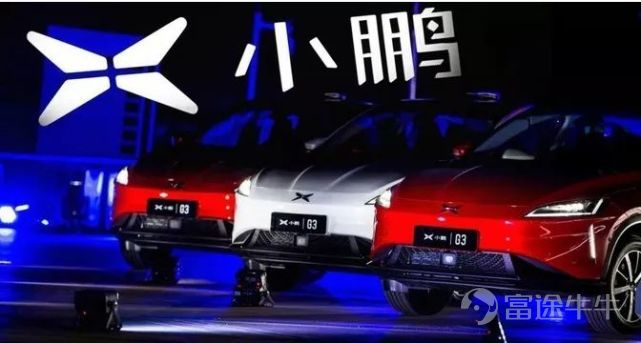
To date, Xpeng's product lineup includes its first model, the G3; the P7, which began deliveries in May 2020; the limited-edition P7 Pengyi version, delivered in March 2021; the G3 and P7 models equipped with lithium-iron-phosphate batteries, launched in March 2021; and the P5, unveiled in April. The mid-cycle facelift of the G3i is scheduled for delivery in the third quarter of this year, and the company plans to launch its first SUV in 2022.
Notably, the P7 began production at the Zhaoqing plant in Guangdong in May 2020, while the G3 is manufactured at its Zhengzhou plant in Henan Province under a contract manufacturing arrangement with Haima Automobile. Xpeng also plans to build new production facilities in Guangzhou and Wuhan, each with an anticipated annual capacity of 100,000 vehicles.
However, the growth in sales and revenue has not changed Xpeng Motors' loss situation. In 2018, 2019, and 2020, the company's net losses were RMB 1.399 billion, RMB 3.692 billion, RMB 2.732 billion, and RMB 787 million, respectively. In the first quarter of this year, Xpeng Motors recorded a net loss of RMB 787 million, an increase of 21.05% year on year; during the same period, Nio and Li Auto reported net losses of RMB 450 million and RMB 360 million, respectively.
Compared with Tesla, which has now achieved profitability for seven consecutive quarters, "NIO, XPeng, and Li Auto" as a whole have not yet reached break-even. Among them, XPeng Motors not only recorded the largest loss in the first quarter of this year, but also had the lowest gross profit margin among the three.
From 2018 to 2020, XPeng Motors' gross profit margins were -24.3%, -24.0%, and 4.6%, respectively. In the first quarter of this year, it improved to 11.2%, but still lagged behind Nio's 19.5% and Li Auto's 17.3% for the same period.
In its first-quarter report, XPeng Motors explained that the improvement in gross margin is closely related to revenue generated by software and reduced material costs. Notably, the lithium iron phosphate versions of the G3 and P7, launched in March, made a significant contribution. He Xiaopeng stated that XPeng Motors will further increase the proportion of lithium iron phosphate batteries installed in its vehicles in the future, which will greatly boost the company's gross profit.
Despite the fact that net profit has not yet turned positive, XPeng Motors continues to maintain high operating expenses, with R&D spending reaching RMB 535 million in the first quarter, up 72.2% year on year; sales and administrative expenses reached RMB 721 million, up 124% year on year.
Net cash flow from operating activities, an indicator reflecting the company's ability to generate cash through its operations, has been negative for many years, indicating that XPeng Motors is in a "cash-burning" phase. In 2018, 2019, 2020, and the first quarter of 2021, the net cash used in operating activities was RMB 1.573 billion, RMB 3.563 billion, RMB 140 million, and RMB 571 million, respectively.
XPeng Motors also mentioned in its risk disclosure that the company is currently still incurring losses and negative operating cash flow, a situation that may persist for some time.

As of March 31, 2021, XPeng Motors had a total of RMB 36.2 billion in cash, cash equivalents, restricted funds, short-term deposits, short-term investments, and long-term deposits, and the company believes that its current cash flow can support operations for another 12 months.
In a recent speech, He Xiaopeng revealed a remark he made during a conversation with Li Bin: "We're all in the qualifying round—we haven't reached the knockout stage yet, we're not even at the table, because we're still very small today."
This means that XPeng Motors still needs substantial financing to support the company's continued growth and expansion."Smart" Advantages Face Challenges from Huawei and Baidu
As autonomous driving capabilities gradually become the main selling point of smart cars, XPeng Motors also regards its self-developed autonomous driving system as the company's core competitiveness.
According to the prospectus, Xpeng's rapid pace of innovation and its unique capabilities enable its vehicle software to adapt to the evolving needs of domestic consumers and specific road conditions in China—features that set it apart from traditional automakers (or OEMs) and certain pure-play EV startups that typically rely on third-party software solutions. This constitutes the company's core competitive advantage.
When comparing the three new EV makers—NIO, XPeng Motors, and Li Auto—XPeng Motors' autonomous driving technology is undoubtedly among the best. XPeng has launched the NGP feature, which is similar to Tesla's NOA automatic navigation-assisted driving, enabling near-autonomous driving on highways covered by high-precision maps. This year, XPeng will release XPILOT 3.5, adding NGP functionality in several cities, and will roll out an OTA upgrade to customers in early next year.
XPeng Motors' advanced driver-assistance system, XPILOT 3.0, currently equipped on its models for sale, achieved a user subscription rate of 20% in the first quarter. According to the annual report, XPeng's software business generated total revenue of RMB 80 million, with RMB 50 million coming from last year and RMB 30 million from the first quarter of this year.
According to the prospectus, the key value that attracts users to keep paying is the ability to update and upgrade via OTA firmware, introducing performance enhancements and new features. Meanwhile, the accumulation of more user data can, in turn, help XPeng Motors continuously test its self-developed algorithms and achieve frequent upgrades, thereby providing customers with an ever-improving autonomous driving system.
Currently, XPeng's autonomous driving R&D team is mainly based in China and the United States, with a total of 600 employees, led by Wu Xinzhou, former head of Qualcomm's autonomous driving business.
On the hardware front, XPeng has equipped its new P5 model with automotive-grade LiDAR manufactured by a Dajiang-affiliated company to enhance its visual perception capabilities. According to data from IHS Markit, this model is expected to become the world's first mass-produced smart electric vehicle equipped with LiDAR upon delivery.
Li Auto has long adopted a cautious approach to its autonomous-driving strategy. At its spring 2021 launch event, the company unveiled the Li AD advanced driver-assistance system, which will be rolled out via over-the-air (OTA) updates to 2021-model-year owners in the third quarter. Building on the existing Level 2 driver-assistance capabilities, the system will enable NOA navigation-assisted driving.
Li Xiang himself admitted that, compared with Tesla and Xpeng, Li Auto needs to catch up in the field of autonomous driving. At present, its 300-member autonomous driving team will be expanded to 600 by the end of the year.
Nio is also lagging behind Xpeng. In its early days, Nio's North American team was primarily responsible for autonomous driving R&D; in 2019, the team was even laid off due to a financial crisis. After overcoming the crisis in August 2020, Nio re-established its autonomous driving R&D team, led by Zhang Jianyong, former head of SAIC's autonomous driving division, and Ren Shaoqing, former R&D director at the autonomous driving startup Momenta. Nio, which also prioritizes full-stack in-house development, will equip its first smart electric sedan, the ET7—scheduled for delivery in the first quarter of 2022—with a lidar jointly developed by Hesai Technology and Nio, closely following in the footsteps of the Xpeng P5.
However, setting aside the survivors of the previous wave of car-making booms—NIO, XPeng Motors, and Li Auto—now that tech giants such as Huawei, Xiaomi, and Baidu are directly involved in the second wave of car-making, the industry landscape has changed again. Can XPeng Motors still maintain its first-mover advantage?
Unlike XPeng, which started from scratch, tech giants such as Baidu and Xiaomi are able to draw on the experience of their competitors and leverage electrification as a foundation to leap directly into intelligent features. For example, Baidu's primary goal in launching Jidu Auto is to apply the AI technologies it has accumulated over the past seven or eight years. Baidu's Apollo autonomous driving system, which has been refined over many years, has already been implemented in WM Motor's W6.
Huawei's autonomous-driving solutions currently count BAIC New Energy, GAC, and Changan Automobile as its partners. Despite its public stance of "not building cars," analysts view Huawei as pursuing a roundabout path to vehicle manufacturing. After all, while Huawei has long excelled in R&D and marketing, it has historically lacked expertise in automotive development and design. Through its collaboration with Seres—providing electric components and HiCar cockpit systems and leveraging its own "Huawei Smart Selection" retail channel—Huawei has gained entry into various stages of the car-making process, positioning itself for a smooth transition to full-scale vehicle production down the road.
Since its launch in April, the Huawei Smart Selection SF5 has seen booming orders. Seres previously stated that the vehicle's orders exceeded 3,000 within just two days of sales and surpassed 6,000 within a week, outpacing XPeng Motors' May delivery volume.
Some analysts believe that the competition has already begun, and XPeng Motors' "smart" label and its core business of autonomous driving will inevitably be challenged by companies such as Huawei and Baidu.
Note: This article is an original work by Leida Finance (ID: leidacj). Reproduction is prohibited without authorization.
Risk Disclaimer: The above content only represents the author's view. It does not represent any position or investment advice of Futu. Futu makes no representation or warranty.Read more

Comments
to post a comment
4
38