Which book or movie is worth recommending to the novice of stocks?

Recommended by mooer: 10 must-read introductory books for novice investors
Recently, many new investors found the class teacher and said they wanted to learn the basics of investing, but they didn't know where to start. Are there any recommended books
Our cow ring is a treasure circleNow that everyone has asked, the class teacher has compiled and distributed the top 10 beginner investment books recommended by the mooer!
Now that everyone has asked, the class teacher has compiled and distributed the top 10 beginner investment books recommended by the mooer!As the saying goes, “the book has its own gold house”, let's take a look at these “gold books in the gold house”
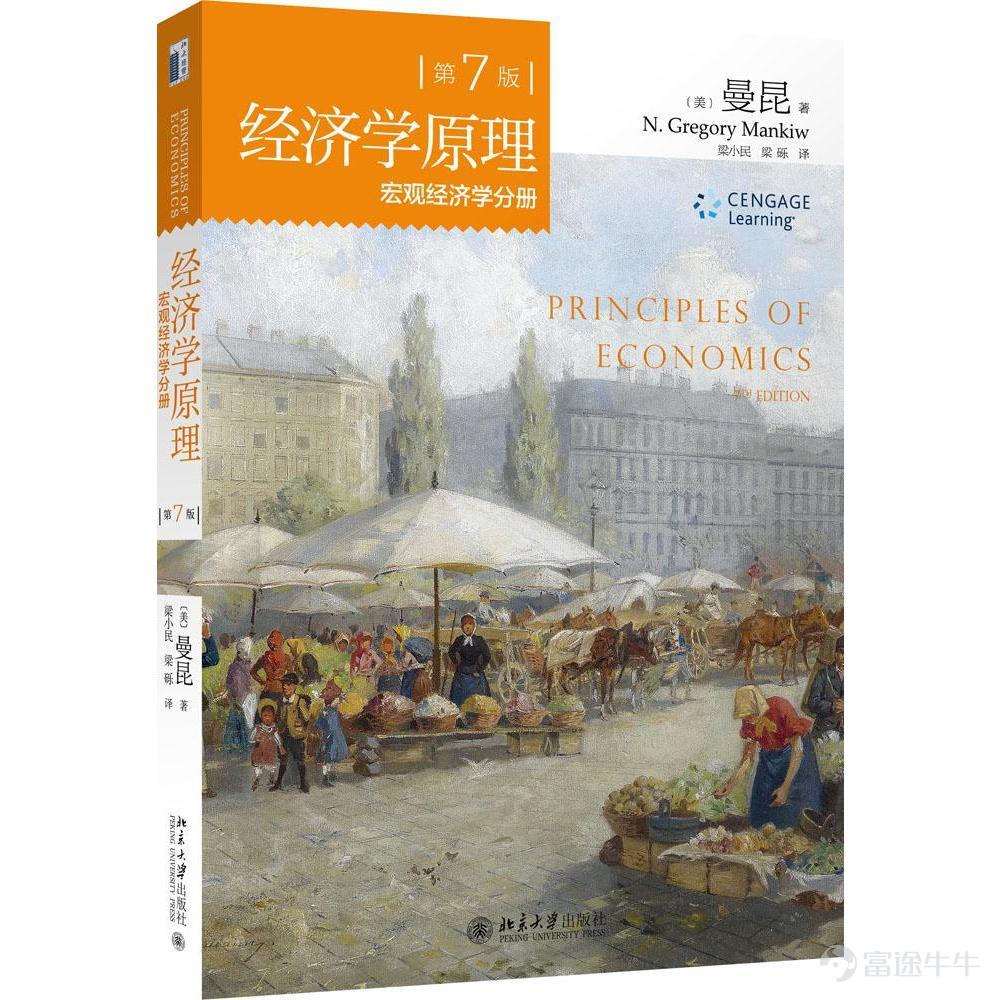
1. “Principles of Economics” Nicolas Gregory Manquin
After reading these two books (volume 1 and 1), I was able to understand almost the same basic principles of economics. N. Gregory Mankiw (“N. Gregory Mankiw”) was born on February 3, 1958 and is a famous American economist. At age 29, he became one of the youngest tenured professors in the history of Harvard University. He entered politics in 2003 and is the author of classic textbooks such as “Principles of Economics” and “Macroeconomics.”
Mankun's principles of economics are very simple and easy to understand. Mankun introduces economics through familiar examples, story experiences, policy analysis, and news excerpts from everyday life, so that readers can easily understand the basic theories and methods of economics through fun reading.
Manquin's “Principles of Economics” is the world's most popular introductory textbook on economics; it's not one of them.
![Recently, many new investors found the class teacher and said they wanted to learn the basics of investing, but they didn't know where to start. Are there any recommended books[Shocked] Our cow ring is a treasure circle[Cool Guy]Now that everyone has asked, the class teacher has compiled and distributed the top 10 beginner investment books recommended by the mooer! As the saying goes, “the book has its own gold house”, let's take a look at these “gold books in the gold house”[Whimper] @王伟CFA 美港A股投资 1. “Principles of Economics” Nicolas Gregory Manquin After reading these two books (volume 1 and 1), I was able to understand almost the same basic principles of economics. N. Gregory Mankiw (“N. Gregory Mankiw”) was born on February 3, 1958 and is a famous American economist. At age 29, he became one of the youngest tenured professors in the history of Harvard University. He entered politics in 2003 and is the author of classic textbooks such as “Principles of Economics” and “Macroeconomics.” Mankun's principles of economics are very simple and easy to understand. Mankun introduces economics through familiar examples, story experiences, policy analysis, and news excerpts from everyday life, so that readers can easily understand the basic theories and methods of economics through fun reading. Manquin's “Principles of Economics” is the world's most popular introductory textbook on economics; it's not one of them. 2. “Japanese Candlestick Technique: A Modern Guide to Ancient Oriental Investment Techniques” The candlestick technique is based on a series of waxes...](https://nnqimage.futunn.com/2021030500383972822ab302873.png/big?imageMogr2/ignore-error/1/format/webp)
2. “Japanese Candlestick Technique: A Modern Guide to Ancient Oriental Investment Techniques”
Candlestick technology is based on different trend patterns formed by combining a series of candlestick lines. Data relevant conclusions are drawn from these pattern analysis, and the future trend of the market is predicted using this data. The candlestick chart technique is used to analyze the so-called bull market or bear market in the securities market. It can also be seen whether the market issued the best entry and exit period, and accurately grasp the market trends. The origin of the candlestick chart: The candlestick chart originated from the rice trade during the Tokugawa shogunate period (1603-1867) in Japan, and was used to calculate the daily rise and fall of rice prices.
This book is an introduction to technical analysis. When I read it, it was quite clear and easy to understand about the mentality and principles of market trading. At the same time, it also introduced how to combine candlestick charts with other trend analysis tools, making them easy to understand, and the best introduction to technical analysis.
![Recently, many new investors found the class teacher and said they wanted to learn the basics of investing, but they didn't know where to start. Are there any recommended books[Shocked] Our cow ring is a treasure circle[Cool Guy]Now that everyone has asked, the class teacher has compiled and distributed the top 10 beginner investment books recommended by the mooer! As the saying goes, “the book has its own gold house”, let's take a look at these “gold books in the gold house”[Whimper] @王伟CFA 美港A股投资 1. “Principles of Economics” Nicolas Gregory Manquin After reading these two books (volume 1 and 1), I was able to understand almost the same basic principles of economics. N. Gregory Mankiw (“N. Gregory Mankiw”) was born on February 3, 1958 and is a famous American economist. At age 29, he became one of the youngest tenured professors in the history of Harvard University. He entered politics in 2003 and is the author of classic textbooks such as “Principles of Economics” and “Macroeconomics.” Mankun's principles of economics are very simple and easy to understand. Mankun introduces economics through familiar examples, story experiences, policy analysis, and news excerpts from everyday life, so that readers can easily understand the basic theories and methods of economics through fun reading. Manquin's “Principles of Economics” is the world's most popular introductory textbook on economics; it's not one of them. 2. “Japanese Candlestick Technique: A Modern Guide to Ancient Oriental Investment Techniques” The candlestick technique is based on a series of waxes...](https://nnqimage.futunn.com/20210305003839731eeaf3d70a9.png/big?imageMogr2/ignore-error/1/format/webp)
3. “The Smart Investor” Benjamin Graham
Benjamin Graham is the acknowledged father of value investing (value investing). His views on securities analysis laid the foundation for a generation of investors, including his most famous student, Warren Buffett. The book “The Smart Investor”, published in 1949, can be considered a popular copy of Graham's book “Securities Analysis” published in 1934. It is more readable than “Securities Analysis”, the most commonly quoted but rarely read masterpiece of investment science. The book “The Smart Investor” doesn't teach you how to choose stocks, but rather teaches some reliable, time-tested investment principles that everyone can apply. Another proof that this book is worth reading is that Warren Buffett once said, “This is the best investment book so far.”
![Recently, many new investors found the class teacher and said they wanted to learn the basics of investing, but they didn't know where to start. Are there any recommended books[Shocked] Our cow ring is a treasure circle[Cool Guy]Now that everyone has asked, the class teacher has compiled and distributed the top 10 beginner investment books recommended by the mooer! As the saying goes, “the book has its own gold house”, let's take a look at these “gold books in the gold house”[Whimper] @王伟CFA 美港A股投资 1. “Principles of Economics” Nicolas Gregory Manquin After reading these two books (volume 1 and 1), I was able to understand almost the same basic principles of economics. N. Gregory Mankiw (“N. Gregory Mankiw”) was born on February 3, 1958 and is a famous American economist. At age 29, he became one of the youngest tenured professors in the history of Harvard University. He entered politics in 2003 and is the author of classic textbooks such as “Principles of Economics” and “Macroeconomics.” Mankun's principles of economics are very simple and easy to understand. Mankun introduces economics through familiar examples, story experiences, policy analysis, and news excerpts from everyday life, so that readers can easily understand the basic theories and methods of economics through fun reading. Manquin's “Principles of Economics” is the world's most popular introductory textbook on economics; it's not one of them. 2. “Japanese Candlestick Technique: A Modern Guide to Ancient Oriental Investment Techniques” The candlestick technique is based on a series of waxes...](https://nnqimage.futunn.com/20210305003839740de24c9bb52.png/big?imageMogr2/ignore-error/1/format/webp)
4. “Snowball: Buffett and his life of wealth” Schroder
This is the only authorized official biography of his life, unravels Buffett's true life from a perspective he has never seen before. The “stock god”, who has been in the spotlight for many years, has finally stepped down from the altar to tell the most moving story of his life in '78, and shared the most valuable experience in his 60-year business and investment career.
![Recently, many new investors found the class teacher and said they wanted to learn the basics of investing, but they didn't know where to start. Are there any recommended books[Shocked] Our cow ring is a treasure circle[Cool Guy]Now that everyone has asked, the class teacher has compiled and distributed the top 10 beginner investment books recommended by the mooer! As the saying goes, “the book has its own gold house”, let's take a look at these “gold books in the gold house”[Whimper] @王伟CFA 美港A股投资 1. “Principles of Economics” Nicolas Gregory Manquin After reading these two books (volume 1 and 1), I was able to understand almost the same basic principles of economics. N. Gregory Mankiw (“N. Gregory Mankiw”) was born on February 3, 1958 and is a famous American economist. At age 29, he became one of the youngest tenured professors in the history of Harvard University. He entered politics in 2003 and is the author of classic textbooks such as “Principles of Economics” and “Macroeconomics.” Mankun's principles of economics are very simple and easy to understand. Mankun introduces economics through familiar examples, story experiences, policy analysis, and news excerpts from everyday life, so that readers can easily understand the basic theories and methods of economics through fun reading. Manquin's “Principles of Economics” is the world's most popular introductory textbook on economics; it's not one of them. 2. “Japanese Candlestick Technique: A Modern Guide to Ancient Oriental Investment Techniques” The candlestick technique is based on a series of waxes...](https://nnqimage.futunn.com/20210305003839755040c257848.png/big?imageMogr2/ignore-error/1/format/webp)
5. 《Securities Analysis》
Known as the investors' bible, “Securities Analysis” is a Wall Street classic and a landmark that established Graham's reputation. The book explains for the first time how to find “good and inexpensive” stocks and bonds, and these methods still apply 20 years after Graham's death.
The valuation factors for enterprises mentioned in the book “Securities Analysis”, which can be learned, are mainly explained in the following three categories: dividend rate and its history, profit and loss account factors (profitability), and balance sheet factors (value of assets). Apart from the fact that sections 1-3 of the book discuss fixed income and preferential bonds, sections 4-6 basically revolve around the analysis of the above three categories, and section 7 discusses the differences between price and value. The book analyzes the stability of an enterprise's dividends, profitability, and the value support of tangible assets as key elements of securities analysis, so as to arrive at a conclusion whether an enterprise has a “margin of safety” and is worth investing in. Simply put, it is to find out by turning a stone: “Using 50 cents to buy something worth 1 dollar”
![Recently, many new investors found the class teacher and said they wanted to learn the basics of investing, but they didn't know where to start. Are there any recommended books[Shocked] Our cow ring is a treasure circle[Cool Guy]Now that everyone has asked, the class teacher has compiled and distributed the top 10 beginner investment books recommended by the mooer! As the saying goes, “the book has its own gold house”, let's take a look at these “gold books in the gold house”[Whimper] @王伟CFA 美港A股投资 1. “Principles of Economics” Nicolas Gregory Manquin After reading these two books (volume 1 and 1), I was able to understand almost the same basic principles of economics. N. Gregory Mankiw (“N. Gregory Mankiw”) was born on February 3, 1958 and is a famous American economist. At age 29, he became one of the youngest tenured professors in the history of Harvard University. He entered politics in 2003 and is the author of classic textbooks such as “Principles of Economics” and “Macroeconomics.” Mankun's principles of economics are very simple and easy to understand. Mankun introduces economics through familiar examples, story experiences, policy analysis, and news excerpts from everyday life, so that readers can easily understand the basic theories and methods of economics through fun reading. Manquin's “Principles of Economics” is the world's most popular introductory textbook on economics; it's not one of them. 2. “Japanese Candlestick Technique: A Modern Guide to Ancient Oriental Investment Techniques” The candlestick technique is based on a series of waxes...](https://nnqimage.futunn.com/2021030500383976648783dfaa2.png/big?imageMogr2/ignore-error/1/format/webp)
6. Peter Lynch's Successful Investments
The system explains how to fully prepare for stock investment, how to start searching for your favorite listed company stocks from life and work, how to analyze the basic business, financial, and stock situations of listed companies, and how to correctly understand stock price fluctuations. Almost all of the questions you want to know about stock investment can be found in “Peter Lynch's Successful Investment”.
For the layman, investment opportunities are everywhere. Just take a close look at business trends and keep an eye on the world around you, from shopping malls to where you work, and you'll be able to spot potentially successful companies earlier than professional analysts.
![Recently, many new investors found the class teacher and said they wanted to learn the basics of investing, but they didn't know where to start. Are there any recommended books[Shocked] Our cow ring is a treasure circle[Cool Guy]Now that everyone has asked, the class teacher has compiled and distributed the top 10 beginner investment books recommended by the mooer! As the saying goes, “the book has its own gold house”, let's take a look at these “gold books in the gold house”[Whimper] @王伟CFA 美港A股投资 1. “Principles of Economics” Nicolas Gregory Manquin After reading these two books (volume 1 and 1), I was able to understand almost the same basic principles of economics. N. Gregory Mankiw (“N. Gregory Mankiw”) was born on February 3, 1958 and is a famous American economist. At age 29, he became one of the youngest tenured professors in the history of Harvard University. He entered politics in 2003 and is the author of classic textbooks such as “Principles of Economics” and “Macroeconomics.” Mankun's principles of economics are very simple and easy to understand. Mankun introduces economics through familiar examples, story experiences, policy analysis, and news excerpts from everyday life, so that readers can easily understand the basic theories and methods of economics through fun reading. Manquin's “Principles of Economics” is the world's most popular introductory textbook on economics; it's not one of them. 2. “Japanese Candlestick Technique: A Modern Guide to Ancient Oriental Investment Techniques” The candlestick technique is based on a series of waxes...](https://nnqimage.futunn.com/20210305003839770ef3f5bdd30.png/big?imageMogr2/ignore-error/1/format/webp)
7. “Stock Market Trend Technical Analysis”
The first edition of “Technical Analysis of Stock Market Trends” was published in 1948, and the tenth edition was revised in 2012. A book written in the mid-20th century remains practical and important to this day. It is a work of Taishan Beidou in the field of technical analysis. This book emphasizes 3 basic principles: stock prices tend to move in a trend, trading volume follows the trend, and once a round of trends is established, it tends to continue to work. There is a lot of content in the book about patterns that often form when a certain trend is reversed. The author argues that traders follow the trend rather than try to seize the bottom of the market before the downtrend is over.
![Recently, many new investors found the class teacher and said they wanted to learn the basics of investing, but they didn't know where to start. Are there any recommended books[Shocked] Our cow ring is a treasure circle[Cool Guy]Now that everyone has asked, the class teacher has compiled and distributed the top 10 beginner investment books recommended by the mooer! As the saying goes, “the book has its own gold house”, let's take a look at these “gold books in the gold house”[Whimper] @王伟CFA 美港A股投资 1. “Principles of Economics” Nicolas Gregory Manquin After reading these two books (volume 1 and 1), I was able to understand almost the same basic principles of economics. N. Gregory Mankiw (“N. Gregory Mankiw”) was born on February 3, 1958 and is a famous American economist. At age 29, he became one of the youngest tenured professors in the history of Harvard University. He entered politics in 2003 and is the author of classic textbooks such as “Principles of Economics” and “Macroeconomics.” Mankun's principles of economics are very simple and easy to understand. Mankun introduces economics through familiar examples, story experiences, policy analysis, and news excerpts from everyday life, so that readers can easily understand the basic theories and methods of economics through fun reading. Manquin's “Principles of Economics” is the world's most popular introductory textbook on economics; it's not one of them. 2. “Japanese Candlestick Technique: A Modern Guide to Ancient Oriental Investment Techniques” The candlestick technique is based on a series of waxes...](https://nnqimage.futunn.com/2021030500383978c14faee9668.png/big?imageMogr2/ignore-error/1/format/webp)
8. “Poor Dad Rich Dad”
It's an enlightenment book that made me learn about the importance of financial management. The book is very interesting. The story says that the author has two “dads” who think very differently, showing the common mentality of migrant workers and the way of thinking of rich people.
Focus: Understand assets and liabilities, buy value-added assets as much as possible, own your own business, generate diversified cash flow, control expenses, and use passive income to cover daily expenses, so as to break out of the rat race and achieve financial freedom.
![Recently, many new investors found the class teacher and said they wanted to learn the basics of investing, but they didn't know where to start. Are there any recommended books[Shocked] Our cow ring is a treasure circle[Cool Guy]Now that everyone has asked, the class teacher has compiled and distributed the top 10 beginner investment books recommended by the mooer! As the saying goes, “the book has its own gold house”, let's take a look at these “gold books in the gold house”[Whimper] @王伟CFA 美港A股投资 1. “Principles of Economics” Nicolas Gregory Manquin After reading these two books (volume 1 and 1), I was able to understand almost the same basic principles of economics. N. Gregory Mankiw (“N. Gregory Mankiw”) was born on February 3, 1958 and is a famous American economist. At age 29, he became one of the youngest tenured professors in the history of Harvard University. He entered politics in 2003 and is the author of classic textbooks such as “Principles of Economics” and “Macroeconomics.” Mankun's principles of economics are very simple and easy to understand. Mankun introduces economics through familiar examples, story experiences, policy analysis, and news excerpts from everyday life, so that readers can easily understand the basic theories and methods of economics through fun reading. Manquin's “Principles of Economics” is the world's most popular introductory textbook on economics; it's not one of them. 2. “Japanese Candlestick Technique: A Modern Guide to Ancient Oriental Investment Techniques” The candlestick technique is based on a series of waxes...](https://nnqimage.futunn.com/202103050038398666430e9cea5.png/big?imageMogr2/ignore-error/1/format/webp)
9. “Poor Charlie's Common Sense” (also translated as “Poor Charlie's Collection”)
Charlie Munger is a low-key but very intelligent old man. Even though he is over 90, his thoughts are still clear and thorough. There are also many people in the bullring who regard Charlie as an investment mentor. Like Buffett, his characteristic is that he sees reading as very important. It only takes a few important investment decisions in life to actually become rich. Be frugal, stay rational, and find someone who doesn't have high expectations. Keep doing better every day than before and be smarter than others. The gap will become more obvious as the days go by.
Focus: Exposure to different types of fields, establish multiple thinking models, understand your circle of abilities, and keep learning. This book is highly recommended for friends if they want to choose to follow the right investment mentor.
![Recently, many new investors found the class teacher and said they wanted to learn the basics of investing, but they didn't know where to start. Are there any recommended books[Shocked] Our cow ring is a treasure circle[Cool Guy]Now that everyone has asked, the class teacher has compiled and distributed the top 10 beginner investment books recommended by the mooer! As the saying goes, “the book has its own gold house”, let's take a look at these “gold books in the gold house”[Whimper] @王伟CFA 美港A股投资 1. “Principles of Economics” Nicolas Gregory Manquin After reading these two books (volume 1 and 1), I was able to understand almost the same basic principles of economics. N. Gregory Mankiw (“N. Gregory Mankiw”) was born on February 3, 1958 and is a famous American economist. At age 29, he became one of the youngest tenured professors in the history of Harvard University. He entered politics in 2003 and is the author of classic textbooks such as “Principles of Economics” and “Macroeconomics.” Mankun's principles of economics are very simple and easy to understand. Mankun introduces economics through familiar examples, story experiences, policy analysis, and news excerpts from everyday life, so that readers can easily understand the basic theories and methods of economics through fun reading. Manquin's “Principles of Economics” is the world's most popular introductory textbook on economics; it's not one of them. 2. “Japanese Candlestick Technique: A Modern Guide to Ancient Oriental Investment Techniques” The candlestick technique is based on a series of waxes...](https://nnqimage.futunn.com/20210305003839878000492f424.png/big?imageMogr2/ignore-error/1/format/webp)
10. “Super Performance”
I learned about this American investment and trading competition champion from an online video, breaking the idea that investing means holding a good company for the long term. Even with frequent transactions, you can have extremely high returns, and more importantly, know how to get both.
Focus: To find strong stocks rather than buy weak stocks and bounce back, you need to know the importance of stop-loss, understand the bull and bear cycle, and invest in buying stocks and risk management rules.
![Recently, many new investors found the class teacher and said they wanted to learn the basics of investing, but they didn't know where to start. Are there any recommended books[Shocked] Our cow ring is a treasure circle[Cool Guy]Now that everyone has asked, the class teacher has compiled and distributed the top 10 beginner investment books recommended by the mooer! As the saying goes, “the book has its own gold house”, let's take a look at these “gold books in the gold house”[Whimper] @王伟CFA 美港A股投资 1. “Principles of Economics” Nicolas Gregory Manquin After reading these two books (volume 1 and 1), I was able to understand almost the same basic principles of economics. N. Gregory Mankiw (“N. Gregory Mankiw”) was born on February 3, 1958 and is a famous American economist. At age 29, he became one of the youngest tenured professors in the history of Harvard University. He entered politics in 2003 and is the author of classic textbooks such as “Principles of Economics” and “Macroeconomics.” Mankun's principles of economics are very simple and easy to understand. Mankun introduces economics through familiar examples, story experiences, policy analysis, and news excerpts from everyday life, so that readers can easily understand the basic theories and methods of economics through fun reading. Manquin's “Principles of Economics” is the world's most popular introductory textbook on economics; it's not one of them. 2. “Japanese Candlestick Technique: A Modern Guide to Ancient Oriental Investment Techniques” The candlestick technique is based on a series of waxes...](https://nnqimage.futunn.com/202103050038398899990d6deaa.png/big?imageMogr2/ignore-error/1/format/webp)
What other books do you recommend for beginners?
Write in the comments, let's talk
Risk Disclaimer: The above content only represents the author's view. It does not represent any position or investment advice of Futu. Futu makes no representation or warranty.Read more


Comments (3)
to post a comment
49
55