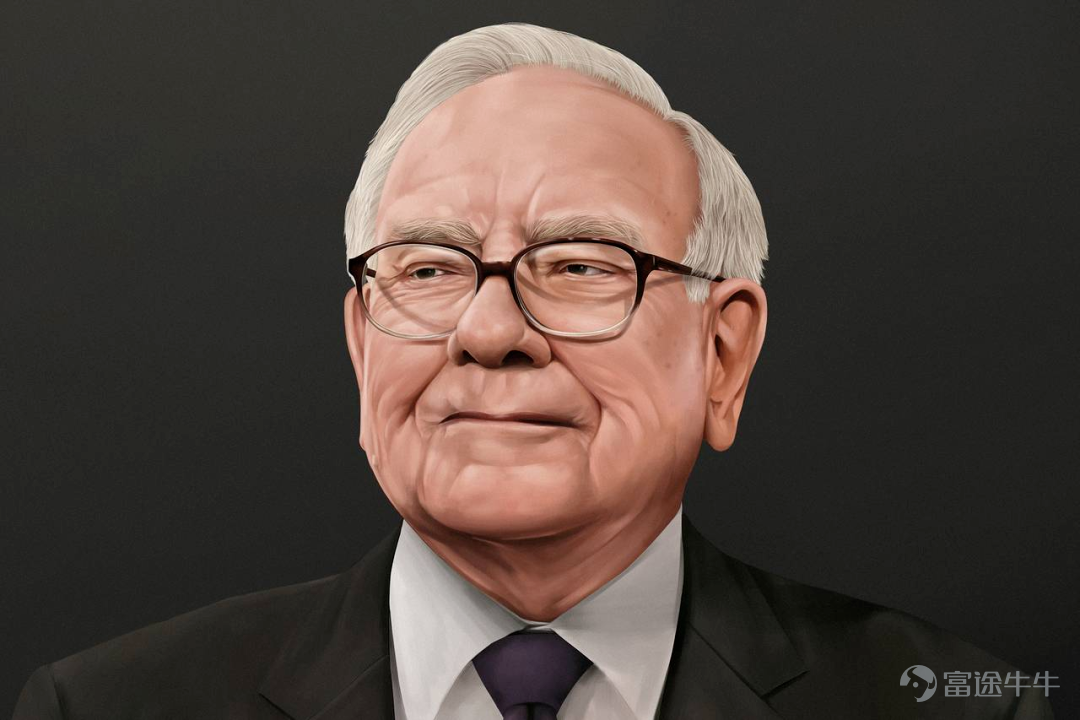

[FUTU Sponsored] 2021 Buffett's Annual Shareholders Meeting

What is the lack of Buffett's annual shareholder letter

Text | “Barron's” writer Andrew Bary (Andrew Bary)
Editor | Kang Juan, Guo Liqun
Editor's note:On February 27, Berkshire Hathaway published its annual public letter to shareholders from stock god Buffett and the company's annual report on its official website.
According to convention, the beginning of the shareholder letter is a comparison between Berkshire's market value per share and the performance of the S&P 500 Index.In 2020, Berkshire's market value per share increased by only 2.4%, while the S&P 500 index increased by 18.4%, and Berkshire lost 16 percentage points.In 2019, Berkshire's market value per share increased by 11%, while the S&P 500 index increased by 31.5%, and Berkshire outperformed the market by 20.5%.Berkshire's US stock market value has outperformed the S&P 500 index for two years in a row.
However, in the long run, from 1965 to 2020, the compound annual growth rate of Berkshire's market value per share was 20.0%, clearly exceeding the 10.2% rate of the S&P 500 index.In particular, between 1964 and 2020, Berkshire's market capitalization growth rate was an astonishing 2810526%, while the S&P 500 index was only 23454% during the same period.
Buffett also discussed investment opportunities in renewable energy and the prospects for the US in the letterOptimistic, as well as views on retained earnings and controlling interest.
As far as Barron's is concerned, we are more concerned about the important topics Buffett did not address in this shareholder letter.
The highlight of Warren Buffett's annual shareholder letter was his discussion of Berkshire Hathaway's strengthening share repurchases: in the last two quarters of 2020, the total share repurchases for each quarter was $9 billion, and spent $24.7 billion for the whole year, up from $4.9 billion in 2019.
This should make Berkshire (BRK.A, BRK.B) shareholders happy, as it is a clear sign that Buffett believes these stocks are undervalued.
In 2019 and 2020, the company's stock fell behind the S&P 500 index by more than 40 percentage points. Last year, Berkshire's repurchases accounted for 5.2% of Berkshire's tradable shares, whileBarron's analysis shows that it will continue to maintain this strong repurchase momentum in 2021 — as of February 16, this year's total repurchases have exceeded $4 billion。
However, what this 14-page annual shareholder letter published on February 27 lacks is a discussion of some of the most important topics for Berkshire investors:Buffett did not address the issue of successors, the apparent slump in Berkshire stock prices, missed investment opportunities in 2020, and Berkshire's leadership team。
Berkshire CEO Buffett tooNot mentionedBerkshireDividend distribution issues。 “Barron's” has always believed that Berkshire should pay dividends because Berkshire has sufficient profits and huge amounts of cash.
“Before I read this letter, I thought, 'What would surprise me? 'There haven't been many surprises in the past few years.” David Rolfe (David Rolfe), chief investment officer of Wedgewood Partners (Wedgewood Partners) based in St. Louis, said.
Rolfe sold Berkshire's long-held shares in 2019.He called this shareholder letter a “nostalgic trip” for 90-year-old Buffett。 Buffett discussed the history of Berkshire's long-term ownership of See's Candies (See's Candies), Nebraska Furniture Mart (Nebraska Furniture Mart), and Geico Insurance, and paid tribute to a group of Nebraska doctors who have owned Berkshire for over 50 years and are around 100 years old.
The strength of repurchases exceeded expectations and continued to be optimistic about Berkshire
February 26, Berkshire'sClass A shares closed at $36,4580 and are up 4.7% so far in 2021. Class B shares closed at $240.51。 “Barron's” has always been optimistic about Berkshire, believing that the company's stock valuation is quite attractive. The ratio of the stock price to book value at the end of 2020 is less than 1.3 times, and the earnings outlook for 2021 is strong. Berkshire's earnings per share of operations increased 19% in the fourth quarter.
Regarding repurchases, Buffett wrote: “Last year, we spent $24.7 billion to buy back A-shares equivalent to 80,998 shares to express our enthusiasm for Berkshire's asset expansion. This move has increased your shareholding ratio in all Berkshire companies by 5.2%, and you don't need to use your wallet at all.”
Jim Shanahan (Jim Shanahan), an analyst at Edward Jones, said: “The buy-back operation is really impressive.” He rated Berkshire a buy. “I didn't expect this kind of buy-back strength a year ago.”
The stock market acknowledged the mistake of more than 10 billion US dollars
In 2016, Berkshire bought Precision Castparts (PCC) for 33 billion US dollars. The deal was unlucky, and Buffett was also criticized. Precision Casting, an aircraft parts manufacturer, was hit hard during the downturn in the aviation industry. It was this 2016 acquisition that caused asset write-offs of more than $10 billion in 2020.
“I've spent too much money on this company. No one has misled me in any way — I'm just too optimistic about the PCC's earnings potential after normalization. “Last year, the adverse development of the entire aerospace industry, the PCC's most important source of visitors, exposed my misjudgment,” Buffett wrote.
Shanahan believes that Buffett “will always be a gentleman and will not push anyone out of his car for this deal.”
The stock price is lagging behind the market, what is Berkshire missing
Buffett previously wrote that if Berkshire can't beat the S&P 500 over time, investors should buy an index fund。 Over the past 5 and 10 years, Berkshire's performance has lagged behind the S&P 500 Index.
Buffett did not discuss the issue in his shareholder letter, nor did he express his opinion on whether Berkshire can beat the S&P 500 Index in the future.
One reason Berkshire's poor performance was that it failed to find what Buffett called an “elephant acquisition” target to absorb the huge amount of cash held by Berkshire. By the end of 2020, Berkshire held a total of $138 billion in cash.
Berkshire also failed to profit from the stock market crash in early 2020 because the company had a net sale of about $8 billion in stocks that year, including holdings of aviation and financial companies.

A successor has yet to be announced, and Munger will appear at the annual meeting
Rolfe wants to see Berkshire executives Todd Combs (Todd Combs) and Ted Weschler (Ted Weschler) play a more prominent role. They currently each manage about $20 billion in assets in Berkshire's $281 billion equity portfolio.
They are likely to take over the entire investment portfolio in the post-Buffett era. The industry believes that Berkshire's purchase of new economy companies such as Amazon (Amazon) and data storage company Snowflake (SNOW) is their handiwork, while Buffett dominated large purchases of Chevron (Chevron) and Verizon (VZ) in 2020.
“Buffett likes the analogy of playing baseball,” Rolfe said. “I was expecting him to say, 'Ted and Todd have been working here for about 10 years, and they have proven that they can hit pitches, so I promoted them to the major leagues. Their new goal is to reduce the number of stocks they hold and swing a bat, so their best investment ideas or two will appear on our biggest positions list. '”
Buffett once praised Combs and Wescheller, pointing out that the portfolios they manage are very close to the S&P 500 index, and their performance has always been better than him.
As CEO of Berkshire, Buffett will be 90 years old in August of this year.There is currently no indication that he will relinquish the leadership role he has held since 1965。 Berkshire's annual meeting will be held in Los Angeles on May 1. Buffett and his long-time partner, 97-year-old Vice Chairman Charlie Munger, will attend the annual meeting. Munger did not attend last year's annual meeting.
Buffett's likely successor, Greg Abel (Greg Abel), Berkshire's vice chairman and head of the company's huge non-insurance business, appeared on the same stage as Buffett at the 2020 virtual annual meeting of the company. He will play a second-in-command role at this year's annual conference. Abel and Ajit Jain (Ajit Jain), who is responsible for Berkshire's insurance business, will answer shareholders' questions about operations at the meeting.
“Now — there should be applause here — the surprise has come.” Buffett wrote, “This year, our conference will be held in Los Angeles... and Charlie will be on stage to answer questions and express opinions throughout the 3 and a half hour Q&A session. I missed him last year (he didn't come), and more importantly, you obviously missed him too.”
This is probably one of the last meetings the legendary couple will attend together. Given their age, most shareholders will be willing to cherish this opportunity to witness their appearance together, even if it means that the next generation of leaders won't get enough attention.
Further reading: Why doesn't Berkshire pay dividends
Berkshire hasn't paid dividends for over 50 years. What is the reason? According to Buffett, 1 dollar in his hands will play a greater role than 1 dollar in the hands of shareholders and can bring more returns to shareholders. Over a long period of time, Buffett's tremendous success in investments and acquisitions confirmed his view. But in recent years, this approach has not worked as well as it did in the past.
In his 2012 annual letter to shareholders, Buffett addressed the issue of dividends. He believes that for investors who want to make a profit, a better and more tax-efficient approach is to sell a small portion of Berkshire shares every year.
Buffett wrote in his letter, “First, dividend distribution is a monetization policy that targets all shareholders, but cannot take into account the needs of every shareholder. For example, if a dividend of 40% of the profit is paid, then those who expect the dividend to be 30% or 50% of the profit will suffer. Berkshire has 600,000 shareholders, and the need for cash varies, but what is certain is that many, and probably most, of them use cash for savings; logically, they would rather not pay interest.”
In 2014, Berkshire shareholders overwhelmingly rejected a proposal for Berkshire to pay dividends.
David King (David King), co-fund manager of Columbia Flexible Capital Income, said, “Berkshire should start paying dividends. Doing so can increase Berkshire's appeal to current investors seeking income. Judging from Berkshire's size and financial strength, the company's failure to pay dividends is quite unusual, and that should change.”
Berkshire's top ten holdings, and BYD's holdings rank eighth in market value
In terms of asset holdings, as of the end of last year, Berkshire held shares in Apple (market capitalization: US$12.4 billion), Bank of America (US$31.3 billion), Coca Cola (US$21.9 billion), American Express (US$18.3 billion), Verizon (US$8.6 billion), Moody's (US$7.16 billion), Bank of America (US$6.9 billion), BYD (US$5.897 billion), Chevron (market capitalization: US$4.096 billion), and Charter Communications (market capitalization: US$3.45 billion).

Risk Disclaimer: The above content only represents the author's view. It does not represent any position or investment advice of Futu. Futu makes no representation or warranty.Read more


Comments (11)
to post a comment
25
41