English
Back
Open Account
What are the impacts of credit bond defaults on the bond market?

高腾国际
joined discussion · Nov 16, 2020 17:40 ·

Gao Teng International Zhu Huiping: Comments on Recent Credit Debt Defaults

Wonnie Chu   Managing Director of Gaoteng International Fixed Income  1. What happened recently in the bond market?  The recent default of Huachen and Yongmei has raised market concerns, and the credit bond market is in turmoil again. Historically, China has been gradually breaking through recent transactions. In the past, the market has also experienced several rounds of high-impact credit default cases: 2014 ultra-Japanese bonds, state-owned enterprises with excess production capacity such as China Steel, China Railway Materials, and Northeast Special Steel defaulted in 2015-2016, and private enterprises with poor qualifications began to default normally after 2016. Defaults are no longer unfamiliar to the bond market, but why is the focus on the default market so high this time?  After the past few rounds of default, the market has become more cautious and rational, and also pays more attention to credit qualifications themselves rather than simply “belief.” However, in this round of default, market investors discovered shadows of debt evasion, such as companies defaulted bonds after allocating assets. This caused investors to worry about widespread learning effects and triggered a wave of “active” corporate defaults. As a result, many bonds with flawed qualifications were sold by investors in a panic, thus amplifying the impact on the market.  In the past two years, with the rise of the media, social attention attracted by this round of events has increased dramatically. However, judging from the level of default and the current impact on the market, the real impact is far lower than the shock brought to the market by the first default of a state-owned enterprise in 2015-2016. (The number of “thunderstepping” institutions revealed in this round is also far lower than in 2015-2016, and the scope and intensity of credit bond sell-off is spreading...
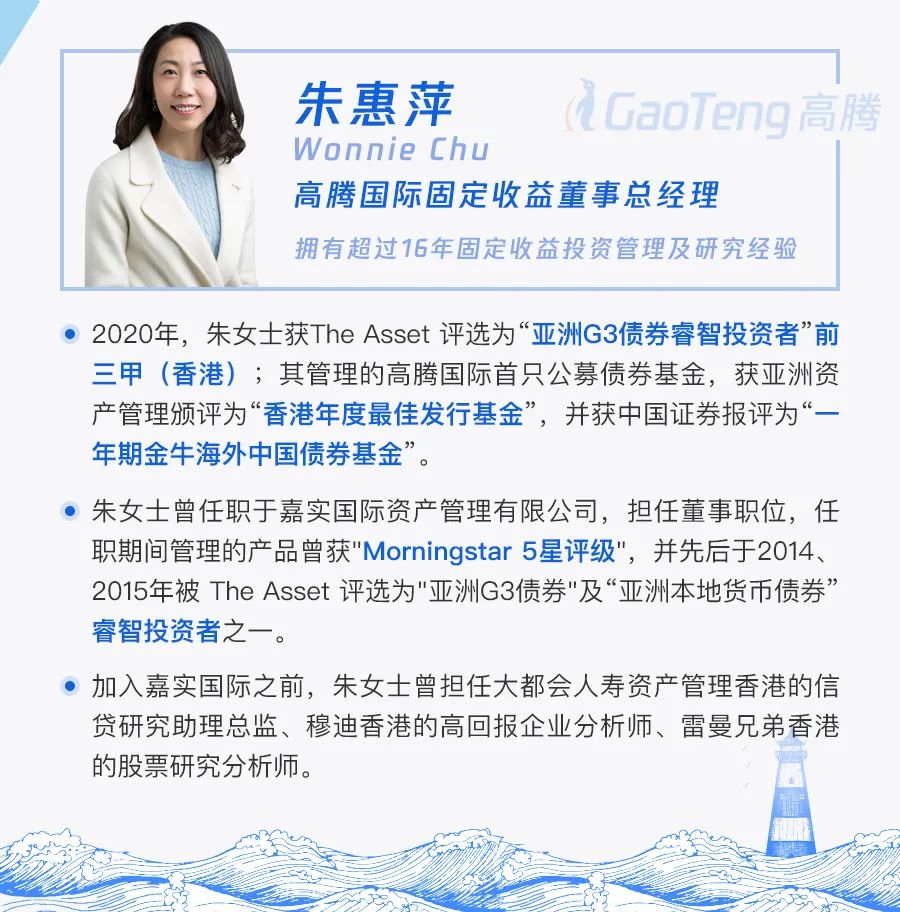
Wonnie Chu
Managing Director of Gaoteng International Fixed Income
1. What happened recently in the bond market?
The recent default of Huachen and Yongmei has raised market concerns, and the credit bond market is in turmoil again. Historically, China has been gradually breaking through recent transactions. In the past, the market has also experienced several rounds of high-impact credit default cases: 2014 ultra-Japanese bonds, state-owned enterprises with excess production capacity such as China Steel, China Railway Materials, and Northeast Special Steel defaulted in 2015-2016, and private enterprises with poor qualifications began to default normally after 2016. Defaults are no longer unfamiliar to the bond market, but why is the focus on the default market so high this time?
After the past few rounds of default, the market has become more cautious and rational, and also pays more attention to credit qualifications themselves rather than simply “belief.” However, in this round of default, market investors discovered shadows of debt evasion, such as companies defaulted bonds after allocating assets. This caused investors to worry about widespread learning effects and triggered a wave of “active” corporate defaults. As a result, many bonds with flawed qualifications were sold by investors in a panic, thus amplifying the impact on the market.
In the past two years, with the rise of the media, social attention attracted by this round of events has increased dramatically. However, judging from the level of default and the current impact on the market, the real impact is far lower than the shock brought to the market by the first default of a state-owned enterprise in 2015-2016. (The number of “thunderstepping” institutions revealed in this round is also far lower than in 2015-2016, and the extent of the sell-off and intensity of credit bonds is still manageable).
II. The impact of recent credit bond defaults on the market
We believe that the impact on the market will still be more manageable. At the regulatory level, investigations have begun on whether defaulting companies have evaded their debts. This is undoubtedly the biggest stabilizer in the market. The central bank has also accumulated rich handling experience in the past few rounds of default incidents, and the probability that credit risk will turn into a liquidity crackdown has been drastically reduced. Yongmei itself has also paid interest and said it is actively raising capital. The core concern of the market is “debt evasion.” Looking at it now, a series of regulations and corporate statements over the weekend are also driving the incident in a positive direction.
Of course,We still need to pay close attention if a well-known company defaults again in the short term, it may cause a further market shockIt also intensified the spread of panic, thereby triggering a wider decline in the market.
3. Do we hold the default bonds mentioned? Will it be affected?
Investors in overseas markets have experienced richer credit cycles, and they also pay more attention to fundamental analysis of the company's qualifications themselves. Therefore, after this round of domestic market defaults,Overseas dollar bonds do not fluctuate drastically. Most flawed bonds have long been fully priced.
We adhere to strict fundamental investment and investment discipline. Currently Gaoteng Micro Fund-Gaoteng Asia Income FundNot investedThis type of corporate debt.Despite the murmur of market default events, our portfolio has performed steadily, the impact is not significant.
IV. Gaoteng International's Investment Logic and Strategy
Fund manager Ms. Zhu Huiping (Managing Director of Gao Teng International Fixed Income) summed up the investment philosophy as follows:Active management, reverse investment, sector rotation. Through in-depth fundamental research, we reduce the probability of being hit by lightning, strictly abide by investment discipline, and reasonably control positions; and diversify investments and allocate low-correlation assets to spread risk, effectively avoid single events, reduce fluctuations, and actively generate returns for the portfolio.

summed
Gaoteng Micro Fund-Gaoteng Asia Yield Fund has not stepped on the thunderbolt, and recent performance has been steady.
We believe that the impact on the market will still be relatively manageable, and overseas dollar bonds will not fluctuate drastically.
The overall Asian market sector continues to have capital inflows, and sufficient liquidity is still beneficial to the Asian sector. Fluctuations in the fourth quarter have brought good opportunities for well-placed long-term assets, and we hope to continue to strive for long-term steady returns through solid fundamental analysis.

Wonnie Chu   Managing Director of Gaoteng International Fixed Income  1. What happened recently in the bond market?  The recent default of Huachen and Yongmei has raised market concerns, and the credit bond market is in turmoil again. Historically, China has been gradually breaking through recent transactions. In the past, the market has also experienced several rounds of high-impact credit default cases: 2014 ultra-Japanese bonds, state-owned enterprises with excess production capacity such as China Steel, China Railway Materials, and Northeast Special Steel defaulted in 2015-2016, and private enterprises with poor qualifications began to default normally after 2016. Defaults are no longer unfamiliar to the bond market, but why is the focus on the default market so high this time?  After the past few rounds of default, the market has become more cautious and rational, and also pays more attention to credit qualifications themselves rather than simply “belief.” However, in this round of default, market investors discovered shadows of debt evasion, such as companies defaulted bonds after allocating assets. This caused investors to worry about widespread learning effects and triggered a wave of “active” corporate defaults. As a result, many bonds with flawed qualifications were sold by investors in a panic, thus amplifying the impact on the market.  In the past two years, with the rise of the media, social attention attracted by this round of events has increased dramatically. However, judging from the level of default and the current impact on the market, the real impact is far lower than the shock brought to the market by the first default of a state-owned enterprise in 2015-2016. (The number of “thunderstepping” institutions revealed in this round is also far lower than in 2015-2016, and the scope and intensity of credit bond sell-off is spreading...
Risk Disclaimer: The above content only represents the author's view. It does not represent any position or investment advice of Futu. Futu makes no representation or warranty.Read more
Dizzy
1
Thumbs Up
20
Heart
1
1
1.1M Views
Report
Comments (7)
Write a Comment...
7
23