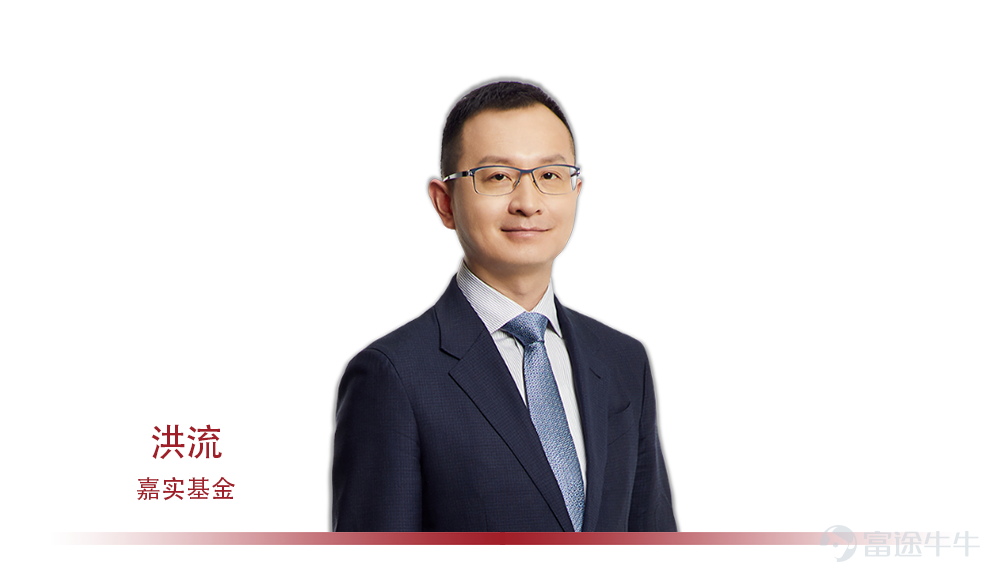

[Awarded] Which investment opportunities in Greater China are you optimistic about?

Harvest Fund's Hong Liu: The New Normal of A-shares Through the Eyes of a 20-year Value Investor
Introduction: Hong Liu from Harvest Fund is a star fund manager we have interviewed every year for the past two years. As the Managing Director of Harvest Fund and Chief of Balanced Investment, Hong Liu has over 20 years of investment research experience in the A-share market, resembling a bottle of aged Maotai—rich and fragrant—with unique investment accumulation and charm.
Hong Liu views capital market pricing with great foresight. He believes that the introduction of the registration-based IPO system will accelerate market-oriented pricing, leading to greater differentiation among asset management firms in research capabilities. In the future, a large number of excellent companies will go public, so pricing ability must be 'front-loaded,' allowing for an in-depth evaluation of corporate value before listing.
China's capital market has never ceased its pace of reform, with the registration-based IPO system being one of the significant milestones. As an asset management institution, it is necessary not only to embrace reform and change but also to carry out self- 'reform and iteration.'
This year, Harvest Fund Management launched a new decade of investment research strategic upgrade. The core of this upgrade is to enhance and focus investment capabilities, dividing the investment direction into several key strategic tracks, using an Alpha Seeking mindset to build sustainable excess return capacity. The era of "personal heroism" in the asset management industry has ended, and future excess returns will rely on a powerful investment research platform and system. Through upgrading investment research, resources can be allocated more efficiently, ultimately helping investors achieve long-term favorable returns.
Harvest Fund’s Hong Liu: A 20-Year Value Investor's Perspective on the New Normal of China's A-Share Market
As a seasoned investor with over 20 years of experience across market cycles, Hong Liu has a profound understanding of the business models of various industries. He exudes a particularly calm demeanor.

Below, we share some of Hong Liu's investment "golden quotes":
1. In the context of globalization and industrial upgrading, the alignment between Chinese companies' valuation systems and fundamentals continues to improve, and the market value of high-quality companies will see steady and sustained growth.
2. The registration-based IPO system further reconstructs the capital market's valuation framework, making theoretical supply infinitely large, and pricing is no longer solely based on past three-year profitability. This offers institutional investors greater freedom from an industrial perspective and becomes a more decisive factor for success.
3. Extending the timing of asset allocation will become a significant source of excess returns. Differences among fund managers will also grow larger, making in-depth research increasingly critical.
4. Our company emphasizes an Alpha Seeking mindset, which is based on in-depth research into industries and listed companies. This is one of the most important characteristics of Harvest Fund Management.
5. Everything we do ultimately isn't about research for the sake of research or investing just for the sake of investing; it’s all about generating Alpha.
6. Due to the increase in residents reallocating assets towards the equity market and the steady rise of institutional investors’ share, China's market may enter a prolonged structural slow bull phase. It will be difficult to acquire shares of quality companies at low prices, making the pursuit of excess returns more complex.
7. In the future, asset management companies will still compete on the forward-looking nature and depth of research, as well as the scalability of their research platforms.
8. Between aggregate and structural factors, we should try not to make ceiling predictions because our research is primarily bottom-up.
The initial position determines the annual return.
Zhu Ang: It's been a year since our last discussion. Could you share your investment insights over the past year and any updates to your framework?
FloodOur fundamental framework remains unchanged, which is good industry, good company, and good price. A solid investment framework must be both stable and capable of evolving. This year, we have made minor adjustments within this larger framework, driven by two factors: first, our assessment of the pandemic, and second, how the framework responds to external shocks.
An investment framework must flexibly respond to significant external market shocks.Whether it’s growth strategies, pure value strategies, or GARP strategies, all faced certain incompatibilities this year, indicating that it’s not an individual issue. Faced with major changes, everyone's investment frameworks have shown limitations in self-adjustment and evolution. Many highly experienced fund managers delivered relatively flat performance this year due to two reasons: one, the large size of their products, and more importantly, reluctance to make drastic adjustments to their investment frameworks, especially in response to severe external shocks. Those products that appeared strong in the early stages of the pandemic may have simply been positioned in growth sectors from the start rather than adapting effectively later. This highlights the advantage of 'positioning' in a portfolio and its positive impact on performance.
As for our transformation, previously we had a lower tolerance for valuations, but now considering the trend in risk-free rate levels, profound changes in China’s economic and industrial structure, and the introduction of the registration-based system,we have increased our tolerance for valuation based on a deep understanding of industry development prospects and company fundamentals.
Identifying long-term investment themes based on national endowments
Zhu Ang: Where are the key areas for the next phase of asset allocation?
FloodIn terms of focus, we must remain committed to high-quality investment themes. Consumer goods have always been a key area for our allocation.
First, although the consumer sector was impacted at the beginning of the year, given China's actual situation, when the economy begins to recover even slightly, consumption remains the best choice. Not only does it generate significant revenue, but its valuation levels have also surpassed previous years. The fundamentals of consumer goods are also sustainable, which proves that as retail investors gradually exit, institutional investors’ allocation power is strengthening.
Secondly,65% of China’s GDP growth comes from the consumer sector—high-end, mid-end, and low-end. Different consumer demands correspond to different product lines. Various categories cut across multiple dimensions, creating multi-layered market opportunities.Personally, I believe that consumption remains in a relatively stable growth trend. Its brand power, product strength, channel capabilities, and its own financial condition are all strong. Therefore, consumption is still a very important component of China’s economy.
Zhu Ang: Besides the consumer sector, what other directions do you favor?
FloodAnother area I am optimistic about in the long term is advanced manufacturing.
First, China's manufacturing industry has strong competitiveness and vast potential.Currently, China is not yet a technological powerhouse but is in the process of upgrading as the world’s largest manufacturing country. From the perspective of China's national endowments, its competitive advantage in manufacturing is significant. China possesses the most comprehensive range of manufacturing categories globally, with complete supply chains and industrial chains. We have observed that sectors such as new energy photovoltaics, new energy vehicles, and Apple’s supply chain operated smoothly during the pandemic, ensuring good production continuity; we also saw medical devices and protective equipment being exported to many countries worldwide. In the process of industrial upgrading and evolution, China's outstanding manufacturing companies are advancing towards sophisticated "smart manufacturing" and becoming world-class manufacturers.
Second, China's manufacturing industry demonstrates strong resilience in crisis management.。For example, in the third quarter, as China effectively controlled the pandemic while outbreaks continued overseas, the textile industry shifted production back from India to China. During this realignment of supply chains, we can clearly see China's global comparative advantage in the manufacturing sector. Currently, frontline workers in some countries are still unable to gather at factories, and their ability to respond to customer demands and restore manufacturing capacity remains off track. This is why China's exports have performed better than expected this year, even growing against the trend.
Third, the fundamentals of many leading manufacturing companies have recovered beyond expectations.Amid this year’s pandemic, industry differentiation intensified, favoring market leaders who demonstrated strength, and many leading Chinese manufacturing companies achieved excellent market capitalization growth. Their profit growth aligns reasonably with valuations. High-quality companies across various subsectors have shown both fundamental and valuation recovery, which I believe is a very bright highlight in China's capital markets.
Another long-term promising sector is pharmaceuticals.
The pharmaceutical sector is increasingly influenced by policies, which are driving structural optimization within the industry. For instance, policies like medical insurance cost control and centralized procurement have brought drug and medical device prices back to reasonable levels. On the other hand, the introduction of the registration-based IPO system has led to the emergence of innovative drug companies with no profit records or low profitability, forming a "new asset class" in the pharmaceutical sector. We also see systematic linkages between private equity and public markets, such as Hillhouse Capital's full industrial chain layout and pricing power in the innovative drug industry.
Zhu Ang: Nowadays, everyone in the market says technology, pharmaceuticals, and consumer goods are the best sectors. What’s your take on technology?
FloodTechnology is the primary productive force. In the capital markets, the best sectors within the technology industry are those with cross-sector attributes—where technology merges with consumer goods or advanced manufacturing, creating a group of high-quality compound tech companies that experience long-term sustainable growth. For example, consumer electronics is a sector where technology intersects with consumption. From 2019 to now, the best-performing tech sector has been consumer electronics, with leading companies showing rapid earnings growth in tandem with innovation cycles. The second investment theme in the technology sector is import substitution and achieving self-reliance. Examples include sub-sectors like 5G and semiconductors.
We have two approaches to investing in technology stocks: one is to use the U.S. as a mirror to reflect China's industrial investment logic; the other is to use the Hong Kong market as a platform to find technology stocks we can allocate to. We invest in quality internet platform-type and software-focused companies in the Hong Kong market, while in the A-share market, we focus on hardware-oriented platform companies.
The registration-based system optimizes resource allocation but imposes more stringent upfront research requirements.
Zhu Ang: Do you think the capital market has played a significant role in reallocating resources this year?
FloodWe can see that, overall, the rise in the index of the capital market this year has been limited, but the market value of leading enterprises has grown very rapidly. For example, a premium liquor brand in the consumer goods sector has reached a market cap of two trillion yuan, a home appliance company in the manufacturing sector has surpassed 600 billion yuan in market value, and a leading machinery firm has grown from a few hundred billion yuan to over a trillion yuan in market cap.All these indicate that, in an era of globalization and institutionalized investing, the valuation systems and fundamentals of Chinese companies are increasingly aligned, with the market values of quality firms experiencing stable and sustained growth.
Secondly, this year has seen record-breaking levels of IPOs, refinancing, and fund issuance, fully leveraging the capital market’s role in driving economic restructuring and growth. This also channels residents’ savings into the capital market through professional institutional investors, mainly via funds, which have delivered excellent overall performance. As a result, the capital market’s function of reallocating resources for the national economy and household wealth is gradually becoming evident.
Thirdly, the comprehensive implementation of the registration-based system and the establishment of delisting mechanisms will help concentrate social resources on industries and investment areas with long-term sustainable growth potential. The era of professional, institutionalized management is accelerating, making the capital market’s resource allocation function more efficient. A long-term structural slow bull market in China’s capital market is foreseeable.
Zhu Ang: Earlier, you mentioned that the registration-based system has influenced the prediction of valuations. Could you elaborate on that?
FloodThe registration-based system further reconstructs the capital market’s valuation framework because future supply will no longer be restricted by profitability metrics, nor will pricing strictly follow the profit levels of the past three years. Institutional investors must deeply analyze companies from an industry perspective. The differences in industrial research capabilities among institutional investors provide greater valuation flexibility for unprofitable companies under the registration-based system, becoming a key differentiator in future competition among institutional investors.
Here, 'flexibility' can be explained as follows: Previously, we used unified standards to evaluate companies, such as P/E ratio, P/B ratio, PE, PB, ROE, PEG, and so on. These metrics were designed for valuing mature assets. However, under the current investment system led by industrial capital, a group of innovative companies without a profit track record have entered the secondary market. After receiving financing from the capital markets, these innovative companies experience rapid changes in fundamentals, resulting in high volatility in secondary market valuations.
Some investors secured prime positions at the bottom when these companies first went public, giving them a significant competitive advantage for the next five to ten years. This is unlike before, where simply holding good stocks could generate excess returns. Therefore,Extending the timing of asset allocation will become a major source of excess returns. Differences among fund managers will also widen, making forward-looking, in-depth research increasingly important. This will also be reflected in the upgrades to our Harvest Fund Management’s investment research process this time around.
Zhu Ang: Does bringing pricing forward mean that research must be conducted even earlier?
TorrentIn the future, many newly listed stocks may seem expensive right after their IPOs. At that point, it will require insight into the company's future development. The essence of excess returns won’t change, with the core being an understanding of corporate value, including the ability to create value, the entrepreneurial spirit of management, and the value provided to employees and society.
Where will future changes occur?Due to the steady increase in individual investors allocating more to equity assets and the growing proportion of institutional investors, China’s market may enter a mid-to-long-term structural slow bull phase, making it difficult to find cheap investment opportunities. As a result, obtaining excess returns will become more complex.The downside risk has decreased, but to achieve excess returns, we need to reconsider our strategy and positioning.
In the future, new developments will continuously emerge, which is the new normal for capital markets. When new phenomena and opportunities keep arising, only forward-looking in-depth research can generate excess returns.
Harvest Fund’s Alpha Seeking prepares for a new era.
Zhu Ang: Could you elaborate further on Harvest Fund's investment research strategy upgrade?
TorrentFirst,We have reassessed and reorganized industry sectors, identifying a group of strategic tracks,Strategic tracks refer to specific sub-sectors that can produce companies with massive market capitalizations. These are broad, not single entities, and we will focus our research efforts on these tracks. If new companies continue to emerge within this track and grow sustainably, we may allocate three, five, or even more analysts to perfect the research framework for this sector.
Secondly, at Harvest Fund, all staff participate in research. Analysts will increasingly concentrate on strategic tracks and top-tier companies; fund managers will also conduct research because understanding these new products requires participation in in-depth discussions and field research on key strategic products, ensuring synchronized and continuous evolution of knowledge.
Third,Our company emphasizes an Alpha Seeking mindset based on deep research into industries and listed companies.This Alpha Seeking, built upon solid foundations, will become one of the most significant characteristics of Harvest Fund going forward.We will steadfastly conduct in-depth analysis on sources of returns, examining industrial changes and continuously seeking new opportunities in emerging industries. This is where Harvest Fund demonstrates greater scalability within our research framework.
Fourth, institutionally, we have adopted a 'Chief Fund Manager System.' A chief fund manager is like a rocket, with several assistant fund managers acting as boosters to support the chief fund manager in investment research on specialized tracks. While an airplane can only reach 30,000 feet, a rocket can go into outer space — this is the rationale. At the same time, we have also established a Lead Analyst Mechanism, driving investments through deep research, thoroughly analyzing industry developments, evaluating high-quality assets, and forming strategic assessments along with investment-research synergy.
Fifth, we have strengthened the management of the stock pool to prevent risks and ensure that issues do not gradually emerge later on. We have raised the threshold for stocks entering the pool, requiring in-depth research and internal discussion for each inclusion, ensuring that regardless of over-allocation or under-allocation, significant risks will not arise.
Zhu Ang: From your perspective, what is the starting point of Harvest Fund’s Alpha Seeking strategy?
TorrentIn my view, when we evaluate a company, we don’t look at past prices but base our assessment on long-term future growth value. Everything we do is ultimately not just for the sake of research or investment itself, but for the sustained generation of Alpha over the long term.We need to understand the source of Alpha, using first principles to find, track, and implement Alpha.
Asset Management Enters Its Best Era
Zhu Ang: How will changes in the scale of listed companies impact the capital market in the future?
FloodNow there are companies with trillion-yuan market caps, and also some with hundreds of billions in market value. These are all excellent enterprises,I believe that the main battleground for the future capital market should be companies with hundreds of billions in market cap.The scale of funds is getting larger and larger. In the future, everyone will operate in areas with depth, just like in the U.S., where people used to wonder why there were companies with market values of one or two trillion dollars. Now it seems normal, and in the future, we will see the same in the A-share market.
This is a rather interesting perspective,We’ve noticed that the market capacity is growing, which is very suitable for both domestic and foreign investors to thrive.We can see fund managers managing products worth 50 billion yuan with excellent performance, precisely because they are making allocations. The impact of scale on their returns is becoming smaller and smaller, which is why everyone needs to rethink the market. At present, some people have achieved good returns through small-scale flexible trading, but in fact, the replicability of this investment model is very weak.
In China's capital market, there are still some people who have built a perfect product return curve, with annualized returns already exceeding 20%. If the structural slow bull market in the A-share market continues for 5 to 10 years, their annualized return could reach 30%, which would be extremely impressive. Because their management scale is large, compounded returns will steadily drive the growth of their assets under management.Giant fund management companies and fund managers overseeing more than 100 billion yuan in assets will soon emerge.
Zhu Ang: So, will the asset management industry become completely concentrated at the top?
FloodIt won't be so extreme. Some asset management companies focus on a few niche areas, such as pharmaceuticals, consumer goods, or technology sectors, and they can still stand out. However, without systematic in-depth research, it is impossible to become a leading asset management company.In the future, what asset management companies will compete on is still the forward-looking nature of research, in-depth research, and the scalability of the research platform.
Long-term value must have social value.
Zhu Ang: How do you understand value? How many levels of value do you perceive?
TorrentAll our investments are based on value investing. This 'value' has three sources.
The first level,Does this company have actual social value?That is, does its existence have meaning? Has it created value for society, such as creating jobs and tax revenue, fostering new industrial environments? This is a kind of integration of social value and intrinsic value, which we pay close attention to.
The second level,The investment value of a company lies in whether long-term allocation can bring sustained returns to institutional investors, meaning whether it has growth potential.,I often tell others that growth and value are organically unified. That's why the first open-ended product I launched at Harvest Fund is called Harvest Value and Growth Mixed Fund. During the investment process, if the value is purely static, then its value is limited. If you truly buy into investment value, it should inherently possess long-term growth attributes.
At the third level, value is embodied in human value. We focus on outstanding entrepreneurs and their inherent entrepreneurial spirit. A great entrepreneur demonstrates perseverance, has deep research capabilities, understands industry patterns, builds excellent business and profit models, and drives value creation for shareholders, employees, and society.
In 2021, both value and growth have opportunities.
Zhu Ang: At this stage, which low-valuation areas do you favor?
TorrentLow-valuation assets may carry a 'value trap,' and investing in low valuations is far more challenging than investing in growth stocks. The low-valuation sectors we favor are those related to macroeconomic recovery, such as cyclical growth areas like non-ferrous metals, construction machinery, and home appliances, as well as leading companies in real estate and financial sectors with interim allocation value.
Zhu Ang: Both the liquor and active pharmaceutical ingredient sectors already have large market caps. From an industry perspective, could they face a market cap ceiling?
TorrentFirst,Industry ceilings generally refer to total volume rather than structure. The core of structure lies in the shifting competitive dynamics of enterprises.Better than you, I will devour your market value.I think the concept of an industry ceiling itself has some issues because supply can create demand.Take the mobile phone industry as an example. Initially, everyone used Nokia phones, and no one thought that new innovations could emerge in mobile phones. When Apple introduced the smartphone and revolutionary innovations, Apple became the world's largest market-cap company. The idea that supply creates demand is very meaningful; looking at the development of various industries, the ceiling stops when innovation ceases.
Secondly, between total volume and structure, we should try not to predict ceilings because our research is mostly bottom-up. First, the core focus is on a company’s development potential; second, it’s about the company’s competitive ability and growth characteristics. As long as the intrinsic value and social value of a company can be integrated to meet humanity's pursuit of a better life, it can eventually break through the industry ceiling.
Innovation in the baijiu sector is difficult, but whether there’s a ceiling is still hard to say. From the perspective of industry supply and demand, there definitely is a ceiling in terms of total volume, but not structurally. For example, a certain premium baijiu company currently produces more than 30,000 tons annually, and its products are in short supply. As long as production capacity is effectively unleashed and prices steadily rise, growth potential will open up.
Third, I believe that as long as human society keeps moving forward on the path of innovation, the ceiling won't be a core issue. Supply can create demand, and conversely, demand can also drive supply; the two have a symbiotic relationship.
Risk Disclaimer: The above content only represents the author's view. It does not represent any position or investment advice of Futu. Futu makes no representation or warranty.Read more

Comments (2)
to post a comment
3