
Hong Kong stocks pull back—how will they perform in the second half of the year?

Buy the dip! Southbound capital scooped up HK$11.3 billion in a single day! These sectors are being positioned...
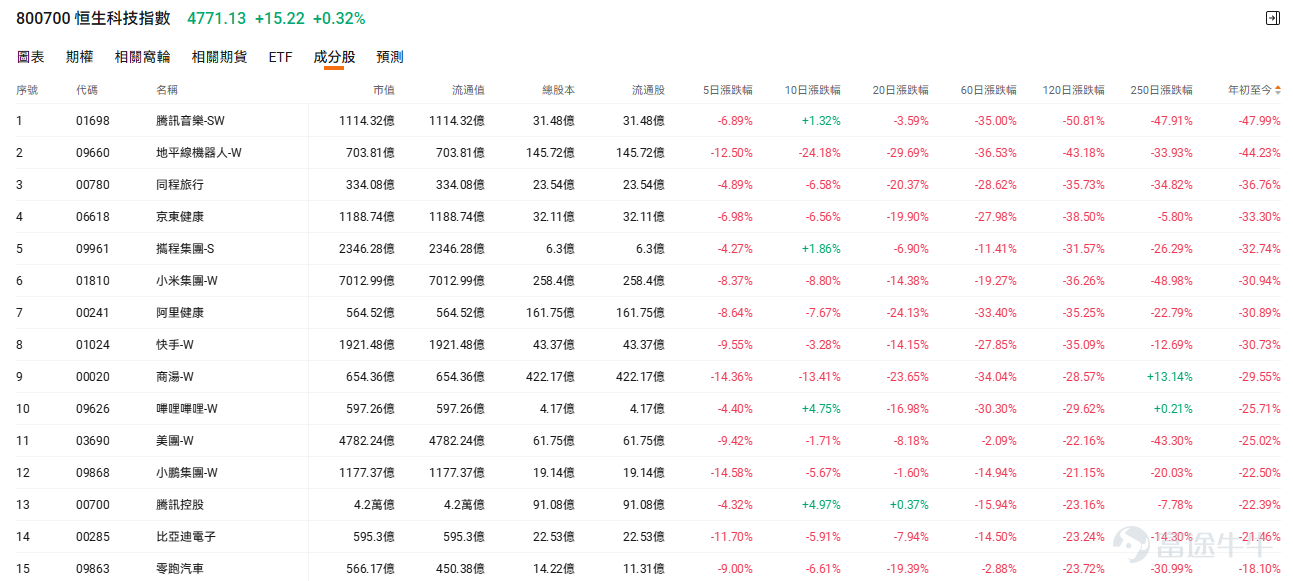
On June 8, 2026, Hong Kong stocks retreated across the board amid macroeconomic headwinds, $Hang Seng TECH Index (800700.HK)$ closing down 2.71%, with technology, semiconductor, and innovative drug-related stocks broadly declining, pushing market sentiment into a temporary slump.However, southbound capital staged a classic 'buying on dips' move—recording net purchases of HK$11.318 billion in a single day,Among them,$TRACKER FUND OF HONG KONG (02800.HK)$ with net buying of HK$5.595 billion, $TENCENT (00700.HK)$ 、 $KNOWLEDGE ATLAS (02513.HK)$ 、 $CSOP Hang Seng TECH Index ETF (03033.HK)$ 、 $KB LAMINATES (01888.HK)$ 、 $YOFC (06869.HK)$ and other targeted names all receiving significant net inflows.
Which sectors are southbound funds positioning into during this market downturn? This article will decode the allocation strategy of southbound capital and offer analytical insights.
Historical Review: Rising Rates ≠ Valuation Compression for Growth Stocks
Since Q4 2025, the Hong Kong stock market has undergone a significant correction. CICC’s analysis points out thatthis pullback stems from the confluence of three pressures: concerns over liquidity tightening due to heightened Fed rate hike expectations, market skepticism about AI-related capital expenditure returns weighing on tech heavyweights, and weaker-than-expected manufacturing PMI data signaling soft fundamentals.
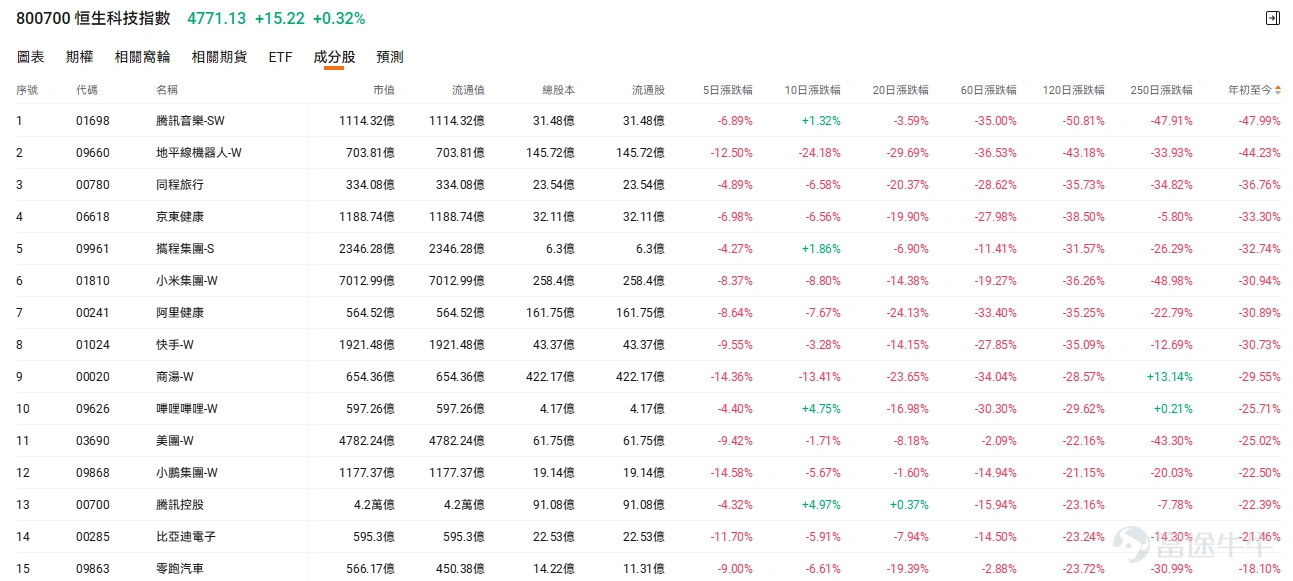
Specifically, $Hang Seng Index (800000.HK)$ the index briefly fell to the 24,000-point mark, with technology stocks bearing the brunt of the sell-off, $XIAOMI-W (01810.HK)$ with a cumulative decline of over 30% year-to-date in 2026, and Tencent down more than 20%, $KUAISHOU-W (01024.HK)$ 、 $BILIBILI-W (09626.HK)$ 、 $MEITUAN-W (03690.HK)$ and others all came under pressure, leading the declines.
There is a common misconception in the market that Fed rate hikes and rising interest rates inevitably lead to valuation compression for growth stocks. However, historical evidence shows this causal relationship exists only under the assumptions of discounted cash flow models and does not hold up to empirical testing.Looking back at major industrial boom periods in both the U.S. and China, growth stocks with strong industry tailwinds and solid earnings delivery were still able to generate independent outperformance—even amid liquidity tightening environments.
A recent research report from GF Securities noted that if a stock’s price appreciation is driven predominantly by valuation expansion (rather than EPS growth), then interest rate hikes and liquidity tightening will have a pronounced negative impact. However, if industry trends drive consistent EPS upgrades and robust earnings realization among sector leaders, the disruption from interest rates and liquidity conditions will only be temporary, leaving the medium-term price trend unaffected.
Looking ahead to the second half of the year, many institutions believe that downside risks to Hong Kong equities’ fundamentals have largely been priced in. With foreign capital returning and southbound fund inflows increasing, the Hong Kong market is expected to regain upward momentum. High-dividend income assets, hard-tech leaders backed by solid earnings, and domestic demand recovery plays are favored. However, institutions also caution about potential headwinds, including a peak in share lock-up expirations and volatility in overseas monetary policy.
Southbound funds bought HK$11.3 billion in a single day! These sectors are being quietly accumulated.
PCB industry chain: AI-driven computing power fuels simultaneous volume and price increases
$KB LAMINATES (01888.HK)$ On June 8, it received net southbound fund inflows of HK$324 million—a move that was no coincidence. PCBs (printed circuit boards), the 'skeleton' of electronic products, are now entering a supercycle driven by surging AI computing demand.
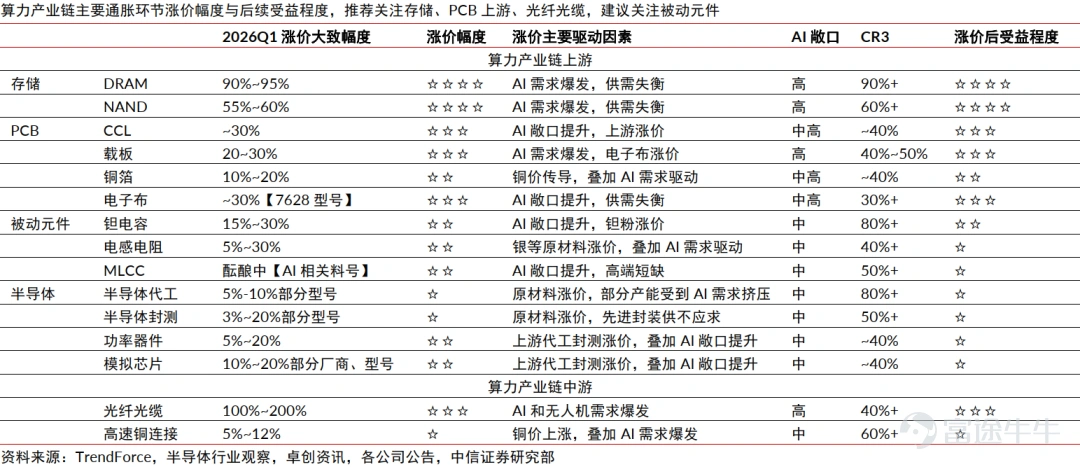
According to a research report from Dongwu Securities,With the nonlinear growth of AI computing infrastructure, a significant supply-demand gap has emerged for upstream PCB raw materials, driving sustained price increases for key inputs such as copper foil, electronic glass fabric, and resins.Prices of electronic glass fabric have already risen 60–95% year-to-date, and inflationary pressure is expected to accelerate further in June, quickly pushing up prices of copper-clad laminates (CCL). Since 2025, KB Laminate has raised prices seven times consecutively.
As the world’s largest integrated manufacturer of copper-clad laminates and electronic substrates,KB Laminate owns a complete vertical supply chain—from fiberglass and electronic glass fabric to CCL—capturing profits at both ends!In 2025, the company delivered explosive earnings growth, achieving total revenue of HK$20.40 billion, up 10.0% year-over-year; net profit surged 83.6% YoY to HK$2.442 billion. Revenue from its core CCL business alone reached HK$20.225 billion, up 10.5% YoY, accounting for the overwhelming majority of group revenue.
As the global AI-focused CCL market continues to expand, the company stands to benefit directly.CITIC Building Materials Commentary: Embracing the strongest micro-level certainty amid macro uncertainty; target market cap for KB Holdings at HK$250 billion.
Internet Giant: Revaluation of WeChat’s AI Ecosystem
$TENCENT (00700.HK)$ Received net southbound capital inflows of HK$1.162 billion, reflecting the market's repricing of its AI strategy. Tencent has recently been highly active in the AI space—WeChat Open Platform has started offering developers easy access to WeChat’s AI ecosystem. Additionally, multiple media outlets report that Tencent is testing a prototype of an AI agent embedded within WeChat.
According to media reports, the WeChat AI agent will allow users to swipe right to activate an AI Agent and directly instruct it to operate WeChat Mini Programs to complete practical tasks such as ordering food delivery, hailing rides, or booking hotels—effectively connecting WeChat’s entire ecosystem into a seamless transaction loop.
Unlike other large-model products struggling to find monetization paths, the WeChat AI Agent is inherently positioned 'closest to money' from day one.Once launched, the WeChat AI Agent could deliver precise long-tail traffic to businesses (especially SMEs) on Mini Programs, potentially reshaping Tencent’s customer acquisition logic for its To B business.
From a valuation perspective, Tencent currently trades at a P/E ratio of 15.73, near a historical low, with its share price having fallen below HK$500. As WeChat’s AI ecosystem gradually materializes, the company stands to undergo a significant revaluation.

Optical Communications: The 'Neural Network' of the Computing Power Era
$YOFC (06869.HK)$ Has recorded net southbound fund inflows for three consecutive days, totaling HK$744 million, reflecting market recognition of the critical role of optical communications in the AI computing power era.
A recent research report by Guosheng Communications noted that a key driver behind the current rally in optical fiber stocks is surging overseas demand, which has become a core growth catalyst. Chinese fiber-optic cable manufacturers are now systematically expanding overseas.
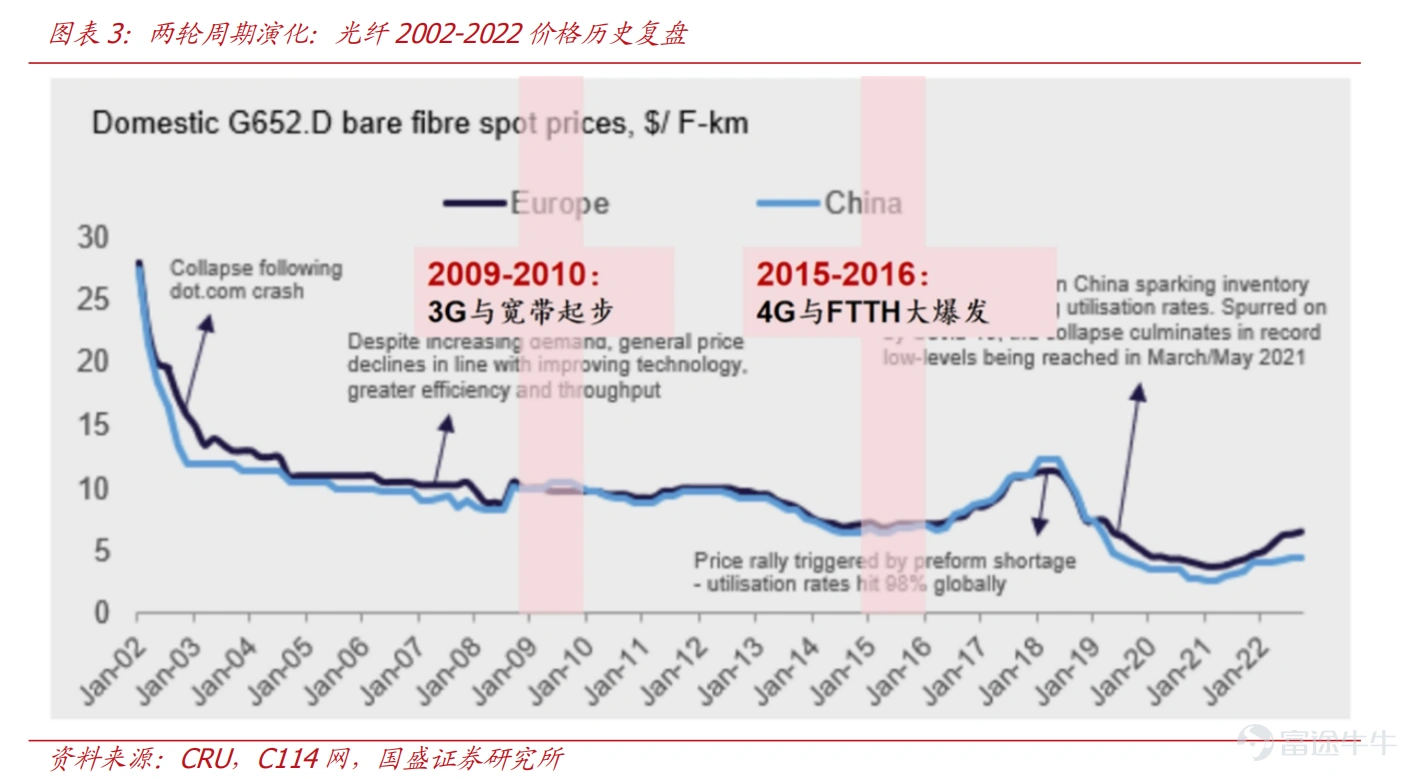
The North American optical fiber market is currently experiencing a severe supply-demand imbalance.On one hand, accelerated AI data center construction is driving exponential growth in fiber density requirements; on the other hand, U.S. domestic optical fiber production capacity is highly concentrated among a few manufacturers like Corning, and capacity expansion is constrained by the 18–24 month lead time required for preform (optical fiber preform) production, making short-term supply nearly inelastic. Cloud service providers (CSPs) are thus strongly motivated to lock in prices and secure supply. The rise in data center demand and the scaling up of specialty fiber production mean that optical fiber is transitioning from a commoditized bulk product into a ubiquitous passive component in the AI era, fundamentally altering its traditional cyclical dynamics and leading to a revaluation of its valuation framework.
On June 8, $Corning (GLW.US)$ Signed a multi-billion-dollar agreement with Amazon to produce optical fiber for data centers in the U.S., causing its stock price to jump 5.6% in a single day. The company had previously entered into strategic collaborations with Meta and NVIDIA. Global tech giants are now locking in optical fiber capacity with unprecedented intensity. From the 'queue' of tech giants signing long-term contracts, we can identify three key trends:
(1)The core bottleneck in AI computing clusters is shifting from compute power to interconnectivity: As GPU clusters scale from tens of thousands to hundreds of thousands or even millions of cards, inter-node communication bandwidth has become the critical bottleneck limiting large model training efficiency.
(2)Supply chain security has become a strategic priority: Multiple tech giants are placing oversized orders—a form of 'over-procurement'—reflecting their extreme emphasis on securing supply chains for critical materials.
(3)Optical interconnects have become the new battleground in the data center arms race: Traditional copper cabling solutions can no longer meet the demands of AI clusters in terms of power consumption, reach, and bandwidth density. Optical fiber is becoming the standard solution for both intra-data-center interconnects (DCI) and chip-to-chip connectivity.
Legendary investor John Templeton once said: 'Bull markets are born in pessimism, grow on skepticism, mature in optimism, and die in euphoria.' For rational investors, the key today is not to predict every Federal Reserve interest rate decision, but to identify which companies can consistently create value amid industrial transformation.
At this historic moment of a tech industry boom, companies that can seize the trend and deliver strong earnings will ultimately be rewarded by the market.
Risk Disclaimer: The above content only represents the author's view. It does not represent any position or investment advice of Futu. Futu makes no representation or warranty.Read more


Comments (4)
to post a comment
48
52