
[Industry Frontline] After Jiu'an Medical and Hot View Biotech, who else can “play” with medical devices?
Influenced by the collection, “Northeast Yao Mao” Changchun Hi-Tech and Shigekura Changchun Hi-Tech's “Pharmaceutical Goddess” Gu Lan recently appeared in the hot news. According to the author's statistics, Changchun Hi-Tech dropped three times in a row from January 19 to 21, and finally opened a slump this Monday (24th). The stock fell 35.11% cumulatively on January 19-25. During the period of three consecutive declines, some shareholders said they “drank three bottles of tap water in three days.”
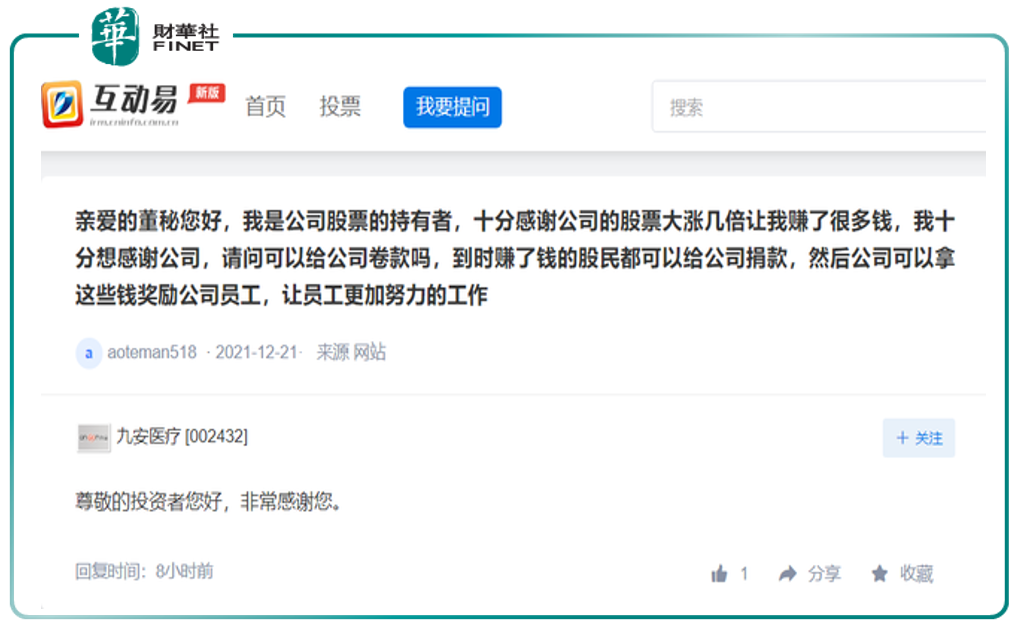
Meanwhile, the “monster stock” Jiu'an Medical in the early days has also continued to decline. On January 21, 24, and 25, it has continued to “drop” three times in a row on the three trading days of January 21, 24, and 25 (Jiu'an Medical's trend is a “roller coaster” on the 25th; it's not a word drop to a stop). The stock's “lace”: Previously, a shareholder made a profit and shouted to donate money on Interactive Easy, but now it continues to fall to a standstill, and his wish has “been successfully realized” (see figure below).
The pharmaceutical-biological sector has been under a lot of pressure recently. According to WIND data, the Pharmaceutical Biology Index (Shenwan) began to decline on January 18, with a cumulative decline of 11.24% from January 18 to 25. At the individual stock level, as described above, whether it is an industry leader or subject concept, the decline is quite significant.
This probably has something to do with the recent general environment.
The recently held National Assembly set the tone for 2022 collection and decided to normalize and institutionalize centralized procurement of pharmaceuticals and high-value medical consumables. The medical and pharmaceutical industry is under great pressure. According to a recent report by Securities Daily, Chen Qiaoshan, a medical researcher at the Understood Research Institute, said that currently, the medical industry has three clear investment lines: innovative drugs, CXO (pharmaceutical R&D outsourcing), and high-end medical devices.
As can be seen from the recent IPOs of medical companies, these three types of companies have the highest number and scale of listing. Among them, the medical device sector has always received a lot of attention in the market. Although it has experienced a round of national collection, judging from the valuation level, the medical device sector is highly valued, and is not limited to high-end medical device companies.
Although collection is the biggest uncertainty in the industry, and medical device valuations are also high, institutions have recently been very “interested” in the medical device industry.
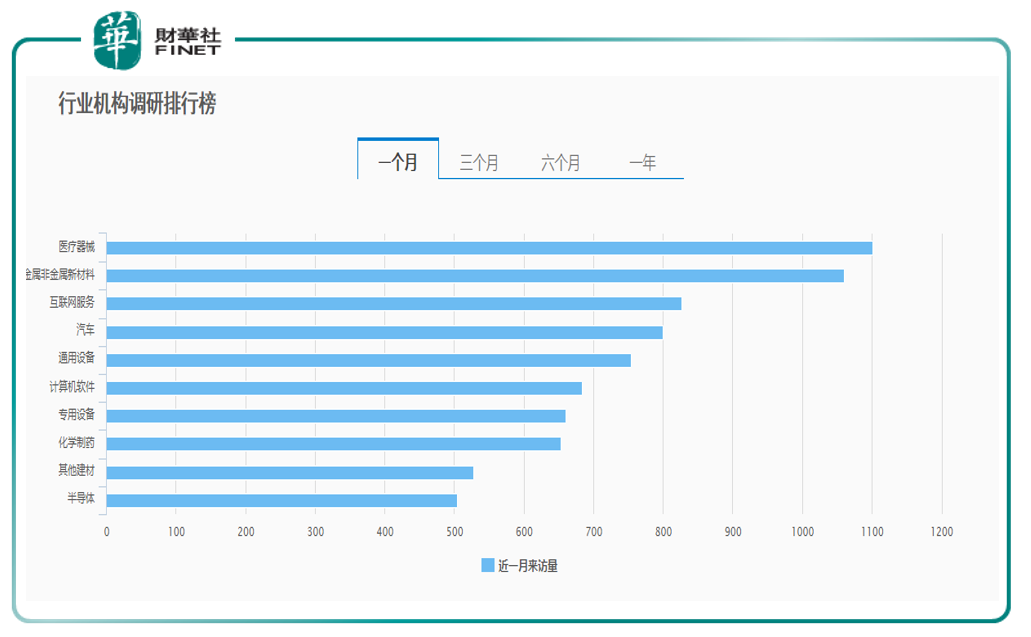
The author found from Choice data that the medical device field has received a lot of attention from institutions in the past month. According to institutional research data, according to industry research rankings, as of January 23, medical devices have ranked first in the past month.
According to the news, there is a recent industry planning document from senior management, which is probably the reason why institutions are “interested” in medical devices recently.
On December 28, 2021, multiple departments jointly issued the “14th Five-Year Plan” for the Medical Equipment Industry; the plan clarifies 7 key areas, implements 5 special actions, and adopts 6 safeguard measures to promote the development of the medical equipment industry. Seven key areas include diagnostic testing equipment, treatment equipment, monitoring and life support equipment, traditional Chinese medicine diagnosis and treatment equipment, maternal and child health equipment, health care and rehabilitation equipment, and active implant interventional devices. The author wrote the article “Medical Equipment Top-Level Plan Released, List of Core Stocks in Seven Key Areas!” on December 31 of last year The investment opportunities that existed in various fields after the plan was released are detailed in.
According to the Southwest Securities Research Report, the sales scale of medical devices in China increased from 370 billion yuan in 2016 to 688.2 billion yuan in 2019, with a compound annual growth rate of 18%. Demand for COVID-19 prevention and control has increased, domestic medical device companies are booming, national policies strongly support restrictions on domestic medical equipment and imported products, and domestic equipment is expected to benefit hospitals.
In addition, according to iResearch, the global medical device industry market size in 2020 was 349.8 billion yuan, up 4.6% year on year. The global medical device industry is expected to reach nearly 418.5 billion yuan by 2025, with a compound growth rate of 4.5% from 2014 to 2020. Looking at the domestic market, as of 2020, China's medical device market was about 811.8 billion yuan, up 15.5% year on year, close to 4 times the global medical device growth rate. China has also become the second largest medical device market in the world after the United States. The total size of China's medical device market is expected to be close to trillion yuan in 2021.
Institutions are interested and the market is large. The author then counted the relevant situation in the medical device industry, combined with the latest financial data already published (2021 three-quarter report) and the published 2021 annual report performance forecast, and looked for industry-related investment opportunities as a whole.
According to the classification standards of the Shenwan Industry (2021 edition), pharmaceutics is a level 1 industry, medical devices are a level 2 sub-industry under the industry, and medical devices are also divided into 3 level 3 sub-industries.They are: medical equipment, medical consumables, in vitro diagnosis.The following data are all according to WIND's 2021 edition of the industry classification statistics.
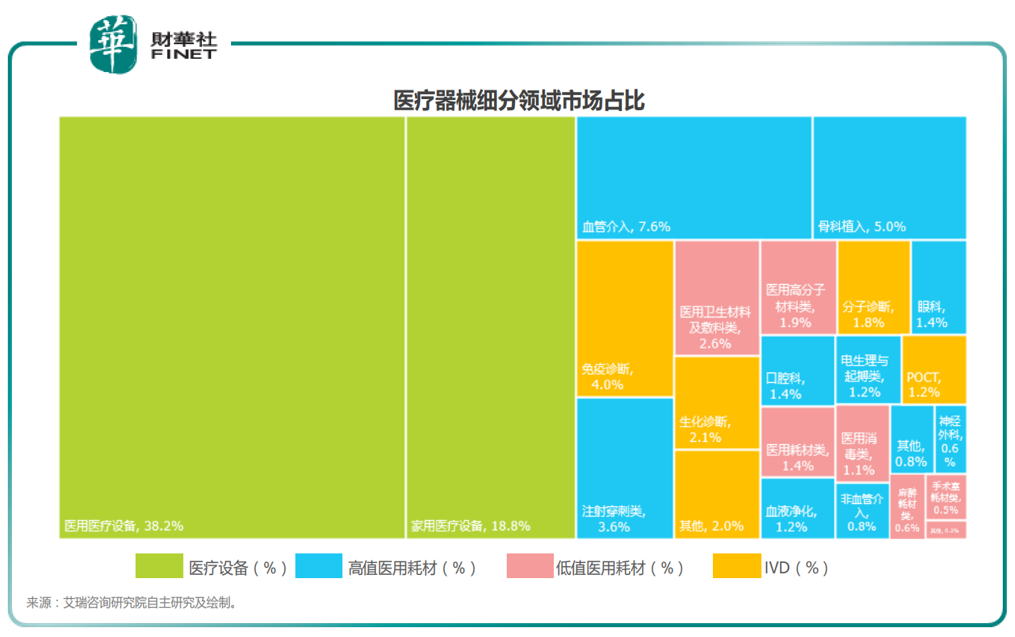
According to iResearch, medical devices can be divided into several categories according to product characteristics, such as medical devices, high-value consumables, low-value consumables, and in vitro diagnosis.
Among them, medical equipment accounts for the largest share, which is subdivided into medical medical equipment (38.2%) and household medical equipment (18.8%).Medical devices are the main sub-industry in medical devices(See the green section below).
So let's first take a look at the A-share listed medical device companies.
medical equipment
According to WIND data,There are 29 A-share listed companies for medical devices, according to the 2021 three-quarter report:
1. Year-on-year growth rate of operating income:The arithmetic average was 14.59%, and the median was 12.10%. There were 12 companies above average. Among them, the top three were Chutian Technology (67.24%), Haier Biotech (54.89%), and Dongfulong (54.61%).
2. Year-on-year growth rate of net profit attributable to mother:The arithmetic average is 46.25%, and the median is -10.50%. A total of 14 companies have positive profits and 15 have negative profits. The absolute difference between profitable companies and loss-making companies is extremely large, resulting in a large difference between the average and the median. For example, the top three were Chutian Technology (723.53%), Kaili Healthcare (418.78%), and Aohua Endoscopy (174.58%), while the top three loss-making companies were Hejia Healthcare (-94.94%), Jiu'an Healthcare (-86.19%), and Yangpu Healthcare (-83.59%).
According to WIND data, as of January 24, 10 companies in the medical equipment industry have announced their 2021 full-year performance forecasts, with 5 pre-increases, 2 pre-cuts, 1 initial loss, 1 reversal of losses, and 1 slight decrease.
Of these 10 companies, 6 can find the median net profit predicted by the agency. We used the agency's forecast value to compare the performance forecast (lower forecast net profit limit) announced by the company to see which company exceeded expectations and which company thundered (same below):A total of 5 companies fell short of agency expectations, and 1 exceeded agency expectations.
3. Failure to meet institutional expectations (the company's forecast net profit lower limit is less than the agency's expectations, same below):Dongfulong, Chutian Technology, Furui Co., Ltd., Kaili Healthcare, and Sannuo Biotech.
4. Exceed institutional expectations (the lower limit of the company's forecast net profit is greater than the institutional expectations, same below):Yirui Technology.
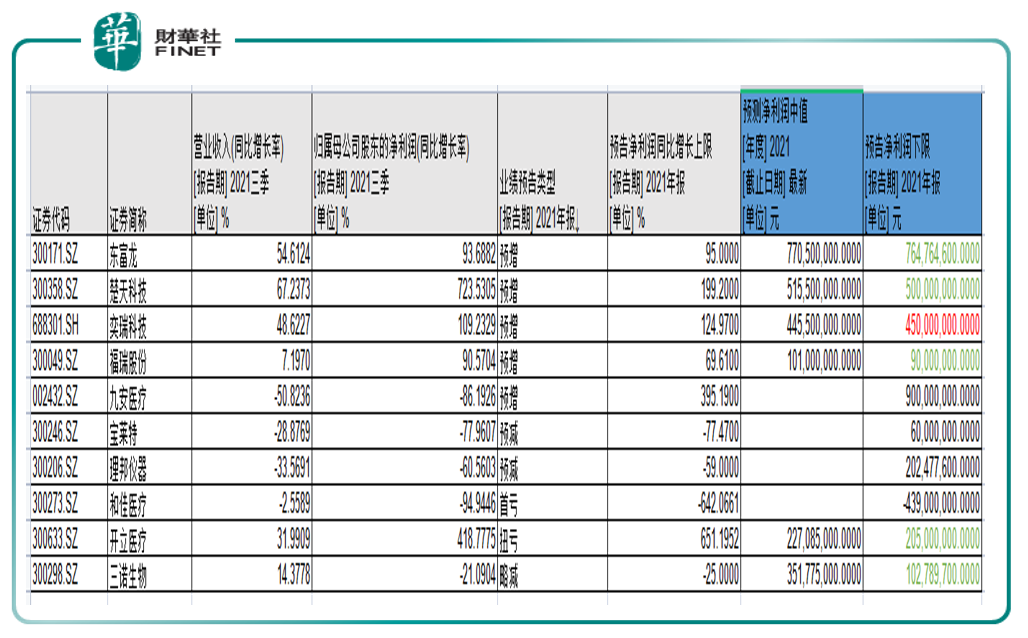
The table above shows the performance status of 10 companies that have announced their performance forecasts. Note the lower limit of forecasted net profit column.Green indicates that it falls short of institutional expectations, and red indicates that it exceeds institutional expectations(Corresponds to the domestic practice of stocks falling green and rising in the K-line, same below).
Yirui Technology's recent financial information,On January 24, the main capital had a net inflow of 12.1898 million yuan, a net inflow of floating capital of 181,700 yuan, and a net outflow of retail capital of 726,700 yuan. (Note: The main capital is large order transactions, floating capital is large order transactions, and retail investors are small to medium order transactions).
The company explained the reason for the increase in performance in the announcement: in 2021, the company continued to actively explore the global market and successfully achieved the introduction and mass production of many strategic customers. At the same time, sales of new medical and industrial products maintained rapid growth, and the share of dynamic product sales further increased.
medical consumables
According to WIND data, there are 37 A-share listed companies in medical consumables, according to the 2021 three-quarter report:
1. Year-on-year growth rate of operating income:The arithmetic average was 29.16%, the median was 33.59%, and 21 companies were above average. Among them, the top three are Cardiac Medicine (55.45%), Bairen Healthcare (54.24%), and English Healthcare (52.56%).
2. Year-on-year growth rate of net profit attributable to mother:The arithmetic mean was 36.12%, and the median was 39.42%. The reason the average was lower than the median was that Sano Medicala, which had the most losses, lowered the average (-326.65%). Among the profitable companies, five companies doubled their net profit (up more than 100% year over year), namely Jimin Healthcare (316.37%), Hualan (252.83%), Haohai Biotech (175.64%), Huitai Healthcare (126.38%), and Aibo Healthcare (104.36%).
Recently, Sano Healthcare once again revealed plans to reduce shareholders' holdings by a large percentage.
According to Sano Healthcare's announcement, the company's shareholders Great Noble Investment Limited, Denlux Microport Invest Inc. and their co-actors Denlux Capital Inc., and CSF Stent Limited plan to reduce their holdings by no more than 17.97% of the company's shares. Among them,CSF Stent Limited plans to reduce its holdings in a liquidation style,It is one of the individual stocks with the largest reduction in shareholders' holdings recently.
In fact, since November 2020, some shareholders of Sano Healthcare have frequently proposed plans to reduce their holdings. In the end, the actual reduction ratio of holdings was about 10.72%.The actual cash package amount is approximately 460 million yuan.
The company's highest stock price was 43.60 yuan in July 2020, but recently the stock price has dropped to single digits (around 7-8 yuan).
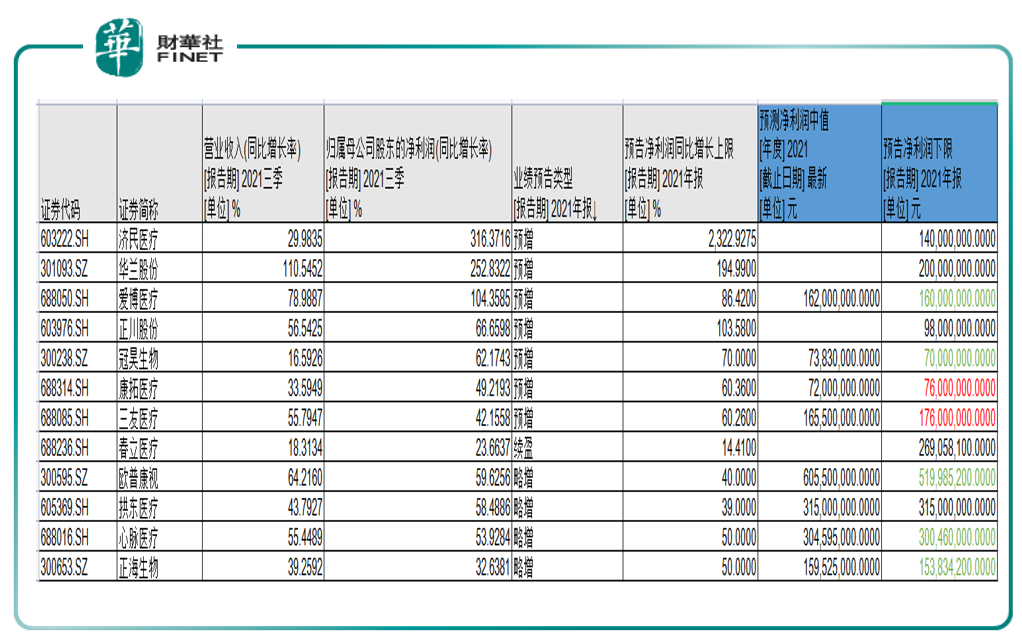
According to WIND data, as of January 24, 12 companies in the medical consumables industry have announced their 2021 full-year performance forecasts, with an advance increase of 7 companies, a slight increase of 4 companies, and 1 renewed profit, all of which are good news.
Of these 12 companies, 8 were able to find the median net profit predicted by the agency. 5 fell short of the agency's expectations, 2 exceeded the agency's expectations, and 1 fully met the agency's expectations.
3. Failing to meet institutional expectations:Aibo Healthcare, Guanhao Biology, Opcom Vision, Cardiac Healthcare, and Zhenghai Biology.
4. Expectations of superinstitutions:Kangtuo Medical, Sanyou Medical.
5. In line with institutional expectations:Gongdong Medical (third to last line in the table below, not color-coded).
In vitro diagnosis
According to WIND data, there are 39 A-share listed companies for in vitro diagnosis, according to the 2021 three-quarter report:
1. Year-on-year growth rate of operating income:The arithmetic average is 119.72%, and the arithmetic average is higher than that of medical equipment and medical consumables. The reason is that there were only 5 companies with negative year-on-year growth in in-vitro diagnosis revenue, and negative values dragged down the industry as a whole. In the same period, under the same index, 7 companies had negative values for medical equipment and 6 companies for medical consumables had negative values.
The median year-on-year growth rate of in vitro diagnosis revenue was 27.16%, with 7 companies above average.It is worth mentioning that Hejing Biotech's revenue increased 2508.41% year over year, ranking first among the sub-industries.
The stock rose and fell sharply at the beginning of this year. Like Jiu'an Medical, it falls into the same category of “monster stocks.” Among them, from January 5 to 14, the stock had a cumulative increase of 107.48%, doubling in 8 trading days; from January 17 to 24, the stock made a U-turn and declined again, with a cumulative decline of 40.06%. 6 trading days were close to a “backdrop” (of which the 15th and 16th were double holidays), rising and falling sharply, making it difficult to operate.
The stock conceptually belongs to the COVID-19 testing sector. Recently, the director of Lijing Biotech actively interacted with investors to respond to topics such as the accuracy and testing efficacy of COVID-19 test kits developed and produced by the company. It said on the investor interactive platform that after bioinformatics comparison and analysis, the company's COVID-19 testing reagents can detect the Omicron COVID-19 variant, and related products have been sold in more than 30 countries and regions around the world.
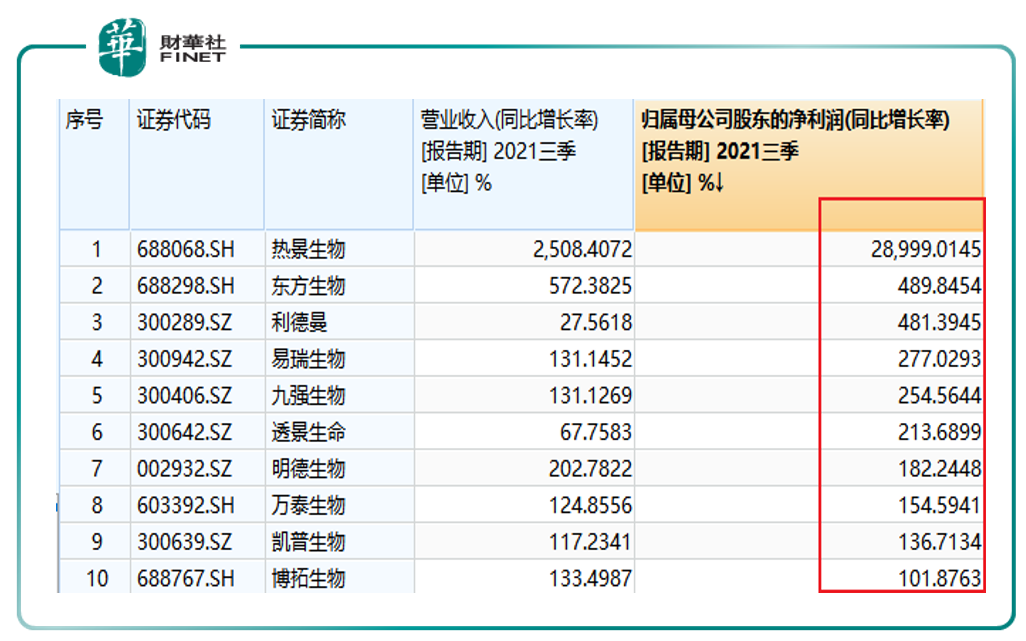
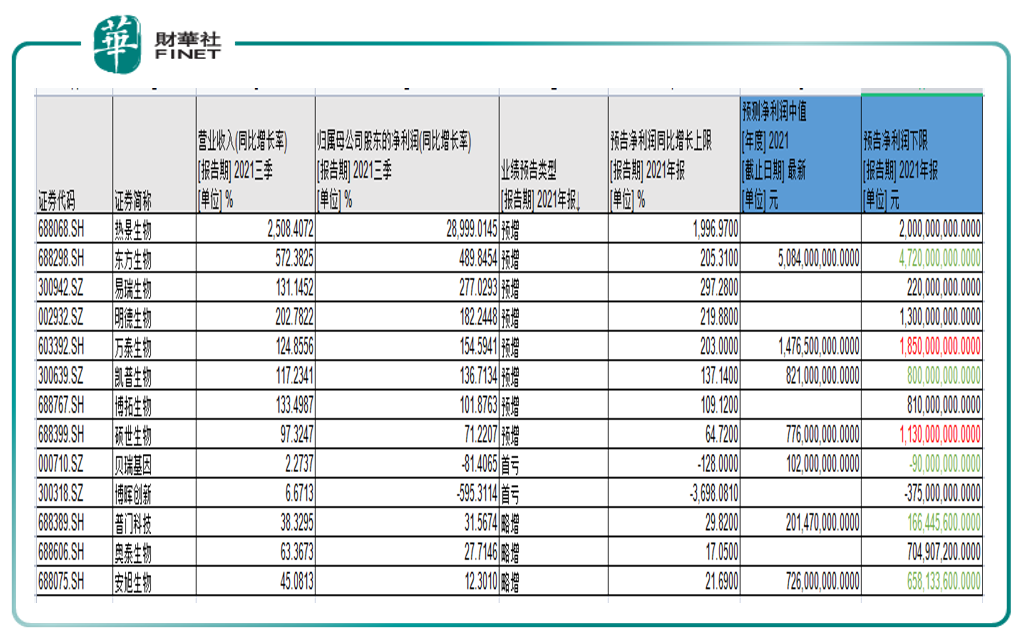
2. Year-on-year growth rate of net profit attributable to mother:The arithmetic average is 800.51%, which is such a high average. The reason is that Hejing Biotech “averaged” everyone else's family (28999.01%). At first, I even thought it was wrong, and after repeated checks, it was confirmed that it was correct.
In addition to HeatKing Biotech, nine other companies doubled their net profit (up more than 100% year over year), as shown in the table below.
According to WIND data, as of January 24, 14 companies in the in-vitro diagnosis industry had announced their 2021 full-year results forecasts, with an advance increase of 8 companies, a slight increase of 4 companies, and an initial loss of 2 companies.
Of these 14 companies, 7 were able to find the median net profit predicted by the agency. 5 fell short of the agency's expectations (including the thunderstorm of Berry Gene's performance), and 2 exceeded the agency's expectations.
3. Failing to meet institutional expectations:Oriental Biotech, Capbio, Berry Genomics, Pumen Technology, and An Xu Biotech.
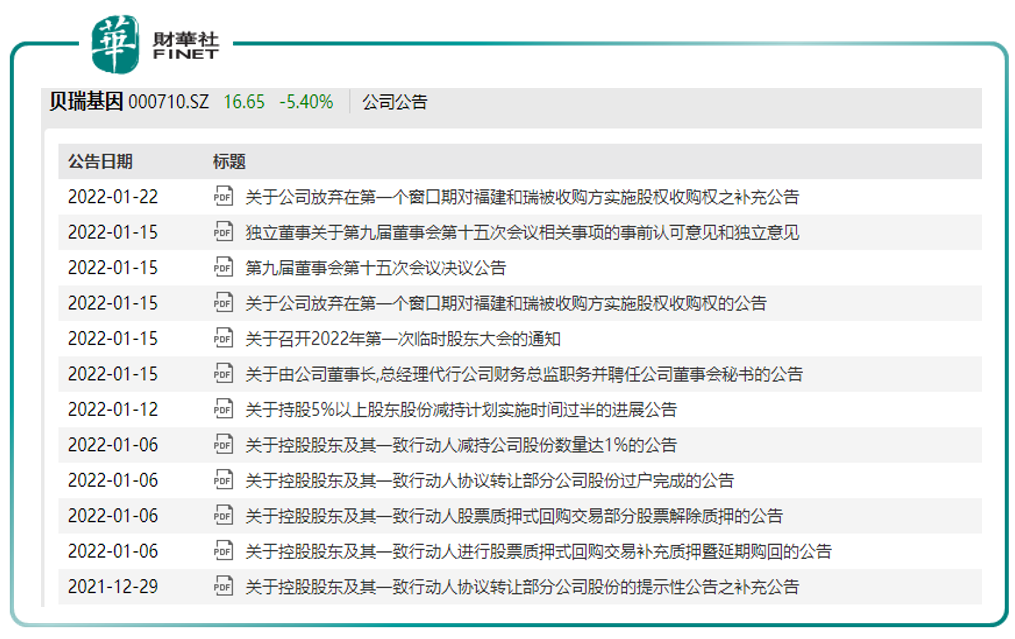
The author hereby makes a special reminder that it is seriously out of line with the agency's expectations.Blizzard, a company whose performance suddenly changed its face, is Berry Genomics.
However, the author inquired about the company's recent announcement and found that some risk warning keywords are accompanied by announcements, such as pledge, reduction of holdings, abandonment, and executive changes (see figure below).
4. Expectations of superinstitutions:Wantai Biology, Shuoshi Biology.
It is worth mentioning that both companies have greatly exceeded expectations, especially Shuoshi Biotech. However, there has already been a reaction in stock price performance. For example, Shuoshi Biotech rose 55.35% from January 7 to 14, and fell by 34.58% from January 17 to 24. The stock price was on a “roller coaster.”
The author inquired about the company profile. Shuoshi Biotech is a leading domestic provider of in vitro diagnostic products. According to the announcement on December 31 of last year, the company stated at the institutional research conference in December last year that the company's performance in 2021 came from COVID-19 and two-wheel drive in conventional business, and did not simply rely on COVID-19 testing. In terms of routine business, the company's non-COVID-19 diagnostic reagents are mainly HPV, BV, and other infectious disease reagents.
Medical device sector summary
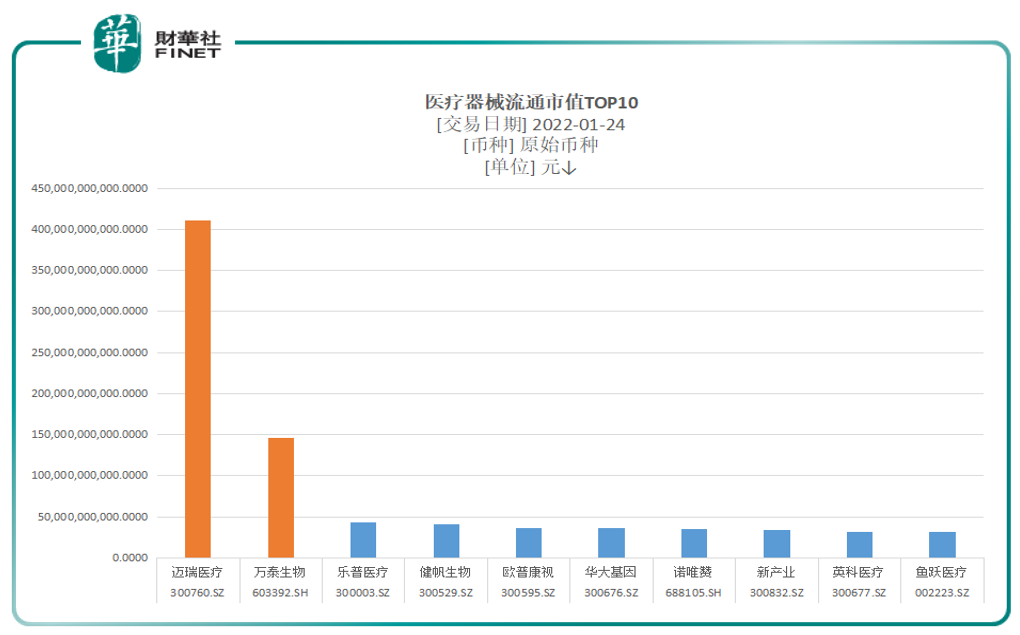
If you look at the ranking of market capitalization in circulation, the top 10 companies in the medical device industry by market capitalization, Mindray Healthcare and Wantai Biotech, are in an absolute “hegemonic” position (see figure below), and the last 8 companies have about the same market capitalization.
In 2021, Mindray Healthcare was still at the top of the list of popular stocks in institutional research. According to Choice data, the company's total number of institutional visits reached 3,065 throughout the year.It also became the only company that received more than 3,000 institutional visits.Previously, in 2020, Mindray Healthcare surpassed Hikvision to become the most popular company among institutions.
However, based on the industry segmentation data described above, many “small” companies have increased their performance or are more “sexy.” In particular, I just experienced a wave of “COVID-19 tests” at the beginning of the year, which created several “monster stocks”, such as Jiu'an Healthcare and Hot View Biotech.
For the three submolecular industries in the medical device industry, the overall situation of the sector is as follows:
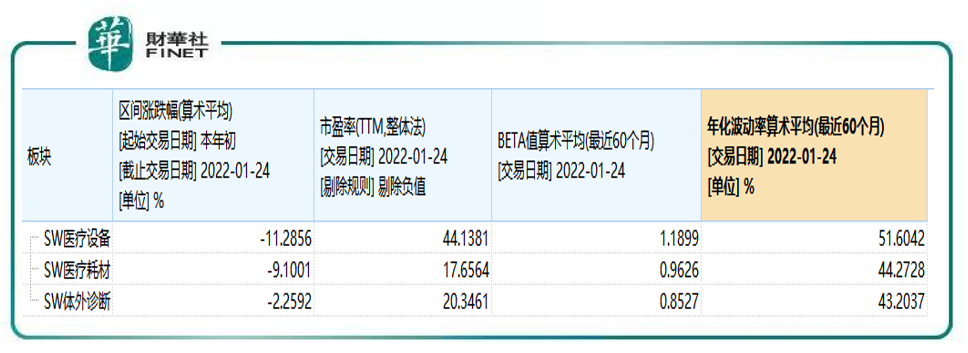
As can be seen from the table, although experiencing the “COVID-19 testing” market at the beginning of the year, all three sub-industries have declined since the beginning of the year. Among them, medical equipment has declined the most, while in vitro diagnosis is quite “stable.” Judging from the volatility, the fluctuations in the three sub-industries are similar, and the BETA value is leading for medical devices. This is a slightly larger relationship with mutual verification of the volatility of this sub-sector.
(Note: BETA value is a risk index used to measure price fluctuations of individual stocks or stock funds compared to the entire stock market. (The higher the value, the more volatile the stock is compared to the performance evaluation benchmark, and vice versa.)
To understand the investment opportunities and risks in terms of sub-industry classification, after reading through a large number of institutional research reports, I quoted China Merchants Securities's views as the end of this article:
Medical devices:
Medical equipment is the racetrack with the largest market size and relatively low import substitution rate in the field of equipment. The technical threshold for medical device development is high. In addition to self-research, enterprises mostly develop products and upgrade technology through mergers and acquisitions and cooperative R&D. As the COVID-19 pandemic continues, domestic replacement and internationalization of medical equipment are expected to usher in rapid development. You can focus on business opportunities such as mergers and acquisitions, equipment sales, supply chain finance, etc.
Medical consumables:
Short-term collection pressure for mature high-value consumables products is high. Taking coronary stents as an example, the national collection launched in 2020 had a great impact on the revenue scale, profit margin, and future growth space of the corresponding products. However, there is still plenty of room for import alternatives in the medium to long term for products such as cardiac interventional valves, neurological intervention, and peripheral vascular stents that have not yet fully met domestic clinical needs. While being wary of the risk of single product collection, we can pay attention to business opportunities for platform-based consumables companies to spin-off, listing, mergers and acquisitions.
In vitro diagnosis:
In vitro diagnosis is divided into biochemical, immunological, molecular diagnosis, and POCT. Biochemical import substitution is relatively complete, there is little room for technological progress, the pattern is stable, and there is a risk of collection in the short term. The chemiluminescence market has expanded rapidly in recent years, and domestic production has gradually moved from the low end to the middle and high-end markets. Short-term regional collection has sent a risk signal. Molecular diagnosis is at an early stage of development at home and abroad, and there is great potential in the future in fields such as companion diagnosis, early tumor screening, and prenatal diagnosis.
The author also looked for institutional holdings. Recently, with the gradual disclosure of the Quarterly Report on public funds, institutional holdings data also surfaced. It should be pointed out that, judging from the current public fund holdings situation, the pharmaceutical industry was the industry that was cut the most in the fourth quarter of last year (see statistics in the table below, where the industry actively increased and decreased positions).
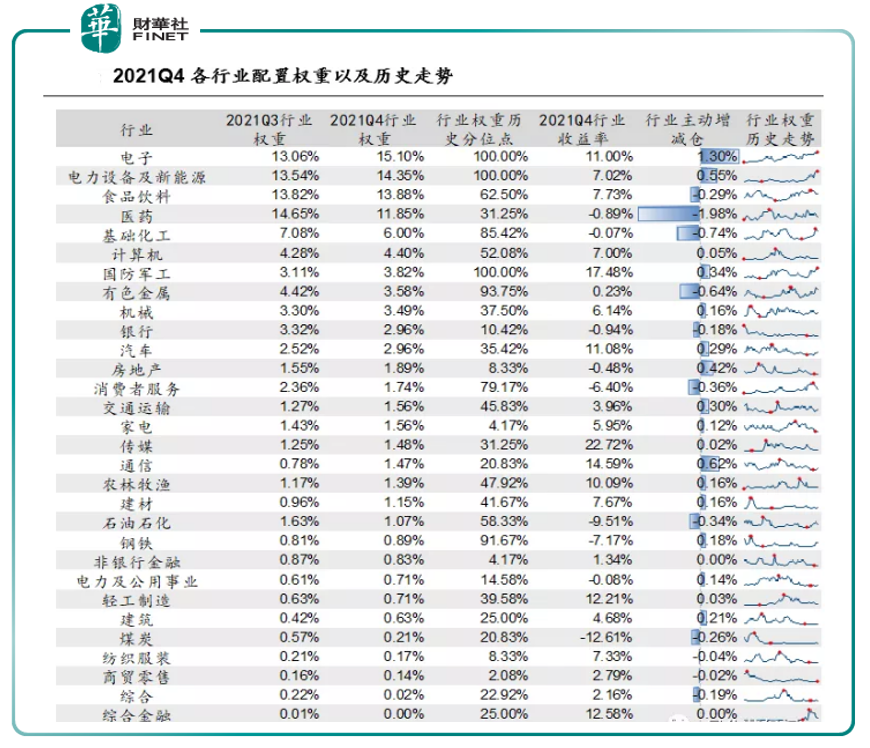
The details are as follows:
According to the 2021 Quarterly Report, the three industries with the highest allocation weight are the electronics, power equipment, new energy, and food and beverage industries, which are 15.1%, 14.35%, and 13.88%, respectively. The three industries that actively increased their positions were the electronics, communications, and power equipment and new energy industries, with the margins of 1.3%, 0.62%, and 0.55%, respectively, while the three industries that actively reduced their positions were the non-ferrous metals, basic chemicals, and pharmaceuticals industries, which were 0.64%, 0.74%, and 1.98%, respectively.
This article is a relatively hard-core research article. With individual stock performance forecasts being released one after another and Changchun Hi-Tech has become a hot topic, as an overall research article on the medical device industry, the author hopes to trigger some thoughts.
Xu Yao Yao
Risk Disclaimer: The above content only represents the author's view. It does not represent any position or investment advice of Futu. Futu makes no representation or warranty.Read more

Comment (1)
to post a comment
1
22