
TCL Technology stands at a crossroads that could reshape its valuation framework.
$Tcl Corporation (000100.SZ)$
When it comes to TCL, most people are well familiar with this "national brand"; TCL televisions can still be found in the living rooms of many households today. However, the key to TCL's rapid growth in recent years lies in the LCD panel (liquid crystal display) business, which is the core operation of its listed subsidiary, TCL Technology (000100.SZ). Back then, TCL founder Li Dongsheng's decision to focus on the LCD panel sector marked a pivotal turning point in the company's history.
Today, TCL Technology has become one of the domestic industry's "dual leaders," alongside BOE, and has raked in substantial profits amid a recent sharp rise in panel prices. However, as large‑size panel prices adjust, TCL Technology's stock price has pulled back, closing at 6.30 yuan per share on November 18—down more than 35% from its year‑to‑date high of 10.26 yuan per share in March.
It appears that the capital markets' view of the LCD panel industry's cyclicality remains unchanged, and TCL Technology continues to be labeled a "cyclical stock."Below, this paper will analyze whether TCL Technology can navigate economic cycles and elevate its intrinsic value by examining three dimensions: the supply side, the demand side, and technological development trends.
/ 01 /
LCD production capacity clustering
A "dual-leader" structure has taken shape.
"High technology, heavy capital investment, and long project cycles" are the most salient characteristics of the LCD panel industry, and they also form the foundation for understanding TCL Technology's fundamentals.
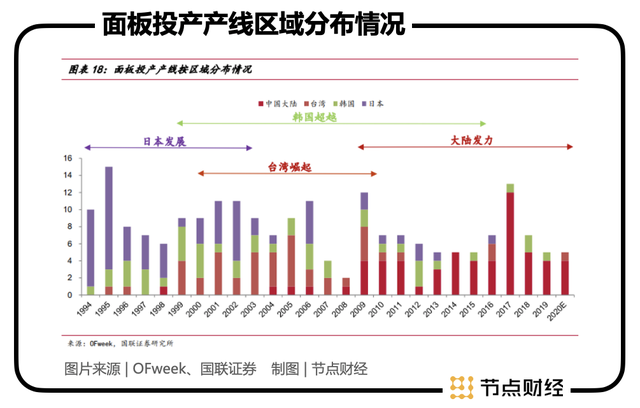
Public records show that LCD display technology originated in the United States in the 1960s and 1970s. After it matured into an industry, production shifted to Japan, South Korea, Taiwan, and other countries and regions. In recent years, China has caught up rapidly, even surpassing others in production capacity. In fact, around 2008—when Li Dongsheng decided to pivot to LCD panel manufacturing—China still relied heavily on imports for LCD panels.
Li Dongsheng once recalled, "At the time, the investment for our very first factory reached as high as 24.5 billion yuan. Prior to that, even our largest project had been just over 2 billion yuan—nothing compared in scale. Even by today's standards, an industrial project worth more than 20 billion yuan would still be considered a mega‑project."
Nor is this an exaggeration on Li Dongsheng's part. At present, the investment required for a single LCD panel production line typically starts at tens of billions of yuan, and its construction and ramp-up usually take two to three years.
In response to these industry characteristics, the LCD panel sector has adopted a "counter-cyclical" investment strategy: during downturns, it pursues acquisitions and mergers, invests in new production lines, eliminates competitors, and increases industry concentration; when market conditions improve, it leverages its capacity advantages to capture greater profits.
However, the "counter-cyclical" investment approach has, in turn, reinforced the cyclical nature of LCD panels, and after decades of evolution, the prevailing market consensus is unlikely to shift anytime soon.
In 2017, after LCD panel prices reached a peak, they remained persistently low. Under mounting operational pressures and driven by the need to invest in next‑generation technologies such as OLED (organic light‑emitting diode) panels, South Korean manufacturers—including LG Display and Samsung—began phasing out LCD production.
Conversely, domestic manufacturers such as TCL Technology and BOE have continuously expanded their LCD panel production capacity during this period, driven by robust demand in the Chinese mainland market. According to a research report by Guoyuan Securities, following this round of Korean manufacturers' exit, panel production capacity will further shift to China; by 2025, mainland China is expected to account for nearly 70% of global LCD panel capacity. Among them, TCL Technology's core subsidiary, TCL CSOT, currently operates six production lines with a total investment approaching RMB 200 billion.
As production capacity becomes increasingly concentrated, mainland Chinese companies have gained greater pricing power in the LCD panel market. Moreover, given the high‑tech, capital‑intensive nature of the industry, it has become exceedingly difficult for late entrants to break into this sector.
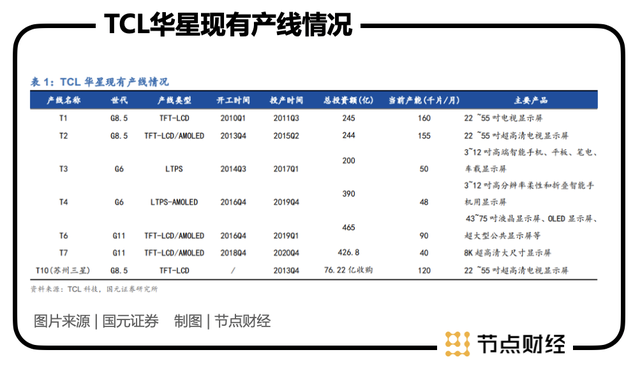
In terms of market share, in 2020, BOE and TCL CSOT accounted for 20% and 14.4% of total shipment area, ranking first and second globally, respectively. In the LTPS (low-temperature polysilicon) LCD smartphone panel segment, both BOE and TCL CSOT ranked among the top three. Additionally, in the large-size panel category, TCL CSOT holds the world's largest share in the 55-inch segment, the second-largest share in the 32-inch segment, and the second-largest share in the 65- and 75-inch segments.
In addition to its existing production lines, in April this year, TCL CSOT invested RMB 35 billion to build an 8.6-generation oxide‑based panel production line (t9) in Guangzhou. This expansion represents the final piece of TCL CSOT's strategic plan for its panel‑manufacturing footprint; once completed, the company will transition from primarily producing large‑size panels to becoming a full‑range‑size manufacturer.
At present, the "duopoly" between TCL Technology and BOE in the LCD panel industry is becoming increasingly evident. As Korean companies continue to exit the market, this trend will only strengthen, and the company is expected to enjoy a higher "leading‑firm premium," while the cyclicality of the LCD panel sector is gradually fading. However, whether it's TCL Technology or BOE, the valuation premium associated with their leading positions has yet to be adequately reflected in their stock prices.
Is the capital market simply too slow to recognize value, or does TCL Technology truly still fail to justify its lofty valuation? The final section of this article will offer a detailed analysis of the valuation issue. For now, we will continue to examine TCL Technology's fundamentals, tracing the narrative through the supply side, the demand side, and the evolution of display technologies.
/ 02 /
The Era of the Internet of Everything
Demand-side potential remains.
As supply-side capacity becomes increasingly concentrated, demand-side potential is gradually being unleashed.
On the demand side, LCD panels are typically categorized by size into three types: large‑size (TV panels), medium‑size (IT panels), and small‑size (mobile phone panels).
In the large‑size segment, TV panels—the largest application market for the LCD panel industry—have exhibited relatively low volatility and stable shipment volumes over the years, while in recent years they have been trending toward larger screen sizes and higher-end specifications.
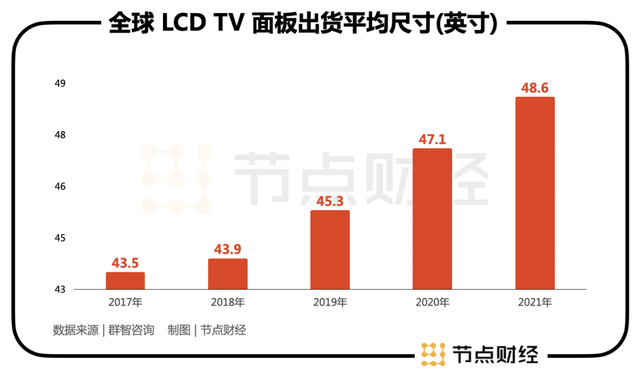
According to data from Qunzhi Consulting, in 2020, TCL Technology's VT panel shipments totaled 39.7 million units, accounting for approximately 14.6% of the global market, a 2% year-on-year decline. The total shipment area reached 26.6 million square meters, up 26% year on year. In this segment, TCL Technology ranked second only to BOE.
In the mid-size segment, over the past two years, driven by the pandemic, activities such as remote work, online learning, and at-home entertainment have become more prevalent, leading to a significant increase in shipments of IT panels—including desktops, laptops, and tablets.
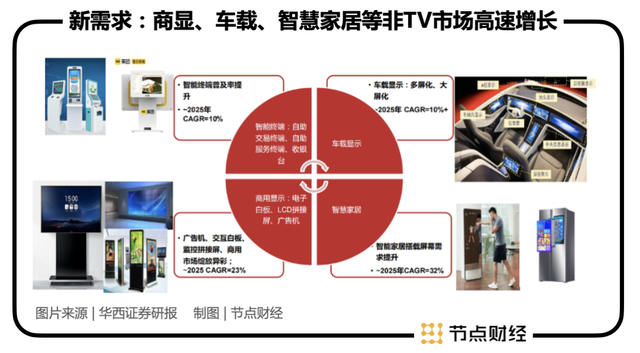
More importantly, with the advent of the Internet of Everything and the age of artificial intelligence, video displays—as key interactive interfaces—are seeing increasingly diversified and fragmented demand, offering significant potential to become new growth drivers for LCD panels.
For example, as the esports industry continues to grow, IDC forecasts that gaming monitor sales will surpass those of gaming desktop PCs for the first time in 2021. Meanwhile, driven by the broader trend toward vehicle intelligence, the increasing adoption of in‑vehicle displays in electric vehicles is expected to boost demand for automotive panels. According to Omdia, global shipments of automotive displays reached 127 million units in 2020, with a compound annual growth rate of over 10% projected through 2025.
In terms of small sizes, global smartphone panel shipments reached 1.89 billion units in 2020, up 6% year over year. LCD panels remain the dominant technology for mobile displays; in 2020, they accounted for more than 60% of total global smartphone panel shipments.
It's worth noting that in the smartphone display market, OLED screens have already become the dominant trend, with Samsung and LG firmly established as industry leaders. At this point, those familiar with the evolution of display technologies may wonder: when will OLED panels replace LCD technology in the medium- and large‑size segments?
Many investors are wary of manufacturers such as TCL Technology and BOE, and the market is even reluctant to assign them higher valuations, largely due to the threat posed by OLED technology.
So, is OLED technology really that game‑changing, and how will TCL Technology respond?
/ 03 /
Is Mini LED the game-changer for LCDs?
OLED, or organic light-emitting diode, is a type of self-emissive display technology. Compared with traditional LCD panels, OLED screens are thinner and lighter, offer higher brightness, faster response times, and a wider viewing angle, and can even be bent—hence their nickname, "flexible displays."
Compared with LCD panels, OLEDs offer clear advantages; accordingly, many in the industry believe that it is only a matter of time before OLEDs replace LCDs.
In March this year, Li Dongsheng also stated that the share of OLED technology in the small- and medium-sized display segment—particularly in the smartphone market—will continue to grow. However, foreign companies still hold a significant advantage in this area, and Chinese firms remain in the process of catching up.
Nor is this mere modesty on Li Dongsheng's part. Although TCL Technology has achieved some results in the OLED field—such as supplying OLED panels for Xiaomi's MIX 4 and even reportedly planning to supply its rival, Samsung—OLEDs still remain far from being one of TCL Technology's core strengths.
So, has the LCD panel already reached the brink of obsolescence?
"LCD will never be enslaved"—the situation isn't quite that dire. Although OLED technology boasts clear advantages, it also suffers from drawbacks such as burn-in, high costs, and a relatively short lifespan. In the large‑size segment, these issues are particularly critical and remain far from adequately addressed. That's why, in recent years, OLED has been confined largely to small and medium sizes; in the biggest market—large‑size TV panels—it has yet to achieve any significant breakthroughs.
According to TrendForce, global OLED TV panel shipments are expected to reach 7.5 million units in 2022, with the penetration rate rising to 3%. Meanwhile, Huaxi Securities believes that LCD TV panels will continue to dominate over the next five years.
With the battle between LCD and OLED locked in a stalemate, the emergence of Mini LED (sub-millimeter light-emitting diode) technology has delivered a much-needed boost to the former.
Mini LED is an advanced technology based on LCD panels that significantly enhances LCD display performance, delivering finer image quality, higher brightness, improved power efficiency, and longer lifespan, all at a lower cost than OLED.
Currently, Mini LED is widely hailed by enthusiasts as the "rising star" in the battle against OLED, and 2021 has been dubbed the "Year of Mini LED" by the display‑panel industry. According to Ovi Ruiwo's forecast, global shipments of Mini LED TVs are expected to reach 4 million units in 2021, with the segment poised for rapid growth over the next five years.
TCL Technology recognized the value of Mini LED at an early stage, launching R&D in 2018 and unveiling the world's first Mini LED TV that September. The company has long maintained a leading position in this field.
Objectively speaking, as a transitional technology based on LCD panels, it is still too early to conclude whether Mini LED will ultimately outpace OLED. However, the growing popularity of this technology will significantly enhance the competitiveness of LCD panels, potentially extending their lifecycle.
In summary, as supply-side capacity becomes increasingly concentrated, demand-side drivers diversify, and the technology lifecycle lengthens, the cyclical nature of the LCD panel industry is expected to weaken. For TCL Technology, which has already established itself as an industry leader, the current moment may well mark a pivotal juncture for navigating market cycles and enhancing its valuation.
However, does the capital market recognize TCL Technology's growth and assign the company a higher valuation?
/ 04 /
There is logic behind underestimation.
Patience is still needed to navigate market cycles.
Judging from its financial reports, TCL Technology's recent performance appears to be strong.
According to TCL Technology's latest financial report, in the first three quarters of this year, the company posted revenue of RMB 120.929 billion, up 148.26% year over year, and net profit attributable to shareholders of RMB 9.102 billion, a year-on-year increase of 349.44%. In the third quarter alone, revenue reached RMB 46.630 billion, up 140.65% year over year, while net profit attributable to shareholders stood at RMB 2.318 billion, up 183.69% year over year.
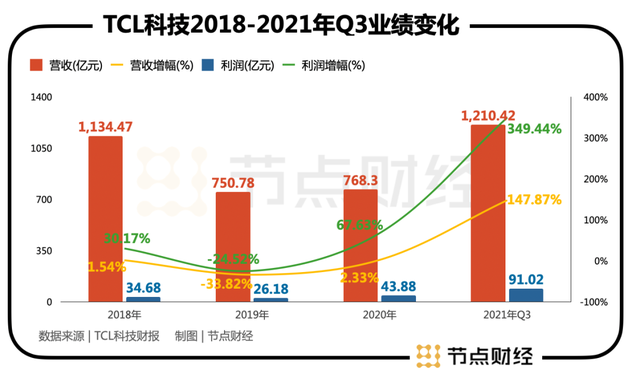
If we look at it by business segment,In the first three quarters, the semiconductor display (i.e., LCD panel) business generated revenue of RMB 66.56 billion, up 106% year over year, with net profit reaching RMB 9.74 billion, a 16.2-fold increase compared to the same period last year.Amid a pullback from elevated price levels, Q3 net profit reached RMB 3.13 billion, up 347% year over year.
TCL Technology's strong performance can be attributed, first and foremost, to the robust surge in display panel prices that began in mid-2020. According to data from Runzhi Consulting, as of June 2021, price increases for mainstream‑size panels had exceeded 100%, marking the largest price hike in the LCD panel industry over the past decade.
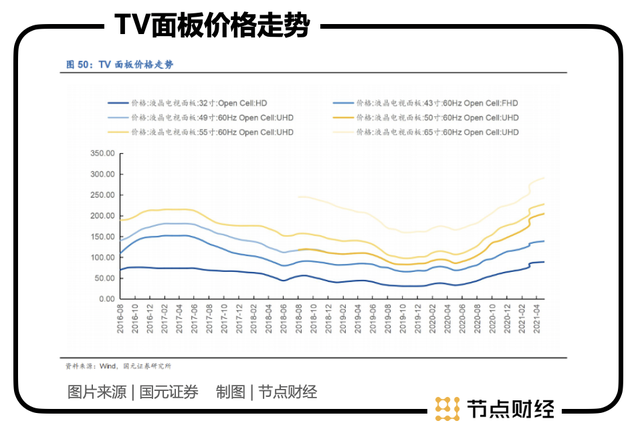
However, both TCL Technology and BOE have seen their stock prices plunge significantly since entering the third quarter. This downturn is attributable to the concurrent decline in TV panel prices, which resulted in a quarter-over-quarter drop in third-quarter earnings.
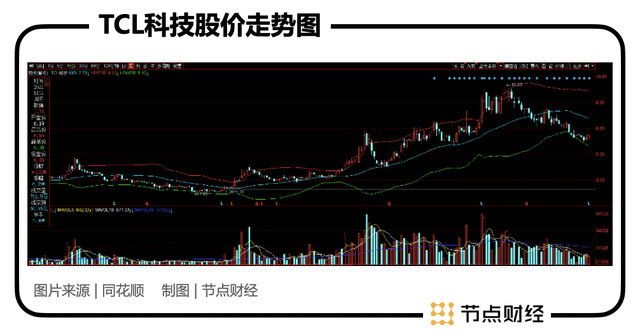
The market fears that the earnings decline in the third quarter will persist, ultimately reverting to the familiar pattern of the traditional cyclical downturn.
TCL Technology stated that the recent decline in display panel prices is primarily attributable to global shipping congestion and rising logistics costs following the onset of the third quarter, which have dampened downstream customers' inventory‑building intentions and led to a drop in prices for large‑size TV products.
Huatai Securities, meanwhile, attributes the rapid decline in large‑size panel prices to a sharp weakening in demand from TVs and PCs, coupled with substantial inventory destocking as end‑customers had previously built up sizable stockpiles. Furthermore, given the relatively steep price increases earlier in the cycle, some OEMs have seen their profitability under pressure, and supply‑chain dynamics have become increasingly contentious. At the same time, raw‑material prices—such as those for driver ICs—have stabilized, leading to a moderation in cost pressures.
In fact, TCL Technology has a second growth driver: the semiconductor‑photovoltaic and semiconductor materials sectors. According to the company's Zhonghuan Semiconductor, its third‑quarter results show revenue of RMB 29.09 billion, up 117% year over year, and net profit of RMB 3.28 billion, up 190% year over year.
At present, Zhonghuan's photovoltaic semiconductor segment accounts for over 20% of its revenue and more than 30% of its net profit, yet the full potential of this growth trajectory remains underappreciated in its valuation.As of the close on November 18, the company's trailing P/E ratio stood at 7.3 times. Market participants appear to remain most concerned about earnings volatility stemming from declining LCD panel prices.
Therefore, in the long term, TCL Technology remains undervalued, and the current decline in its stock price is within a normal range. After all, whether it's Moutai, CATL, or other blue-chip stocks that have maintained a sustained bull run, corrections of this magnitude are nothing unusual.
However, it will likely be no easy task for TCL Technology to shake off the market's widespread perception of it as a cyclical stock and thereby raise its valuation multiple.
First, over the decades of LCD panel development, the market has long held a widely entrenched view; altering this perception will require demonstrating superior performance.
Secondly, the LCD panel industry typically evolves on an annual timescale; its long cycles mean that industry shifts rarely yield immediate, tangible results, placing significant demands on the patience of both investors and analysts.
Third, within the broader context of the industry chain, the extent to which upstream and downstream players will accept the "duopoly" in the LCD panel market will also shape the industry's renewed price‑negotiation dynamics; realizing the "premium attached to the industry leader" will take time.
Finally, with the pandemic still ongoing, the timing of the global economy's and consumer markets' recovery remains uncertain. Both the traditional supply‑demand cycles and the peak‑off‑peak season cycles are subject to significant uncertainties.
TCL Technology, led by Li Dongsheng, has once again reached a critical crossroads. The company's management and operational capabilities speak for themselves, but in the sweeping currents where technology, industry, and capital markets converge, whether it can navigate economic cycles and advance further remains to be seen—only time will tell.
Node Finance Disclaimer: The content of this article is for reference only. The information contained herein or any opinions expressed do not constitute investment advice, and Node Research shall bear no liability for any actions taken based on the use of this article.
Risk Disclaimer: The above content only represents the author's view. It does not represent any position or investment advice of Futu. Futu makes no representation or warranty.Read more

Comments (3)
to post a comment
6
9