Tengshengbo Pharma Hong Zhi: Improving the accessibility of innovative drugs is key to coping with public health crises | Yunfeng Talk
来源:云锋基金
新冠疫情肆虐,如何应对这场全球公共卫生危机成为全世界的共同课题。
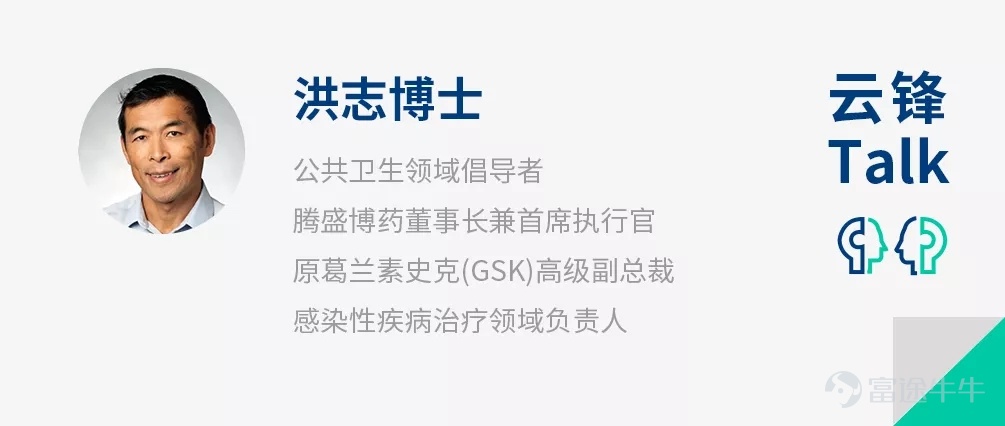
In this prolonged battle against the epidemic, in addition to the frontline medical staff, there are also scientific research workers and pharmaceutical innovation companies racing against time in the laboratory day and night for research and development.$BRII-B (02137.HK)$ Dr. Hong Zhibo and his team are among them. As early as the beginning of the epidemic, he led the team at Tengshengbo Pharma to dedicate themselves to the research and development of antiviral drugs.
Before founding Tengshengbo Pharma, Dr. Hong Zhibo served as Senior Vice President at GlaxoSmithKline (GSK), responsible for GSK's drug development work in the field of AIDS and infectious diseases. Under his leadership, multiple drugs and therapies for AIDS treatment were approved by the Food and Drug Administration (FDA). Dr. Hong Zhibo is also an advocate and promoter in the field of public health, not only leading the establishment of the GSK Infectious Diseases and Public Health Research Institute, but also actively assisting in establishing cooperation projects for various governments and charitable organizations.
As a multinational biotechnology company operating in both China and the USA, Tengshengbo Pharma has always focused on the anti-infection field, while meeting the needs of Chinese patients, engaging in cross-border and international cooperation. They aim to achieve the breakthrough of innovative drugs from 0 to 1 at the fastest speed through a new industry-university-research collaboration model, benefiting more patients suffering from infectious diseases.
In October this year, Tengshengbo Pharma submitted an Emergency Use Authorization (EUA) application to the FDA for its in-development novel coronavirus BRII-196/BRII-198 combination therapy. If approved, it would mean that this combination therapy has been recognized by the regulatory agency for its efficacy and safety.This is also expected to be the first domestically produced neutralizing antibody against the novel coronavirus to be marketed.
Typically, the development of new drugs takes at least about 10 years. However, in responding to the COVID-19 crisis, Tengshengbo Pharma collaborated comprehensively with Tsinghua University, the Third People's Hospital of Shenzhen, and the National Institutes of Health (NIH) in the USA, achieving completion of the research and product application work for the COVID-19 neutralizing antibody at an approximately 5 times faster pace, in just 18 months.Operation
With nearly 30 years of experience in the field of drug research and development, Dr. Hong Zhi, with his rich accumulation of experience and keen insight into patients, has led Tengshengbo Pharmaceutical to establish a differentiated and diversified product pipeline involving research and development in areas such as functional cure for hepatitis B, multidrug-resistant and extensively drug-resistant bacterial infections. Tengshengbo Pharmaceutical takes the development of innovative therapies for major infectious diseases as its starting point, dedicated to driving innovation in the entire public health field, improving the accessibility of innovative drugs, and enhancing the health levels of global patients.
For many years, Yunfeng Fund has been focusing on major public health issues caused by acute and chronic infectious diseases, discovering and supporting entrepreneurs and entrepreneurs who provide innovative solutions for public health and nationwide health, exploring more possibilities to prioritize prevention and promote national health. In 2018, Yunfeng Fund invested in Tengshengbo Pharmaceutical, being the earliest investor to accompany the founding team of Tengshengbo Pharmaceutical.
Yunfeng Fund's co-founder and chairman Yu Feng stated, "Biotechnology is a key focus area of Yunfeng Fund's continued attention, as acute and chronic infectious diseases can easily trigger major public health emergencies, threatening human health and safety. Tengshengbo Pharmaceutical is actively promoting the research and transformation of neutralizing antibody therapy during the COVID-19 pandemic, and has already made significant breakthroughs in clinical trials. As the earliest investor in Tengshengbo Pharmaceutical, Yunfeng Fund, starting from ESG investment, hopes to actively promote technological innovation in the public health field and strive to enhance people's health and well-being."
Humanity's victory over major disasters and pandemics depends on scientific development and technological innovation. Innovation is a breakthrough from 0 to 1, it is forging ahead on an untrodden path with determination. The practices and breakthroughs of Tengshengbo Pharmaceutical during the COVID-19 pandemic may provide experience and inspiration for entrepreneurs also advancing in technological innovation.
In this issue of 'Yunfeng Talk,' Dr. Hong Zhi, Chairman and CEO of Tengshengbo Pharmaceutical, shared his thoughts on cooperation between public health and the technology industry, the challenges faced in the prevention and control of infectious public health diseases, and the determination to bring high-quality innovative drugs back to China and to bring a digitalized R&D innovation system to the world.
Below is the dialogue between 'Yunfeng Talk' and Dr. Hong, enjoy:

The Birth of COVID-19 Neutralizing Antibody Combination Therapy
Yunfeng:腾盛博药最近的好消息是向FDA提交了新冠中和抗体(BRII-196/BRII-198)联合疗法紧急使用授权(EUA)申请。如果获批,这对新冠患者和公司来说分别有什么特殊意义?
Hong Zhi:这是我们项目研发中非常重要的里程碑,获批后我们的新冠抗体BRII-196/BRII-198联合疗法就能在美国进行紧急使用,让病人能够更早得到治疗。对公司来说,拿到审批意味着我们的药物已经在疗效、安全性和质量上得到药监机构的认定,可以开始对外销售。
云锋:这次EUA申请是基于海外三期临床试验(ACTIV-2 3期)的积极结果,这个结果代表了什么?
Hong Zhi:数据结果是积极的。首先,我们临床实验的治疗窗口期是最长的,新冠患者有症状后10天内都可以进行治疗,其它药物大多限制在5天。我想这是我们对医疗界做出的贡献之一,对于晚期治疗的患者,我们的药物表现出积极的治疗效果。
第二,我们选择入组的病人都是有很大机率变成重症的患者,这意味着给我们临床实验增加了很多event(事件),这让我们在统计学上有相对完整的结果。The results show that the combination therapy of BRII-196/BRII-198 (compared to placebo) can reduce the composite endpoint of hospitalization and death by 78%, with zero deaths achieved in our treatment group within 28 days.
Thirdly, we conducted clinical studies later than other drugs, the benefit being that we recruited many patients carrying the Delta variant, so we have very direct clinical data to demonstrate the effectiveness of the combination therapy of BRII-196/BRII-198 against the Delta variant.Therefore, we have very direct clinical data to prove that the combination therapy of BRII-196/BRII-198 is effective against the Delta variant.
Yunfeng:What are the differences between the neutralizing antibodies (BRII-196/BRII-198) combination therapy and vaccines? How should different therapies complement each other to deal with virus mutations and spread?
Hong Zhi:In response to outbreaks of large pandemics, defense is the most important measure, and vaccines are the main way of defense. The use of antibody therapy works through immunity, similar to vaccines, but the key difference is that antibody treatment acts quickly. After administration, the concentration of antibodies in the blood immediately reaches its peak, whereas vaccines take several weeks to achieve such concentrations. For example, exposed or close contact individuals may already be infected with the virus but not yet showing symptoms. Vaccination at this point might be too late, and these individuals should receive antibody treatment.
Furthermore, the antibody response generated by vaccines in the human body does not remain at very high concentrations for an extended period. We have genetically modified the antibodies, extending their half-life to at least 60 days, with the concentration of antibodies maintained for 6-9 months. For older people or those with immune deficiencies, the antibody response is already low and drops rapidly after vaccination. These groups are better suited for preventive treatment with antibodies, providing greater protection.
Yunfeng:The progress of the BRII-196/BRII-198 combination therapy has been rapid, partially due to the quick collaboration with Tsinghua University and Shenzhen Third Hospital. How did you manage to reach a collaboration consensus in a short period of time?
Hong Zhi:In January 2020, Tsinghua University and Shenzhen Third Hospital began researching neutralizing antibodies for COVID-19. Given our established trust with both parties in the past, Tengshengbo Pharmaceuticals took on the project in March. The three parties quickly delineated their responsibilities: Tsinghua University and Shenzhen Third Hospital carried out necessary testing, screening, virology experiments, and other research. Tengshengbo Pharmaceuticals mainly provided antibody optimization in drug development, intellectual property protection, project management, Contract Development and Manufacturing Organization (CDMO) management, and subsequent transformation work for clinical trials.
Yunfeng:For Tengshengbo Pharmaceuticals, what is the importance of finding a partner in the development of combination therapy?
Hong Zhi:Our team has been deeply involved in the field of infectious diseases for many years and has accumulated many insights in antibody drug research and development. Therefore, we already had some ideas for neutralizing antibody drug treatment plans in the early stages. However, Tengshengbo Pharmaceuticals is still a startup company with certain limitations in manpower, finances, and resources. So, we maintained a very open mindset from the beginning to seek better partners.
Yunfeng:From the beginning of research and development to the submission of EUA application, the COVID-19 neutralizing antibody (BRII-196/BRII-198) combination therapy only took 18 months. What is the reason for such rapid progress?
I think this is the most successful example of technology transfer in history. It only took 18 months from basic research to product application, which was unimaginable in the past. This is related to cooperation, team ability, and experience. Being able to make the best decisions in the shortest time and further execute them, we have done well in this regard.
Yunfeng:Looking back on the cooperation process, what other aspects can be improved?
Hong Zhi:Many things are being learned along the way. We have done what takes 10 years in a year and a half, but the money spent over 10 years also needs to be spent in a year and a half. The cash flow challenge is very big for startups. We also hope to have good cooperation with all parties in the future, introduce funds early, and help us accelerate projects faster and better. This is also a mechanism that we think needs further improvement.
Yunfeng:What were some of the most difficult decisions you made during the development of the neutralizing antibodies (BRII-196/BRII-198)?
Hong Zhi:There were too many. One of the most memorable ones was the final dose selection, which actually led to a lot of debates, discussions, and arguments, some of which got quite heated. The decision-making process was quite painful at that time, but looking back, we feel that we made the right choice. Even though it only took us 18 months, the process was very challenging, and we faced a lot of pressure. Many decisions were made with tears in our eyes.
Yunfeng:What drove the decision of Tengshengbo Pharmaceuticals to develop the neutralizing antibodies (BRII-196/BRII-198) for COVID-19?
Hong Zhi:Our driving force was the huge patient demand. When we embarked on the development of neutralizing antibodies, our primary consideration was whether we were stepping forward at the most challenging time for the country. That was the first question we asked ourselves.
Yunfeng:Dealing with the epidemic is a race against time, how to withstand the pressure and maintain a rapid response?
Hong Zhi:At the beginning of the epidemic, we didn't expect it to develop so quickly and fiercely. Our team also went through a process of cognition. When we established Tengshengbo Pharmaceutical, we focused on the field of infectious diseases and major public health events, but we didn't anticipate a pandemic like COVID-19. This brought us huge challenges and practical opportunities. I am actually very proud of the whole process, as we acted quickly under extremely high pressure.
Yunfeng:The occurrence of major public health events is usually accidental and sudden, how to respond to sudden public health events in a timely and effective manner?
Hong Zhi:For me, a pandemic will definitely occur, it's just that you don't know when it will happen, so you can't predict. The uncertainty here refers to the uncertainty of the timing, but its occurrence is inevitable. Therefore, we need to have a full understanding, not with a mentality of luck. When you know that a (public health event) will definitely happen in the future, you should be thinking about how to solve this problem now.
Yunfeng:In the face of the epidemic, people around the world have become a community of shared future. What advantages will global cooperation bring to combating the new coronavirus?
Hong Zhi:In dealing with this international public health emergency, we need international cooperation and cannot confine research to one country. The spread of the epidemic knows no borders, so drug development should not be done independently. Therefore, I believe that international cooperation is needed on a global scale, and it is crucial to collaborate with the best partners. For example, when the new coronavirus first appeared, we couldn't continue our clinical trials in China because of the strong epidemic control measures taken by the country, which quickly brought domestic cases to zero. Therefore, we needed to continue our clinical research abroad. In addition to international collaboration, we need to partner with the most experienced institutions. After obtaining data overseas, we bring the drugs back to China as emergency medications to deal with small-scale domestic outbreaks.
High returns are not the driving force behind innovative therapies.
Innovation should have broader accessibility.
Yunfeng:In the process of combating the new coronavirus, we have seen a steep growth curve in innovation across the entire pharmaceutical industry. What is the driving force behind this innovation?
Hong Zhi:Innovation is driven by patient needs, without demand there is no driving force, and this is the most crucial point.

Yunfeng:Why is innovation particularly important in the field of infectious diseases?
Hong Zhi:In the general environment, many major pharmaceutical companies have left the field of infectious diseases in the past, focusing on some rare diseases and oncology fields. One of the reasons is that drugs in these disease areas can have very high prices, which increase every year, leading to better returns. However, we believe that guiding pharmaceutical innovation development direction solely based on high prices and high profits is unsustainable and will overlook many areas of great importance to public health.
I think most major public health events and diseases involve millions, even tens of millions of patients. We hope to consider more of these diseases, driving innovation through the massive number of patients, rather than seeking investment returns through high prices or price increases. We want to make efforts in this regard, develop competitive products, and benefit global patients through scale, especially Chinese patients.
So the projects we choose, whether HIV or HBV, involve a very large number of patients. We want to change the traditional business model, benefiting more patients through a new model, which is what we hope to achieve.
Yunfeng:So, innovative therapies do not necessarily mean high prices; innovation should have broader accessibility.
Hong Zhi:Yes, I think this is a very important topic with practical significance. I never believe that price is the driving force behind innovation. If we can drive innovation through scale, we can bring these experiences to other developing countries. Of course, this is a very long-term goal.
Yunfeng:You once said that the first choice for entrepreneurship is to return to China. Has this been a long-considered idea?
Hong Zhi:Returning to China is very attractive to me. What we can do by going back to China is not only innovation but also achieve better breakthroughs in patient accessibility. In the past, traditional pharmaceutical sales were basically manpower-intensive, with a large amount of costs spent on sales, often sending out 2,000 sales staff. What we were thinking is whether we could do this well with 200 people, and the remaining 1,800 in sales costs could be reallocated. We saved these sales costs and returned them to patients, which was a very exciting idea for us at the time.
Yunfeng:There is a sentence on the official website of Tengshengbo Pharmaceutical that says, "We believe that now is the best time for China to deeply innovate and practice the medical and health care industry." What is the reason for writing this sentence?
Hong Zhi:When we just founded the company, we felt a strong driving force in China for new drug research and development, rapid development in digital healthcare, bringing disruption to the entire innovative drug field. The COVID-19 pandemic is also accelerating the development of digital healthcare.
Yunfeng:In which areas will digital healthcare continue to make breakthroughs in the future?
Hong Zhi:China has always maintained a leading momentum in the field of digital healthcare. Domestic clinical cases can better unleash the potential of digitization. In the future, there will be new breakthroughs in disease knowledge, patient education, pharmaceutical delivery, and supply due to digital empowerment. The results of these breakthroughs will significantly reduce sales channel costs, and the saved costs will return to patients, making drug prices lower, allowing more people to receive better treatment. In this regard, China is likely to lead the world in the future.
Yunfeng:During the research and development of the COVID-19 combination therapy, Tengshengbo Pharmaceuticals validated the synergy brought by "multi-party cooperation" to innovation. How do you view the relationship between small innovative companies and traditional pharmaceutical enterprises?
Hong Zhi:There will be more and more cooperation between large and small companies globally. Ten years ago, many small companies often obtained products from large companies for further research and development. Now, many innovations emerge from small companies, which are then acquired by large companies. Large companies have many comprehensive capabilities, but they lack the courage to take risks. So I think that in the future, large companies and small companies will have a more interdependent relationship, cooperating with each other to seek common development.
Yunfeng:In this collaborative innovation, what are the advantages of start-up companies?
Hong Zhi:With fewer people making decisions in small companies, usually 1-2 individuals can make a decision. We can make a lot of decisions in a very short period of time. Typically, it takes 10 years to develop antibody drugs, but we completed it in a year and a half. However, the decisions made in this year and a half are the same as those made in 10 years. It's just that decisions have to be made faster now, and the agility needs to be stronger. I think this is the advantage of small companies. Because the situation with the pandemic is ever-changing, decisions need to be made according to the changes in the situation. It is possible that previous decisions were wrong and need to be revisited and modified quickly. Large companies, though, have performed well in the fight against the pandemic; many CEOs directly participated and made decisions very quickly.
Yunfeng:You mentioned that the combination therapy of neutralizing antibodies for COVID-19 (BRII-196/BRII-198) was a successful scientific transformation. In recent years, China has been focusing on increasing the conversion rate of scientific and technological achievements. Based on past experiences, what conditions should scientific and technological achievements have for successful transformation?
Hong Zhi:Scientific transformation is a very complex matter, with failures having their inevitability, while successful cases have their randomness, making it difficult to simply state a specific secret. Sometimes we confuse the words 'science' and 'innovation,' which are actually different concepts. However, the transformation into products is mostly done by companies, which means that the team capabilities of companies are crucial. For example, insights into capital markets, healthcare systems, and patient needs are very important. It is worth deeply considering how to promote more collaboration between research institutions and companies in a better environment. In fact, the United States has a lot of experience; cities like San Francisco and Boston have many universities, numerous scientific research projects, and many small companies constantly growing within them.
Bring good medicines back to China.
Take good concepts to the world.
Yunfeng:How did you enter the field of anti-infectives? Why did you choose to start your entrepreneurial journey focusing on infectious diseases?
Hong Zhi:I have been in the field of infectious diseases since I started my PhD. Over the years, my team and I have accumulated many concepts and ideas, so I also hope to bring these ideas to China. One of the most significant things that influenced me when I returned to China was the discovery that there are few good drugs for treating HIV domestically. The drugs our patients use in the early stages are not as good as those used by patients in some backward countries. I really want better drugs to come to China, which is also why I later found Luo Yongqing (President and Greater China General Manager of Tengshengbo Pharmaceutical), he has very good ideas in this area, using China as a scenario to explore a new and accessible way to try in the field of major public health diseases. I think this is very significant.
Yun Feng:Was it your original intention to benefit more patients with innovative drugs when you established Tengshengbo Pharmaceutical?
Hong Zhi:Exactly, at that time we wanted to transform the insights we have gained in this field over the years into innovative drugs with significant advantages, benefiting global patients, especially Chinese patients. I think there is still some discrimination in society against patients with public health diseases, whether they are carriers of hepatitis B virus, carriers of HIV virus, or sufferers of central nervous system diseases. They not only suffer physically from the disease, but also carry a heavy psychological burden. The outbreak of COVID-19 is the same. Every isolated patient bears a great psychological burden, and one of the reasons is that people do not have enough understanding of the disease.
Yun Feng:Tengshengbo Pharmaceutical is challenging the functional cure for hepatitis B, which is a difficult task. Why does Tengshengbo Pharmaceutical emphasize the functional cure for hepatitis B?
Hong Zhi: If everyone hopes for a cure for hepatitis B, then this is a very important unmet patient need.If we can achieve functional cure for hepatitis B, the quality of life of patients will greatly improve, and they will no longer be discriminated against. How to help patients understand the treatment methods and be willing to undergo timely treatment is also a key aspect of treating major public health diseases.
Nowadays, the chances of curing many chronic diseases are very small, patients have to take medication for life, and the condition may worsen, even leading to death. There are also some diseases of the central nervous system for which there are treatment options, but the treatment plans are not good enough, considering the patient experience, and the patient's voice is not being heard.
We have made a lot of considerations in these aspects, understanding what the true needs of the patients are. In the past, it was usually the doctors who told patients what medicine to take, but in reality, many patients do not know which medicine is best for them. Nowadays, there is more and more information in these areas, patients have a better understanding of the diseases, and the patient's choices become more important. So, we consider not only whether the new drugs are effective, but also how they can be more easily accepted by patients, and have better safety during the treatment process.
Yun Feng:In the past two years, many traditional pharmaceutical companies and emerging research forces have begun to refocus on the field of infectious diseases such as hepatitis B. How does Tengshengbo Pharmaceutical adapt to such market changes?
Hong Zhi:Infectious diseases are one of the major challenges for public health. As a company dedicated to developing drugs for major infectious diseases, it is crucial to sustain leadership. Curing hepatitis B is a very complex process, involving various combination drug therapies, and it is a constantly evolving field. For example, at the beginning, the cure rate for hepatitis C was only 8%, it later increased to 20%, 40%, 60%, 80%, and over 90%. I think for Tengshengbo Pharmaceutical, continuously updating products and setting higher goals is something I value.
Yun Feng:In this era of rapid change, what strategic deployments will TSC Pharma make in response to the new challenges faced by pharmaceutical companies in the future?
Hong Zhi:In China, we will definitely continue to focus on research and development in the areas of functional cure for hepatitis B, multi-drug resistant, and extensively drug-resistant bacterial infections. In the USA, our main focus will be on the development of HIV and central nervous system product pipelines.But our ultimate goal is to bring back all products to China, whether through independent research and development or transfer of intellectual property rights, in order to benefit more Chinese patients.

Risk Disclaimer: The above content only represents the author's view. It does not represent any position or investment advice of Futu. Futu makes no representation or warranty.Read more


Comments (12)
to post a comment
17
25