Technology Research Institute: CPI data is about to be released! What opportunities are there amid t

Delin Weekly Observation (August 24, 2026)
Market Recap
1
U.S. Treasury Expands Long-Term Bond Buybacks
The U.S. Treasury announced that it would at least double the single-operation cap for liquidity-support buybacks of nominal coupon bonds with maturities from 10 to 30 years, raising it to at least $4 billion per operation. The new rules take effect on September 9, 2026. This move triggered a decline in long-end yields. Acting as the 30-year U.S. Treasury yield hit a new high since 2007, this step signals policy intervention and has reignited market debate over "fiscal version of yield curve control."
The Federal Reserve's released minutes showed that in July, "some" participants advocated for rate hikes, with a minority believing this could avoid more aggressive hikes later; some policymakers felt that current financial conditions were not restrictive enough to drive inflation down to the Fed's 2% target; most participants expected inflation to ease for the remainder of the year, but many worried about more persistent high inflation; Fed staff assessed that inflation expectations carry upside risks; some participants believed that AI investment has already had a broader impact on prices by boosting aggregate demand; while some argued that tariff pass-through to prices is largely complete, others expressed concern that conflicts in the Middle East could make inflation more persistent.
U.S. housing starts in July fell 12.4% month-on-month, far below market expectations; building permits weakened in tandem, reflecting continued pressure on housing demand amid still-high mortgage rates (30-year at 5.26%). Residential investment has dragged on GDP growth for several consecutive quarters; this data further confirms that the U.S. housing market has entered a phase of deep adjustment, serving as a key argument for the "dovish" faction within the Federal Reserve to accelerate rate cuts.
Japan's Ministry of Internal Affairs and Communications Statistics Bureau released July CPI data. Core CPI (excluding fresh food) rose 1.8% year-on-year, higher than June's +1.6%, in line with market expectations; headline CPI increased 1.9% year-on-year. The "core-of-core" CPI (excluding both fresh food and energy) rose 1.9% year-on-year (June: +1.7%). Following the data release, market expectations for the Bank of Japan (BoJ) to raise interest rates from 1.0% to 1.25% at its September 17-18 policy meeting have strengthened further, putting short-term pressure on USD/JPY.
This week's FOMC minutes confirmed hawkish voices within the Federal Reserve, but we maintain our previous view that the decision on a September rate hike will depend on future economic data. On the other hand, Japanese economic data indicates that the macro narrative remains "stagflationary pressure + policy catch-up." The BoJ has long lagged behind the inflation curve; yen depreciation has pushed up food and energy prices, eroding household purchasing power and triggering a sharp rise in long-end JGB yields, which threatens the sustainability of the Kishida administration's expansionary fiscal policies. Tax cuts are expected to have limited impact on growth but will significantly worsen long-term debt prospects. We advise investors to avoid unnecessary currency exposure and exercise caution when borrowing low-interest currencies for investment. Regarding asset allocation, we believe credit spreads face further widening risks due to AI financing demand; therefore, we recommend investors prioritize higher-rated, high-quality bonds.
2
China needs to boost domestic demand
Data from the National Bureau of Statistics shows that the value-added of industrial enterprises above designated size grew by a real 4.5% year-on-year, down from the previous 5.3%. From January to July, value-added in the equipment manufacturing sector grew 9.7% year-on-year, and high-tech manufacturing grew 13.8%, outpacing the overall industrial growth by 4.4 and 8.5 percentage points, respectively. In July, industrial robot production increased 30.2% year-on-year, while photovoltaic cell production fell 9.4% and smartphone production dropped 22.9%; new energy vehicle production rose 29.9%.
According to data from the National Bureau of Statistics, sales of newly built commercial housing totaled RMB 4.2718 trillion from January to July, a 13.1% decline, with the drop narrowing by 0.5 percentage points. At the end of July, the area of commercial housing available for sale was 759.11 million square meters, down 0.8% year-on-year, with the decline narrowing by 0.1 percentage points. From January to July, funds available to real estate developers amounted to RMB 4.5748 trillion, a 20.3% year-on-year decrease.
National Bureau of Statistics data shows that total retail sales of consumer goods grew 0.6% year-on-year in July, falling 0.4 percentage points from the previous month. Communication equipment led with a 20.4% growth rate, while automobiles continued to drag down the overall figure with a 17.0% decline. From January to July, online retail sales of goods and services exceeded RMB 11 trillion, up 4.8% year-on-year. Online retail sales of goods grew 4.6%, with food-related items surging 16.9%, and service consumption continuing its rapid growth.
The People's Bank of China authorized the National Interbank Funding Center to announce that the Loan Prime Rate (LPR) on August 20, 2026, was: 3.0% for the 1-year LPR and 3.5% for the LPR over 5 years. This marks the 15th consecutive month of no change. Reports indicate that the Monetary Policy Execution Report proposed diversifying loan pricing benchmarks, corresponding to previously implemented loans benchmarked to DR (Depository-Institutions Repo Rate), thereby avoiding a single LPR pricing mechanism and enabling smoother transmission from market rates to loan rates.
This week's Chinese economic data indicates that overall domestic demand remains weak, with goods consumption lagging behind services, reflecting sustained low consumer willingness. New home prices fell month-on-month for the fifth consecutive month, with only tier-1 cities showing some price resilience. On the other hand, we observe a "strong revenue, slow spending" combination on the fiscal side: general public budget revenue rose 11.7% year-on-year in July, but expenditure increased only 0.5%, adding further pressure to domestic demand. In the current environment, we expect the government to introduce a series of targeted policies to stabilize fragile market confidence. Regarding asset allocation, earnings from large-cap tech stocks continue to reflect weak domestic demand, while companies still incur significant expenses for growth and competition, putting considerable pressure on profitability. We suggest investors accumulate high-quality assets on dips while paying attention to investment duration.
3
Delin Securities' View
Kenty Wong, Deputy CEO of Delin Securities, observed that the Hong Kong stock market rose steadily last week. After catching its breath following declines in the previous two weeks, the Hang Seng Index rose for five consecutive days, reclaiming the psychological barrier of 26,000 points. It closed at its daily high last Friday at 26,009 points, coincidentally matching the monthly closing high on August 3. Turnover on the main board reached HKD 257.2 billion last Friday, slightly higher than the weekly average of HKD 240 billion per day. The Hang Seng Index accumulated a gain of 892 points last week, ending the previous two-week declining trend.
Looking ahead to this week, the Hang Seng Index is expected to fluctuate around the 26,000 level initially. Whether the index can climb higher depends on market sentiment and turnover. Recent market turnover has hovered around or even below HKD 250 billion. If turnover can surge to HKD 300 billion before the end of the month, it would somewhat signal that capital is genuinely betting on further upside for Hong Kong stocks. In terms of sectors, gold mining and financial stocks have seen support from capital inflows, which investors should monitor closely.
Last week, China's National Financial Regulatory Administration announced that to optimize the asset allocation structure of insurance funds, mainland insurance capital will be permitted to invest in Hong Kong Exchange-traded funds (ETFs) included in the Stock Connect via the Shanghai-Hong Kong and Shenzhen-Hong Kong Stock Connect programs. This new policy is believed to build on the mature experience of mainland insurance funds investing in the Hong Kong stock market through Stock Connect, further facilitating diversified asset allocation for mainland insurers via the Hong Kong Exchange, promoting ETF market development, and expanding the ETF ecosystem. In recent years, the Hong Kong Exchange has actively promoted the development of exchange-traded products, including nurturing and expanding innovative products such as active ETFs and encouraging overseas ETFs to cross-list in Hong Kong. Data shows ETF trading volumes hitting new highs: last year's average daily turnover nearly doubled year-on-year, and it rose by over 25% year-on-year in the first half of this year, indicating a very bright outlook.
4
Mainland Market Observations
Last week, A-shares experienced a 'surge followed by a pullback,' with major indices mostly closing lower. The Shanghai Composite Index fell 0.56% for the week, holding above the 3,900-point mark, while the ChiNext Index adjusted more deeply, dropping 2.23%.
The market displayed distinct defensive characteristics, with average daily turnover shrinking to approximately RMB 2.27 trillion, indicating cooled trading sentiment. Sector divergence was sharp: buoyed by geopolitical tensions and a surge in gold prices, resource and high-dividend sectors such as oil and petrochemicals, non-ferrous metals, and banks led the gains against the trend. Conversely, previously active TMT sectors like media and computers suffered heavy losses and led the decline due to disruptions in overseas tech narratives and decreased risk appetite.
As the peak period for interim report disclosures approaches, the market may be transitioning from 'valuation digestion' to 'earnings-driven' dynamics. After short-term volatility and consolidation, there remains room for a rebound.
Key News
1
Trump urges Congress to advance
the CLARITY Act
Last week, the total on-chain market capitalization of Real World Assets (RWA) gently recovered to USD 38.4 billion, but the total number of asset holders surged to 2.3799 million, a net monthly increase of over 58%. This expansion pattern of 'stable market cap, surging holder base' indicates that RWA is accelerating its penetration into a broader investor community. The stablecoin market showed long-awaited signs of warming up: monthly transfer volume rose 4.84% month-on-month, reversing a trend of consecutive deep declines. However, monthly active addresses declined simultaneously, suggesting a shift in capital behavior from 'high-frequency shuffling' to 'wait-and-see accumulation'.
According to reports, Trump urged Congress to advance the CLARITY Act at a White House crypto event, calling it 'very powerful structural legislation' that would put the US 'ahead of all countries.' Coinbase CEO Brian Armstrong called for 'concerted efforts to push the bill across the finish line.' SEC Chair Paul Atkins stated that the crypto asset rules proposed by the SEC this week complement the CLARITY Act and expressed support for Congress passing the bill.
Trump subsequently led the executives into the Oval Office for closed-door discussions. Chainlink Labs CEO Sergey Nazarov revealed that the Trump team considers the bill "highly feasible," with only a few issues and several senators remaining to be consulted. The bill requires 60 votes to pass the Senate before the September recess. The White House event took place on the eve of the first meeting of the CFTC Innovation Advisory Committee, whose members include CEOs from crypto firms such as Kraken, Anchorage Digital, Grayscale, and OKX.
White House Senior Crypto Advisor Patrick Witt expressed an 'optimistic and bullish' attitude toward the passage of the Clarity Act at the SALT Conference, despite ongoing controversies regarding stablecoin reward processing and Trump's crypto conflicts of interest. The Senate Majority Leader has scheduled a vote to end debate for September 15. Witt stated he would work with Democrats to resolve differences and strive for a reliable vote on the 15th.
Tim Scott, Chairman of the Senate Banking Committee, noted that the previously compromised issue of stablecoin rewards has resurfaced, stating, 'We thought it was resolved, but now the problem is back.' Regarding ethical provisions, Trump is weighing a recent proposal that would allow state attorneys general to enforce these clauses. The Clarity Act, spanning over 600 pages, aims to establish a comprehensive federal regulatory framework for the crypto industry and has faced multiple setbacks previously.
2
Xiaomi Group's difficult period is nearing its end
Xiaomi Group's latest Q2 financial report demonstrates strong business resilience amid macroeconomic challenges. The company reported revenue of approximately RMB 108.922 billion, a 9.9% quarter-on-quarter increase, with gross profit reaching RMB 21.609 billion. Profit for the period stood at RMB 9.463 billion, marking a significant quarter-on-quarter surge, while adjusted net profit rose to RMB 6.219 billion. These results effectively alleviated market concerns over rising core component costs and terminal demand volatility, highlighting the group's robust operational management.
In its core smartphone and consumer electronics segments, Xiaomi demonstrated high-quality monetization and successful premiumization. Global smartphone shipments reached 31.2 million units in Q2. Optimized product mix drove the average selling price (ASP) to record highs, stabilizing gross margins. Meanwhile, global monthly active users (MAU) hit a historic high of 766.5 million, up 4.8% year-on-year. The operating expense ratio for the 'Smartphone x AIoT' segment dropped to 14.2%, with channel empowerment effects continuing to unfold through refined layouts across online, offline, and overseas new retail networks.
The automotive and innovation businesses, serving as the second growth curve, are accelerating into a phase of scaled deliveries. In Q2, Xiaomi delivered 104,199 new smart electric vehicles, a 28.2% year-on-year increase, becoming a key driver for revenue and gross profit growth. Capital expenditures this quarter were concentrated in innovative areas such as automobiles and AI. The leap forward in delivery capacity indicates that production bottlenecks have been overcome, accelerating the realization of commercial value within the closed-loop ecosystem and opening new avenues for mid-to-long-term profitability.
From a long-term investment perspective, Xiaomi's heavy investment in 'hardcore technology' has built substantial strategic barriers. R&D expenditure reached RMB 9.2 billion in Q2, an 18.9% year-on-year increase, with patent grants exceeding 47,000. By deeply embedding foundational large models and AI-native capabilities into its three major ecosystems—smartphones, smart home, and new energy vehicles—the market's valuation framework for Xiaomi is evolving from 'hardware manufacturer' to 'ecosystem-driven tech giant.' Its competitive advantage in software-hardware synergy remains significantly undervalued by the market.
3
Alibaba Surges AI Investment
Alibaba's latest financial report shows that its AI cloud business is accelerating into a phase of realizing both revenue and profit growth. External commercial revenue from Alibaba Cloud grew 45% year-on-year, hitting a 22-quarter high. Core AI-related product revenue reached RMB 12.376 billion, marking the 12th consecutive quarter of triple-digit year-on-year growth. The annualized recurring revenue (ARR) for AI-related products exceeded RMB 4.95 billion, accounting for 35% of Alibaba Cloud's external commercial revenue, demonstrating robust commercial monetization momentum.
Alongside explosive revenue growth, the profitability quality of the AI cloud business has improved dramatically. The report indicates that EBITDA for the AI cloud and computing power services segment surged 133% year-on-year, with adjusted EBITDA margin climbing to 12%. Group CEO Eddie Wu pointed out that as more customers adopt full-stack AI solutions covering AI Agents, large models, cloud infrastructure, and self-developed chips, coupled with increased bargaining power due to tight computing supply, AI has officially evolved from a 'revenue growth engine' for cloud computing to a 'core driver of profit improvement.' This marks a comprehensive shift in the group's heavy AI investment from a scale expansion phase to a profit realization phase.
The underlying driver behind the significant profit improvement in the AI business is the breakthrough leap in efficiency of self-developed chips and computing infrastructure. T-Head's latest generation of self-developed AI chip, Zhenwu M890, has achieved large-scale commercial deployment via Alibaba Cloud, successfully serving over 650 external clients across more than 20 industries, including autonomous driving, internet, and finance. The 'Zhenwu M890' super nodes, built on this chip, are now online and being sold at scale, supporting stable inference for large models with over 2 trillion parameters. Leading large models such as Kimi K3 and Tongyi Qianwen Qwen 3.8 Max have already integrated and utilized the system. The transition of T-Head chips from internal support to large-scale external commercial shipments has established a second growth curve for Alibaba Cloud with significant cost advantages and supply barriers.
The quality and efficiency improvements in Alibaba Cloud's AI business have laid a solid foundation for the long-term reshaping of Alibaba's valuation. From the previous stage of technology incubation and capital expenditure to the current record-breaking revenue growth, doubled EBITDA margins, and full commercialization of its self-developed ecosystem, Alibaba has successfully validated the commercial closed-loop capability of its 'Full-Stack AI' strategy. Although consumer-facing businesses still face industry competition and macroeconomic headwinds in the short term, the accelerated release of profits from the AI cloud business has not only effectively improved the group's overall profit structure but will also accelerate the market's valuation logic shift from a traditional e-commerce platform to an 'AI infrastructure and enterprise cloud giant,' demonstrating high strategic allocation value in the mid-to-long term.
4
New Strategy Amid US-Iran Conflict
The U.S. government recently announced the launch of a new strategy dubbed "Economic D-Day" in response to U.S.-Iran tensions, marking a formal shift from large-scale military confrontation to deep economic warfare. Particularly after the expiration of the 60-day ceasefire agreement, President Trump explicitly stated his intention to impose the "harshest economic blockade and isolation in history" on Iran amidst the stalemate. The aim is to use ultimate economic pressure to force Tehran back to the negotiating table and compel it to fully reopen the Strait of Hormuz, a critical chokepoint for global energy transportation.
Regarding implementation pathways and policy announcements, U.S. Treasury Secretary Scott Bessent and Vice President JD Vance have been vocal. The U.S. side indicated that the Treasury Department will soon release details of its "strictest-ever" sanctions, targeting the entire Iranian trade ecosystem, including oil smuggling networks, fund clearing channels, shadow fleets, and overseas front companies. Meanwhile, the U.S. issued a highly deterrent warning of secondary sanctions, emphasizing that any country, corporation, or financial institution providing an economic lifeline to Iran—including major buyers like China—will face severe economic consequences, with the ultimate goal of pushing the Iranian regime toward collapse.
The current navigation status of the Strait of Hormuz and the global energy market have become the core flashpoints of this economic war. Currently, throughput in the strait remains well below normal levels, triggering deep concerns about supply disruptions in the global crude oil market and driving up oil prices. The U.S. advocates resolving the strait blockade crisis through economic offensives, while Iran insists that "U.S. fulfillment of agreement commitments" is a prerequisite for fully restoring navigation. The mutual intransigence of both sides regarding passage rights and the lifting of economic sanctions has kept this vital shipping lane in a state of high risk.
In response to U.S. isolation efforts, Iranian officials struck back strongly, labeling U.S. actions as "economic terrorism" and "crimes against humanity," and arguing that these moves aim to mask America's own massive fiscal deficits and policy dilemmas. Despite heavy pressure, Tehran has maintained a tough stance, leveraging countermeasures in energy supply and strait shipping to engage in a tug-of-war with the U.S. This "economic war" not only directly determines the fate of the Strait of Hormuz and international oil price trends but also profoundly impacts Middle Eastern geopolitics and the stability of global financial markets.
5
Anthropic Secretly Files for IPO
Anthropic has confidentially filed a draft S-1 registration statement with the U.S. Securities and Exchange Commission (SEC), marking a substantive step in its Initial Public Offering (IPO) process. As a top AI unicorn housing the flagship large language model Claude, Anthropic reached a valuation of $965 billion in its previous funding round, with Annual Recurring Revenue (ARR) exceeding $47 billion. This confidential filing gives Anthropic a first-mover advantage in the capital markets race against competitor OpenAI, allowing it to seize pricing power and capital liquidity in the public market ahead of rivals.
Choosing to confidentially file the S-1 allows Anthropic to effectively protect its core financial details and trade secrets during the interim regulatory review phase, while maintaining high tactical flexibility. Before the SEC completes its routine review, the company is not required to publicly disclose specific offering sizes, pricing ranges, or detailed operational data. Once regulatory review is complete and market conditions are favorable, Anthropic can quickly make its prospectus public and launch its roadshow. This strategy ensures defensibility and offensive capability amidst volatile capital markets, while creating an effective buffer against regulatory scrutiny and peer competition.
From macro and industry perspectives, Anthropic's listing move comes at a critical "capital absorption window." The U.S. public market is currently experiencing a wave of mega-IPOs, including giants like SpaceX, leading to significant capital diversion from primary to secondary markets. Analysts generally believe that the public market's capacity to absorb the massive capital expenditures (CapEx) required for frontier large model R&D and infrastructure is not infinite. Completing an IPO early not only helps Anthropic lock in ample secondary market liquidity in the capital-intensive AI sector but also establishes a valuation anchor and benchmark for "frontier AI companies" in the public market.
Anthropic's rush to list on the U.S. stock market sends a clear industry signal: the focus of competition in the Artificial General Intelligence (AGI)赛道 is rapidly shifting from mere technological iteration and primary market valuation games to the ultimate test of sustainable profitability and commercialization capabilities in the public market. For secondary market investors, Anthropic's listing offers a rare opportunity to directly invest in core assets of the world's leading generative AI. Although high R&D spending and computing costs may squeeze profit margins in the short term, Anthropic possesses high and unique long-term strategic allocation value thanks to its deep moat in the enterprise market and developer ecosystem.
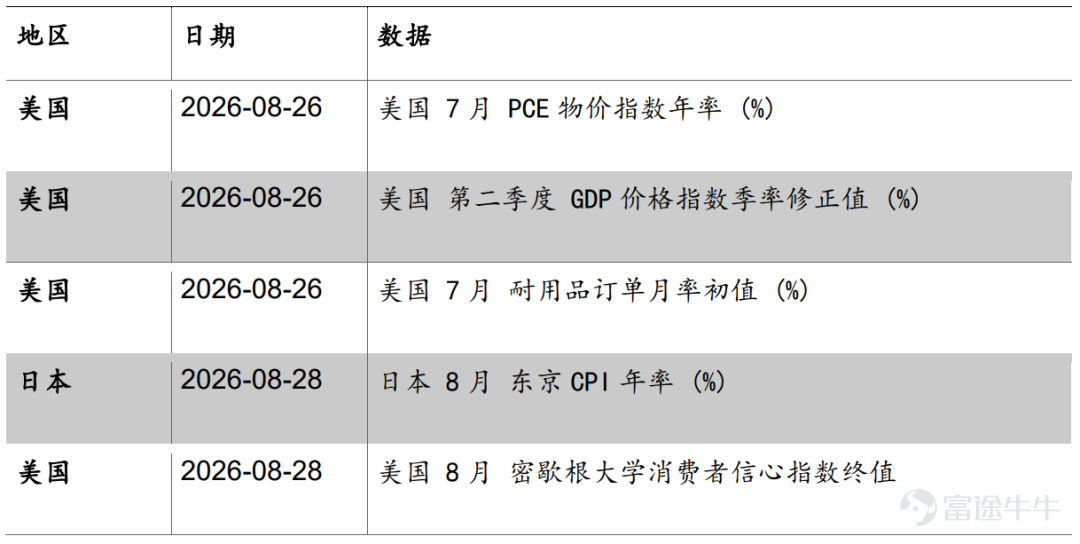
This Week's Economic Data Calendar
Disclaimer
This report was prepared by Delin Family Office (Hong Kong) Limited based on publicly available information. Delin Family Office (Hong Kong) Limited holds a license issued by the Securities and Futures Commission of Hong Kong, authorizing it to conduct Type 4 (advising on securities) and Type 9 (asset management) regulated activities.
The content and opinions expressed in this report are for reference purposes only and do not constitute advice, an offer, solicitation, invitation, advertisement, or recommendation regarding any securities or related financial instruments. Delin Family Office (Hong Kong) Limited endeavors to ensure the accuracy and reliability of the information contained herein but does not guarantee independent verification of such public information.
Delin Family Office (Hong Kong) Limited, together with its branches, affiliates, directors, officers, employees, and agents, assumes no liability for any representations, warranties, or implications made in this report, nor for the accuracy, fairness, or completeness of the information provided herein. It also disclaims any responsibility for errors, ambiguities, omissions, or any resulting misunderstandings or misinterpretations that may arise from this report.
This report is distributed solely to designated recipients. Without the prior written authorization of Delin Family Office (Hong Kong) Limited, any recipient of this report is prohibited from reproducing, distributing, disseminating, citing, republishing, or providing any part or all of its contents to third parties.
Delin Family Office (Hong Kong) Limited reserves all rights to this report.
Risk Disclaimer: The above content only represents the author's view. It does not represent any position or investment advice of Futu. Futu makes no representation or warranty.Read more
Comments
to post a comment