Optical communication stocks lead the rebound; will the AI optical cycle continue?

Zhongji Innolight carries half the sky! Lieqi Intelligent rides the optical transceiver wave, yet shows signs of sluggish performance growth
Produced by | Frontline of Entrepreneurship
Author | Xibo
Editor | Wang Yajing
Art Editor | Xing Jing
Reviewed | Songwen
Optical transceivers are core components in data centers responsible for electro-optical conversion. They convert electrical signals into optical signals, enabling high-speed data transmission through fiber optics.
Recently, Suzhou Lieqi Intelligent Equipment Co., Ltd. (hereinafter referred to as "Lieqi Intelligent"), a supplier of manufacturing equipment for optical transceivers, is making a final push for its initial public offering (IPO) on the ChiNext Board of the Shenzhen Stock Exchange and has successfully submitted its registration application.
The prospectus reveals that Luo Chao, the actual controller of Lieqi Intelligent, engaged in buying equity at low prices and selling at higher prices. There was a significant disparity between the price of equity incentives granted just before the IPO and the entry price paid by external shareholders.
Furthermore, the company's performance growth has been sluggish, with more than half of its revenue derived from a single major customer, Zhongji Innolight.
Whether Lieqi Intelligent will successfully navigate the IPO process remains uncertain.
1. Significant price disparities in multiple equity transactions raise doubts about pricing fairness
The story of Lieqi Intelligent begins with Luo Chao.
Born in 1981, Luo Chao joined Hon Hai Precision Mold (Kunshan) Co., Ltd. (hereinafter referred to as "Hon Hai Precision") after graduating from university, where he served as a mechanical design engineer in the Automation Department.
In November 2015, Luo Chao, together with Xu Kai and Liu Hongming, who were also employed at Hongzhun Precision, as well as Xi'an Zhengqi and Song Yuhua, jointly contributed RMB 5 million to establish Lieqi Limited, the predecessor of Lieqi Intelligence, in Suzhou.
In October 2024, Lieqi Limited completed its shareholding reform; in November of the same year, it filed for IPO tutoring registration with the Jiangsu Securities Regulatory Bureau, marking the start of its capitalization process; in December 2025, its IPO application for the ChiNext Board of the Shenzhen Stock Exchange was accepted.
Currently, Lieqi Intelligence focuses on intelligent production equipment in fields such as optical communications, semiconductors, and automotive automation. The company's products cover core stages of optical module packaging and testing, including key processes such as die bonding, coupling, and burn-in testing, and are ultimately applied in the datacom and telecom markets.
As of the date of signing the prospectus, Luo Chao directly held 20.63% of the company's shares and indirectly controlled 36.77% and 0.75% of the voting rights through Kunshan Benbo and Kunshan Heming, respectively, totaling 58.15% of the voting rights, making him the actual controller.
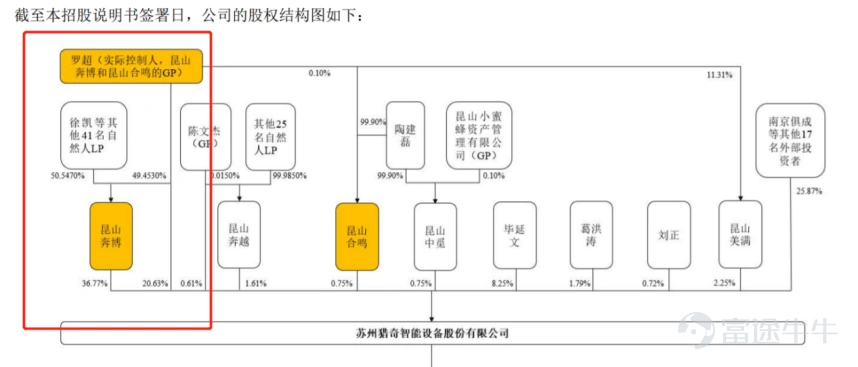
(Image / Lieqi Intelligence Prospectus)
During the development of Lieqi Intelligence, several rounds of unusual equity transfers and capital operations have become the focus of market and regulatory attention.
Specifically, in January 2023, Bi Yanwen, a director of Lieqi Intelligence, transferred his 3.00% equity interest in the company (corresponding to a capital contribution of RMB 300,000) to Kunshan Meiman, controlled by Luo Chao, at a price of RMB 20 per share, for a total consideration of RMB 6 million.
Two months later (in March 2023), Luo Chao transferred a 3.5% equity interest (corresponding to a capital contribution of RMB 350,000) to Kunshan Heming and Nanjing Jucheng at a price of RMB 50 per share, for a total of RMB 17.5 million. Within just two months, the equity transfer price differed by RMB 30 per share.
In its inquiry letter, the Shenzhen Stock Exchange requested the company to explain the reasons and rationale behind Bi Yanwen's low-priced sale of shares to Luo Chao followed by Luo Chao's high-priced resale, and whether there were any nominee holdings or other benefit arrangements.
Lieqi Intelligence responded that the primary reasons for the share price difference were the need to advance the listing process, introduce new investors, stabilize the control structure, and repay loans owed to the company.
However, shortly after filing for IPO tutoring—specifically on November 18, 2024—Lieqi Intelligence quickly implemented an equity incentive plan. Under this plan, three core executives—Ge Hongtao, R&D Director; Liu Zheng, Deputy General Manager and Board Secretary; and Chen Wenjie, Deputy General Manager—jointly subscribed to RMB 1.95 million in newly added registered capital of Lieqi Intelligence at a low price of RMB 8.57 per share.
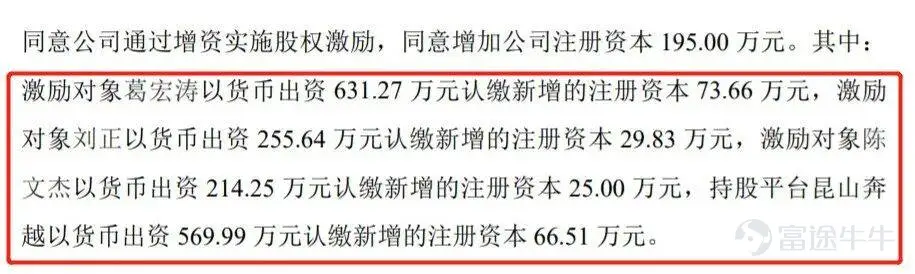
(Source: Lieqi Intelligence Prospectus)
On December 9, 2024, Lieqi Intelligence underwent another capital increase, introducing 11 new shareholders, including Jinpu Muhe, Jinhaitong, and Quande Xuelou Kexin, with the entry price reaching RMB 28.57 per share.
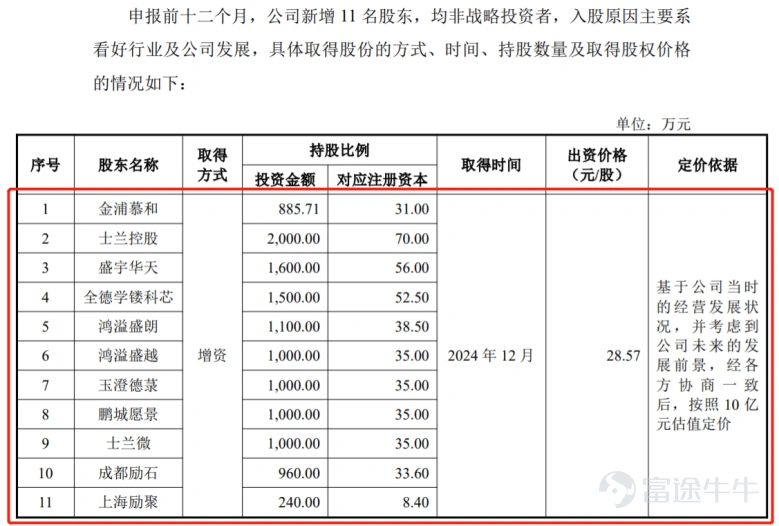
(Source: Lieqi Intelligence Prospectus)
Generally, granting low-priced equity incentives to core executives is a standard corporate practice for motivating management. However, the significant disparity in pricing between these two capital increases has inevitably sparked external skepticism.
Furthermore, Lieqi Intelligence's plan to raise funds through its IPO to supplement working capital after distributing dividends has raised questions about the necessity of the fundraising.According to the prospectus, Lieqi Intelligence distributed dividends of RMB 10 million, RMB 12 million, RMB 15 million, and RMB 35 million from 2022 to the first half of 2025, respectively, totaling RMB 72 million.
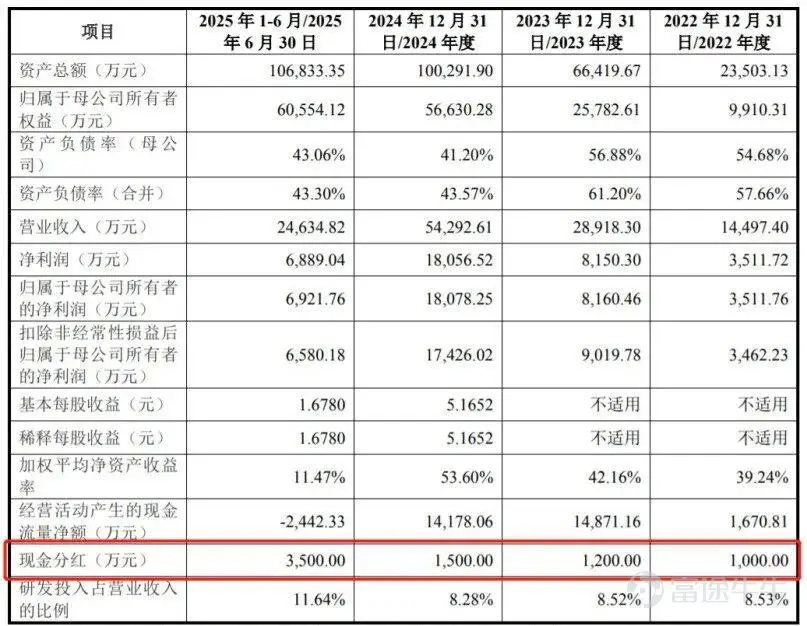
(Source: Lieqi Intelligence Prospectus)
For this IPO, Lieqi Intelligence plans to use RMB 80 million to supplement working capital. However, as of the end of 2025, the company held RMB 167 million in cash and cash equivalents and RMB 301 million in trading financial assets, with no short-term borrowings, indicating ample overall liquidity reserves.
The combination of ample proprietary funds and high dividend payouts, alongside the plan to raise IPO funds for working capital, requires further explanation from Lieqi Intelligence.
2. Sluggish earnings growth, with Zhongji Innolight carrying half the load
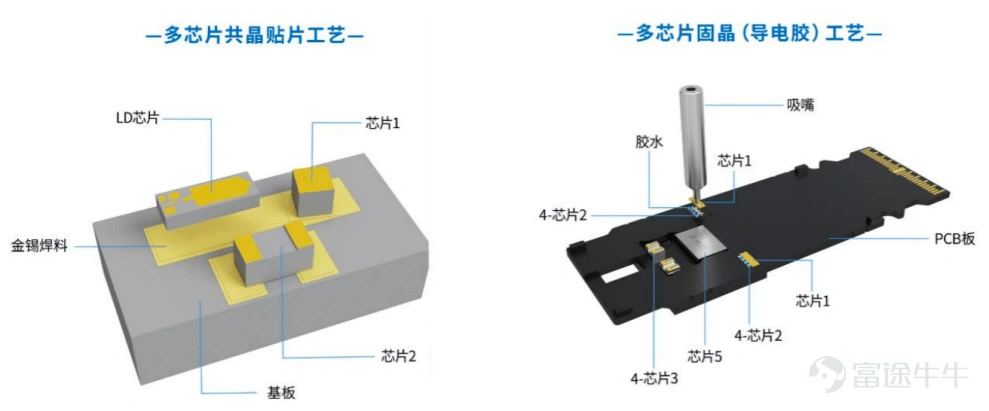
Lieqi Intelligence covers core processes in optical module packaging and testing, including key steps such as die bonding, coupling, and burn-in testing. Its equipment is compatible with the production of 800G/1.6T optical modules, positioning the company as a core manufacturer of optical module packaging and testing equipment.
Benefiting from the high-prosperity cycle in the optical module industry, Lieqi Intelligence has seen rapid earnings growth since 2022.
From 2023 to 2025 (hereinafter referred to as the "Reporting Period"), Lieqi Intelligence reported operating revenues of RMB 289 million, RMB 543 million, and RMB 698 million, representing year-on-year growth of 99.47%, 87.74%, and 28.52%, respectively.
During the same period, its net profit attributable to shareholders of the parent company was RMB 81.6046 million, RMB 181 million, and RMB 182 million, with year-on-year growth of 132.38%, 121.53%, and 0.87%, respectively.
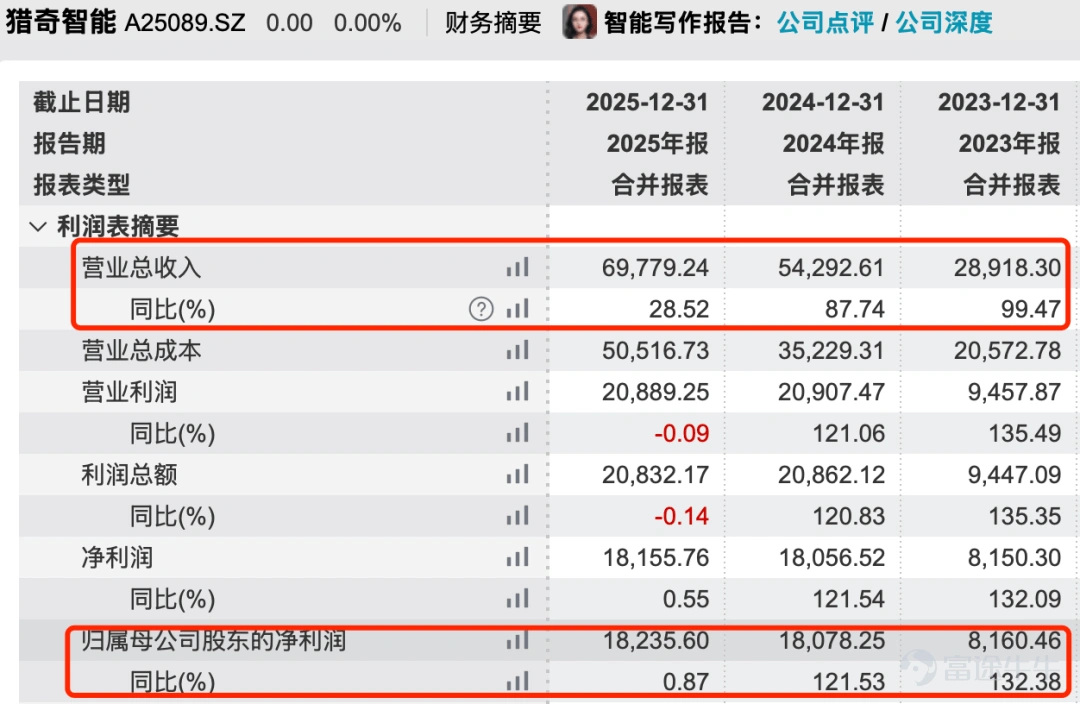
(Chart / Wind (Unit: RMB 10,000))
During the Reporting Period, the growth rates of both revenue and profits for Lieqi Intelligence slowed down. This is related to the gradual completion and commissioning of production lines by optical module companies in the early stages of 2025, which led to a slowdown in the pace of equipment procurement.
Currently, Lieqi Intelligence's revenue relies on die bonding equipment, coupling equipment, burn-in testing equipment, automation equipment, and turnkey line solutions.
(Chart / Lieqi Intelligence Prospectus)
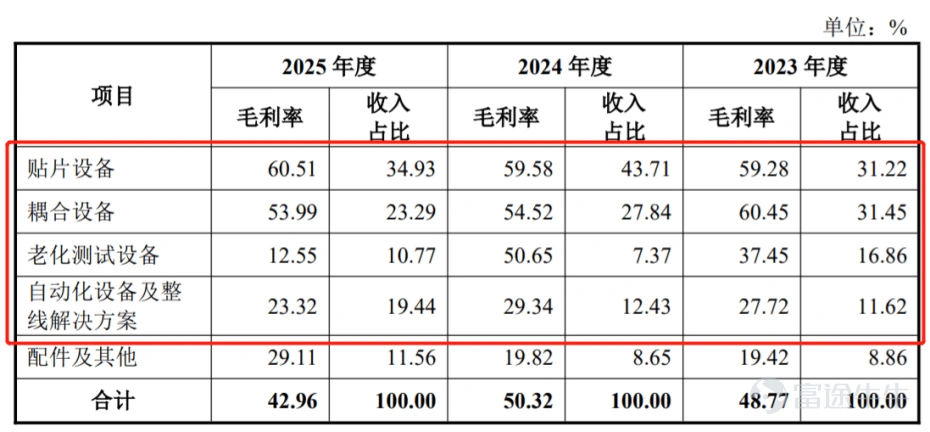
During the Reporting Period, the gross profit margin of Lieqi Intelligence's main business was 48.77%, 50.32%, and 42.96%, respectively, with a year-on-year decline of 7.36 percentage points in 2025. Among these, die bonding equipment and coupling equipment maintained relatively high gross profit margins, but their share of revenue decreased. In 2025, the revenue share of die bonding equipment dropped to 34.93%, and that of coupling equipment fell to 23.29%.
(Source: Lieqi Intelligence Prospectus)
Meanwhile, the gross margins for aging test equipment and automation equipment with full-line solutions—categories that account for an increasing share of revenue—have declined significantly. Specifically, the gross margin for aging test equipment plummeted from 50.65% in 2024 to 12.55% in 2025, a drop of 38.1 percentage points within a year. The gross margin for automation and full-line solutions also fell from 29.34% in 2024 to 23.32% in 2025.
In its response to the inquiry letter, Lieqi Intelligence stated that revenue from module aging test equipment in 2025 was primarily derived from the QTEC model, an upgraded version of the original TEC model. The significant increase in selling price was substantially lower than the rise in costs, leading to a severe compression of gross margins.
This indicates that Lieqi Intelligence has weak bargaining power vis-à-vis its customers, resulting in poor overall profitability performance.
On another front, 'dependence on major clients' is also a risk facing Lieqi Intelligence. Currently, the company's clientele includes enterprises such as Zhongji Innolight, Source Photonics, and Accelink Technologies.
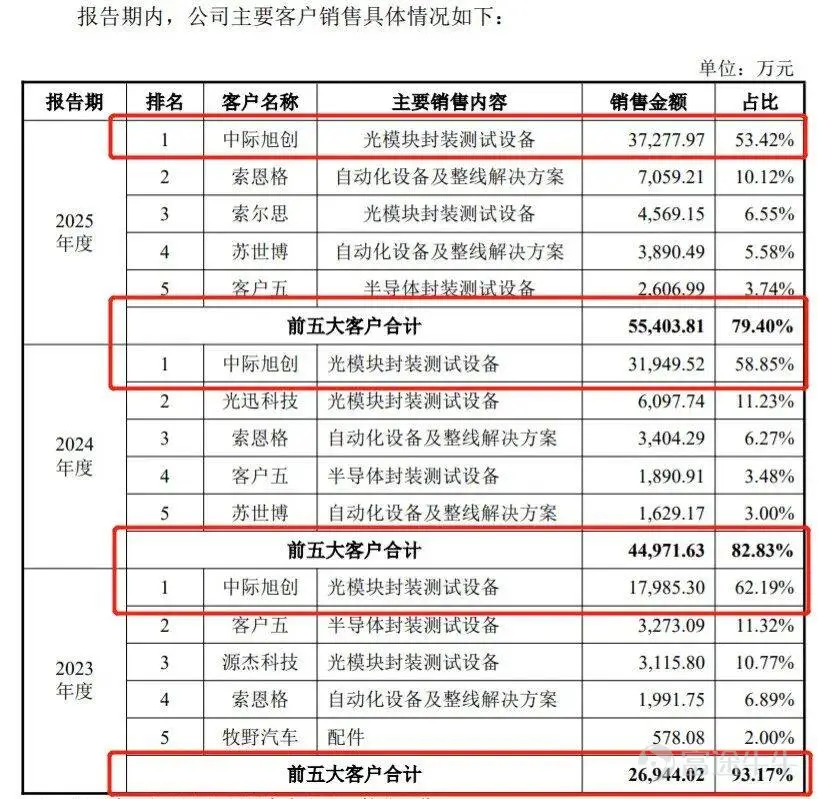
During the reporting period, sales to the top five customers amounted to RMB 269 million, RMB 450 million, and RMB 554 million, accounting for 93.17%, 82.83%, and 79.40% of total revenue, respectively.
Among these, sales to the largest customer, Zhongji Innolight, totaled RMB 180 million, RMB 319 million, and RMB 373 million, representing 62.19%, 58.85%, and 53.42% of total revenue, respectively.
(Source: Lieqi Intelligence Prospectus)
This situation is related to the industry landscape. Data from Frost & Sullivan and LightCounting show that Zhongji Innolight ranked first globally in market share in 2025, with a market share of over 40% for high-end products above 800G. As a global leader in optical modules, Zhongji Innolight's production expansion pace directly determines the order volume for upstream equipment manufacturers.
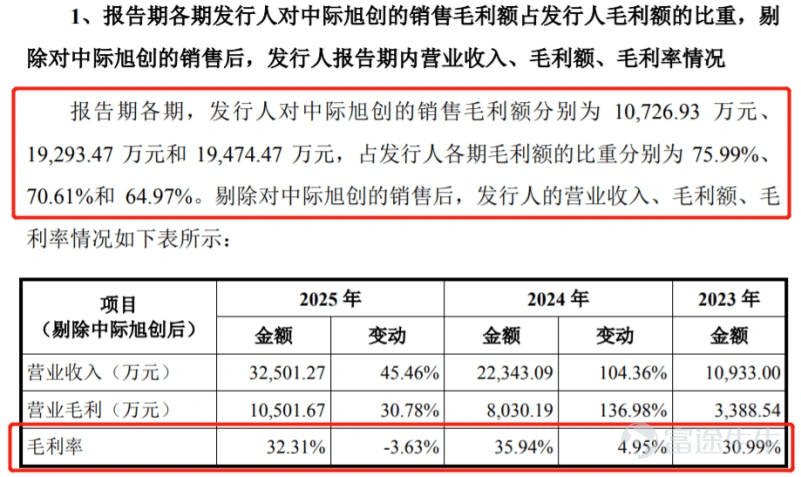
During the reporting period, the gross profit from sales to Zhongji Innolight accounted for 75.99%, 70.61%, and 64.97% of the company's total gross profit in each respective period. Excluding Zhongji Innolight, the company's gross margins were 30.99%, 35.94%, and 32.31%, which are lower than the consolidated gross margin.
(Chart / Lieqi Intelligent IPO Prospectus)
It is evident that Lieqi Intelligent relies heavily on Zhongji Innolight. Any future reduction in orders, supplier changes, or adjustments to Zhongji Innolight’s operational policies that alter procurement demand could directly impact Lieqi Intelligent’s operating performance.
3. High levels of accounts receivable and inventory; core products involved in patent litigation
With high customer concentration, the company’s collection risk continues to escalate.
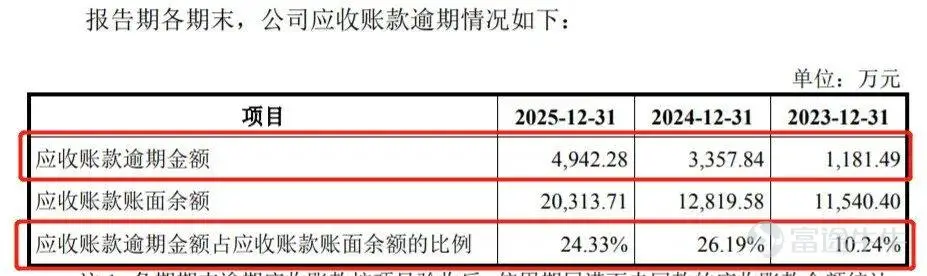
During the reporting period, Lieqi Intelligent’s gross accounts receivable stood at RMB 115 million, RMB 128 million, and RMB 191 million, respectively, showing a rapid growth trend.
Of these, overdue accounts receivable amounted to RMB 11.8149 million, RMB 33.5784 million, and RMB 49.4228 million, respectively. The overdue ratio rose sharply from 10.24% in 2023 to 24.33% in 2025.
(Chart / Lieqi Intelligent IPO Prospectus)
Meanwhile, Lieqi Intelligent’s inventory has also been growing rapidly, with book values of RMB 261 million, RMB 311 million, and RMB 827 million during the reporting period.
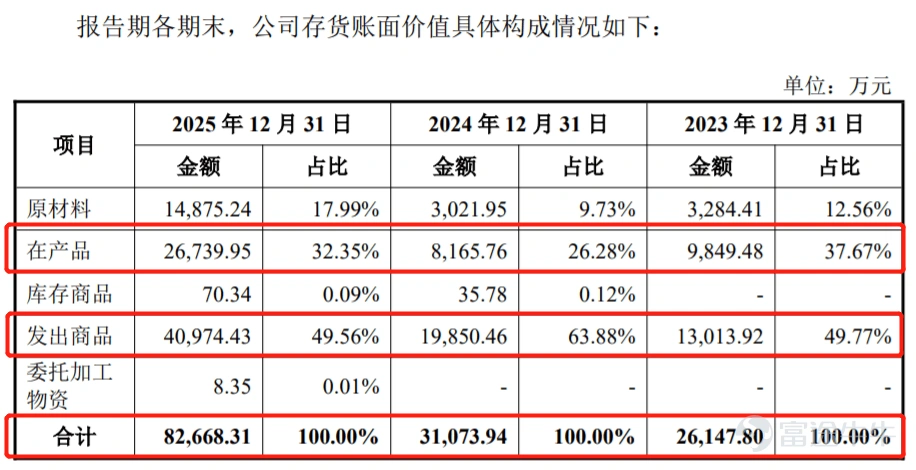
(Chart / Lieqi Intelligent IPO Prospectus)
As Lieqi Intelligent’s equipment consists of customized specialized devices, the end-to-end process—including production delivery, on-site commissioning, and customer acceptance—is lengthy and involves cumbersome approvals, resulting in persistently low inventory turnover efficiency.
During the reporting period, Lieqi Intelligent's inventory turnover ratios were 0.78, 0.94, and 0.70 times, respectively, significantly lower than the industry peers' levels of 1.35, 1.29, and 1.37 times.
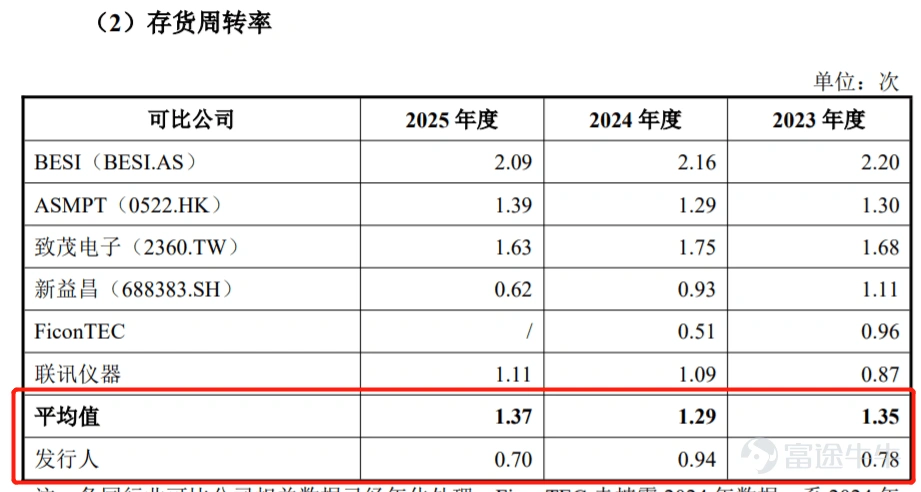
(Source: Lieqi Intelligent Prospectus)
More importantly, the acceptance cycles for die-bonding equipment and coupling equipment—which together contributed over half of total revenue in 2025—were extended to 310 days and 213 days, respectively, further exacerbating turnover pressure. Should acceptance delays, adjustments in customer demand, or project terminations occur subsequently, the substantial inventory could incur impairment losses.
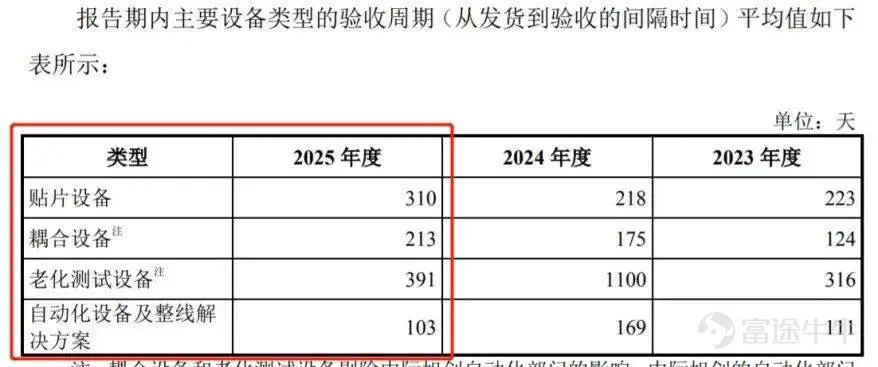
(Source: Lieqi Intelligent Response to Inquiry Letter)
In the fast-iterating "optical" sector, Lieqi Intelligent's R&D investment intensity significantly lags behind that of comparable industry peers.
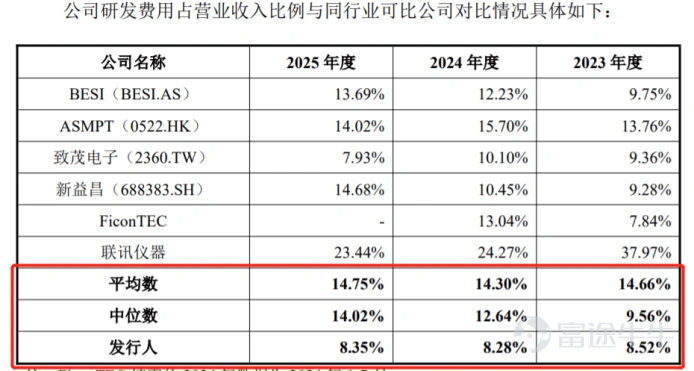
During the reporting period, the company's R&D expenses were RMB 24.6388 million, RMB 44.9627 million, and RMB 58.2874 million, respectively, with R&D expense ratios of 8.52%, 8.28%, and 8.35%, respectively, all below the average R&D expense ratios of comparable peers, which stood at 14.66%, 14.30%, and 14.75%.
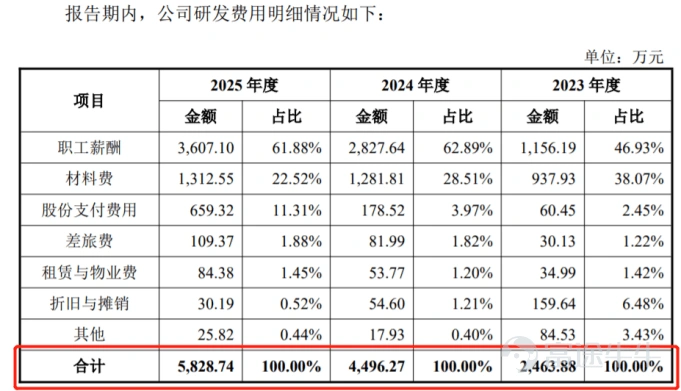
(Source: Lieqi Intelligent Prospectus)
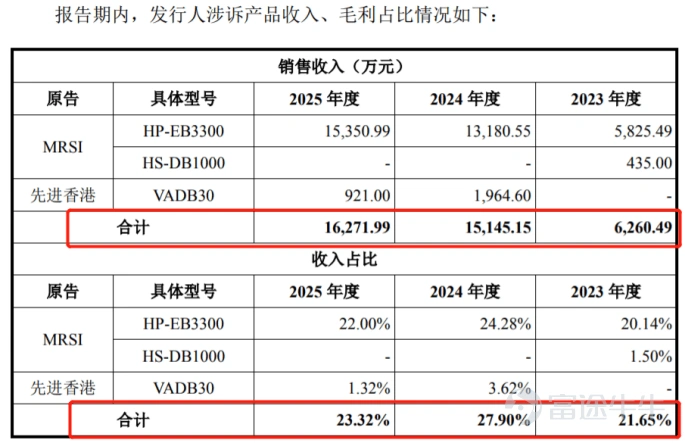
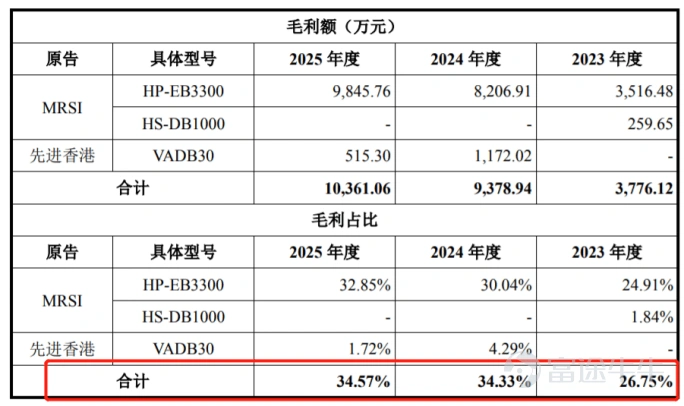
However,Lieqi Intelligent's core products are deeply embroiled in patent litigation disputes.In 2025, Lieqi Intelligent was sequentially sued for patent infringement by overseas industry leaders MRSI and ASMPT, with combined claims totaling RMB 25 million. The products involved in the lawsuits include core flagship models such as the HP-EB3300 and VADB30, which are key revenue generators for the company.
During the reporting period, the total sales revenue from products involved in litigation was RMB 62.6049 million, RMB 151 million, and RMB 163 million, respectively, accounting for 21.65%, 27.90%, and 23.32% of total revenue, and contributing 26.75%, 34.33%, and 34.57% of gross profit, respectively.
(Chart / Lieqi Intelligence IPO Prospectus)
In other words, in 2025, more than 20% of Lieqi Intelligence's revenue and over 30% of its gross profit came from products involved in litigation.
Based on this, the Shenzhen Stock Exchange requested the company to provide a quantitative analysis of the specific impact of the litigation on its production operations and going concern ability during the inquiry process, and to improve information disclosure regarding related risk warnings.
The prospectus shows that regarding the patent infringement lawsuit filed by MRSI, the Shenzhen Intermediate People's Court rejected the plaintiff's claims in the first instance, ruling that the company did not constitute infringement; the case is currently in the appeal period. Regarding the patent infringement lawsuit initiated by Advanced Hong Kong, a subsidiary of ASMPT, the plaintiff voluntarily withdrew the suit after the core claims of the patents in question were declared invalid by the China National Intellectual Property Administration.
Standing at the forefront of the "optical" sector trend, whether Lieqi Intelligence can successfully list remains a focus of continued attention from "Entrepreneurship Frontier."
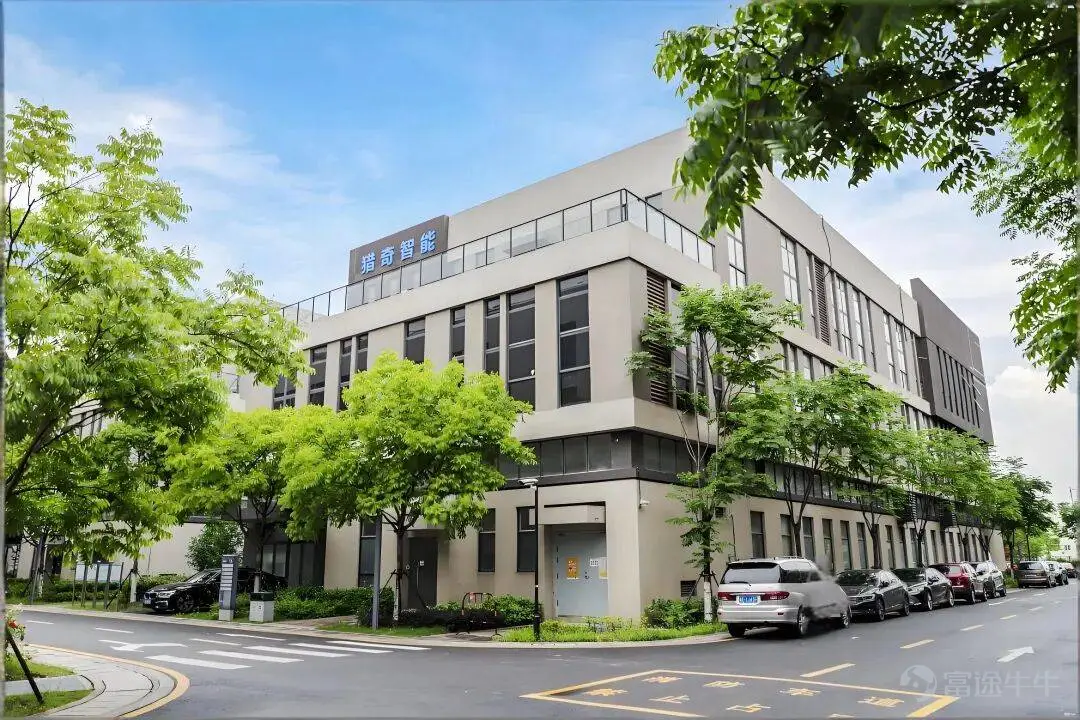
*Note: The cover image in the article is sourced from Lieqi Intelligence's official WeChat public account.
Risk Disclaimer: The above content only represents the author's view. It does not represent any position or investment advice of Futu. Futu makes no representation or warranty.Read more
Comments
to post a comment