Approximately 80% of new listings are expected to rise on their debut in 2026; how will subsequent p

The rapid expansion of Yuanji Food's store count comes with a downside: average spending per customer and revenue per store have declined for consecutive years, alongside numerous food safety concerns.
After its initial listing application lapsed, at the end of July 2026, Yuanji Food Group Co., Ltd. (hereinafter referred to as 'Yuanji Food') resubmitted its prospectus to the Hong Kong Stock Exchange, aiming to become the 'first Chinese dumpling-focused listed company,' with Huatai International and GF Securities acting as joint sponsors.
The good news is that Yuanji Food has received an overseas listing filing confirmation notice from China’s Securities Regulatory Commission—commonly known in market parlance as the 'green light'—bringing the company a step closer to its IPO.
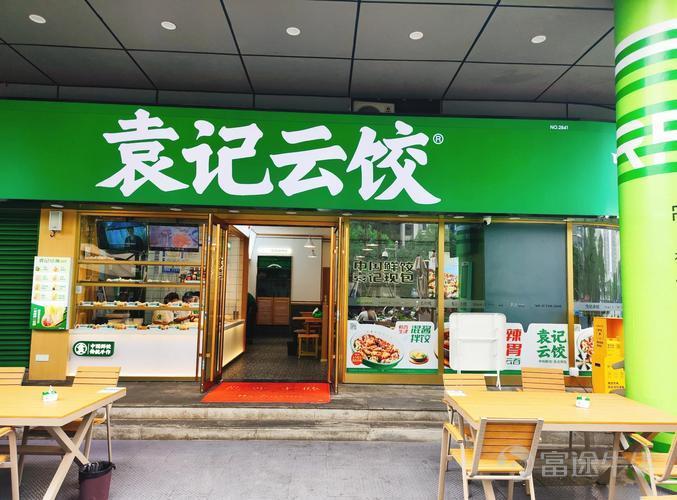
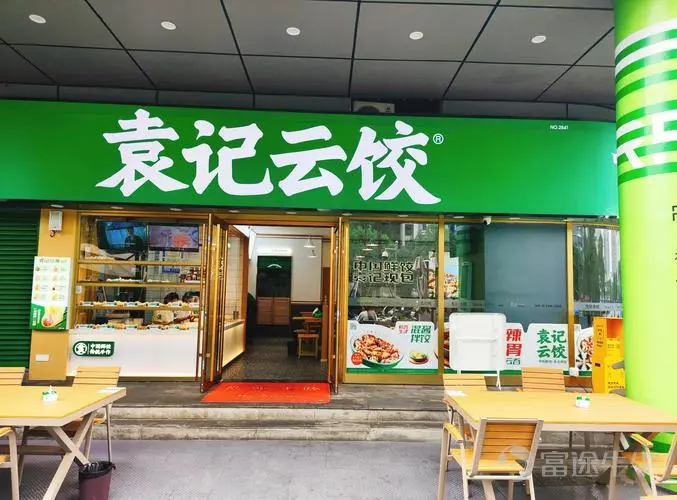
According to the prospectus and data from Tianyancha, Yuanji Food Group was founded in 2017 in Guangzhou and has been operating for over 14 years. It has launched and operates multiple sub-brands, including 'Yuanji Yunjiao' and 'Yuan Lianghong.' Leveraging a centralized production facility combined with a nationwide franchise model, the company expanded its store count from 1,990 to 4,773 within just three years, firmly securing its position as the largest Chinese fast-food chain by store footprint. However, more than 90% of these stores are franchises—an arrangement that underpins the company’s entire revenue base but also represents its biggest risk on the path to going public.
90% of revenue tied to franchisees; ready-to-cook meals struggle to break through as a second growth curve
For the years 2023 to 2025 and the first five months of 2026 (the reporting periods), the company’s revenue was RMB 2.026 billion, RMB 2.561 billion, RMB 2.795 billion, and RMB 1.306 billion, respectively; corresponding net profits were RMB 167 million, RMB 142 million, RMB 199 million, and RMB 157 million.
Breaking down the revenue structure reveals that Yuanji Foods is essentially a food ingredient wholesaler supplying thousands of franchise stores. From 2023 to 2025, revenue from its core brand, Yuanji Dumplings, accounted for over 95% of total revenue, with franchise stores consistently contributing more than 90% of that amount, while company-owned stores contributed less than 3%.
Moreover, revenue from the Yuanji Dumplings segment is almost entirely dependent on franchisees. During the reporting periods, revenue from Yuanji Dumplings amounted to RMB 1.97 billion, RMB 2.495 billion, RMB 2.675 billion, and RMB 1.228 billion, representing 97.2%, 97.4%, 95.7%, and 94.1% of total revenue, respectively. Of this, franchise store revenue was RMB 1.932 billion, RMB 2.443 billion, RMB 2.613 billion, and RMB 1.197 billion, accounting for 95.3%, 95.3%, 93.5%, and 91.7% of total revenue; revenue from company-owned stores was RMB 380.83 million, RMB 528.04 million, RMB 613.37 million, and RMB 313.37 million, representing 1.9%, 2.1%, 2.2%, and 2.4% of total revenue, respectively.
Further breaking down by business type clarifies the company’s revenue sources even more. During the periods under review, sales revenue from products such as fillings and wrappers amounted to RMB 1.938 billion, RMB 2.429 billion, RMB 2.657 billion, and RMB 1.241 billion, representing 95.6%, 94.9%, 95.1%, and 95.0% of total revenue, respectively. Revenue from franchise-related services totaled RMB 878.47 million, RMB 1.17 billion, RMB 1.32 billion, and RMB 634.31 million, accounting for 4.3%, 4.6%, 4.7%, and 4.9% of total revenue, respectively.
The critical weakness of this business model is clear: the company’s performance is entirely tied to franchisees’ willingness to purchase ingredients. If store operations deteriorate significantly or large numbers of outlets shut down, leading franchisees to reduce ingredient orders, the company’s revenue would be directly impacted.
Production and sales data for raw materials may already be signaling weakness. During the reporting periods, sales volume of fillings to franchisees amounted to 44,000 tons, 54,800 tons, 57,600 tons, and 24,200 tons, with average selling prices of RMB 27.5/kg, RMB 26.8/kg, RMB 26.0/kg, and RMB 26.5/kg, respectively. Sales volume of wrappers reached 31,000 tons, 39,600 tons, 41,400 tons, and 17,900 tons, with average selling prices of RMB 8.2/kg, RMB 7.6/kg, RMB 7.8/kg, and RMB 8.3/kg, respectively. Slowing shipment growth and continuously declining unit prices are steadily compressing per-unit profit margins.
To reduce reliance on its single-ingredient business, Yuanji launched Yuanji Weixiang, a prepackaged food brand targeting household retail as a second growth curve. However, results so far have been minimal. Revenue from Yuanji Weixiang during the reporting periods was RMB 544.35 million, RMB 631.63 million, RMB 961.32 million, and RMB 692.81 million (RMB 254.22 million in the same period of 2025, or 2.7% of revenue), representing 2.7%, 2.5%, 3.4%, and 5.3% of total revenue, respectively.
Overall, the Yuanji Weixiang segment appears to be pursuing scale through low pricing and high volume. Total product sales volumes during the periods were 3.3771 million packs, 5.327 million packs, 10.2192 million packs, and 6.4486 million packs, with average selling prices of RMB 15.96/pack, RMB 11.28/pack, RMB 9.26/pack, and RMB 10.49/pack, respectively.
By product category, prices for wontons and pre-made dumplings have fluctuated. Wonton sales volumes were 3.0487 million packs, 3.5181 million packs, 5.2603 million packs, and 3.5495 million packs, with average selling prices of RMB 16.63/pack, RMB 13.25/pack, RMB 10.37/pack, and RMB 11.56/pack, respectively. Dumpling sales volumes were 0.3284 million packs, 1.8289 million packs, 4.9589 million packs, and 2.8991 million packs, with average selling prices of RMB 9.71/pack, RMB 7.43/pack, RMB 8.09/pack, and RMB 9.18/pack, respectively.
Store expansion-driven growth has peaked, and per-store profitability continues to weaken.
According to the prospectus, during the reporting period, the company's total GMV from stores was RMB 4.772 billion in full-year 2023, rising to RMB 6.248 billion in 2024, and slightly increasing further to RMB 6.662 billion in 2025. In the first five months of 2026, combined store GMV reached RMB 2.949 billion. While the aggregate GMV shows an upward trend, this growth stems not from improved operational performance per store but solely from continuous new store openings. Over three years, Yuanji Food expanded its store count from 1,990 to 4,773, covering all provincial-level administrative regions in China and operating 41 overseas stores in markets such as Singapore and Thailand, creating a vast footprint on paper.
During the reporting period, the company operated 3,115, 3,912, 4,446, and 4,684 stores in mainland China, respectively, accounting for 100% of its total store base. Among these, first-tier city stores numbered 1,810, 2,125, 2,362, and 2,213, representing 58.1%, 54.3%, 53.1%, and 47.2% of the total, respectively. Notably, Guangdong Province alone—its home market—hosted 1,513 stores, or 33% of the national total, while Jiangsu, Zhejiang, and Shanghai together accounted for 1,744 stores.
Zhu Dan, a Chinese food industry analyst, noted that the number of chain restaurant outlets serves as a key narrative tool for capital markets, but the franchise model is a double-edged sword: the more stores there are, the exponentially harder it becomes to maintain standardized operations. If widespread store closures occur due to losses, the core revenue stream from ingredient sales—which sustenance headquarters relies on—will come under direct pressure, posing a long-term internal risk for the company.
The influx of new stores has inflated overall sales volume, yet it fails to mask the underlying issue of declining per-store revenue. Yuanji Food’s stores are highly concentrated, with maximum density in many areas, meaning outlets within the same commercial districts cannibalize each other’s foot traffic, continuously diluting individual store earnings.
Average transaction value per order clearly reflects weakening consumer demand: it stood at RMB 26.1 in 2023, dropped to RMB 24.7 in 2024, and further declined to RMB 22.5 in 2025—a reduction of over RMB 3.5 in just two years. In the first five months of 2026, average transaction value modestly rebounded to RMB 22.7, indicating only a slight recovery and still significantly below 2023 levels.
Looking at annual average GMV per store, each outlet generated RMB 1.5 million in 2023, briefly edged up to RMB 1.6 million in 2024, then fell back to RMB 1.5 million in 2025—effectively returning to the starting point after three years. In the first five months of 2026, average GMV per store was only RMB 600,000; if annualized, this suggests potential downward pressure on full-year per-store revenue.
New store openings have not attracted additional consumers but merely fragmented the existing market, directly lowering the revenue ceiling for each store. Daily GMV—the most direct indicator of store foot traffic—shows an even steeper decline: daily revenue per store averaged RMB 5,394.4 in 2023, fell to RMB 5,010.8 in 2024, slid further to RMB 4,687.6 in 2025, and dropped again to RMB 4,627.3 in the first five months of 2026.
As shown by the comparison, daily per-store revenue has decreased by nearly RMB 800 over three years. For small-scale dumpling franchisees, this persistent decline in daily sales intensifies the burden of fixed costs—such as rent, labor, and raw materials—and continuously squeezes profit margins. This dynamic is the fundamental driver behind the year-over-year increase in store closures between 2023 and 2025.
Sales costs remain persistently high, and the company continues to take on debt to fund capacity expansion.
Persistent rigid cost increases have also created underlying pressure on business operations. During the reporting periods, the company’s cost of sales amounted to RMB 1.5 billion, RMB 1.973 billion, RMB 2.098 billion, and RMB 935 million, respectively, rising in tandem with store expansion and increased scale of raw material procurement. Marketing and administrative expenses also escalated correspondingly: selling and marketing expenses were RMB 769.6 million, RMB 1.26 billion, RMB 1.37 billion, and RMB 659.77 million across the periods, while general and administrative expenses remained consistently high at RMB 1.99 billion, RMB 2.39 billion, RMB 2.79 billion, and RMB 1.2 billion, respectively. These substantial fixed costs have continuously eroded profit margins.
Pressure from tied-up working capital in the supply chain is gradually becoming evident. The carrying value of inventory has risen year after year, increasing from RMB 609.84 million at the end of 2023 to RMB 946.28 million by the end of May 2026. Inventory turnover days have fluctuated between 12.1 and 15.5 days, reflecting a continuous expansion in both raw material and finished goods stockpiles, which ties up significant working capital.
The growth trend in accounts receivable is even more pronounced. The book balance rose from RMB 257.85 million to RMB 669.76 million, reaching RMB 651.41 million in the first five months of 2026. The company attributes this increase to extended payment terms granted to distributors and online channels, which led to higher credit sales. Correspondingly, days sales outstanding (DSO) lengthened from 2.8 days to 7.6 days—nearly doubling the collection cycle and significantly weakening cash recovery efficiency.
As the company continues investing in production capacity and warehousing infrastructure, both its asset base and debt levels have expanded in parallel. Total liabilities during the reporting periods stood at RMB 4.62 billion, RMB 5.69 billion, RMB 7.39 billion, and RMB 7.39 billion, respectively. Current liabilities have climbed steadily each year, primarily driven by interest-bearing bank borrowings, which amounted to RMB 400.25 million, RMB 953.4 million, RMB 1.1 billion, and RMB 724.14 million across the periods. The company’s earlier strategy of leveraging debt to fund capacity expansion has clearly resulted in a notable increase in its debt burden.
Liquidity ratios initially showed strain before recovering. The current ratio was only 1.3 and 1.2 in 2023 and 2024, respectively, while the quick ratio stood at 1.1 and 1.0—indicating limited short-term debt coverage. However, by 2025, as cash balances significantly increased, both metrics jumped to 2.2 and 2.1, respectively, and further improved to 2.5 and 2.3 in the first five months of 2026. Meanwhile, the debt-to-asset ratio first rose then declined: it peaked at 21.6% in 2024 before falling to 14.2% and 12.2% in the following two years, signaling a moderation in leverage.
During the reporting periods, net cash flows from operating activities were RMB 2.46 billion, RMB 2.34 billion, RMB 3.71 billion, and RMB 1.09 billion, respectively, while cash and cash equivalents stood at RMB 3.27 billion, RMB 3.51 billion, RMB 10.93 billion, and RMB 7.01 billion, respectively.
Three consecutive years of food safety-related public controversies reveal systemic vulnerabilities in the franchise quality control system.
In the restaurant industry, value has never been determined solely by the number of outlets. Sustainable per-store profitability, closed-loop terminal control, and a robust food safety baseline constitute the true long-term competitive moat. If headquarters fails to address critical gaps in franchise oversight and store operations, even the most aggressive store expansion will ultimately become a heavy burden dragging down the business.
From 2023 to 2025, a series of high-profile negative incidents repeatedly exposed the headquarters’ lack of effective, long-term control mechanisms over its thousands of franchise stores. In 2023 alone, multiple widely publicized controversies erupted. The most heated issue occurred in September and October, when allegations surfaced that despite marketing claims of 'freshly minced filling prepared daily,' all meat fillings and dough wrappers were actually frozen semi-finished products sourced from central factories, with a shelf life of up to 180 days. Stores merely thawed these products and performed minimal mixing before wrapping—creating a stark disconnect between promotional messaging and actual supply chain practices. The topic trended on social media. The company responded only by stating that freezing is an industry-standard practice and made no adjustments to its external communications, thereby directly undermining its core brand positioning around 'freshness' and severely damaging consumer trust.
In August of the same year, a video from a franchise store in Zhuzhou, Hunan, went viral, showing kitchen staff preparing dumplings surrounded by swarms of flies, with no pest control or sanitation protocols in place. Headquarters merely ordered temporary corrective actions. A concurrent inspection of 951 stores revealed widespread violations such as repeated thawing of ingredients and improper mixing of raw and cooked foods—clear evidence that nationwide audits were merely performative. Additionally, that year saw other incidents, including a Shenzhen outlet employee verbally abusing a delivery rider and a Kunming store being warned and fined by local regulators for falsifying sales figures, collectively exposing systemic weaknesses in service standards and regulatory compliance across the franchise network.
The earthworm contamination incident in 2024 marked the most severe public relations crisis since the brand's inception. At a store located near Liudao Kou in Beijing, a customer discovered a three-centimeter-long earthworm in their wonton dish. Initially, the store only agreed to refund the 14-yuan meal cost and only offered a 500-yuan compensation after multiple rounds of negotiation. The incident quickly escalated, prompting local market regulators to launch an immediate investigation, while two nearby outlets simultaneously received food safety warnings. It took the brand a full month to issue an apology statement, reflecting a severely delayed crisis response. The founder later admitted that sales at stores in the affected region dropped by as much as 30%, with a significant loss of core family customers, forcing headquarters to offer ingredient discounts to appease franchisees.
Worryingly, similar issues have not been fully resolved. In June 2025, another incident surfaced at a mall-based outlet in Chongqing, where flies were repeatedly seen crawling on minced meat displayed on an open preparation counter—a video widely circulated across short-video platforms. Netizens immediately linked this to the previous year’s earthworm incident, reinforcing a public perception that the brand was 'repeatedly failing to learn its lesson.' The store simply attributed the problem to insects entering through mall windows, and the brand failed to roll out a nationwide unified rectification plan, making it difficult for outsiders to believe that past corrective measures had been effectively implemented.
Accumulated consumer complaints over the long term cannot be ignored. As of August 6, 2026, a search for 'Yuan Ji Yun Jiao' on Heimao Complaint Platform yielded 410 related complaints, primarily concerning kitchen hygiene, foreign objects in food, and poor service.
In terms of equity structure, prior to its IPO, Yuan Lianghong and his father Yuan Jianjun, together with four employee and franchisee shareholding platforms, collectively held 82.54% of the company’s equity. Yuan Lianghong serves as the general partner in all four shareholding platforms, giving him full control over voting rights and resulting in highly concentrated corporate control. (Produced by Harbor Finance)
Xiao Xiuni, Harbor Business Observer
Risk Disclaimer: The above content only represents the author's view. It does not represent any position or investment advice of Futu. Futu makes no representation or warranty.Read more
Comments
to post a comment