Approximately 80% of new listings are expected to rise on their debut in 2026; how will subsequent p

Zhongke Innovation's gross margin has declined and remains significantly weaker than industry peers: goodwill stands at RMB 50 million, and an arbitration was initiated following its previous failed IPO attempt
On June 29, the STAR Market IPO application of Wuhan Zhongke Innovation Technology Co., Ltd. (hereinafter referred to as 'Zhongke Innovation') was accepted, with Dongwu Securities acting as the sponsor. As of now, Zhongke Innovation’s review status has been updated to 'Inquiry Issued'.
Zhongke Innovation's IPO journey dates back to 2014. In July 2014, the company submitted a prospectus to the Shenzhen Stock Exchange's ChiNext board, but that IPO ultimately failed.
This IPO attempt by Zhongke Innovation still faces several lingering historical issues worth noting. It is reported that in 2012, the company's former controlling shareholder entered into a valuation adjustment mechanism (VAM) agreement with investors. Due to the failure to complete the listing on schedule, the investors initiated arbitration in 2022. This dispute was not resolved until May 2025.
Gross margin has declined and remains significantly below the industry average
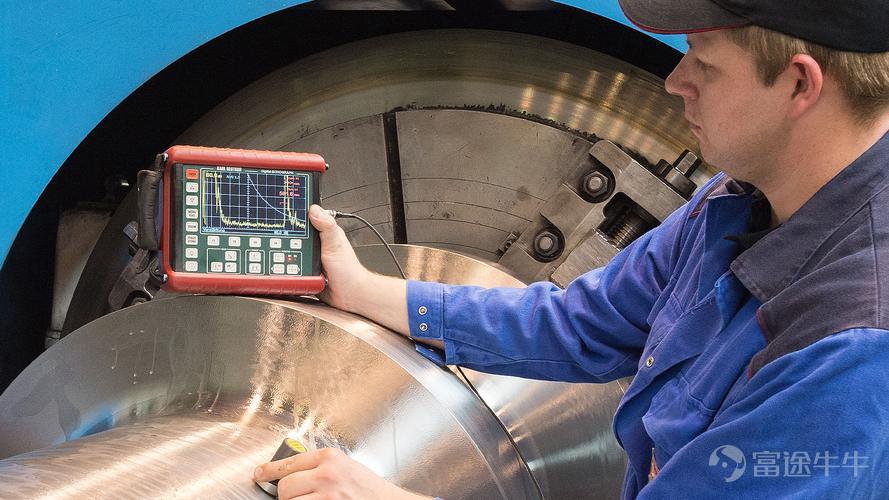
According to Tianyancha and the company’s prospectus, Zhongke Innovation was established in 2003 and originated from the Chinese Academy of Sciences Institute. It is a national-level specialized, sophisticated, and innovative ‘Little Giant’ enterprise focused on the research and development, manufacturing, and sales of industrial non-destructive testing (NDT) equipment. Zhongke Innovation’s main products include automated NDT systems and NDT instruments, which are applied in China’s special steel, petrochemicals, non-ferrous metals, energy and power, rolling stock, defense and military, aerospace, and nuclear industries—key national strategic and pillar sectors. The company specializes in providing professional NDT equipment and technical support for critical components and products used by enterprises in these sectors and their upstream and downstream supply chains.
By product category, during the reporting period (2023–2025), sales of automated NDT systems and NDT instruments accounted for 91.37%, 89.23%, and 90.14% of total revenue, respectively, making them the company’s primary source of income. Spare parts, primarily consisting of various sensors, detection modules, wedges, and other accessories, serve as complementary components for automated NDT systems and NDT instruments.
Zhongke Innovation’s automated NDT systems mainly include ultrasonic automated inspection systems and magnetic flux leakage (MFL) automated inspection systems. During the reporting period, ultrasonic automated inspection systems generated sales revenue of RMB 76.53 million, RMB 100 million, and RMB 138 million, with sales volumes of 56 units, 50 units, and 67 units, respectively, and average selling prices of RMB 1.37 million/unit, RMB 2.01 million/unit, and RMB 2.06 million/unit.

During the same period, MFL automated inspection systems generated sales revenue of RMB 5.01 million, RMB 46.99 million, and RMB 68.79 million, with sales volumes of 10 units, 68 units, and 102 units, respectively, and average selling prices of RMB 0.50 million/unit, RMB 0.69 million/unit, and RMB 0.67 million/unit.
The company’s other major business segment, NDT instruments, generated sales revenue of RMB 94.99 million, RMB 106 million, and RMB 125 million during the reporting period, accounting for 49.16%, 37.38%, and 33.99% of total main business revenue, respectively—a continuously declining share.
The company’s NDT instruments primarily consist of ultrasonic testing instruments and electromagnetic testing instruments. Over the periods, ultrasonic testing instruments sold 1,522 units, 1,499 units, and 1,819 units, with average selling prices of RMB 0.624 million/unit, RMB 0.640 million/unit, and RMB 0.597 million/unit, respectively. In 2024 and 2025, electromagnetic testing instruments sold 27 units and 61 units, with average selling prices of RMB 3.817 million/unit and RMB 2.715 million/unit, respectively. The slight decline in average selling prices of both ultrasonic and electromagnetic testing instruments in 2025 was primarily due to variations in product mix and configurations across different years.
In terms of overall financial performance, during the reporting period, Zhongke Innovation recorded revenue of RMB 200 million, RMB 294 million, and RMB 378 million, net profit of RMB 31.24 million, RMB 50.69 million, and RMB 79.27 million, and net profit attributable to shareholders of the parent company after excluding non-recurring gains and losses of RMB 28.57 million, RMB 37.32 million, and RMB 75.55 million, all showing consistent growth.
However, the company’s gross margin did not follow the same upward trend. During the reporting period, Zhongke Innovation’s gross margin from main operations stood at 53.20%, 53.51%, and 50.39%, respectively, while the average gross margin of comparable peers during the same periods was 60.00%, 60.23%, and 61.67%. In 2025, the company’s gross margin declined by 3.12 percentage points year-over-year and remained consistently below the peer average.
In addition, Zhongke Innovation has consistently received government subsidies, which accounted for more than 15% of total profit during the reporting periods. The amounts of government grants recognized in profit or loss for the periods were RMB 129.976 million, RMB 106.931 million, and RMB 135.440 million, representing 37.46%, 18.72%, and 15.11% of total profit for the respective periods.
Accounts receivable and inventory levels have continued to rise, while the R&D expense ratio remains relatively weak.
As Zhongke Innovation seeks to list on the STAR Market, its R&D investment has become a key focus.
During the reporting periods, the company’s sales expenses amounted to RMB 336.620 million, RMB 444.764 million, and RMB 440.302 million, representing 16.86%, 15.15%, and 11.64% of revenue, respectively; general and administrative expenses were RMB 202.848 million, RMB 293.864 million, and RMB 318.725 million, accounting for 10.16%, 10.01%, and 8.43% of revenue for the respective periods; and R&D expenses totaled RMB 233.122 million, RMB 301.104 million, and RMB 284.584 million, representing 11.67%, 10.26%, and 7.53% of revenue, respectively.
During the same periods, the average sales expense ratios of comparable peers were 14.60%, 16.11%, and 14.45%, respectively, while their average R&D expense ratios were 14.11%, 16.30%, and 16.34%. Zhongke Innovation’s R&D expense ratio has consistently remained below the peer average. Regarding this discrepancy, Zhongke Innovation stated that it is primarily attributable to differences in R&D focus and revenue scale.
It should also be noted that during the reporting periods, both accounts receivable and inventory at Zhongke Innovation showed an upward trend, leading to a corresponding increase in working capital requirements.
At the end of each reporting period, the company’s accounts receivable balances were RMB 1.04 billion, RMB 1.24 billion, and RMB 1.73 billion, representing 52.10%, 42.37%, and 45.71% of revenue, respectively; the net carrying amounts of accounts receivable were RMB 852.988 million, RMB 1.09 billion, and RMB 1.54 billion; allowance for doubtful accounts amounted to RMB 187.525 million, RMB 153.807 million, and RMB 185.137 million; and accounts receivable turnover ratios were 2.36x, 2.57x, and 2.54x per year, respectively.
The relatively high ratio of accounts receivable balance to annual revenue as of the end of 2023 was primarily due to the consolidation of Huayu Yimu into the financial statements as of the end of August 2023, which significantly increased the year-end accounts receivable balance. Meanwhile, consolidated revenue for 2023 included only Huayu Yimu’s results from September to December 2023, resulting in a comparatively higher ratio at year-end.
At the end of each reporting period, the carrying amounts of inventory were RMB 847.985 million, RMB 1.17 billion, and RMB 1.22 billion, representing 24.21%, 26.75%, and 23.67% of current assets, respectively; gross inventory balances were RMB 963.834 million, RMB 1.25 billion, and RMB 1.29 billion; inventory write-down provisions totaled RMB 115.849 million, RMB 78.015 million, and RMB 71.155 million; and inventory turnover ratios were 1.17x, 1.24x, and 1.49x per year, respectively.
Net cash flow from operating activities at the end of each reporting period amounted to RMB 366.188 million, RMB 348.679 million, and RMB 388.789 million, respectively.
Meanwhile, Zhongke Innovation’s goodwill remained consistently above RMB 50 million during the reporting period, significantly exceeding its cash flow from operating activities. At the end of each reporting period, the carrying amount of the company’s goodwill was RMB 53.4603 million, RMB 53.4603 million, and RMB 53.3037 million, accounting for 37.68%, 38.02%, and 33.77% of non-current assets, respectively.
According to the prospectus, in September 2023, Herun Lian acquired control of Huayu Yimu, constituting a business combination under non-common control, resulting in goodwill of RMB 34.8261 million. In December 2023, Huayu Yimu acquired control of Xihongshi Technology and Wuxi Huayu, also constituting business combinations under non-common control, generating goodwill of RMB 18.4776 million and RMB 1.566 million, respectively.
Distributed dividends of RMB 57.7802 million and raised RMB 200 million to replenish working capital; previously, an unsuccessful listing attempt led to arbitration proceedings.
In this IPO, Zhongke Innovation plans to raise RMB 777 million, of which RMB 103 million will be allocated to the ultrasonic non-destructive testing production base construction project; RMB 124 million to the magnetic flux leakage non-destructive testing production base construction project; RMB 54.1493 million to the new product industrialization project; RMB 214 million to the multifunctional R&D center construction project; RMB 80.8909 million to the marketing network and service system construction project; and RMB 200 million to supplement working capital.
In terms of current production capacity, the utilization rates of ultrasonic non-destructive testing equipment during each reporting period were 96.31%, 115.11%, and 99.66%, respectively, remaining consistently at full capacity.
As of the end of each reporting period, Zhongke Innovation’s ending cash and cash equivalents balances were RMB 104 million, RMB 101 million, and RMB 87.2811 million, respectively; cash and cash equivalents were RMB 105 million, RMB 103 million, and RMB 94.2466 million; and trading financial assets amounted to RMB 16.0701 million, RMB 34.5059 million, and RMB 53 million, respectively.
Meanwhile, the company’s current ratios were 2.96, 2.73, and 2.73; quick ratios were 2.25, 2.00, and 2.08; and debt-to-asset ratios were 25.01%, 28.55%, and 28.43%, indicating sound overall solvency.
As of the date of the prospectus signing, Herun Lian directly held 25.7287 million shares of the company, representing 56.62% of the total share capital, making it the controlling shareholder. As of the same date, Zhang Fei and Sancai Education collectively held 100% of Herun Lian’s equity, with Zhang Fei holding 70% and Sancai Education holding 30%; additionally, Zhang Fei held 70% of Sancai Education’s equity. Therefore, Zhang Fei indirectly held 51.52% of Zhongke Innovation’s shares and directly held 1.10% of its shares. In total, Zhang Fei held 52.62% of Zhongke Innovation’s shares directly and indirectly, making him the company’s actual controller.
Regarding dividend distributions, over the past three years, Zhongke Innovation distributed cumulative dividends totaling RMB 57.7802 million, compared to cumulative net profits of RMB 161 million over the same period, representing a payout ratio of 35.84%. Notably, in 2024, the company distributed dividends of RMB 46.42 million, far exceeding its net profit for the period.
Liu Zhigeng, a well-known expert in taxation, finance, and auditing, told Harbor Business Observer: 'Considering the Listing Company Fundraising Supervision Rules effective from June 15, 2025, along with relevant self-regulatory requirements of the STAR Market, this practice of “distributing dividends on the left hand while raising funds to replenish working capital on the right” must be objectively evaluated from three perspectives: compliance, reasonableness, and risk disclosure.'
1. Compliance aspect: This action itself does not directly violate regulatory red lines. The RMB 200 million working capital replenishment falls within the scope of temporary working capital replenishment, complies with the new regulation prohibiting permanent use of over-raised funds for working capital replenishment, and remains within the allowable proportion relative to total raised funds. Additionally, the company has distributed cumulative dividends of RMB 57.7802 million over the past three years, which does not exceed the strict threshold requiring cautious recommendation when dividend payouts represent an excessively high proportion of net profit, thereby satisfying the basic fundraising management rules for the STAR Market.
2. Reasonableness aspect: This issue is a core focus of regulatory inquiries. Exchanges will closely examine two key points: first, the company’s on-balance-sheet cash holdings, debt-to-asset ratio, and other indicators of available internal funds to assess whether there is a genuine need for fundraising to replenish working capital despite holding substantial idle funds; second, the company must clearly differentiate the rationale behind dividend distributions versus working capital replenishment to avoid being perceived as channeling benefits to controlling shareholders through dividends or effectively shifting the burden of routine operational expenses onto investors.
3. Potential risk warning: If the company fails to provide a reasonable justification for the necessity of working capital replenishment, or if the replenished funds are indirectly used for high-risk investments or commingled with internal funds and subsequently funneled into dividend payments, such actions may be deemed non-compliant use of raised capital, potentially triggering regulatory measures such as regulatory letters or warning letters.
Regarding internal controls, according to the prospectus, in May 2012, Guoke Ruiqi, Guoke Investment, and Zhongke Design entered into a Share Transfer Agreement with Zhongke Kaiwu, the company’s then-controlling shareholder, which included special shareholder rights provisions such as performance commitments and share repurchase obligations.
As the company failed to complete its listing within the timeframe stipulated in the agreement, and Zhongke Kaiwu did not fulfill its contractual obligations to Guoke Ruiqi and the other two shareholders, Guoke Ruiqi, Guoke Investment, and Zhongke Design (as claimants) filed an arbitration request against Zhongke Kaiwu (as respondent) with the China International Economic and Trade Arbitration Commission (CIETAC).
In March 2022, CIETAC issued an Arbitral Award requiring Zhongke Kaiwu to initiate, within 30 days, procedures for state-owned asset approval, valuation, and public tender/auction processes, after which it would pay the share repurchase amount to the claimants. If a third party acquired the shares through the public tender/auction process, that third party would pay the purchase price. Should Zhongke Kaiwu fail to act promptly or neglect its assistance obligations, it would be required to directly pay the share repurchase amount to the claimants, with deductions permitted for dividends and performance compensation already received by the claimants.
On May 16, 2025, under the supervision of the Wuhan Intermediate People's Court, Guoke Ruiqi, Guoke Investment, Zhongke Design, and Zhongke Kaiwu signed an Enforcement Settlement Agreement, pursuant to which respondent Zhongke Kaiwu agreed to pay RMB 40.1736 million to claimant Guoke Ruiqi. To support the development of the target company (Zhongke Innovation), claimants Guoke Investment and Zhongke Design agreed to waive Zhongke Kaiwu’s obligations under the arbitral award. As compensation, Guoke Ruiqi, acting upon Zhongke Kaiwu’s instructions, would transfer 787,500 shares each, free of charge, to Guoke Investment and Zhongke Design.
Pursuant to the aforementioned Enforcement Settlement Agreement, Guoke Ruiqi executed Share Transfer Agreements with Guoke Investment and Zhongke Design respectively, transferring a total of 1,575,000 shares of Zhongke Innovation—787,500 shares to Guoke Investment and 787,500 shares to Zhongke Design.
As of the date of the prospectus signing, Zhongke Innovation stated: Zhongke Kaiwu, Guoke Investment, Zhongke Design, and Guoke Ruiqi have confirmed that there are no disputes among the parties regarding the ownership of the issuer’s shares; the share repurchase dispute has been resolved, and there are no outstanding disagreements between the issuer, its other shareholders, or its actual controller. (Produced by Harbor Financial)
Shi Zifu, Harbor Business Observer
Risk Disclaimer: The above content only represents the author's view. It does not represent any position or investment advice of Futu. Futu makes no representation or warranty.Read more
Comments
to post a comment