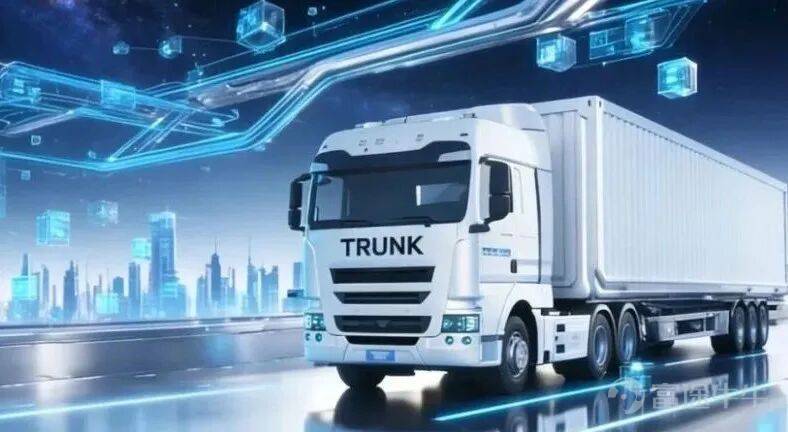

Trunk Tech refiles for listing: Can L4 autonomous driving commercialization cross the 'valley of death'?
Produced by | Frontline of Entrepreneurship
Author | Wei Shuai
Edited by Feng Yu
Art Editor | Xing Jing
Reviewed | Songwen
On June 12, Trunk Tech, a provider of Level 4 autonomous trucks and solutions, resubmitted its prospectus to the Hong Kong Stock Exchange, aiming for a main board listing—marking its second attempt following the expiration of its initial filing in December 2025.
After multiple rounds of consolidation in China’s intelligent driving sector, only a handful of companies have truly transitioned from 'technology demonstrations' to generating real revenue.
As one of the L4 autonomous heavy truck companies recently listed on the Hong Kong Stock Exchange, Trunk Tech’s IPO is not only pivotal for its own future but also serves as a critical case study for the market to assess whether China’s advanced autonomous driving sector can cross the 'valley of death.'
Facing scrutiny from capital markets, Trunk Tech has delivered a seemingly contradictory yet compelling performance: revenue grew by 157% over three years, gross margin jumped to 27.1%, yet cumulative net losses still exceed RMB 570 million; its technical metrics lead the industry, yet it remains trapped in negative operating cash flow.
This precisely reflects the current reality for China’s hard-tech ventures—striving to break through amid industrial transformation while cautiously navigating survival in a capital winter.
With pure technology narratives losing traction and industry valuation logic shifting toward hard metrics—and as more competitors like DeepRoute.ai and One Auto crowd into the space—Trunk Tech’s ability to leverage IPO proceeds to ease operational pressures and accelerate overseas expansion to unlock a second growth curve will directly determine whether it survives the reshuffling occurring on the eve of commercialization.
This race against fate is not only the ultimate test of Trunk Tech’s commercialization capabilities but also a decisive battle for China’s advanced autonomous driving industry.
1. From Ports to Long-Haul Routes
Trunk Tech’s story began in 2017.
Founder Zhang Tianlei holds a Ph.D. in Computer Science from Tsinghua University and was an early technical contributor to Baidu’s Apollo project.
In choosing his entrepreneurial path, he took the road less traveled: rather than pursuing passenger vehicle robotaxis, he focused on commercial vehicles—particularly heavy-duty trucks, a high-value, high-efficiency, and high-certainty use case.
At the time, although open-road passenger vehicle scenarios offered vast potential, they were plagued by intractable long-tail technical challenges, ambiguous regulatory liability frameworks, and low consumer willingness to pay—making a viable business model elusive. In contrast, the commercial logistics sector offered inherent advantages: fixed routes and clear operational rules in settings like ports and long-haul corridors, strong client willingness to pay for cost reduction and efficiency gains, and acute structural labor shortages across the industry.
This strategic choice essentially hedges 'technological uncertainty' with 'scenario certainty,' pulling Level 4 autonomous driving back from 'technology demonstration' onto the track of 'commercial deployment.'
This judgment has proven highly forward-looking. Compared with the complex dynamics of open urban roads, enclosed or semi-enclosed environments such as ports, mining sites, and logistics parks have lower regulatory barriers and more standardized operational workflows, making them naturally suited for Level 4 autonomous driving deployment.
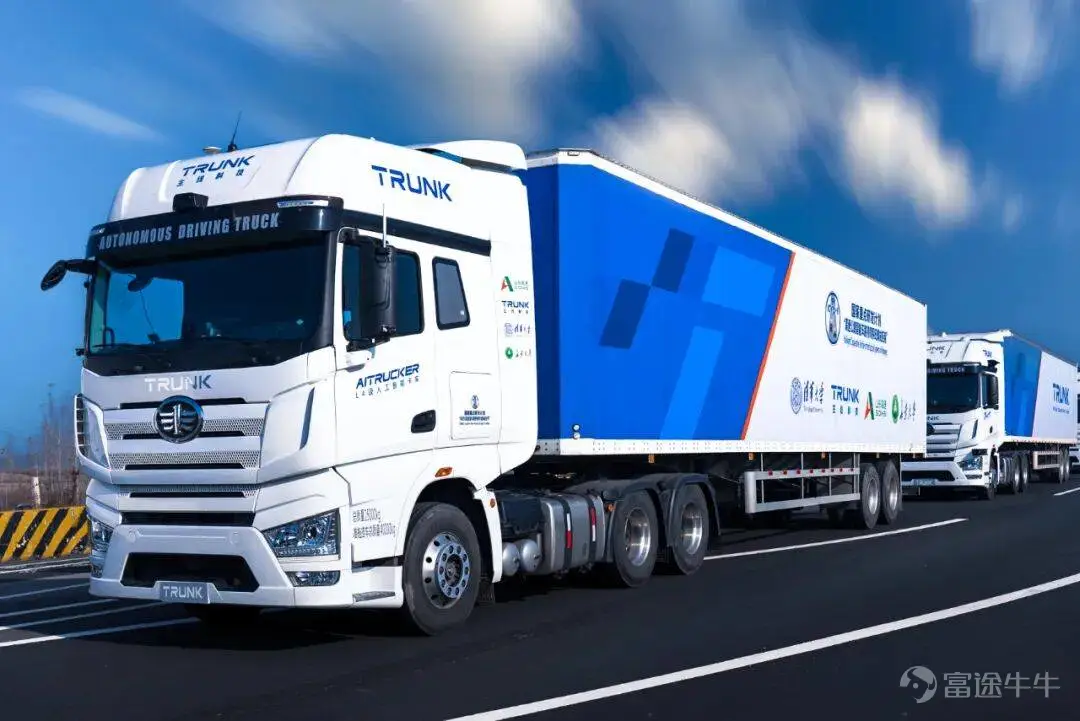
In 2018, Trunk Tech launched the world’s first driverless electric truck at Tianjin Port; in 2020, its fleet of autonomous terminal tractors began routine operations at Ningbo-Zhoushan Port; and in 2021, it delivered 60 ART (Autonomous Robotic Transporter) units to Tianjin Port’s 'Smart Zero-Carbon Terminal,' becoming the core transportation force behind the world’s first fully unmanned container terminal.
As of the end of April 2026, Trunk Tech had cumulatively delivered 1,283 AiTruck intelligent trucks and 381 AiBox intelligent terminals, establishing a stable foothold in port operations.
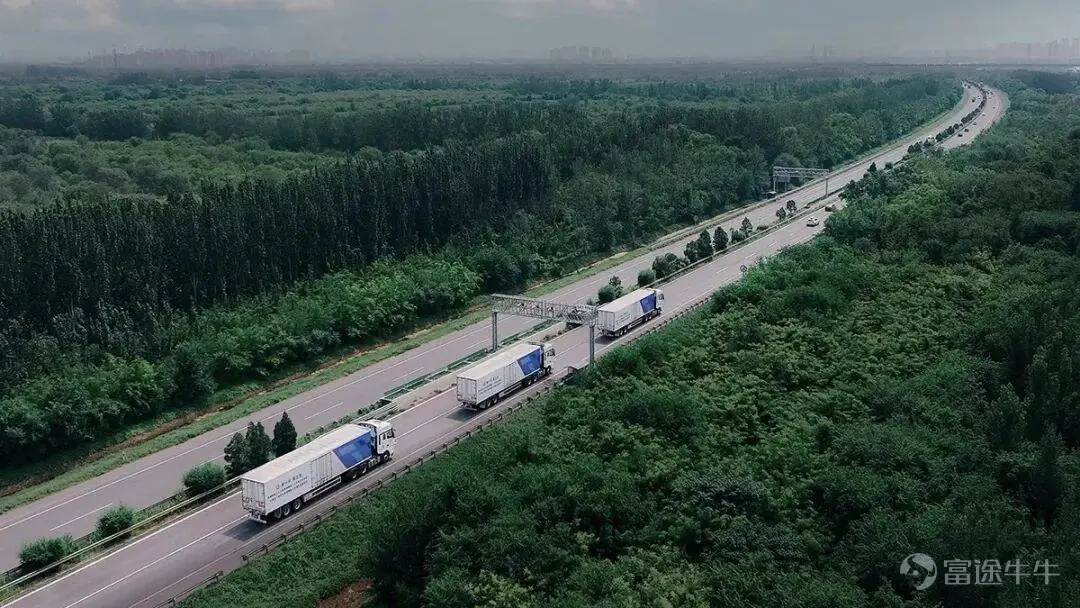
Beyond port applications, since 2024, Trunk Tech has expanded into long-haul logistics, launching its Trunk Pilot (highway logistics) solution and becoming one of the first domestic companies authorized to conduct routine cross-provincial smart connected heavy-truck operations on the Beijing–Tianjin–Tanggu Expressway.
According to prospectus data, Trunk Pilot generated RMB 215 million in revenue in 2025, a 412% year-over-year increase, accounting for 62.5% of total revenue; meanwhile, its port-focused Trunk Port business contributed RMB 128 million, or 37% of total revenue.This marks Trunk Tech’s successful transition from 'validation in closed environments' to 'monetization on open roads.'
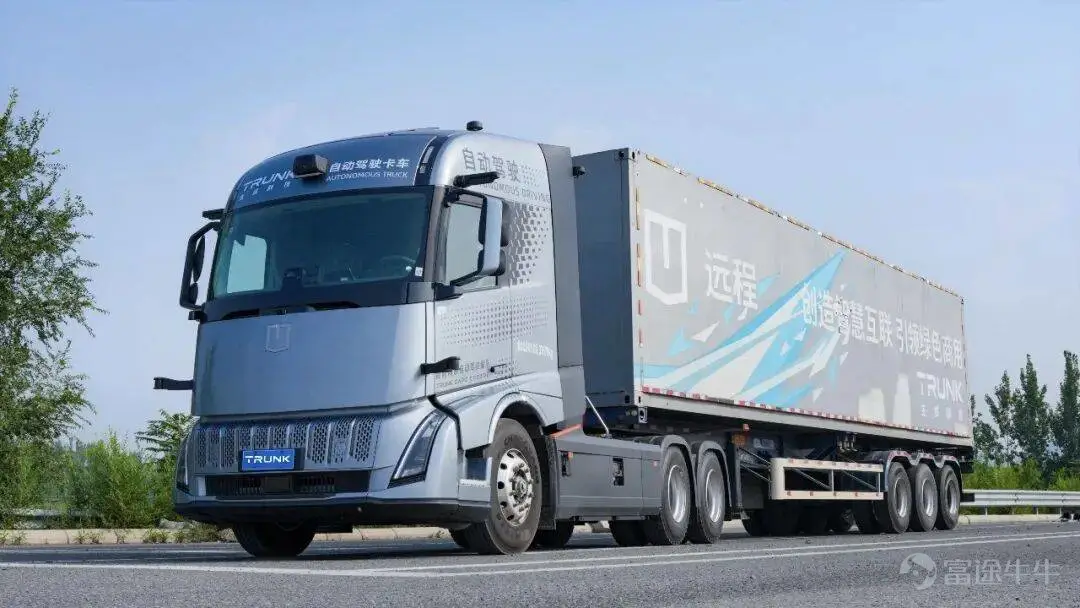
Underpinning this transition is its fully in-house developed AiTrucker system. Centered on an end-to-end Vision-Language-Action (VLA) foundation model and integrating multi-sensor fusion with a high-performance computing platform, the system possesses human-like cognitive capabilities—'see, think, act.'
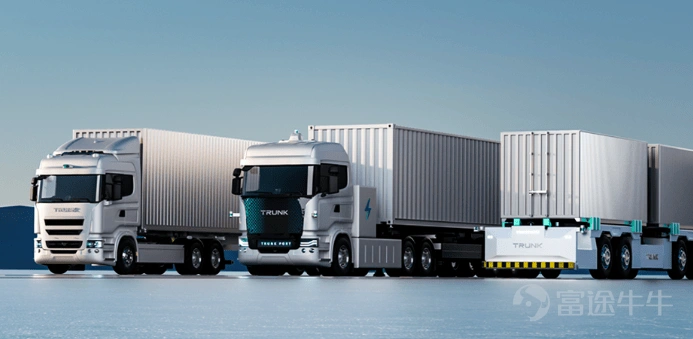
It is not merely a standalone software algorithm but a unified hardware-software, vehicle-cloud collaborative technology platform. Its core value lies in technological reusability and scenario adaptability. Leading logistics companies including Deppon, SF Express, J&T Express, and STO Express have already integrated it into their long-haul transportation networks.
According to Frost & Sullivan, by 2025 revenue, Trunk Tech ranked fourth among commercial vehicle autonomous driving solution providers in China, with a market share of 2.7%; in closed-road scenarios, however, its market share reached 31.8%, firmly securing the top position.
2. Hidden Concerns Behind the Growth
However, beneath the halo, risks are equally evident. Trunk Tech’s financial structure reveals typical characteristics of a hard-tech venture:High growth comes with high dependency, and heavy investment has yet to generate positive cash flow.
According to the prospectus, during the reporting period (2023–2025), Trunk Tech recorded revenues of RMB 134 million, RMB 254 million, and RMB 345 million, respectively, with net losses of RMB 213 million, RMB 187 million, and RMB 171 million.
A notable shift in its business mix is that highway logistics became the largest revenue contributor in 2025, accounting for over 62% of total income.
In the highway logistics segment, the company has partnered with leading logistics clients such as Deppon, STO Express, SF Express, and JD.com, with autonomous freight routes covering key regions including the Beijing-Tianjin-Hebei area, the Yangtze River Delta, and the Guangdong-Hong Kong-Macao Greater Bay Area.
Despite improving metrics, the issue of high customer concentration remains severe. In 2024, the top five customers accounted for 67.9% of revenue, with the largest single customer contributing 30.2%. Although concentration eased somewhat in 2025, the top five clients still generated 48.6% of revenue, making earnings highly vulnerable to changes in any single client relationship.
In port and long-haul logistics segments, clients are predominantly large state-owned enterprises or logistics conglomerates whose investments in intelligent solutions are significantly influenced by macroeconomic conditions and government policies. Any strategic shift or termination of cooperation by a key client could trigger sharp revenue volatility.
Particularly in the current economic climate, large enterprises are adopting a more cautious approach to intelligent technology investments, potentially slowing order cadence and further amplifying operational risks stemming from customer concentration. This 'big-client dependency' not only weakens the company’s pricing power but also diminishes its leverage in payment terms, exacerbating cash flow pressures.
Meanwhile, the company has yet to establish genuine profitability.
On one hand, the company's gross margin surged from 12.2% in 2023 to 27.1% in 2025, yet it continues to incur losses, with cumulative losses exceeding RMB 570 million over the three-year period.
More concerning is that operating cash flow has been negative for three consecutive years—reporting net outflows of RMB 830 million, RMB 860 million, and RMB 800 million, respectively, during the reporting periods. The balance sheet also remains weak. As of the end of 2025, Trunk Tech reported net debt of RMB 11.65 billion, with trade receivables turnover days as high as 166, indicating prolonged collection cycles and significant capital tied up in receivables.
Although cash reserves on the balance sheet increased to RMB 1.67 billion in 2025, a 161% year-over-year rise, this growth was primarily driven by financing activities rather than operational cash generation.
All these factors point to the same issue:The company remains far from achieving sustainable profitability.
As capital markets shift their valuation logic for autonomous driving companies—from prioritizing technical specifications to focusing on hard operational metrics—Trunk Tech must strike a balance between sustaining R&D investment and improving cash flow, while accelerating the conversion of its order backlog into scalable revenue to transition from technological leadership to commercial leadership.
3. Breaking Through During the Window of Opportunity
Fortunately, Trunk Tech’s decision to relaunch its IPO now coincides with a concentrated release of policy-driven opportunities in China’s capital markets for asset securitization of hard-tech ventures.
Currently, investor enthusiasm for autonomous driving commercial vehicle plays on the Hong Kong Stock Exchange remains high. Companies such as CIDI Smart Driving and Uisee Technology have recently completed successful listings on the HKEX, while other leading firms—including DeepRoute.ai, Zero One Auto, and EACON Intelligent Driving—are also racing toward Hong Kong listings alongside Trunk Tech.
From an industry trend perspective, Frost & Sullivan forecasts that China’s market for autonomous driving solutions in closed-road commercial vehicle scenarios will grow from RMB 3.4 billion in 2026 to RMB 29.6 billion by 2030, representing a compound annual growth rate (CAGR) of approximately 72%. Meanwhile, the open-road segment is projected to expand from RMB 17.3 billion to RMB 217.3 billion, becoming the dominant market driver.

(Image / Shutterstock, licensed under VRF agreement)
Autonomous driving in the commercial vehicle sector is gradually shifting from an optional feature to a necessity.
At this critical juncture of its Hong Kong listing, Trunk Tech has clearly focused its fundraising on core operations, including continuously enhancing core R&D capabilities, building mass production and supply chain systems for intelligent equipment and key components, expanding markets and strengthening product brand ecosystems, pursuing strategic equity investments and acquisitions, and replenishing working capital.
In fact, while the trillion-dollar logistics sector is heating up, competition within the industry is intensifying. Trunk Tech is also setting its sights overseas, seeking a second growth curve through global market expansion.
It is reported that the company has already adapted its products for markets in Southeast Asia, South America, and the Middle East. Of course, challenges remain.
In closed environments such as ports and mines, Level 4 heavy-duty trucks are already capable of routine operations. However, on open highways, navigating complex mixed traffic involving pedestrians and vehicles, extreme weather conditions, and non-standardized road infrastructure requires bridging the safety gap from '99% to 99.9999%.' This demands not only breakthroughs in cutting-edge technologies like end-to-end large models but also massive volumes of real-world operational data—creating a formidable technological barrier.
Currently, nationwide road access rights for Level 4 autonomous heavy-duty trucks on public roads have not been fully granted, and cross-provincial highway freight transport faces inconsistent regulatory entry standards. More critically, in the event of an accident, there remains no comprehensive legal framework to clearly delineate liability among automakers, technology providers, and operators, and insurance pricing mechanisms are still underdeveloped—posing a Damocles’ sword over commercialization efforts.
Until the entire industry achieves cost reductions and efficiency gains in hardware, autonomous heavy-duty trucks will continue to face a significant cost and profitability threshold that is difficult to overcome.
In the autonomous driving industry, the 'Valley of Death' is a stark metaphor referring specifically to the transitional phase between 'lab demonstrations' and 'large-scale commercial deployment.' Currently, Level 4 autonomous heavy-duty trucks are deep within this treacherous valley, confronting simultaneous extreme pressures from technology, cost, regulation, and capital.
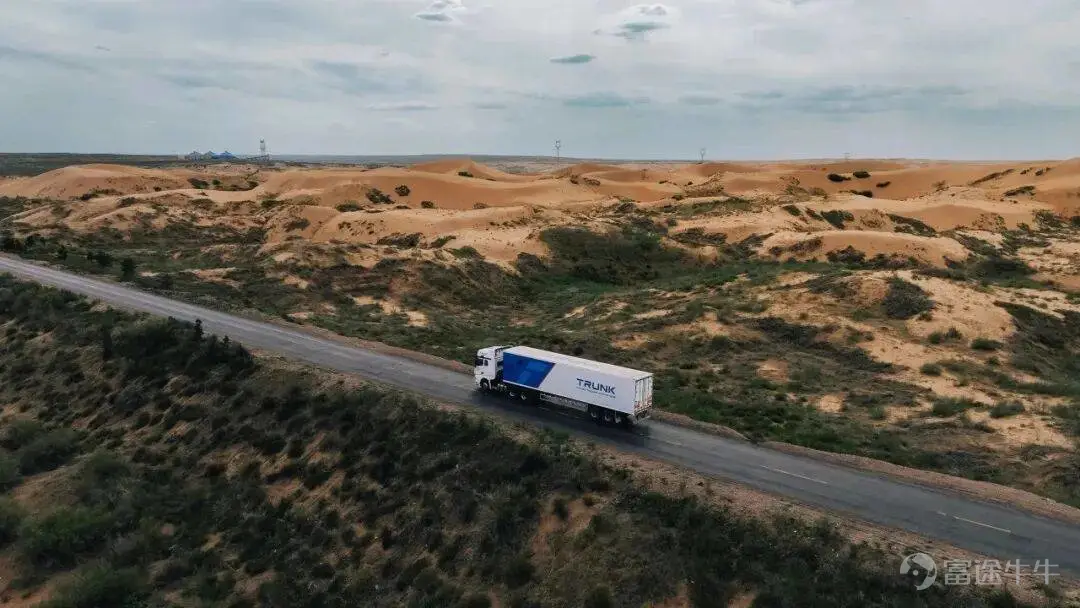
Today, Trunk Tech stands at a crossroads toward scalable commercialization. Its IPO is not the finish line, but rather a new starting point. For the entire industry, Trunk Tech’s success or failure will serve as a defining case study.
If it seizes this opportunity to optimize its financial structure, diversify its customer base, and accelerate global deployment, then today’s prospectus could mark the opening chapter of Trunk Tech’s journey through the 'Valley of Death.'
*Note: The featured image and unattributed images in this article are from Trunk Tech's official WeChat account.
Risk Disclaimer: The above content only represents the author's view. It does not represent any position or investment advice of Futu. Futu makes no representation or warranty.Read more
Comments
to post a comment