English
Back
Open Account
金融外参
wrote a column · Aug 2 21:17

Luo Chunfeng's Ping An Fund: Winning in the Q2 Report, Trapped in Its 'Comfort Zone'?

In the second quarter of 2026, Ping An Fund Management encountered a pronounced structural development bottleneck.
Some of its actively managed equity funds, which held significant positions in popular sectors such as AI, posted quarterly gains exceeding 40%, yet faced substantial redemptions—the so-called 'selling more as prices rise' dilemma—resulting in sharp declines in both fund shares and assets under management. Meanwhile, products focused on traditional sectors also suffered from net asset value drawdowns. Compounded by the recent wave of departures among key portfolio managers from the firm’s investment and research division, Ping An Fund Management’s structural development challenges have become unmistakably evident.

In the second quarter of 2026, Ping An Fund exhibited clear structural bottlenecks in its growth. Some of its actively managed equity funds, heavily invested in popular sectors such as AI, posted quarterly gains exceeding 40%, yet faced significant redemptions amid rising prices—a dilemma where inflows dried up precisely as performance improved. This led to a sharp decline in both fund shares and assets under management. Meanwhile, products focused on traditional sectors also suffered net asset value drawdowns. Compounded by a wave of key fund manager departures from the investment and research team in a short period, Ping An Fund’s structural development constraints became unmistakably evident. This situation not only reflects the extreme market bifurcation currently seen in China’s A-share market but also reveals several underlying issues behind Ping An Fund’s rapid asset growth. Performance Polarization—The Pain of Retaining Investors Amid Rising Prices Ping An Fund’s performance in the second quarter of 2026 can be described as a mix of strong wins and troubling setbacks. On the positive side, its precise bets on sectors like AI and semiconductors generated substantial excess returns—products such as 'Ping An Industrial Competitiveness Mixed Fund' and 'Ping An Hong Kong Stock Connect Technology Selective Mixed Fund' each delivered quarterly returns exceeding 40%. (Source: Ping An Fund) On the negative side, some of Ping An Fund’s products experienced large net outflows even as their net asset values rose. Several funds that previously contributed significant excess returns saw steep share declines—for example, 'Ping An Industrial Competitiveness Mixed Fund' lost more than 70% of its shares in Q2, while 'Ping An Hong Kong Stock Connect Technology Selective Mixed Fund' saw its shares shrink by nearly half. From the perspective of Waicai Financial Outlook, this phenomenon is clearly linked to investor behavior. This is because, amid elevated valuations in tech stocks...
This situation not only reflects the extreme market divergence currently seen in China’s A-share market but also reveals underlying issues at Ping An Fund Management that have emerged amid its rapid asset growth.
Performance Polarization—The Pain of Retaining Investors Amid Rising Prices
Ping An Fund Management’s performance in the second quarter of 2026 can be described as a mix of strong and weak results.
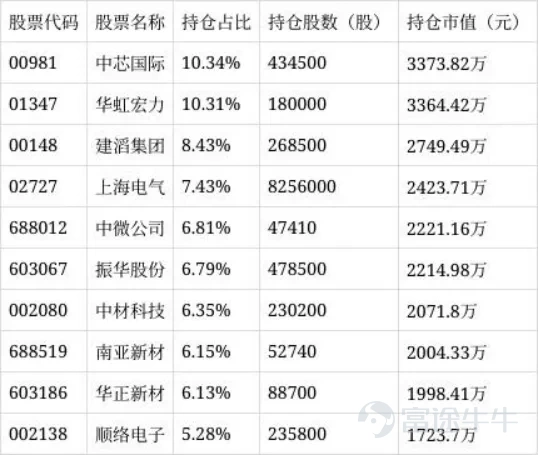
On the positive side, its precise bets on sectors like AI and semiconductors generated substantial alpha—funds such as Ping An Industrial Competitiveness Mixed Fund and Ping An HKEX Tech Select Mixed Fund each delivered quarterly returns exceeding 40%.
In the second quarter of 2026, Ping An Fund exhibited clear structural bottlenecks in its growth. Some of its actively managed equity funds, heavily invested in popular sectors such as AI, posted quarterly gains exceeding 40%, yet faced significant redemptions amid rising prices—a dilemma where inflows dried up precisely as performance improved. This led to a sharp decline in both fund shares and assets under management. Meanwhile, products focused on traditional sectors also suffered net asset value drawdowns. Compounded by a wave of key fund manager departures from the investment and research team in a short period, Ping An Fund’s structural development constraints became unmistakably evident. This situation not only reflects the extreme market bifurcation currently seen in China’s A-share market but also reveals several underlying issues behind Ping An Fund’s rapid asset growth. Performance Polarization—The Pain of Retaining Investors Amid Rising Prices Ping An Fund’s performance in the second quarter of 2026 can be described as a mix of strong wins and troubling setbacks. On the positive side, its precise bets on sectors like AI and semiconductors generated substantial excess returns—products such as 'Ping An Industrial Competitiveness Mixed Fund' and 'Ping An Hong Kong Stock Connect Technology Selective Mixed Fund' each delivered quarterly returns exceeding 40%. (Source: Ping An Fund) On the negative side, some of Ping An Fund’s products experienced large net outflows even as their net asset values rose. Several funds that previously contributed significant excess returns saw steep share declines—for example, 'Ping An Industrial Competitiveness Mixed Fund' lost more than 70% of its shares in Q2, while 'Ping An Hong Kong Stock Connect Technology Selective Mixed Fund' saw its shares shrink by nearly half. From the perspective of Waicai Financial Outlook, this phenomenon is clearly linked to investor behavior. This is because, amid elevated valuations in tech stocks...
(Source: Ping An Fund Management)
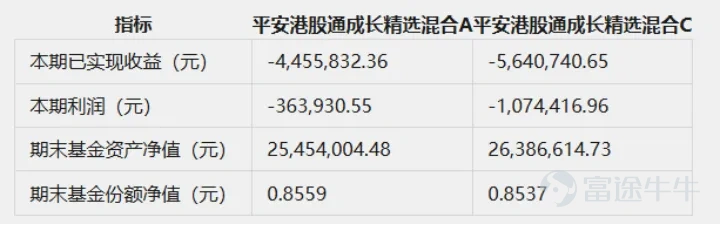
On the negative side, several of Ping An Fund Management’s products experienced significant net outflows even as their net asset values rose. For instance, Ping An Industrial Competitiveness Mixed Fund, which had previously contributed strong excess returns, saw its share count shrink by over 70% in the second quarter, while Ping An HKEX Tech Select Mixed Fund lost nearly half of its shares.
From the perspective of Waicai Financial Outlook, this phenomenon is clearly tied to investor behavior. Given that valuations of technology stocks are already at elevated levels, investors’ decisions to realize gains and secure profits are evidently rational. Such market dynamics are undeniably real.
In the second quarter of 2026, Ping An Fund exhibited clear structural bottlenecks in its growth. Some of its actively managed equity funds, heavily invested in popular sectors such as AI, posted quarterly gains exceeding 40%, yet faced significant redemptions amid rising prices—a dilemma where inflows dried up precisely as performance improved. This led to a sharp decline in both fund shares and assets under management. Meanwhile, products focused on traditional sectors also suffered net asset value drawdowns. Compounded by a wave of key fund manager departures from the investment and research team in a short period, Ping An Fund’s structural development constraints became unmistakably evident. This situation not only reflects the extreme market bifurcation currently seen in China’s A-share market but also reveals several underlying issues behind Ping An Fund’s rapid asset growth. Performance Polarization—The Pain of Retaining Investors Amid Rising Prices Ping An Fund’s performance in the second quarter of 2026 can be described as a mix of strong wins and troubling setbacks. On the positive side, its precise bets on sectors like AI and semiconductors generated substantial excess returns—products such as 'Ping An Industrial Competitiveness Mixed Fund' and 'Ping An Hong Kong Stock Connect Technology Selective Mixed Fund' each delivered quarterly returns exceeding 40%. (Source: Ping An Fund) On the negative side, some of Ping An Fund’s products experienced large net outflows even as their net asset values rose. Several funds that previously contributed significant excess returns saw steep share declines—for example, 'Ping An Industrial Competitiveness Mixed Fund' lost more than 70% of its shares in Q2, while 'Ping An Hong Kong Stock Connect Technology Selective Mixed Fund' saw its shares shrink by nearly half. From the perspective of Waicai Financial Outlook, this phenomenon is clearly linked to investor behavior. This is because, amid elevated valuations in tech stocks...
(Source: Sina Finance)
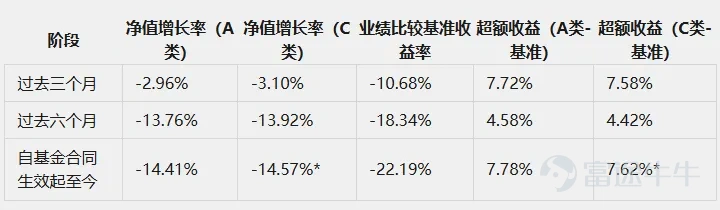
Moreover, Ping An Fund Management has hit a low point with its 'value-oriented' products, exemplified by the 'Ping An Discovery Value Mixed Fund.' In the second quarter, the fund remained heavily invested in traditional sectors such as real estate and domestic consumption, failing to align with the market’s prevailing themes, which led to a significant decline in net asset value. This phenomenon—where underperformance further triggers redemptions—has exacerbated liquidity pressures on Ping An’s fund products.
Clearly, this 'tale of two extremes' at Ping An Fund Management reflects a fundamental weakness in its actively managed equity offerings. Although it initially achieved breakthroughs in certain niche segments through its 'One-Two-Three-Four' investment research platform system, its overall product lineup still lacks a decisive element: anchor funds capable of delivering consistent alpha across both bull and bear markets over the long term.
Therefore, retaining investors has become one of Ping An Fund Management’s primary concerns at present.
Leadership Turnover – The Hidden Risk of a Talent Pipeline Gap
Beyond performance divergence, another recent source of turmoil for Ping An Fund Management lies in the apparent gap within its talent pipeline.
Around June 2026, several key portfolio managers from Ping An’s index and fixed income divisions successively departed. They were quickly replaced by rising new managers. While this suggests Ping An is not short on personnel, it objectively reveals mounting pressure from a generational gap in its investment research team.
Compared with predecessors such as Weng Xin, Bai Guiyao, and Wang Bo, the newly appointed managers still require time to prove their experience and capabilities. For Ping An Fund Management, entrusting critical responsibilities to relatively inexperienced newcomers may represent a new strategic approach to cultivating core portfolio managers.
Of course, Ping An Fund Management is aware of the limited experience of these emerging talents. Management has repeatedly emphasized building a 'platform-driven investment research framework,' aiming to offset individual manager variability through systematic support. However, whether this vision and strategic intent can succeed in today’s highly rotational market remains to be tested.
Foundational Traits – Cross-sector DNA and Strategic Inertia
The structural challenges currently facing Ping An Fund Management are, in fact, long-standing issues that have accumulated over time.
Since 2015, Luo Chunfeng, the current chairman of Ping An Fund Management, has established a development strategy for the company prioritizing fixed-income products before equity products. In its early stages, this approach indeed provided strong momentum for Ping An Fund’s asset growth—so much so that calling it instrumental would not be an exaggeration. Of course, this success was also aided by the prevailing macroeconomic environment and market cycles at the time.
However, over the past decade, this strategy appears to have left Ping An Fund reliant on 'one leg'—with fixed-income business accounting for more than 80% of operations, while active equity management has long remained subordinate. This indicates an imbalance in resource allocation and strategic focus, which is one reason why Ping An Fund has failed to build core competitiveness in the equity market.
In the second quarter of 2026, Ping An Fund exhibited clear structural bottlenecks in its growth. Some of its actively managed equity funds, heavily invested in popular sectors such as AI, posted quarterly gains exceeding 40%, yet faced significant redemptions amid rising prices—a dilemma where inflows dried up precisely as performance improved. This led to a sharp decline in both fund shares and assets under management. Meanwhile, products focused on traditional sectors also suffered net asset value drawdowns. Compounded by a wave of key fund manager departures from the investment and research team in a short period, Ping An Fund’s structural development constraints became unmistakably evident. This situation not only reflects the extreme market bifurcation currently seen in China’s A-share market but also reveals several underlying issues behind Ping An Fund’s rapid asset growth. Performance Polarization—The Pain of Retaining Investors Amid Rising Prices Ping An Fund’s performance in the second quarter of 2026 can be described as a mix of strong wins and troubling setbacks. On the positive side, its precise bets on sectors like AI and semiconductors generated substantial excess returns—products such as 'Ping An Industrial Competitiveness Mixed Fund' and 'Ping An Hong Kong Stock Connect Technology Selective Mixed Fund' each delivered quarterly returns exceeding 40%. (Source: Ping An Fund) On the negative side, some of Ping An Fund’s products experienced large net outflows even as their net asset values rose. Several funds that previously contributed significant excess returns saw steep share declines—for example, 'Ping An Industrial Competitiveness Mixed Fund' lost more than 70% of its shares in Q2, while 'Ping An Hong Kong Stock Connect Technology Selective Mixed Fund' saw its shares shrink by nearly half. From the perspective of Waicai Financial Outlook, this phenomenon is clearly linked to investor behavior. This is because, amid elevated valuations in tech stocks...
(Source: Ping An Fund Management)
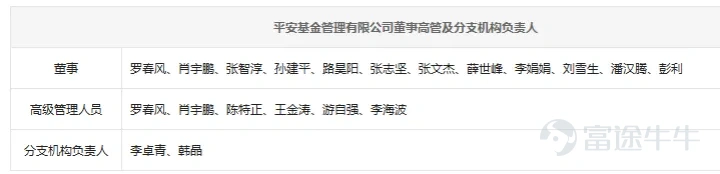
Another key leader shaping Ping An Fund’s trajectory is Xiao Yupeng. Early in his career, he worked within the Jiangxi Provincial Mechanical & Electrical Equipment Supply Bureau before transitioning into China’s securities regulatory system, where he spent several years in oversight roles. It wasn’t until 2009—when he participated in establishing Ping An Fund and became its Chief Compliance Officer—that he completed his transition from regulator to regulated entity.
From Xiao Yupeng’s professional background, it is evident that he possesses deep experience in regulation and risk control—a key source of Ping An Fund’s pragmatic and rigorous compliance culture. However, this cautious leadership style, characterized by a strong reverence for compliance risks, has also left Ping An Fund somewhat lacking in aggressiveness and flexibility in the fast-rotating, structurally dynamic equity market. This is not to disparage Xiao’s compliance mindset; rather, it underscores a reality: today’s fund industry is highly volatile, and an overly conservative leadership approach often struggles to capture timely opportunities for excess returns.
In Waicai Guan’s view, the two leaders of Ping An Fund exhibit clear cross-sector backgrounds and strategic inertia. While these traits were shaped by the company’s early-stage environment, they now require adjustment given the current industry trend toward growing prominence of active equity investing.
In the second quarter of 2026, Ping An Fund exhibited clear structural bottlenecks in its growth. Some of its actively managed equity funds, heavily invested in popular sectors such as AI, posted quarterly gains exceeding 40%, yet faced significant redemptions amid rising prices—a dilemma where inflows dried up precisely as performance improved. This led to a sharp decline in both fund shares and assets under management. Meanwhile, products focused on traditional sectors also suffered net asset value drawdowns. Compounded by a wave of key fund manager departures from the investment and research team in a short period, Ping An Fund’s structural development constraints became unmistakably evident. This situation not only reflects the extreme market bifurcation currently seen in China’s A-share market but also reveals several underlying issues behind Ping An Fund’s rapid asset growth. Performance Polarization—The Pain of Retaining Investors Amid Rising Prices Ping An Fund’s performance in the second quarter of 2026 can be described as a mix of strong wins and troubling setbacks. On the positive side, its precise bets on sectors like AI and semiconductors generated substantial excess returns—products such as 'Ping An Industrial Competitiveness Mixed Fund' and 'Ping An Hong Kong Stock Connect Technology Selective Mixed Fund' each delivered quarterly returns exceeding 40%. (Source: Ping An Fund) On the negative side, some of Ping An Fund’s products experienced large net outflows even as their net asset values rose. Several funds that previously contributed significant excess returns saw steep share declines—for example, 'Ping An Industrial Competitiveness Mixed Fund' lost more than 70% of its shares in Q2, while 'Ping An Hong Kong Stock Connect Technology Selective Mixed Fund' saw its shares shrink by nearly half. From the perspective of Waicai Financial Outlook, this phenomenon is clearly linked to investor behavior. This is because, amid elevated valuations in tech stocks...
Dual Tests—Compliance Baseline and Channel Dependence
Despite Xiao Yupeng’s strong compliance orientation, Ping An Fund has inevitably encountered issues related to compliance/risk controls and channel structure during its pursuit of scale and performance.
On the compliance and risk management front, Ping An Fund has recently received multiple regulatory warning letters due to deficiencies in bond investment risk control procedures and inadequate suitability management in fund sales. Additionally, some of its funds have excessively concentrated bets on single niche sectors, leading to style drift that deviates from their stated investment mandates and benchmark indices—sparking market concerns about adherence to contractual obligations.
In terms of distribution channel structure, Ping An Fund Management’s growth model exhibits a pronounced ecosystem characteristic tied to its parent group. Specifically, over 60% of the company’s sales originate from internal channels within Ping An Group. While this model provided substantial traffic inflows in the early stages, it has led over time to what could be described as 'channel dependency' for Ping An Fund Management.
This condition cannot simply be labeled as either 'good' or 'bad'—after all, merely possessing such a channel is enough to make other fund managers envious. However, it should be noted that when market dynamics shift or short-term demands from the group’s internal channels change, this dependency can trigger significant volatility in asset under management. This is one of the key issues Ping An Fund Management must now comprehensively address.
From Waican Finance’s perspective, Ping An Fund Management’s leadership must not only embed compliance into every stage of its business processes but also pivot its channel strategy toward a 'client-centric' approach to genuinely earn the trust of external investors.
Conclusion
In summary, Ping An Fund Management’s current situation is one marked by turbulence and underlying growing pains.
Mixed performance results, a wave of departures among core fund managers, and challenges related to compliance and channel structure—all these factors define the current predicament facing Ping An Fund Management.
These issues stem partly from objective external factors like shifting market conditions and partly from internal structural weaknesses. It just so happens that, at this critical juncture, these problems have come to the surface. For Ping An Fund Management, however, this moment also presents an opportunity for honest self-reflection—to identify where its shortcomings lie, what needs optimization, and which areas require strategic adjustment.
Waican Finance believes that in today’s increasingly competitive public fund industry, Ping An Fund Management must simultaneously confront its own challenges and return to the fundamentals of asset management—earning long-term market trust and respect through robust investment research capabilities and sound, disciplined compliance practices.
Risk Disclaimer: The above content only represents the author's view. It does not represent any position or investment advice of Futu. Futu makes no representation or warranty.Read more
Thumbs Up
2
58K Views
Report
Comments
Write a Comment...
2