
Autonomous driving in mining areas has finally produced its first IPO
The world’s first listed company specializing in autonomous driving for mining operations has finally emerged. On July 8, Yikong Intelligent Driving rang the listing bell on the Hong Kong Stock Exchange, raising over HK$2.2 billion.
A breakdown of its investor list reveals a mix of industrial capital—including Zijin Mining, XCMG Group, CATL, and Nio Capital—as well as international long-term investors such as Fidelity International, JPMorgan, and Barings. Yikong has firmly captured the appetite of capital markets.
However, a glance at the prospectus reveals a striking contradiction in the numbers.
On one hand, as of the end of 2025, Yikong had deployed 2,580 active autonomous mining trucks, capturing a 55.5% market share in China, maintaining a 100% client group retention rate for three consecutive years, and surpassing RMB 1 billion in revenue in 2025—securing its position as the leader in China’s commercial vehicle autonomous driving sector. On the other hand, from 2023 to 2025, the company accumulated losses exceeding RMB 1.2 billion, and on paper, this deficit continues to widen gradually.
Behind these losses, however, lies Yikong’s deep integration of autonomous driving into mine production systems—a proven business model and a competitive moat that latecomers will struggle to close in the short term.
In this industry segment, which is still in its early stages,Yikong Intelligent Driving has provided a replicable commercial blueprint for autonomous mining operations: First, enter the market with a heavy-asset model to validate the system—demonstrating maturity, efficiency, and trustworthiness—and then transition to a light-asset model, shifting growth from 'adding assets' to 'scaling capabilities.'
1. Heavy assets are the entry ticket; light assets are the ultimate goal
In the autonomous driving industry, losses are the norm. But even among losses, the way capital is burned differs.
Some losses are like pouring water into a pipe with no outlet: the technology hasn’t been validated, a commercial closed loop hasn’t formed, and there’s no commensurate revenue growth in sight.
E-Control’s losses, however, reflect a strategy of building strength before making a breakthrough: it operates within a demand scenario already proven viable, using a capital-intensive model to carve out a path, and then gradually shifting toward a lighter, more sustainable approach.This is a form of structurally driven loss tied to 'technology ramp-up.'
The root cause of this structural loss lies in the fact that autonomous driving in mining areas is inherently a long-term investment sector that scales up gradually.
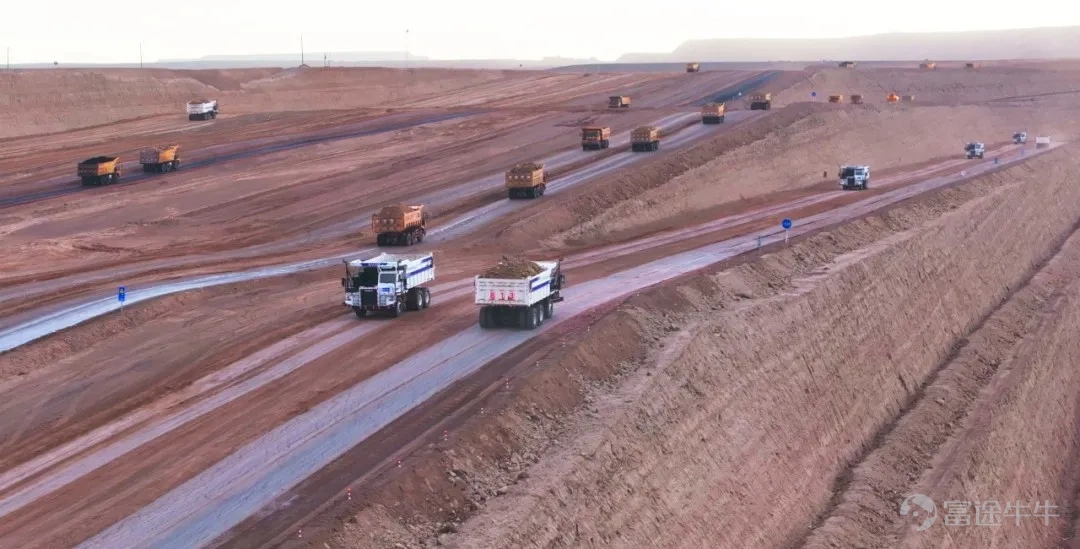
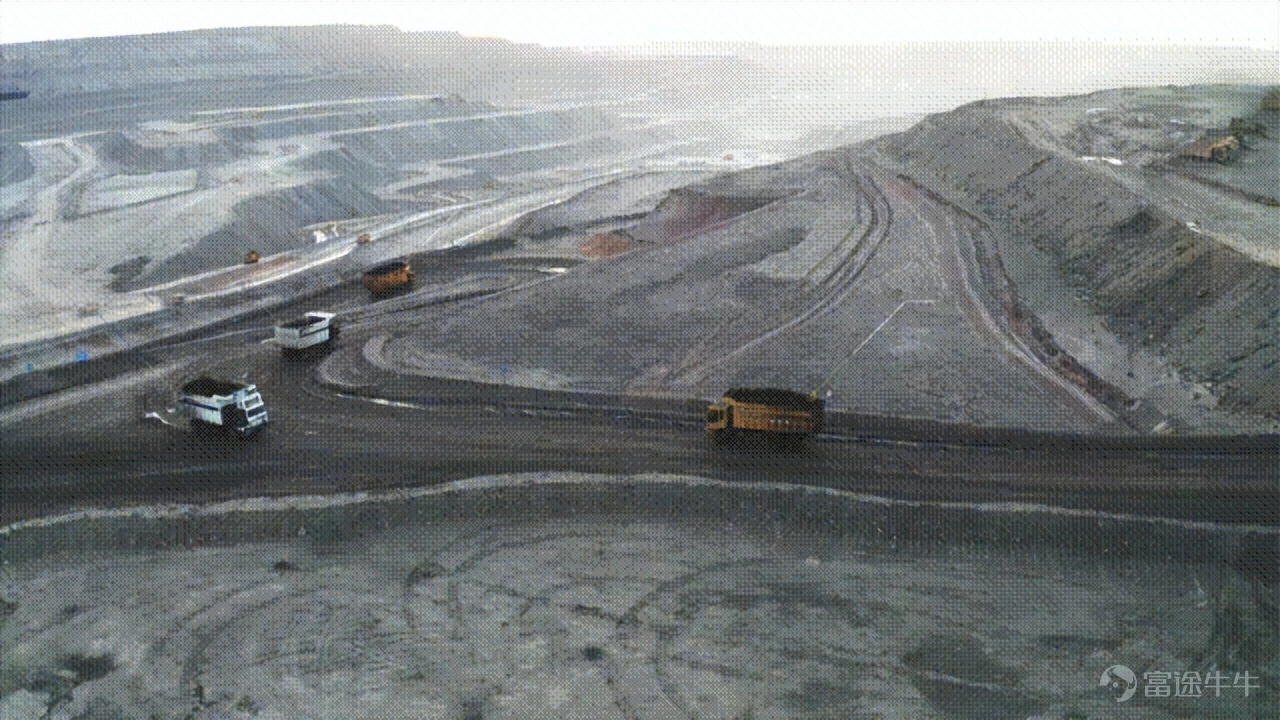
Open-pit mines operate around the clock, constantly exposed to extreme conditions such as dust, rain, snow, severe cold, and high heat. Haul trucks typically carry loads exceeding 100 tons, and transportation, loading, unloading, and dispatch operations are deeply integrated into the entire mine production system.
Consequently, solutions developed for passenger vehicles cannot be simply transplanted here. Algorithms, vehicle control systems, dispatch platforms, safety frameworks, and engineering deployment—all must be rebuilt specifically for mining scenarios. Relying solely on lab-based R&D is insufficient. It is precisely this need for continuous real-world validation and iteration in actual mining environments that compelled E-Control to adopt a capital-intensive model in its early stages.
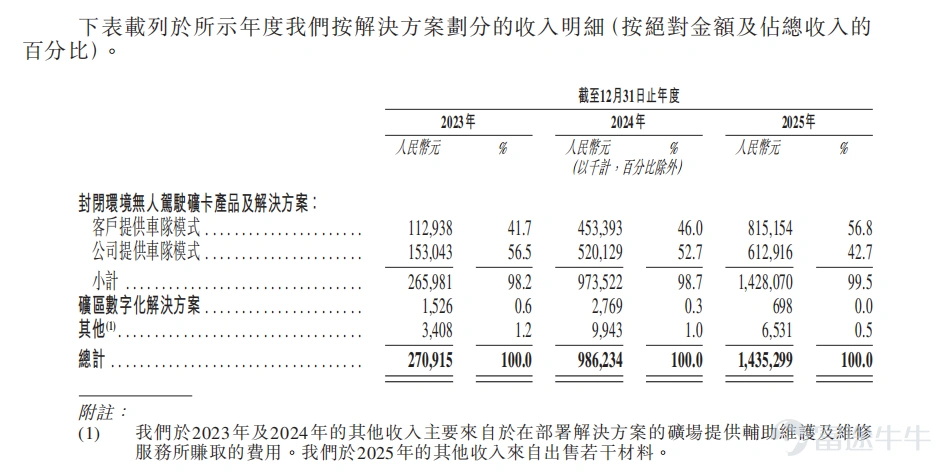
E-Control’s first phase involved providing its own fleet—purchasing vehicles, operating them directly, and contracting mine transport services, charging based on the volume of material transported. This was essentially a 'hardware-plus-service' model. The company bore all vehicle depreciation and operational costs itself, resulting in naturally lower gross margins. In 2023, this model accounted for 56.5% of revenue, making it the dominant contributor, yet it posted a gross margin of -18.6% that year.
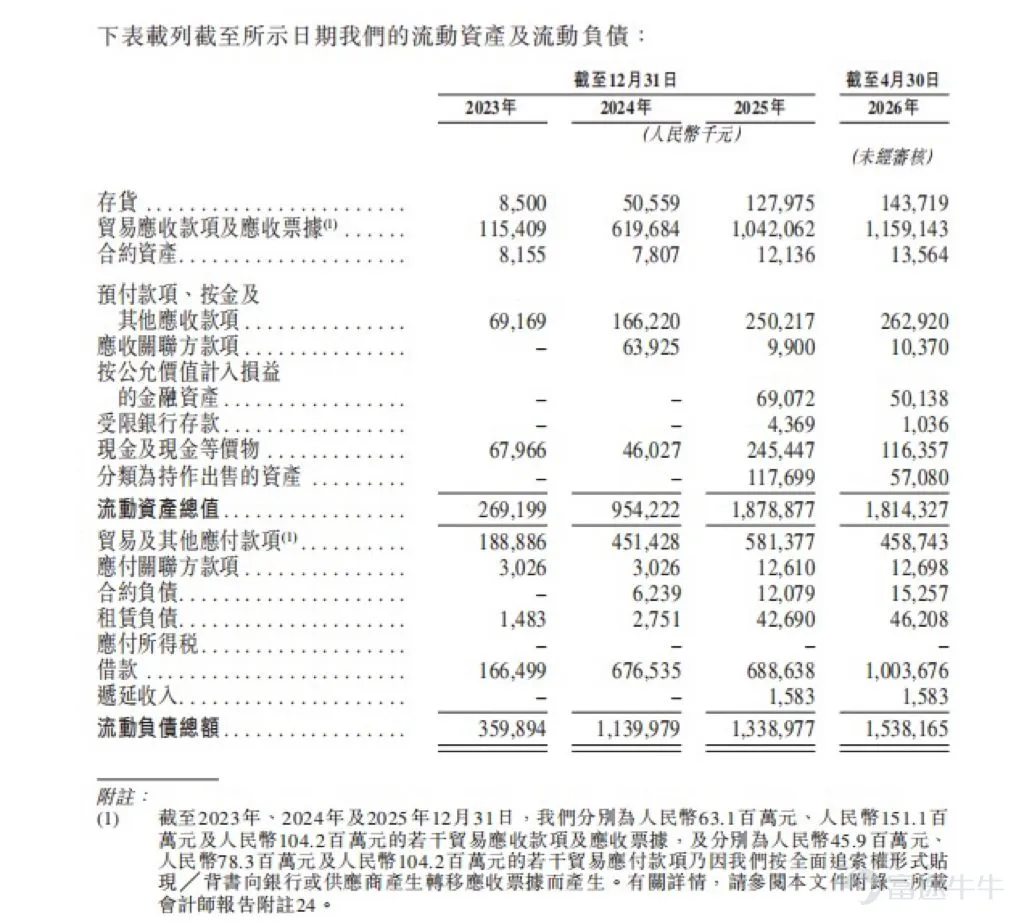
Another thorny issue is cash flow.Mining projects typically involve installment-based payments after hardware delivery. According to the prospectus, E-Control’s trade receivables and notes receivable surged from approximately RMB 115 million at the end of 2023 to about RMB 10.42 billion by the end of 2025, growing far faster than revenue. Under the capital-intensive model, the company must front capital to purchase and maintain its fleet while simultaneously bearing the financial burden of extended payment terms, placing sustained pressure on its operating cash flow.
However, this step is unavoidable. It represents the upfront cost inherent in scaling a business model: only by operating the system firsthand—maturing it, optimizing its efficiency, and proving its safety—can the company convince mining enterprises that the system is worth purchasing.
Once validation is complete, the company enters phase two: customers provide the truck fleet, mining companies purchase their own vehicles, and Yikong supplies the autonomous driving technology system and operational services. In 2023, this model involved only 60 trucks; by 2025, it had grown to 1,709 trucks—a 28-fold increase over two years—and surpassed the company-provided fleet model in revenue contribution, reaching 56.8% to become Yikong’s largest revenue source.
The successful implementation of this asset-light model has driven qualitative changes on two fronts.
First,Revenue structure shifted from 'selling transportation' to 'selling services',significantly reducing marginal expansion costs.
Under the asset-light model, Yikong charges clients in two ways: one based on the number of trucks deployed, and the other through a one-time project service fee. Currently, the latter accounts for a larger share.
This means the company’s growth no longer requires continuous investment in additional vehicles. With every new mine site entered,the core offering becomes software systems and operational capabilitiesrather than heavy assets. As deployment scales up, initial R&D investments and engineering expertise are spread across an increasing number of projects, gradually lowering marginal costs.
At the same time, this approach alleviates the accounts receivable pressure associated with the asset-heavy model. Since customers now procure the vehicles themselves, Yikong no longer needs to front capital for hardware, effectively stemming a major cash outflow. By 2025, the company’s net cash outflow from operating activities had narrowed to RMB 3.94 billion from RMB 7.13 billion in 2024, and net current liabilities of RMB 1.85 billion turned into net current assets of RMB 5.40 billion, reflecting a clear improvement in cash reserves.
Second,Customer relationships have evolved from 'testing the waters' to 'entrusting core operational capacity.'。
Under the asset-heavy model, the vehicles belonged to Yikong, and Yikong bore the operational risk. Mining companies were essentially purchasing a transportation service, making switching costs relatively low.
However, under the customer-provided fleet model, the situation changed dramatically: mining companies now purchase haul trucks themselves and entrust Yikong with both the autonomous driving system and operations. This means customers not only endorse autonomous driving technology itself but are also willing to hand over their core mining transport capacity to Yikong—assuming the asset risk themselves.
This demonstrates that Yikong’s autonomous driving system has become deeply embedded in mining companies’ vehicles, dispatch systems, and mine production workflows, achieving a 100% customer retention rate,further confirming that the relationship has shifted from a one-off project collaboration to a long-term operational partnership.。

2. Yikong’s Three Core Strengths: Understanding Mining, Understanding Vehicles, Understanding AI
Compared to robotaxis, autonomous driving in mining has never been a glamorous sector.
On the same day that Momenta rang the listing bell at the Hong Kong Stock Exchange as the 'first physical AI stock' with a market valuation of HK$70 billion, Yikong Zhijia—the 'world’s first autonomous mining truck company'—had a market cap on the order of HK$15 billion.
Despite both being ‘first-of-their-kind’ listings, this stark valuation gap illustrates a key point: autonomous driving in mining isn’t about grand narratives like urban roads, endgame visions, or revolutions in driverless mobility. Instead, it tackles the overlooked ‘dirty and tough work’ of mine-site transportation.
Yet from another perspective, this is precisely why it has achieved commercial viability earlier than other segments. Rather than dreaming about the future, mining companies care about one thing above all: whether the system can save money and operate reliably. Thus, autonomous driving in mining is first and foremost an engineering capability—and only secondarily an algorithmic one.
Lin Qiao, Partner and Vice President at Yikong, summarizes the company's moat as its 'three core competencies': understanding mining, understanding vehicles, and understanding AI. These three capabilities correspond to the three most challenging barriers in autonomous driving for mining operations.
First is understanding mining. Autonomous driving in mines cannot be achieved through theoretical exercises alone, nor can it simply replicate L2+ or Robotaxi technology solutions. The biggest misconception about autonomous mining trucks is thinking that the core challenge is merely enabling vehicles to drive themselves.
In reality, vehicles are just one component of a mine’s integrated production system. Mining follows a complete operational logic: 'drill, blast, load, haul, dump'—blasting, loading, hauling, and dumping are tightly interlinked processes. Mines don’t have pre-defined roads; instead, routes are continuously created as excavation progresses. In this dynamic environment, the autonomous driving system must autonomously track newly excavated areas and instantly update freshly cleared paths into its map.
From this perspective,Yikong’s approach of 'rebuilding the haulage process around the mine’s production system' becomes even clearer.。
In the era of manual driving, decisions on when to recharge mining trucks relied entirely on driver judgment. Some drivers didn’t know the exact battery level and would send trucks to charge even when they still had sufficient power—resulting in trucks that should be operating sitting idle, while those not needing charging occupied charging stations. With autonomous operation, trucks with low battery levels independently go to recharge and return to the work queue once fully charged, requiring no human intervention. Yikong’s 'cyclic recharging' strategy significantly reduces unnecessary vehicle downtime.
This is also why Yikong launched the 'Muye' platform. If autonomous mining trucks handle transport execution, Muye acts as the 'cloud-based brain' for the entire mine transportation system—managing multi-vehicle coordination, mixed-fleet operations, and optimizing haulage routes to enhance overall efficiency.
To become the brain of a mine, you can’t do the job solely from an office.At Yikong, every new employee—whether in R&D, engineering, or support functions like administration, HR, or finance—must spend three to six months at a mine site after joining. This ensures every team member walks the same path Yikong has taken and stays in sync with real-world mining operations.
The second layer is understanding vehicles. Mining trucks aren’t ordinary vehicles—reliability matters far more than flashy features.
On one hand, mining trucks come in a wide variety of models with an enormous range of payload capacities. Yikong’s solutions already cover vehicles ranging from 45 to 220 metric tons in payload capacity. Different payloads mean vastly different steering and braking response delays—a 220-ton mining truck has a steering delay approaching one second, whereas passenger cars operate on the order of 100 milliseconds.
On the other hand, different OEMs employ varying electronic and electrical architectures and control protocols, with no unified standards. If a completely new control system had to be developed every time entering a new mine or encountering a new vehicle model, commercialization timelines would be severely delayed.
Yikong’s solution is the 'Yushi' drive-by-wire electronic control platform, which decouples hardware and software layers through a standardized, open architecture, abstracting and encapsulating chassis systems and control protocols across different vehicle models. Yikong is the only company in this segment that develops its own core drive-by-wire components, choosing a slower but more solid and harder-to-replicate path.
By the end of 2025, the Yushi platform had been adapted to over 70 vehicle models and adopted by 13 OEM partners, including Tongli, Lingong Heavy Machinery, Yutong, and BeiFang Stock. Yikong can deploy in a new mine within as little as three days using its platform-based adaptation approach, while the industry average typically requires six to twelve weeks.
The third layer is understanding AI.
Autonomous driving in mines certainly relies on AI, but the challenges it faces differ significantly from those of robotaxis. The greatest challenge on urban roads is the complex interaction between humans and vehicles; in mines, the primary challenge lies in making continuous decisions under highly uncertain conditions.
Scenarios such as dust clouds raised by gale-force winds, temperatures reaching 50 degrees Celsius, large-scale white fog caused by geothermal activity, muddy roads covered by rain or snow, and airborne dust after blasting operations—none of these have publicly available datasets. They can only be addressed through continuous real-world operations in actual mines.
Autonomous driving models for passenger vehicles can be trained using urban road data, but mine roads essentially require training entirely from scratch—and the models themselves must undergo extensive modifications to meet the specific demands of this sector.
These harsh operating conditions have instead become Yikong’s 'technical whetstone.' Its core system has already undergone three major upgrades and more than 100 version iterations. Since September 2024, its prediction models have consistently ranked first on multiple Argoverse 2 prediction leaderboards, demonstrating that the team’s algorithmic capabilities are at the global forefront.
Consider also the closed-loop feedback between Yikong’s real-world operational data and algorithmic iteration. By the end of 2025, Yikong had deployed 2,580 active autonomous mining trucks, accumulating over ten million kilometers of operational mileage. Every day’s haulage data continuously feeds back into refining and enhancing its algorithms.
Mine operations generate real-world data, which drives algorithmic iteration; improved algorithms then reduce deployment costs, enabling further scaling of deployments and generating even more data.
In summary,Eacon has truly built a moat through a data flywheel powered by three core capabilities: understanding mining operations, understanding vehicles, and understanding AI.This data flywheel, driven by real-world operations, is far harder to replicate than models trained solely on publicly available data.
3. Billion-dollar-scale autonomous driving in mining areas is now entering a phase of global replication.
Eacon is not the only player in this space. Another leading company, CIDI (Changsha Intelligent Driving Institute), has also been active in autonomous mining for many years. However, their approaches differ:
CIDI started with intelligent driving for commercial vehicles, with business coverage spanning heavy-duty trucks, logistics, and other segments—mining being a key focus—as it advances toward heavy embodied intelligence (physical AI × heavy machinery × high-risk operations);
Eacon, from day one, has focused exclusively on mining, building a comprehensive system around mine-haulage scenarios that integrates deep expertise in mining, vehicles, and AI—and has remained unwavering in this direction for eight years.
Despite their different strategies, both companies have now entered capital markets, reflecting a shared conviction:Autonomous driving in mining is transitioning from a startup niche into a viable commercial use case.This transition carries a dual meaning.
First,The mining scenario has become the first to validate a 'replicable' business model,shifting the competitive focus from whether the technology 'can work' to who can scale and replicate it faster and more efficiently;
Second,a business model centered on technology services has gained recognition from investors. The era of relying on vehicle sales or fleet operations is over; now, generating revenue through software systems and operational capabilities aligns valuation logic more closely with that of a tech company than a transportation firm.
For autonomous driving companies serving mining sites, the domestic market is not the end goal—the true determinant of future growth potential lies in the global mining market.
China possesses one of the world's largest mining production systems, yet its domestic mining market exhibits distinct characteristics: numerous mines with highly complex operational scenarios, but varying significantly in individual mine scale and willingness to pay.
In contrast, core mining regions such as Australia and South America host numerous large-scale open-pit mines, where mining companies are already accustomed to paying a premium for 'safety' and 'efficiency.' Per-ton haulage service fees in overseas mines far exceed those domestically, offering the potential to significantly improve gross margins upon international expansion.
Therefore, in overseas markets, the commercial value of autonomous mining trucks is more readily recognized by mining companies.
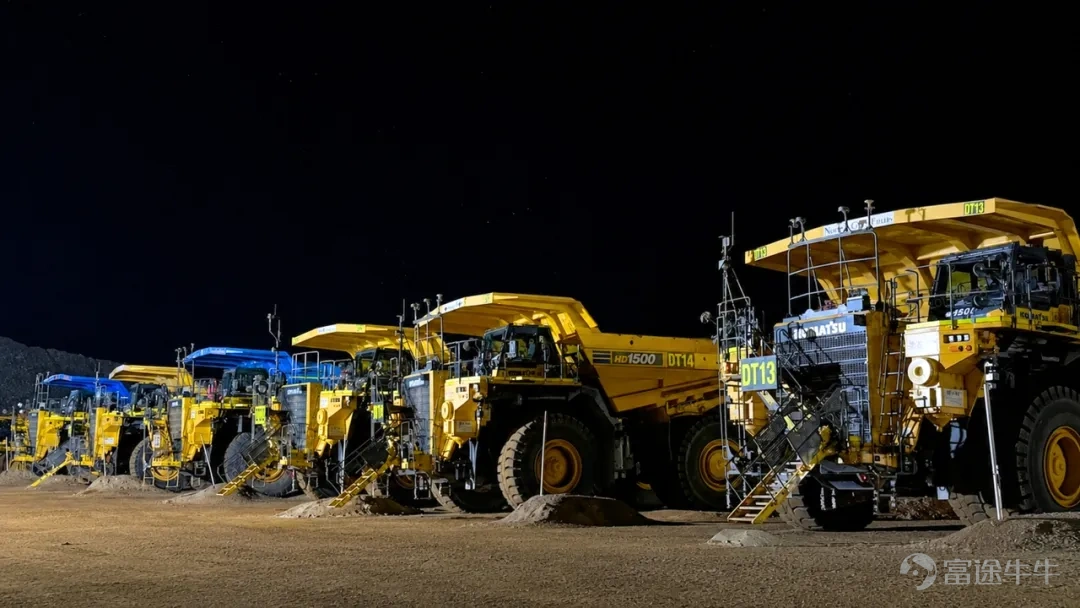
However, Yikong chose Australia not because it is easy to enter. On the contrary, Australia is one of the world’s most demanding markets in terms of mining automation standards. Yikong’s 'top-down' approach is driven by two strategic rationales.
First,Developed countries have higher labor costs, making the economic calculus clearer.In China, the annual driver cost for a mining truck is approximately RMB 600,000, compared to over RMB 3 million in Australia—amplifying the value proposition of autonomous driving systems several-fold.
Second,Mining standards in developed countries are globally recognized; succeeding there effectively grants a passport to the global market.。
Meanwhile, Chinese mining companies’ overseas expansion provides a natural entry point for Chinese autonomous driving technologies abroad. Zijin Mining’s participation as an anchor investor in Yikong’s IPO also reflects industrial capital’s recognition of the trend toward intelligent mining operations.
Australia is the first stop in a 'tackle the hard before the easy' strategy. Yet to date, among China’s mining-sector autonomous driving companies, only Yikong has successfully implemented projects on the ground in Australia. Why them?
The answer becomes clear when comparing Caterpillar and Komatsu, the two global giants.
Caterpillar and Komatsu have been active in mining truck automation for over two decades, but their entire technology architecture is built on automation systems that demand extremely high levels of mine standardization and uniformity.Yikong’s key advantage lies precisely in its system’s greater flexibility and stronger adaptability to non-standard operating conditions.Yikong targets mining sites that Caterpillar and Komatsu currently cannot serve—those with more complex terrain and lower degrees of standardization.
Another dimension of competition is efficiency.Lin Qiao noted that Yikong’s overseas strategy is not simply about capturing market share through low prices, but rather achieving 'higher efficiency.' Previously, mines required 10 manned haul trucks, but with autonomous driving, they can operate with just eight or nine. This reduces the mining company's vehicle purchase costs and allows Yikong to maintain a relatively higher pricing structure for its services.
Of course, the road ahead is not without challenges. Yikong’s gross margin has only recently turned positive at 10%, still some distance from generating stable profits. Regulatory frameworks, safety standards, and customer requirements in overseas markets differ from those in China, and significant work remains between implementing a single project and replicating a scalable business model. These issues will require time to validate.
But the direction is clear:Over the next five to ten years, mine intelligence could further evolve toward full-process unmanned operations.Lin Qiao once painted a picture of such a future: drilling rigs, explosive-loading vehicles, water trucks, graders, loaders, excavators, and haul trucks would all gradually become unmanned; only a small number of personnel would be needed at the dispatch center atop the mine pit, managing the entire mining operation through an intelligent system.
By then, autonomous driving in mining areas will no longer be just a vehicle intelligence project, but will instead become new infrastructure integrating new-energy equipment, autonomous driving, artificial intelligence, and industrial software.
Yikong has already secured its first ticket to enter the next phase of competition. While other autonomous driving segments are still locked in repeated debates over commercialization timelines, the commercial pathway and scaling rhythm for autonomous mining haulage have already moved ahead.
Risk Disclaimer: The above content only represents the author's view. It does not represent any position or investment advice of Futu. Futu makes no representation or warranty.Read more

Comments
to post a comment
1